
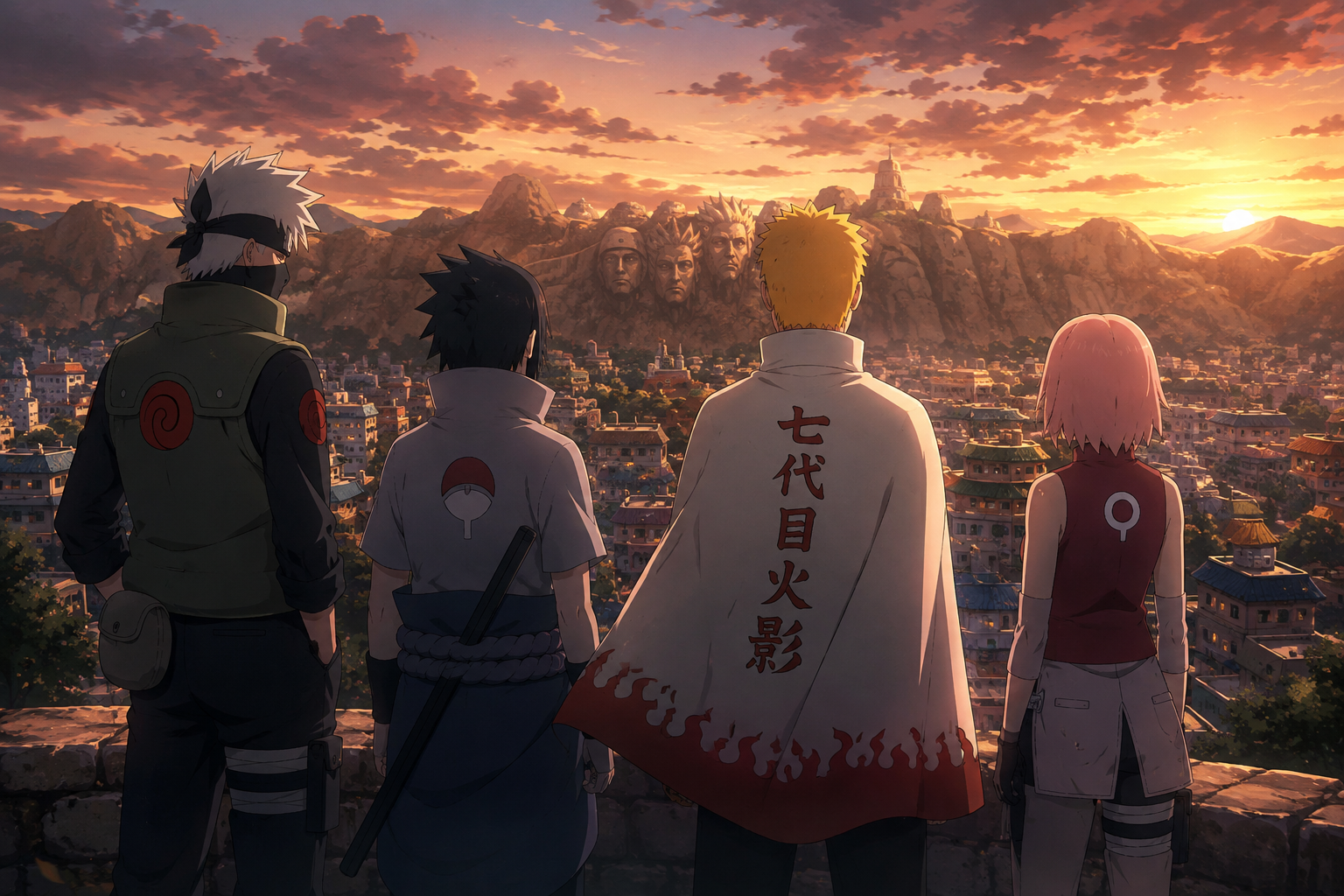
Naruto
One loud orphan, one deeply suspicious village, 220 original-series episodes, and a franchise that keeps asking whether inherited pain has to become somebody else’s childhood.
A lonely child wants recognition from the village that helped create his loneliness
Naruto begins with Naruto Uzumaki acting like Konoha’s public nuisance because being scolded still proves people can see him. The village knows the Nine-Tailed Fox is sealed inside his body, but most adults punish the child for the disaster that happened to him. Becoming Hokage sounds like a ridiculous dream until the story reveals what Naruto actually wants: a place in the community and enough power to protect the bonds he fought to build.
Team 7 puts that need beside Sasuke’s revenge, Sakura’s discipline, and Kakashi’s grief. The missions get larger, but the argument stays personal. Naruto keeps meeting people shaped by clans, wars, sealed monsters, village policy, family obligation, and adults who called exploitation duty. The franchise works best when friendship does not magically erase those systems. People change because somebody finally sees the wound and still demands a better choice.
Choose your Naruto road
Start with the original series, continue into Shippuden and Boruto, or place the movies, OVAs, and specials without breaking the television story.
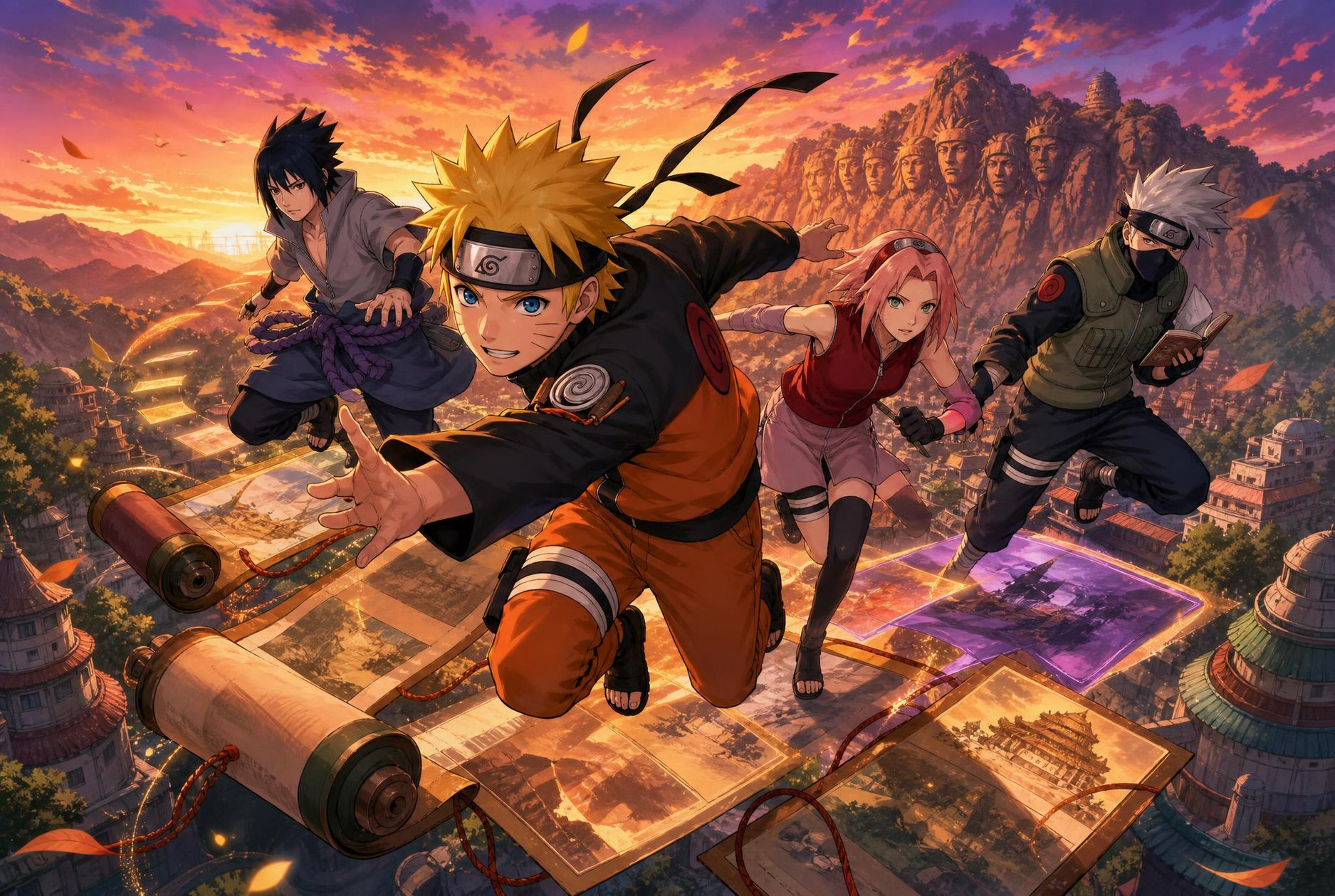
Naruto
Team 7 forms while the hidden-village system reveals what adults ask children to carry.
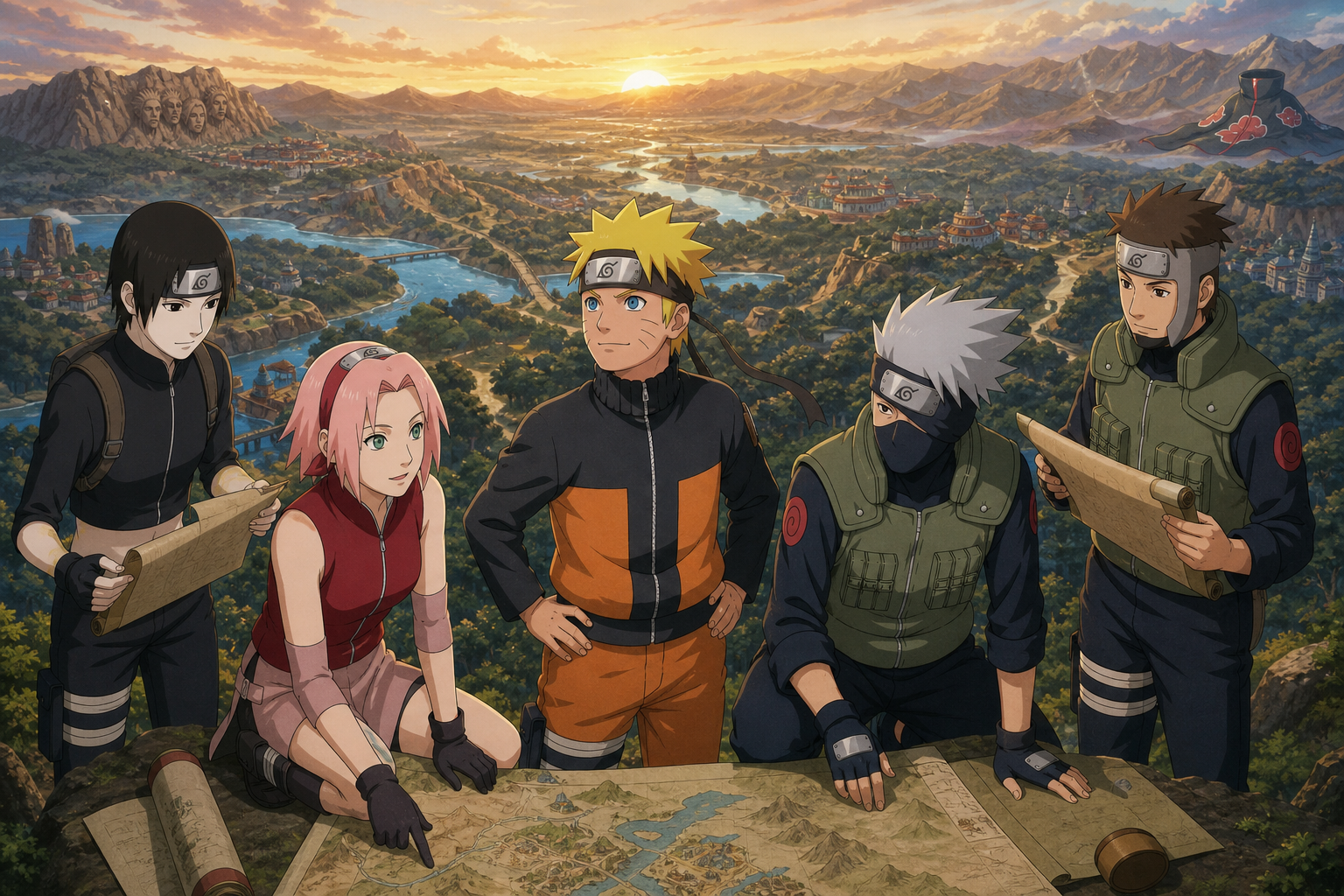
Naruto: Shippuden
Akatsuki, war, lost years, and the consequences waiting behind Naruto’s promise to bring Sasuke home.
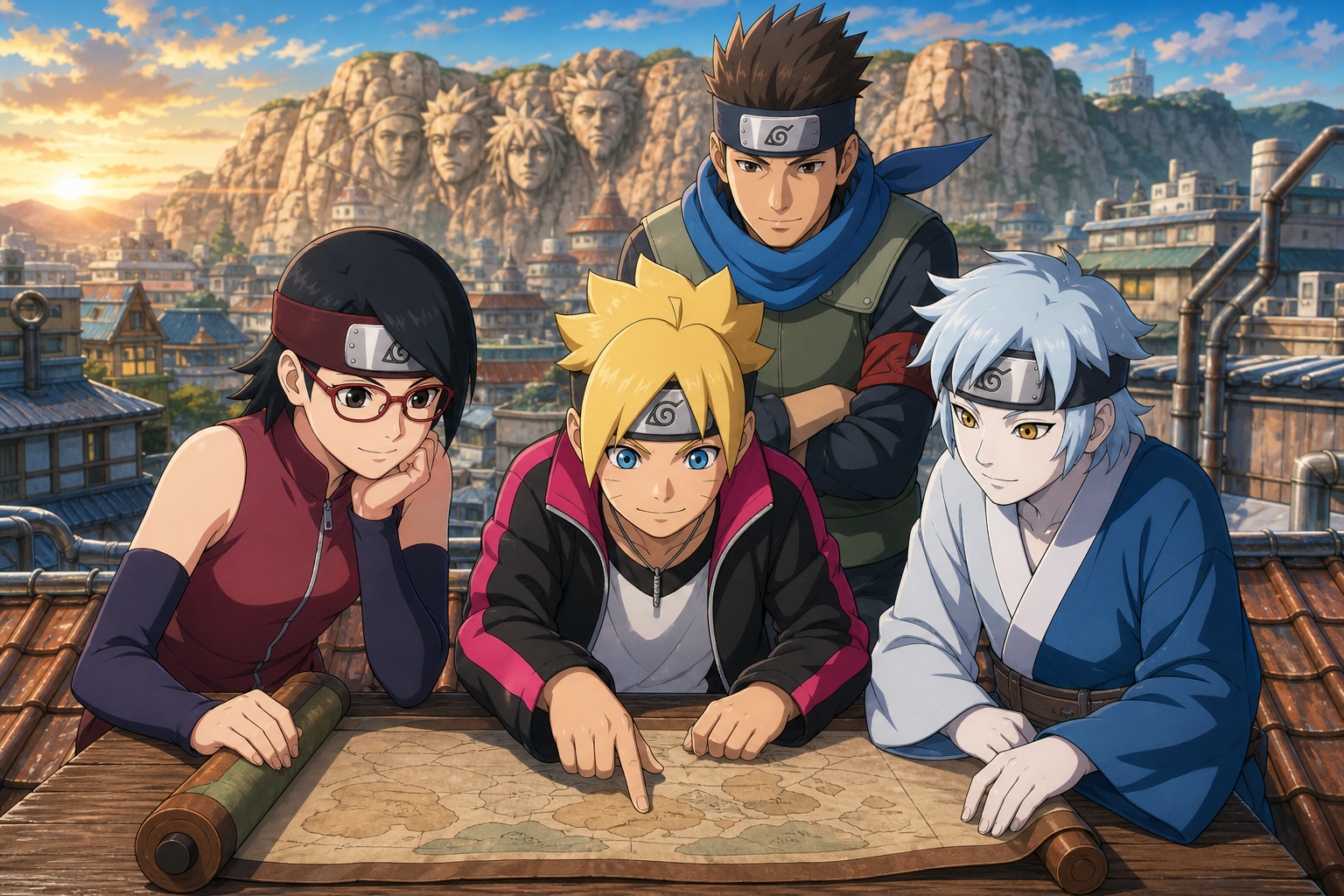
Boruto
Peace, technology, next-generation pressure, and children living beneath famous names.
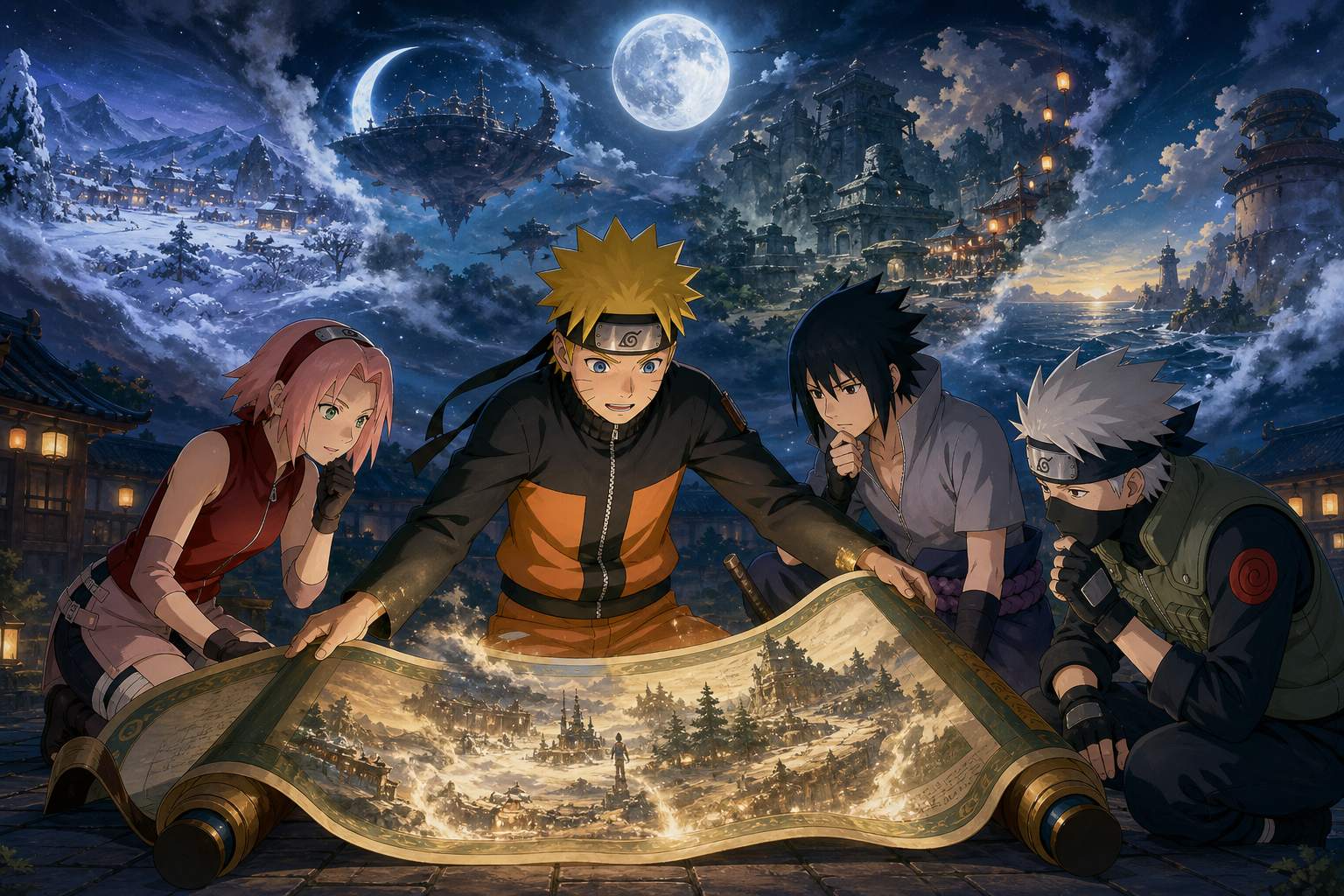
Naruto Extras
Side stories, theatrical adventures, continuity labels, and their useful watch placement.
One opening arc from each animated series
Original Naruto makes Team 7 confront the human cost of shinobi work. Shippuden turns Gaara’s survival into international politics. Boruto tests what peace actually changed for the children born after the war.
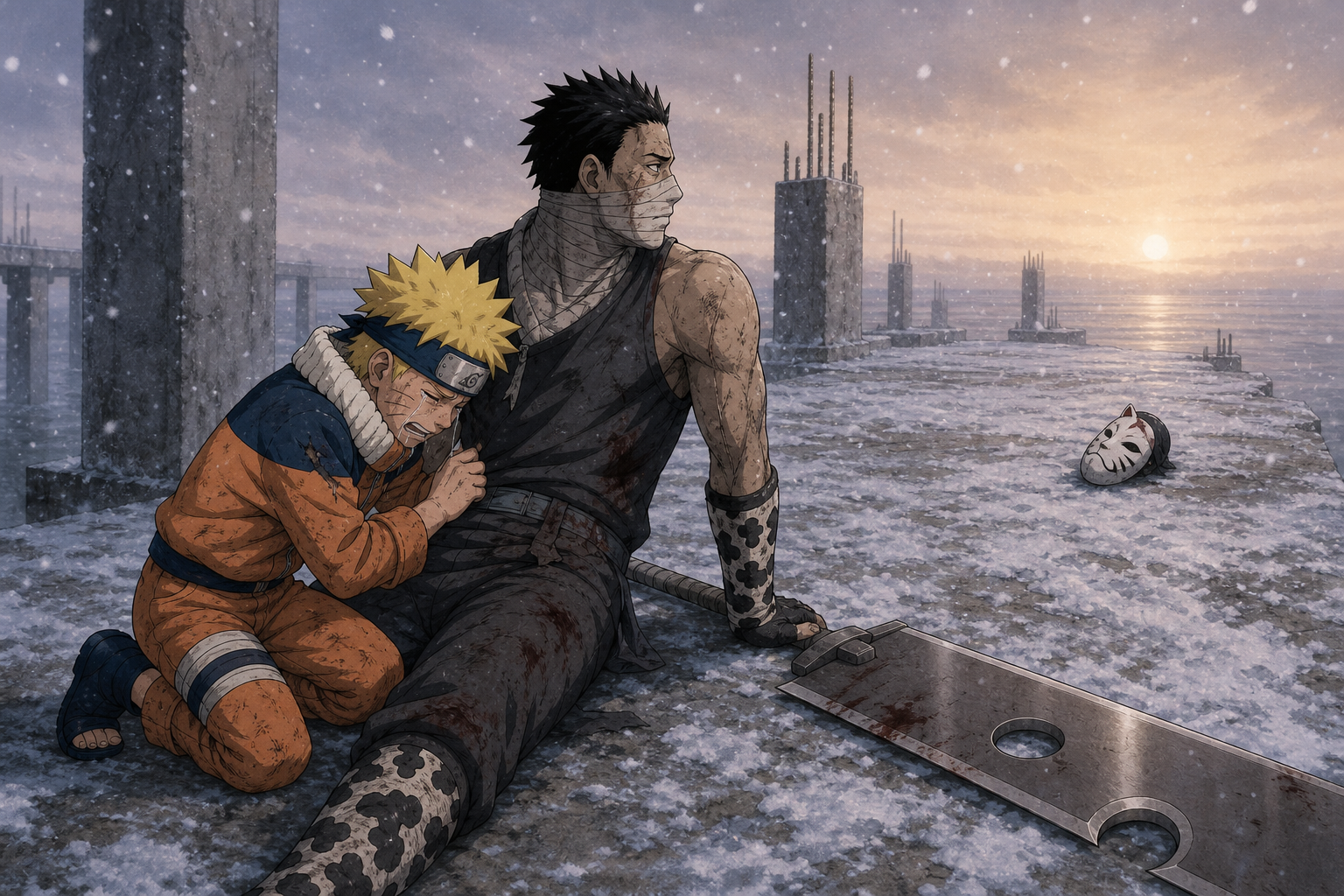
Land of Waves
A bridge mission exposes occupation, child soldiers, mercenary labor, and the lie that shinobi can live as tools without human consequence.
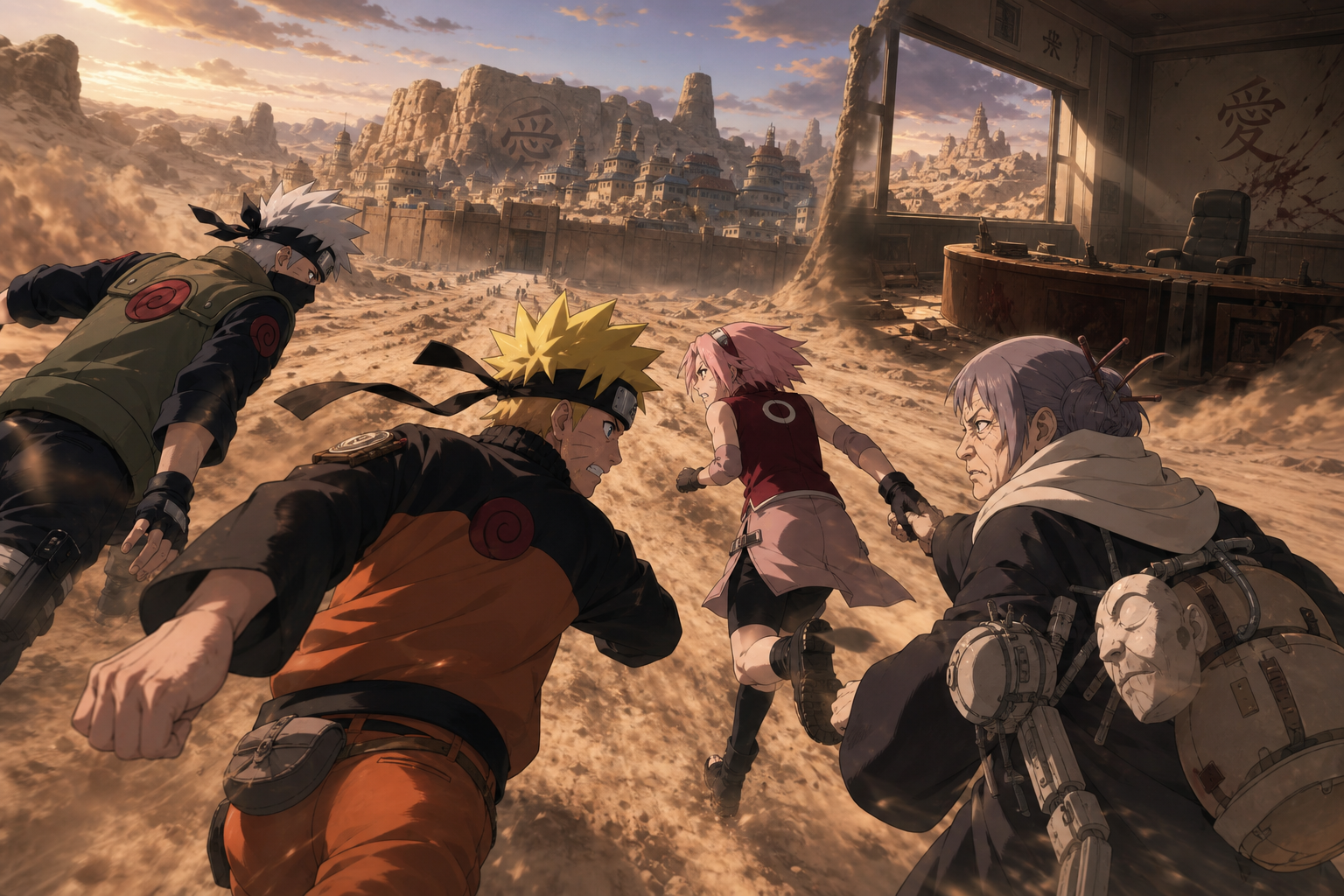
Kazekage Rescue Mission
Gaara’s leadership, Akatsuki’s extraction economy, Sakura and Chiyo’s partnership, and a village forced to grieve the person it once weaponized.
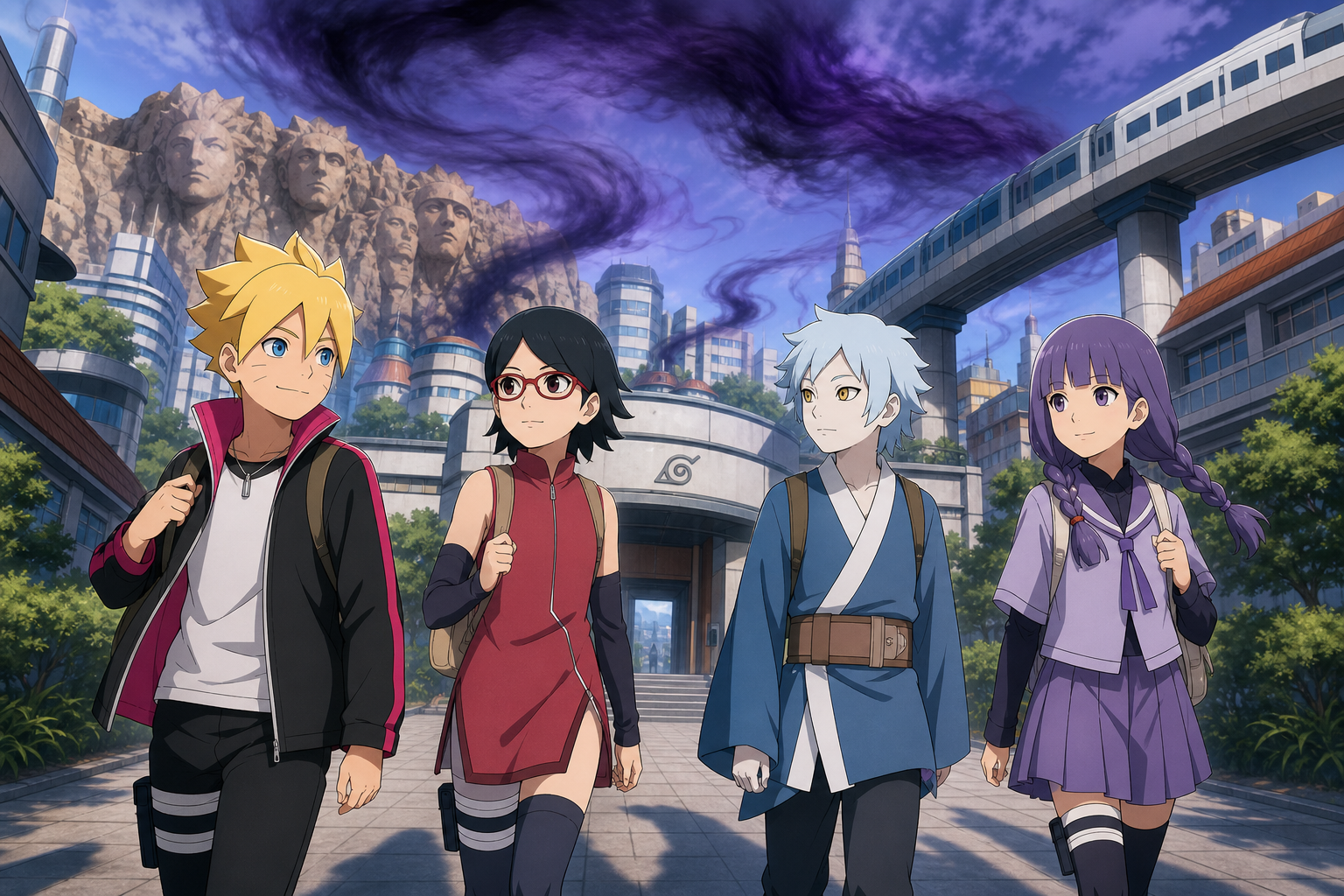
Academy Entrance Arc
Peace, technology, famous parents, the Ghost incidents, and children inheriting damage adults assumed modern Konoha had outgrown.
Four people carry Team 7 and several generations of unfinished business
The directory continues far beyond the front door. Every completed profile follows the character through relevant Naruto, Shippuden, Boruto, film, OVA, relationship, ability, performance, and consequence history.
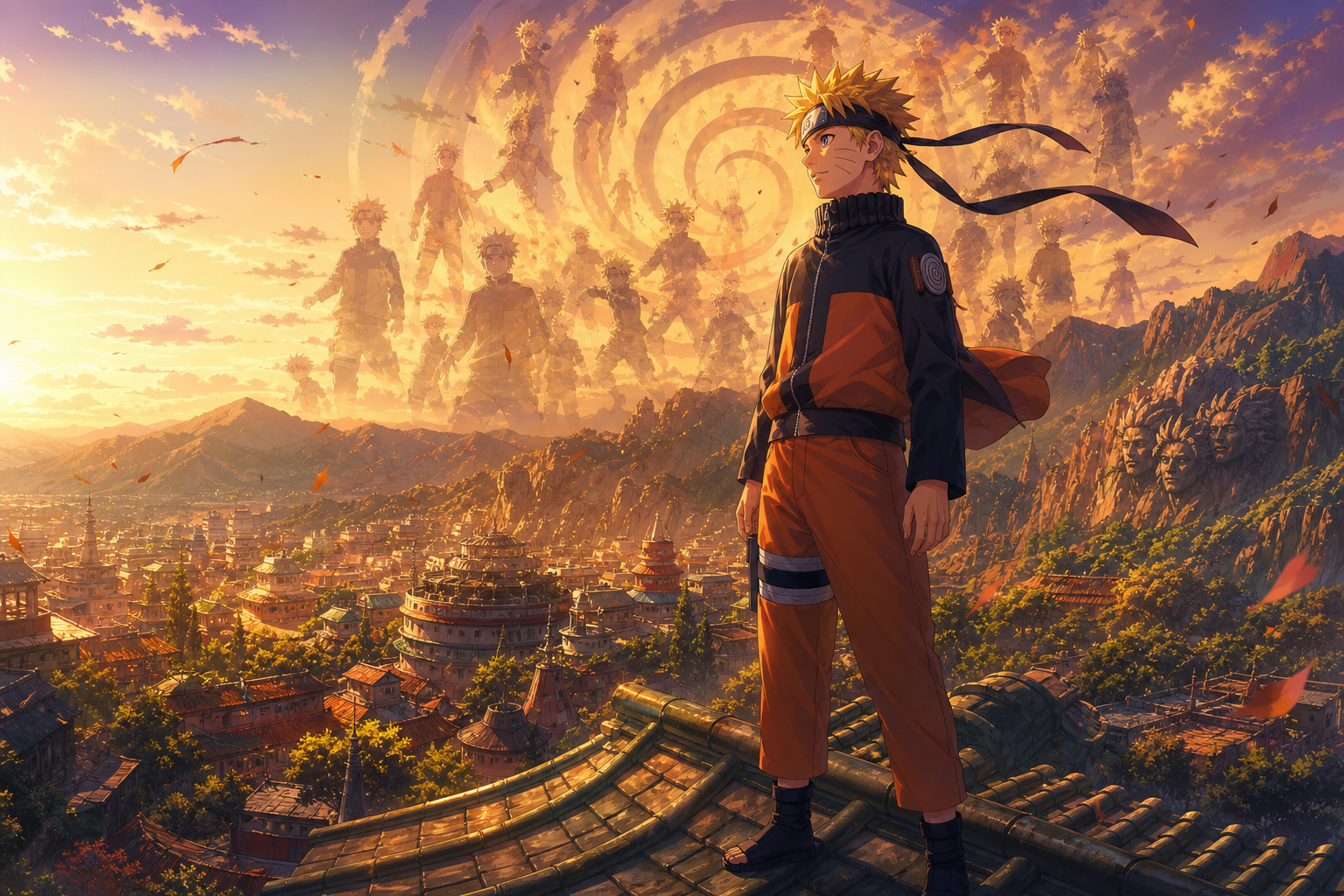
Naruto Uzumaki
Jinchūriki, abandoned child, relationship strategist, and future Hokage.
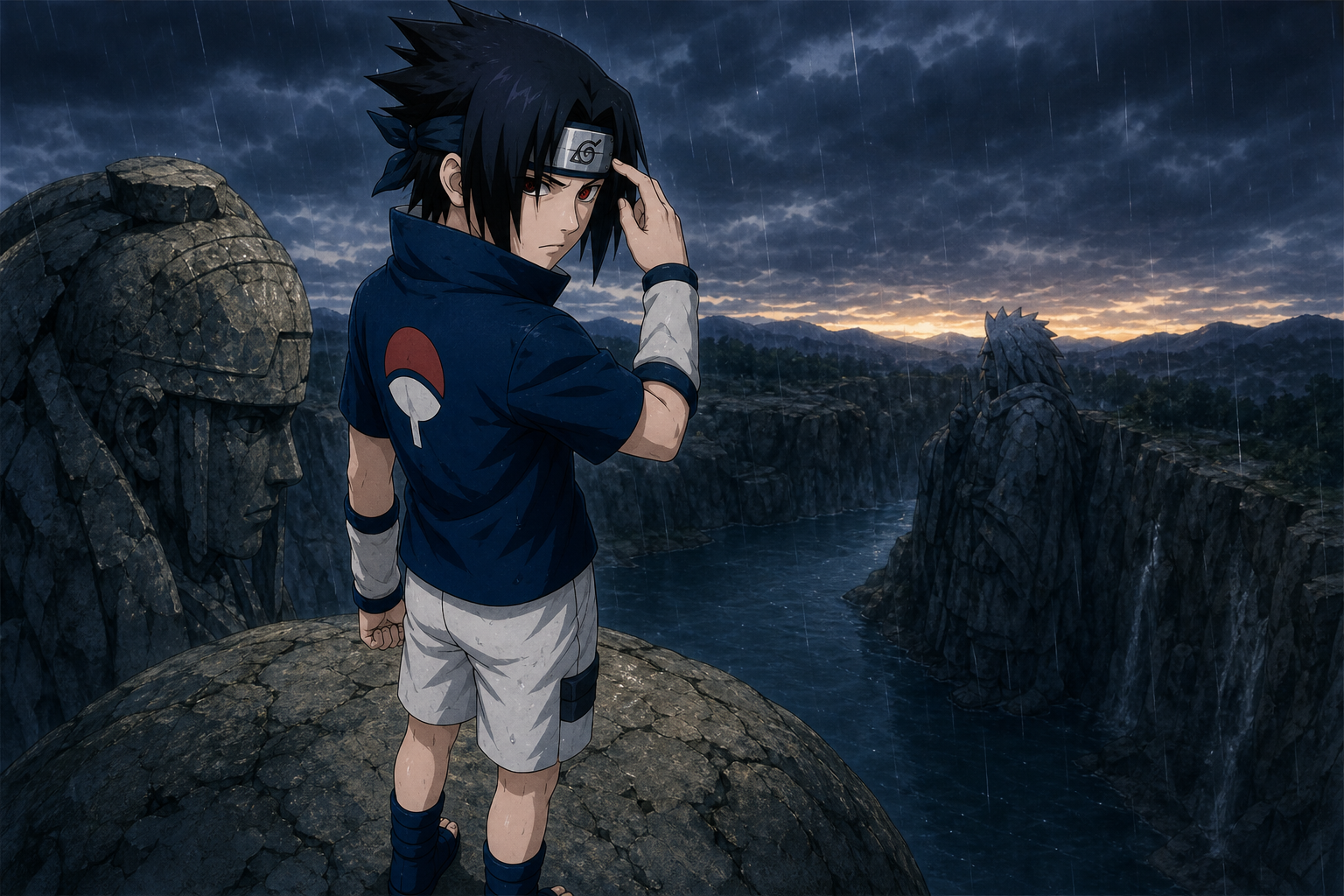
Sasuke Uchiha
Massacre survivor, prodigy, rival, revolutionary, and a person shaped by withheld truth.
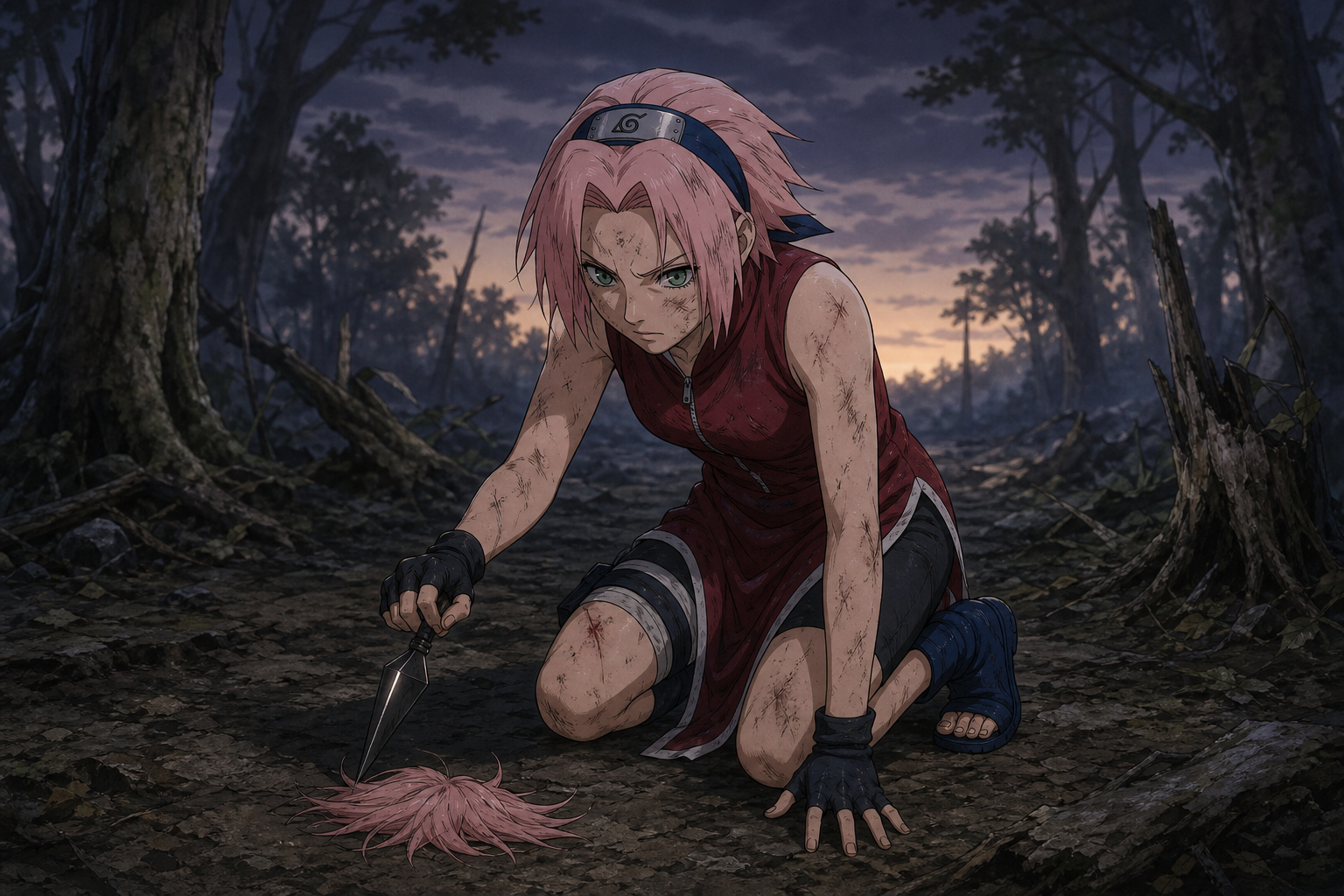
Sakura Haruno
A civilian-born student who turns precision and discipline into medical and physical power.
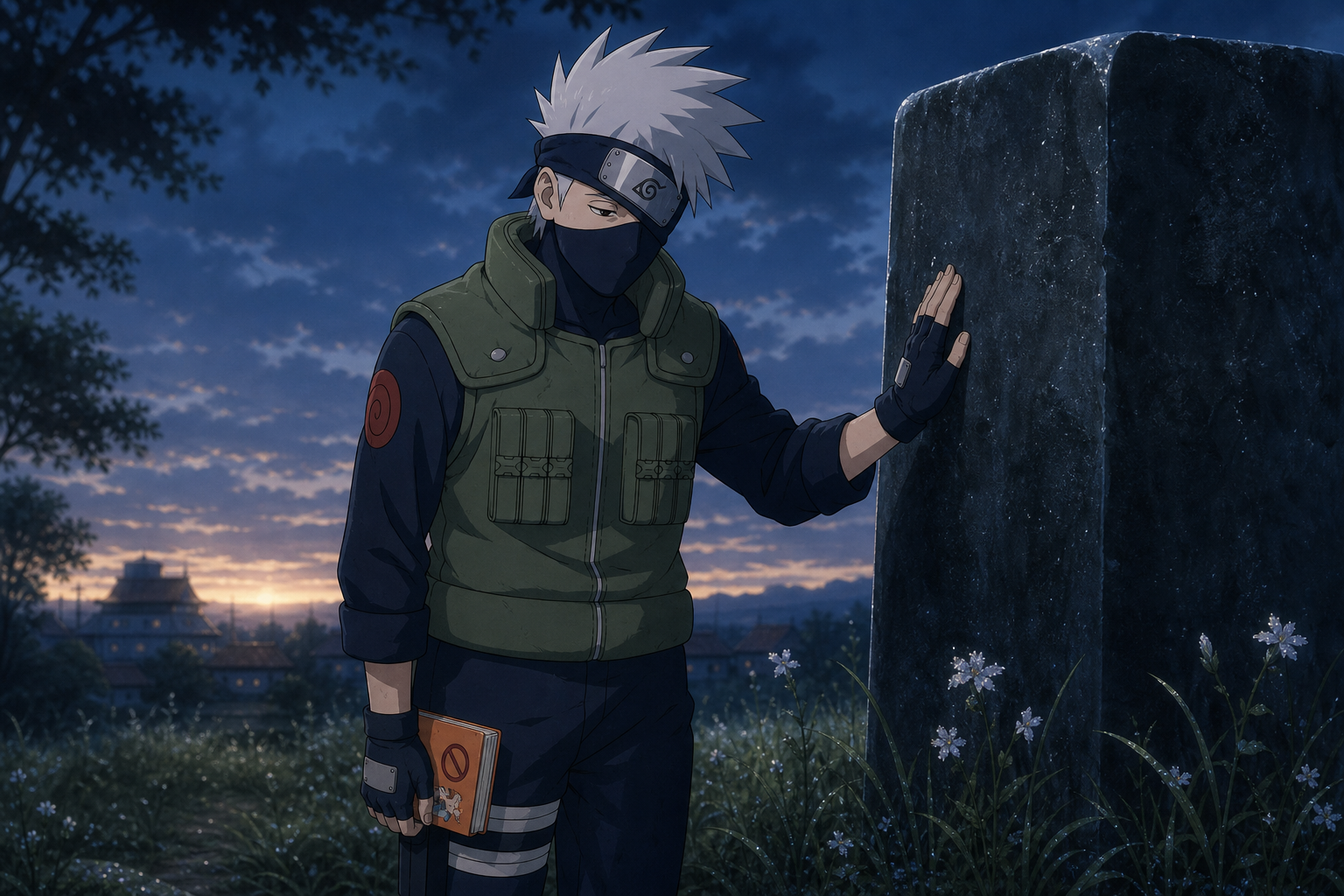
Kakashi Hatake
Teacher, survivor, institutional prodigy, and a man determined not to repeat his dead team.
Whole works get judged as whole works
Episode pages are RaeRae Reacts because one episode needs scene-level reconstruction, not a miniature season score. Naruto Reviews judge complete series, seasons, films, and franchise-sized arguments where pacing, production, adaptation, and payoff can be evaluated together.
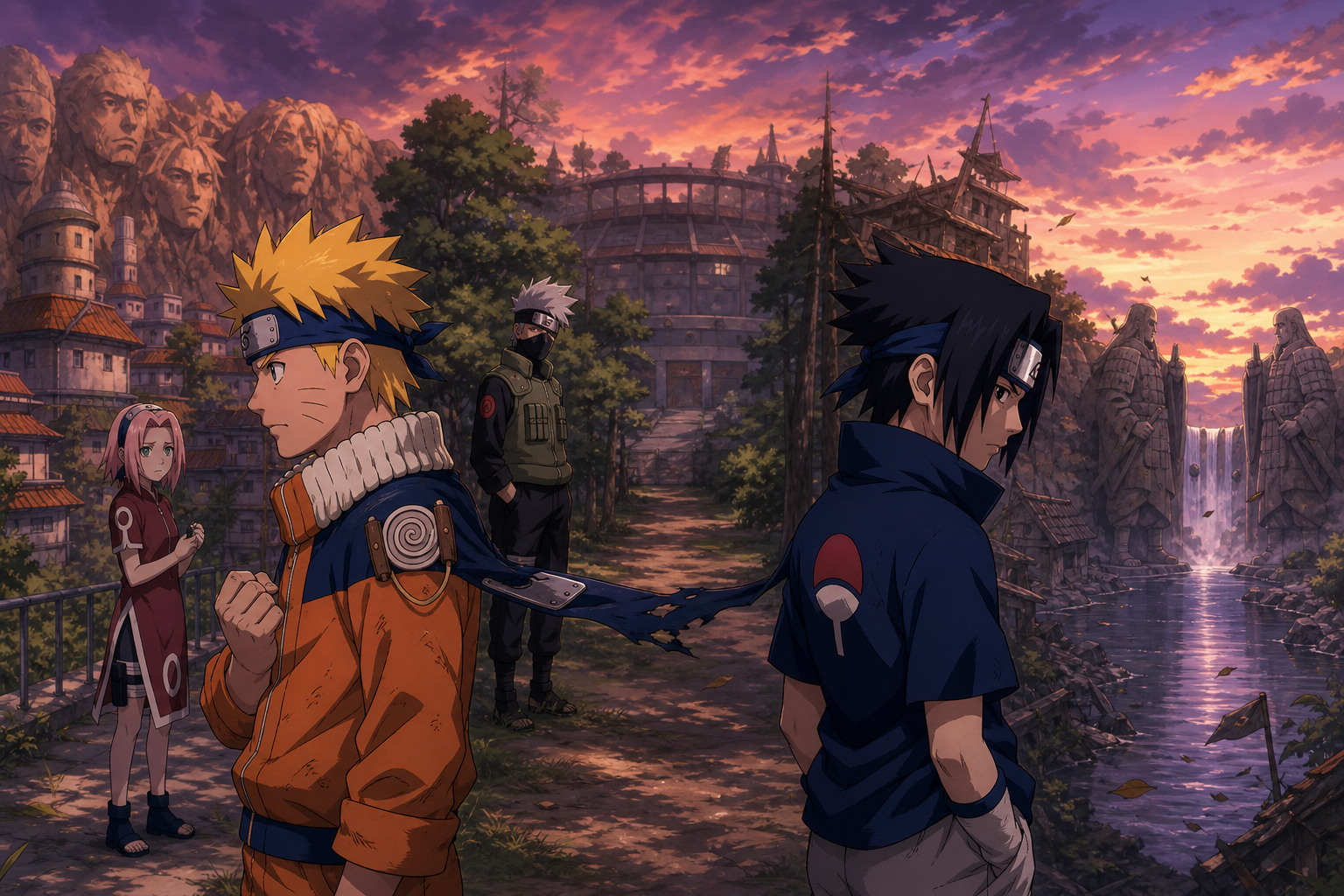
Naruto: The Original Series Review
Team 7, major arcs, filler, Japanese performances, music, institutional politics, broken pacing, and the emotional choices that made Part I last.
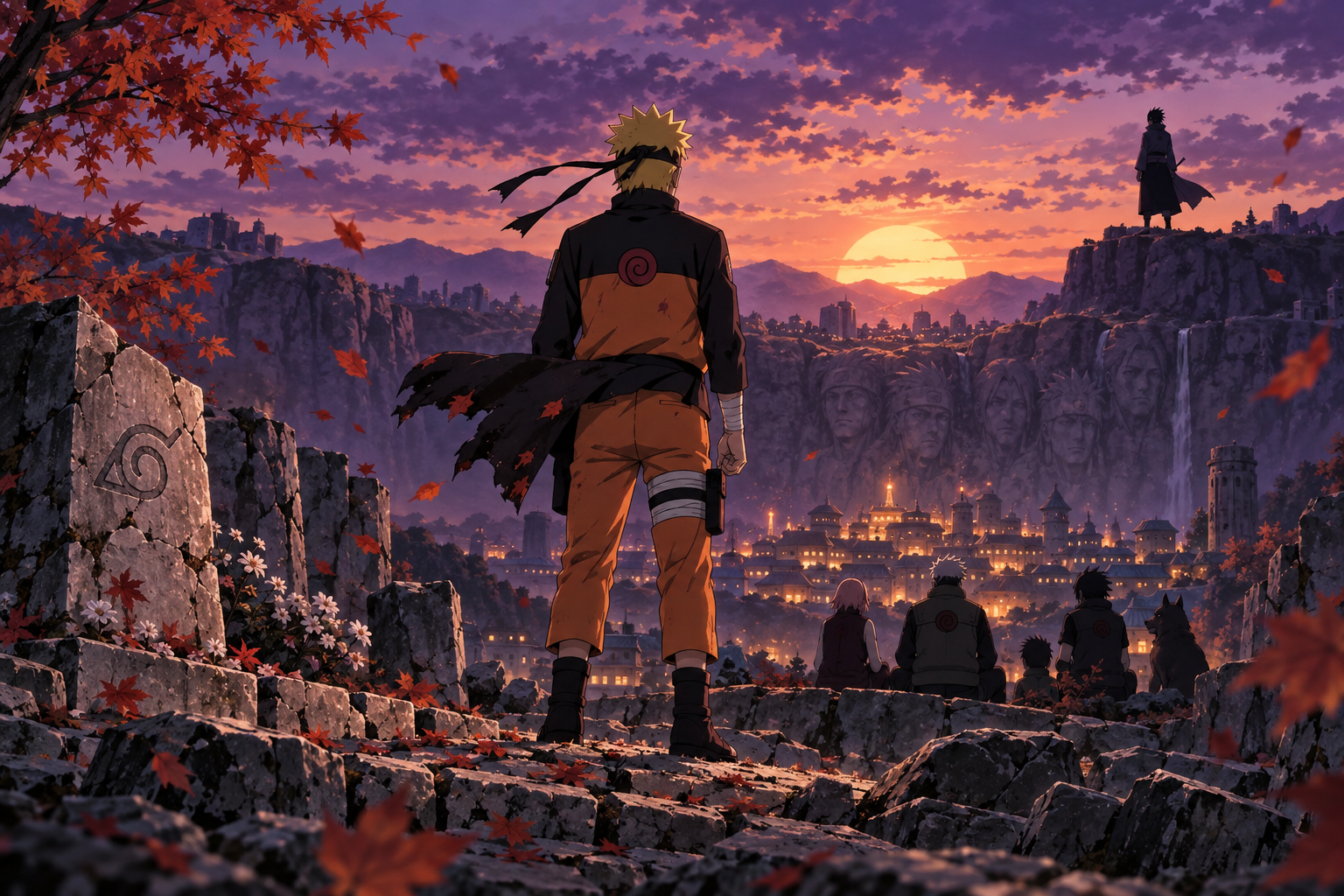
Naruto: Shippuden
Akatsuki, Pain, Sasuke, the Fourth Shinobi World War, institutional failure, women, production, pacing, and the cost of ending a cycle.
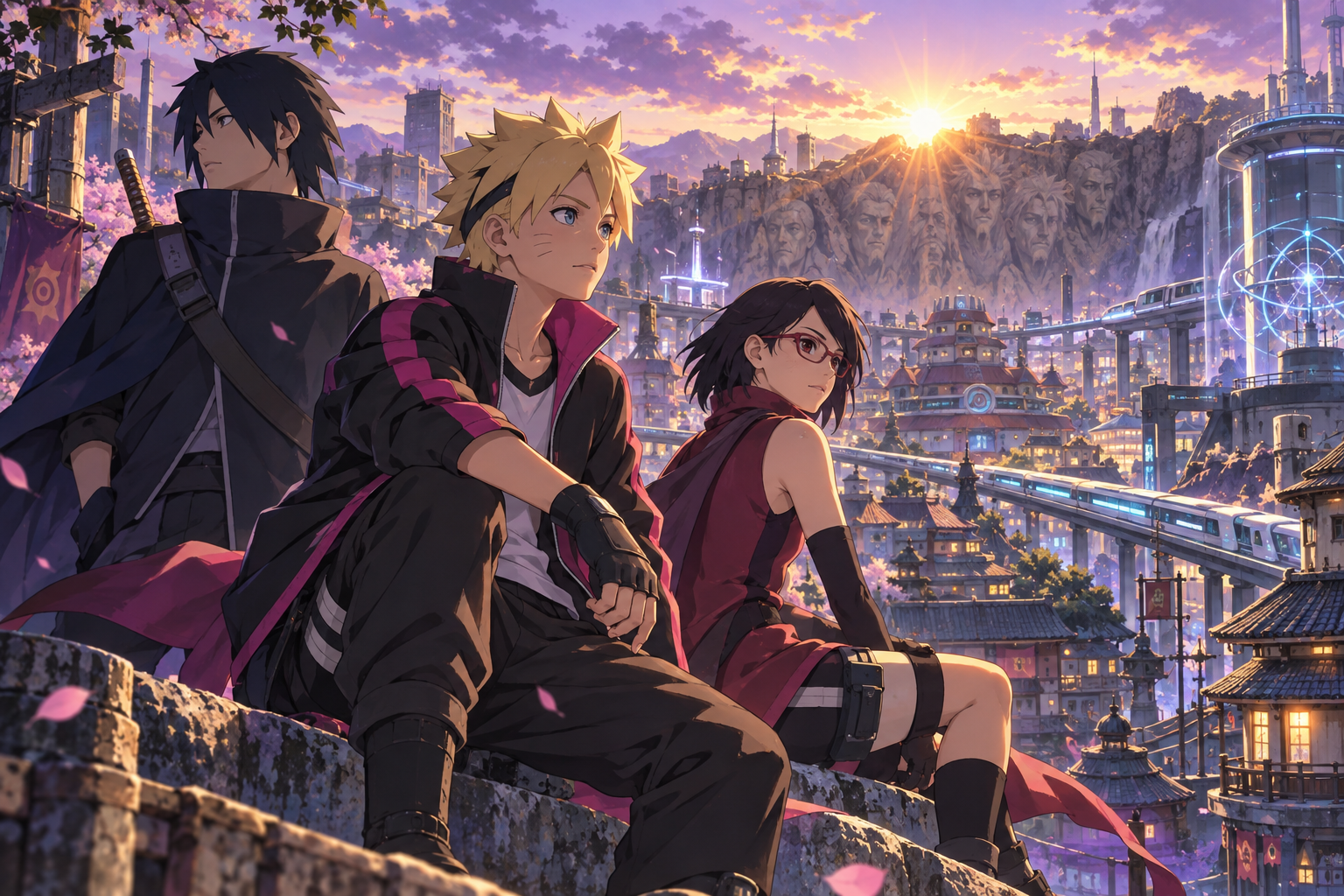
Boruto: Naruto Next Generations
Inherited peace, Naruto’s fatherhood, the new Team 7, Kawaki, scientific tools, weekly production, and sequel expectations.
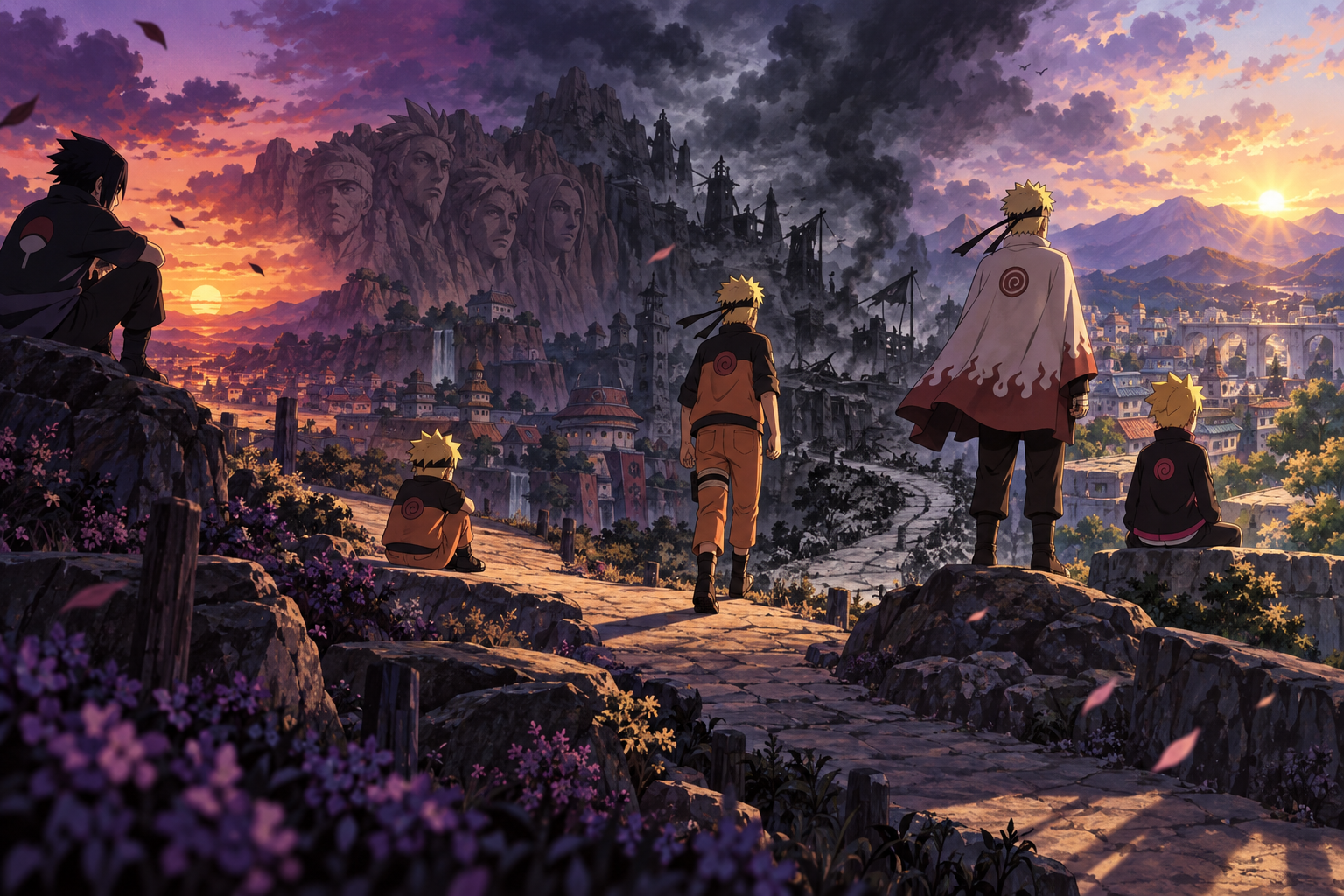
The Complete Animated Franchise
Original Naruto, Shippuden, and Boruto judged together as one generational argument about recognition, war, peace, family, and memory.
Every episode gets room to breathe, argue, and hurt properly
RaeRae Reacts rebuild the episode experience with story movement, character choices, Japanese performance, adaptation, production, cultural context, consequences, and the exact village decision that earned side-eye.
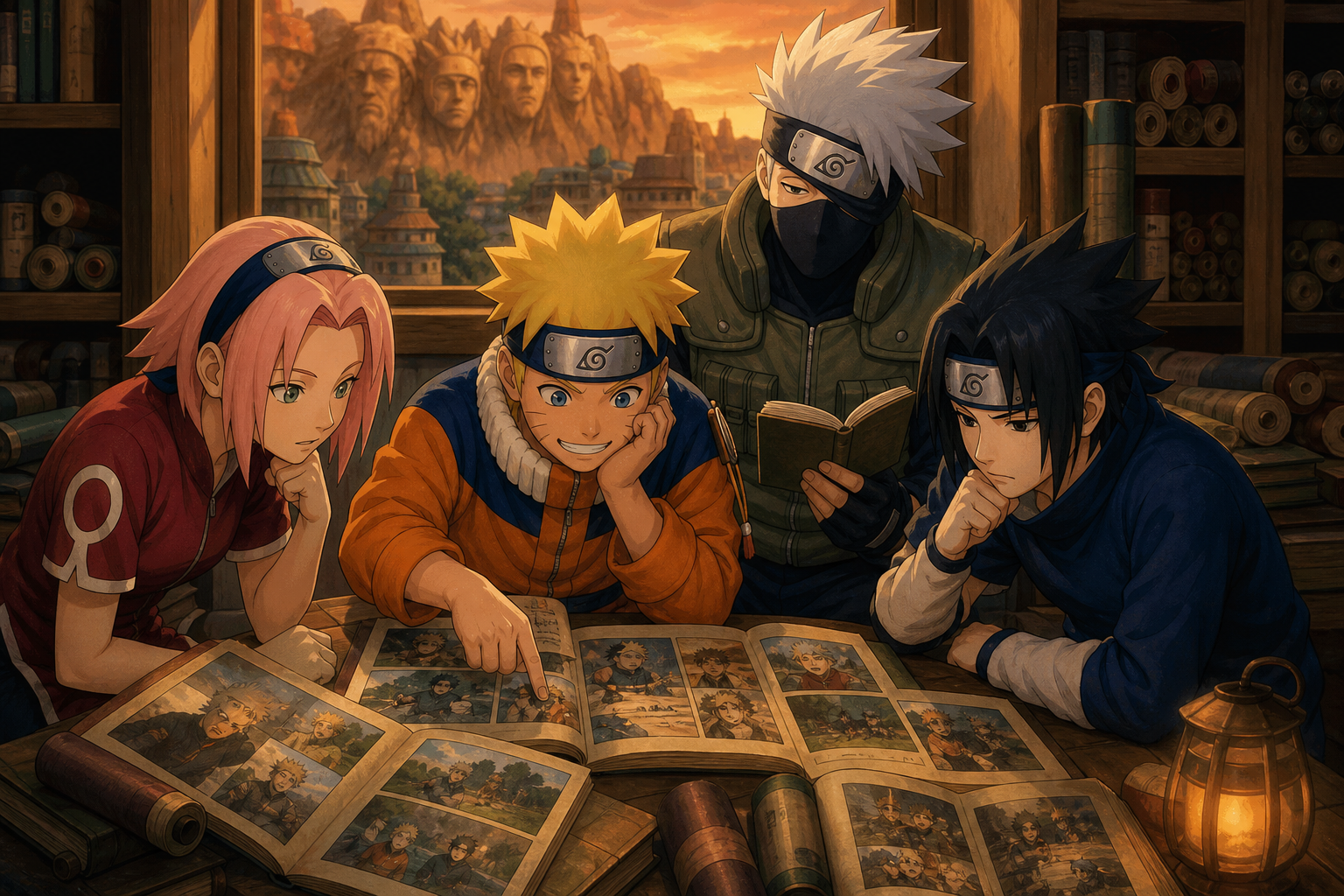
Naruto RaeRae Reacts
Long-form reactions stay connected to the 1–220 directory, so the emotional deep dive never breaks chronological navigation.
Sometimes the village deserves the argument
These files aim the anger at institutions, policy, hypocrisy, labor, gatekeeping, and the adults who called damage necessary because somebody else’s child paid the bill.
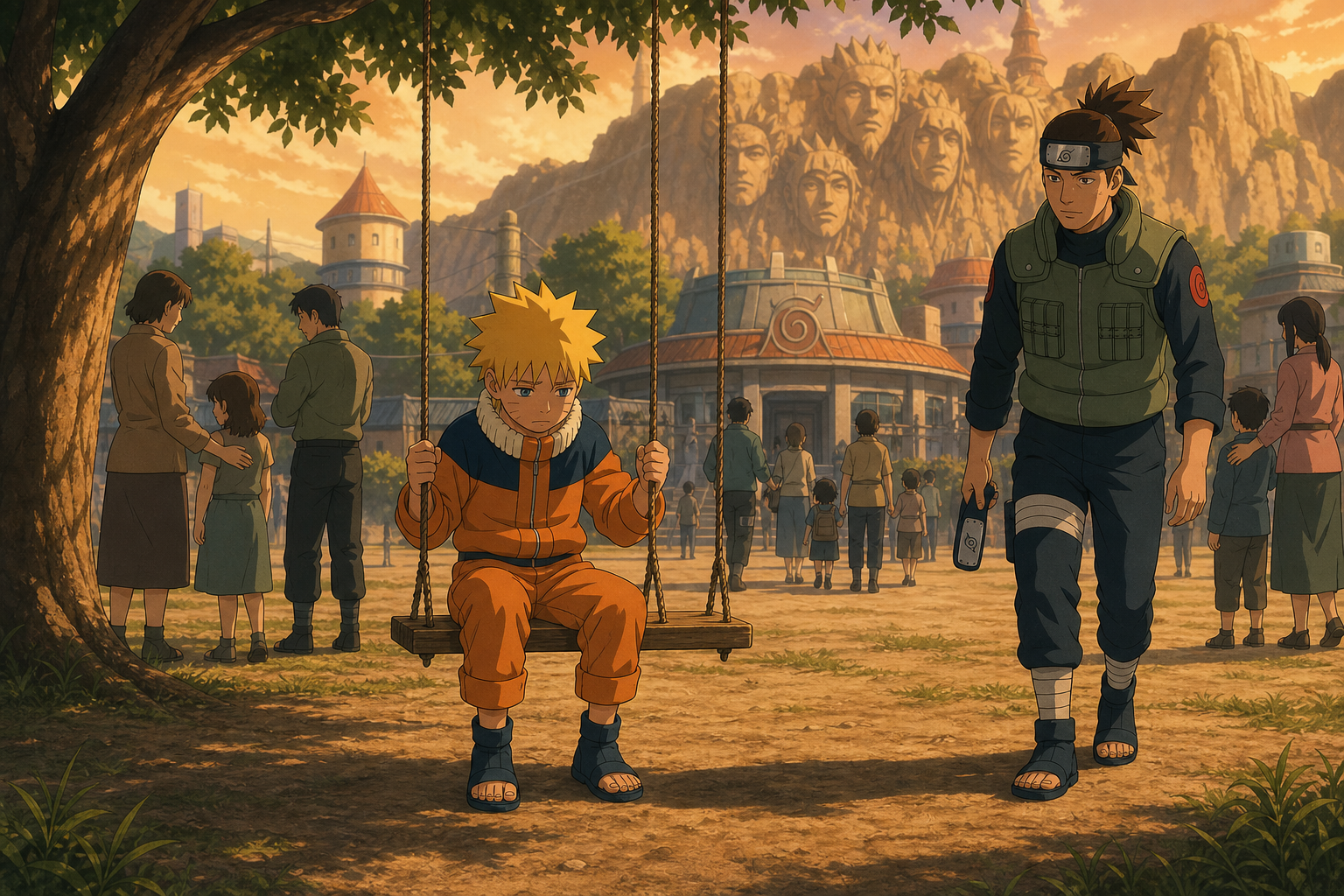
Konoha Did Not Raise Naruto
The village’s later love does not retroactively become adequate childhood care.
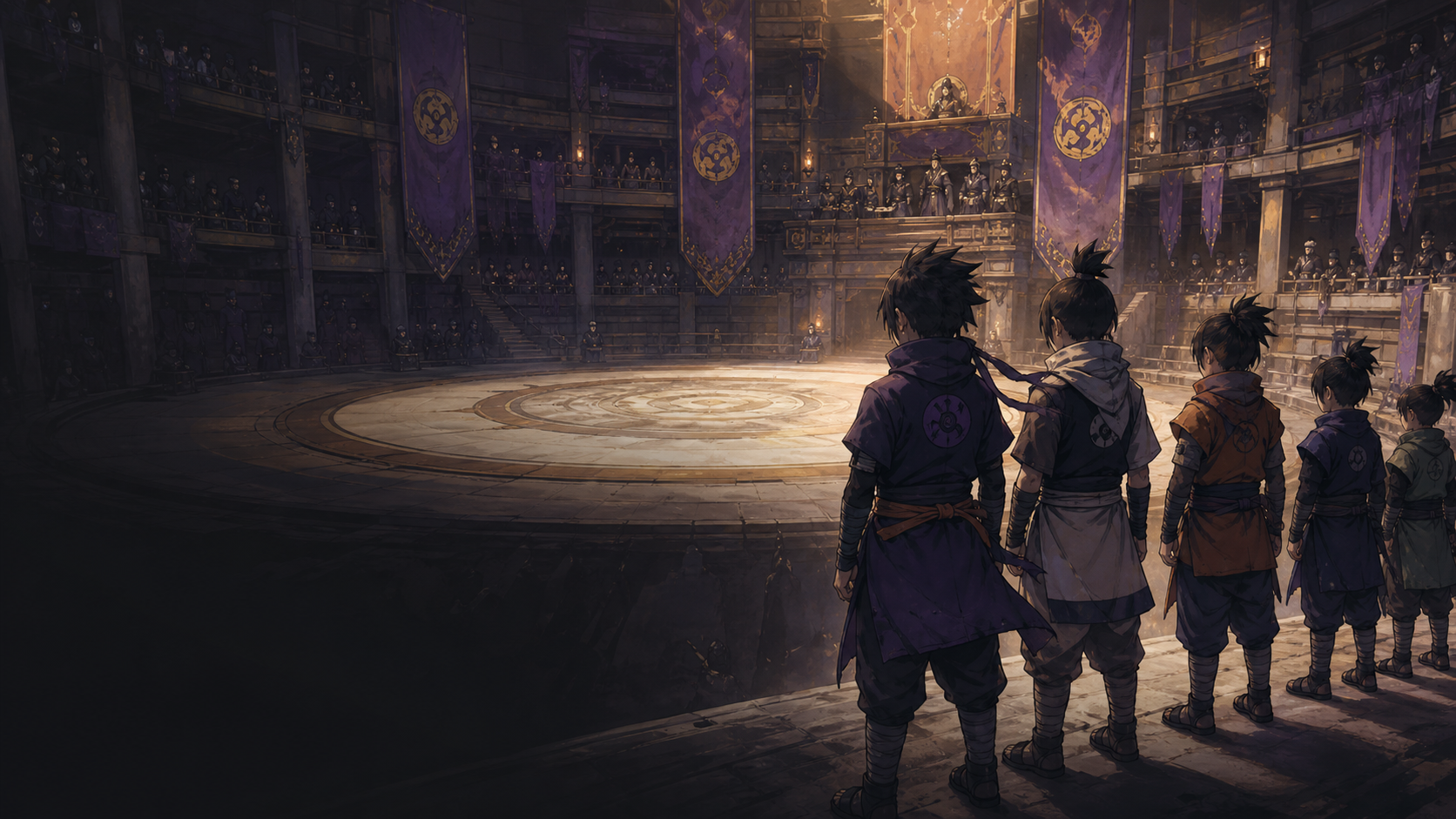
The Chūnin Exams Were a Recruitment Fair
The tournament sells child combat as merit while villages, clients, and military budgets watch from the stands.
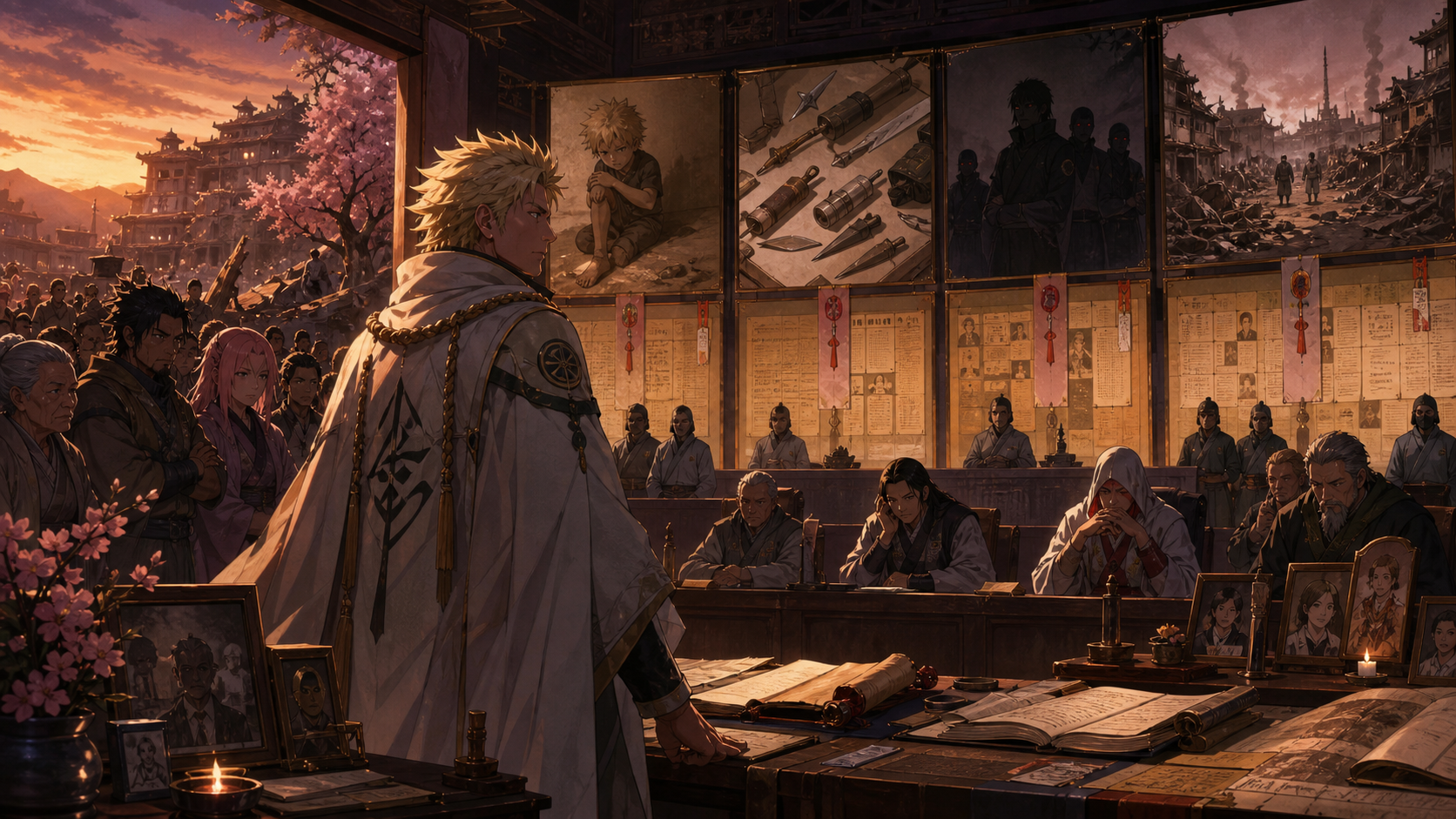
Naruto Forgave a Government That Never Apologized
Personal forgiveness does not erase institutional duty, public accountability, or the childhood Konoha failed to provide.
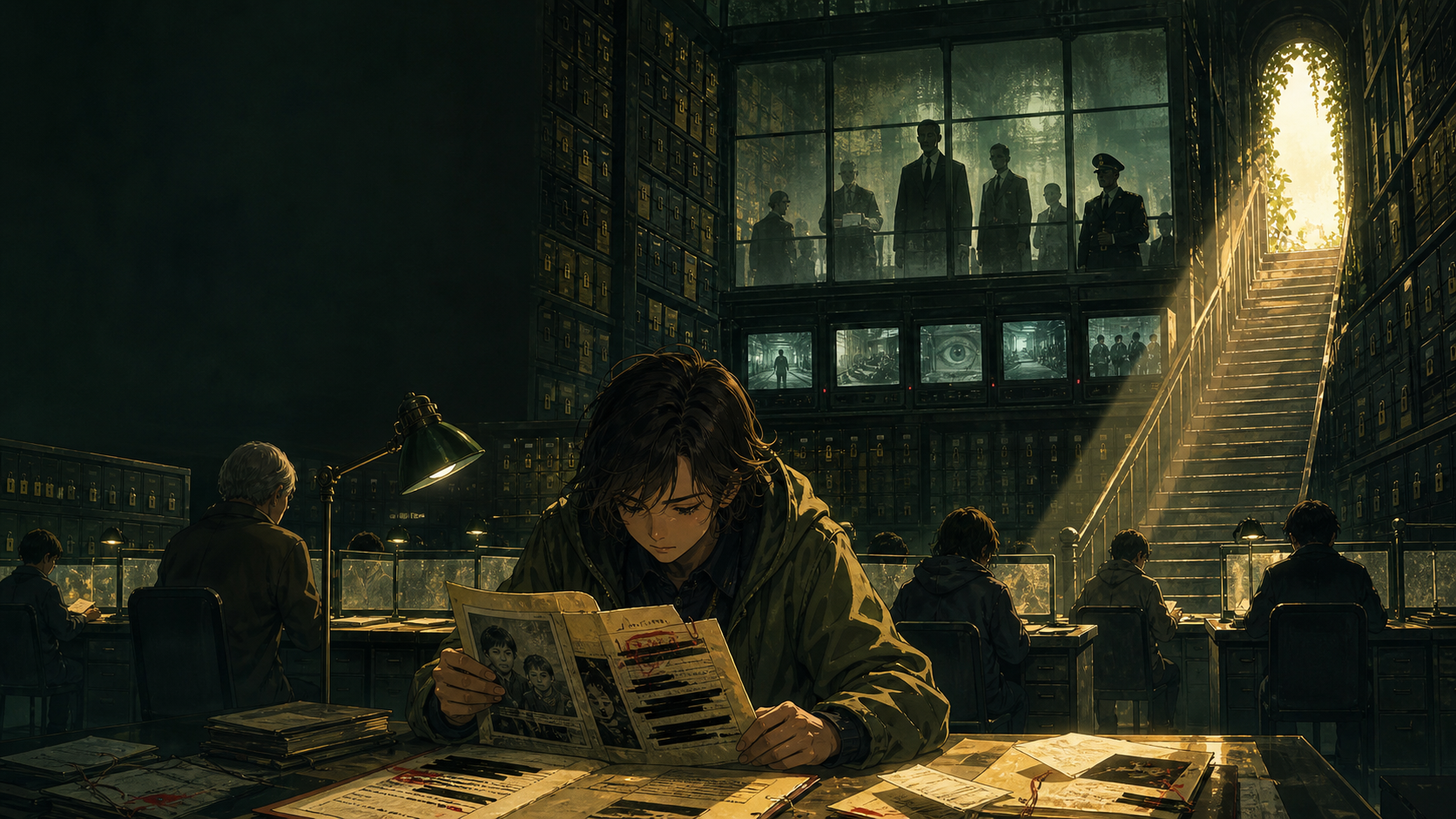
Secrecy Is Not Protection
Naruto and Sasuke show what happens when adults guard classified stories more carefully than the children living inside them.
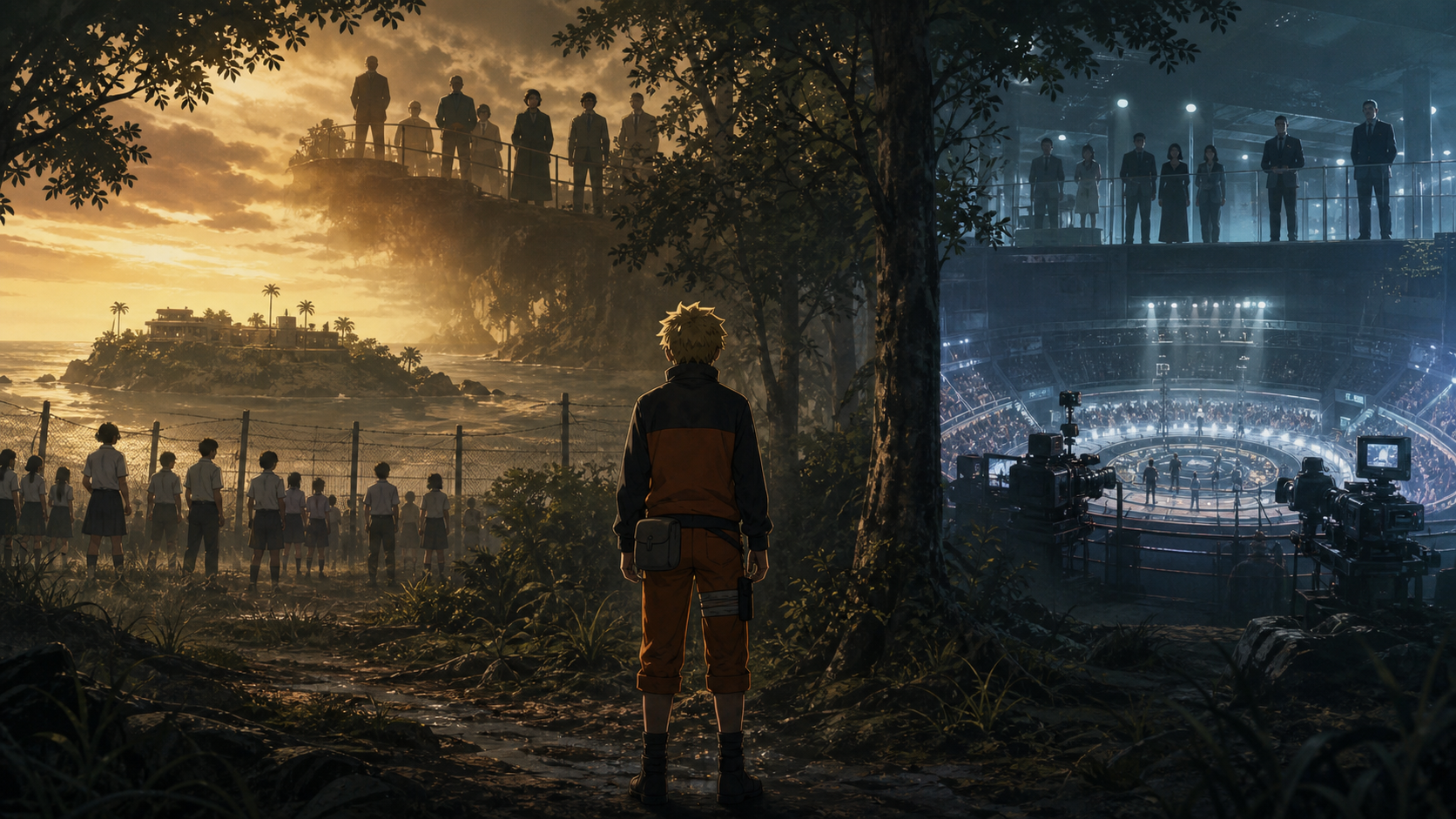
The Hunger Games Was Never New
Battle Royale, the Chūnin Exams, and American franchise memory all package youth violence through different cultural machinery.
The rules beneath every battle
Four ways into the systems Naruto expects viewers to understand: energy, technique, military geography, and the politics of sealing living beings inside children.
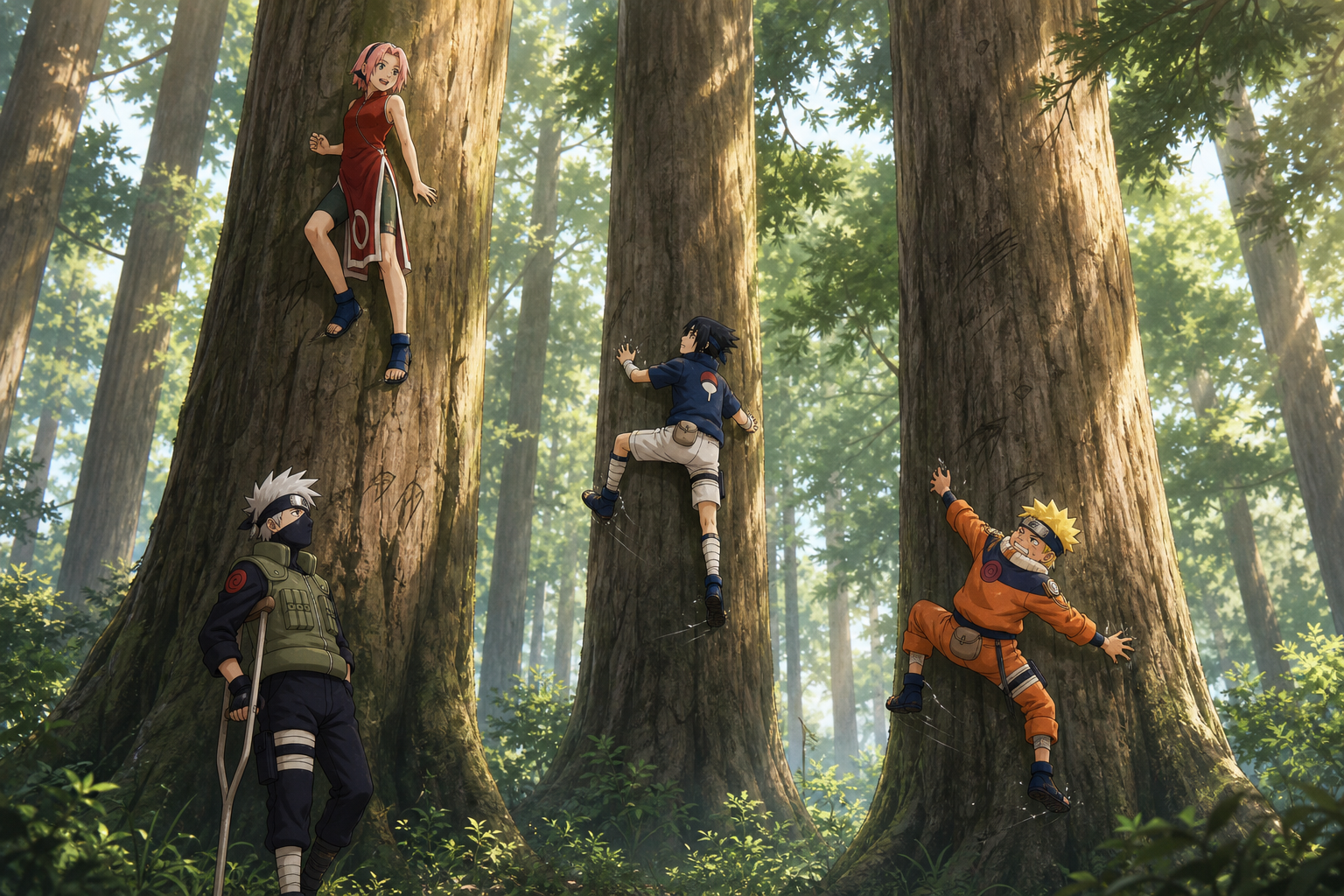
Chakra
Control, reserves, nature transformation, exhaustion, and why having more power does not mean using it well.
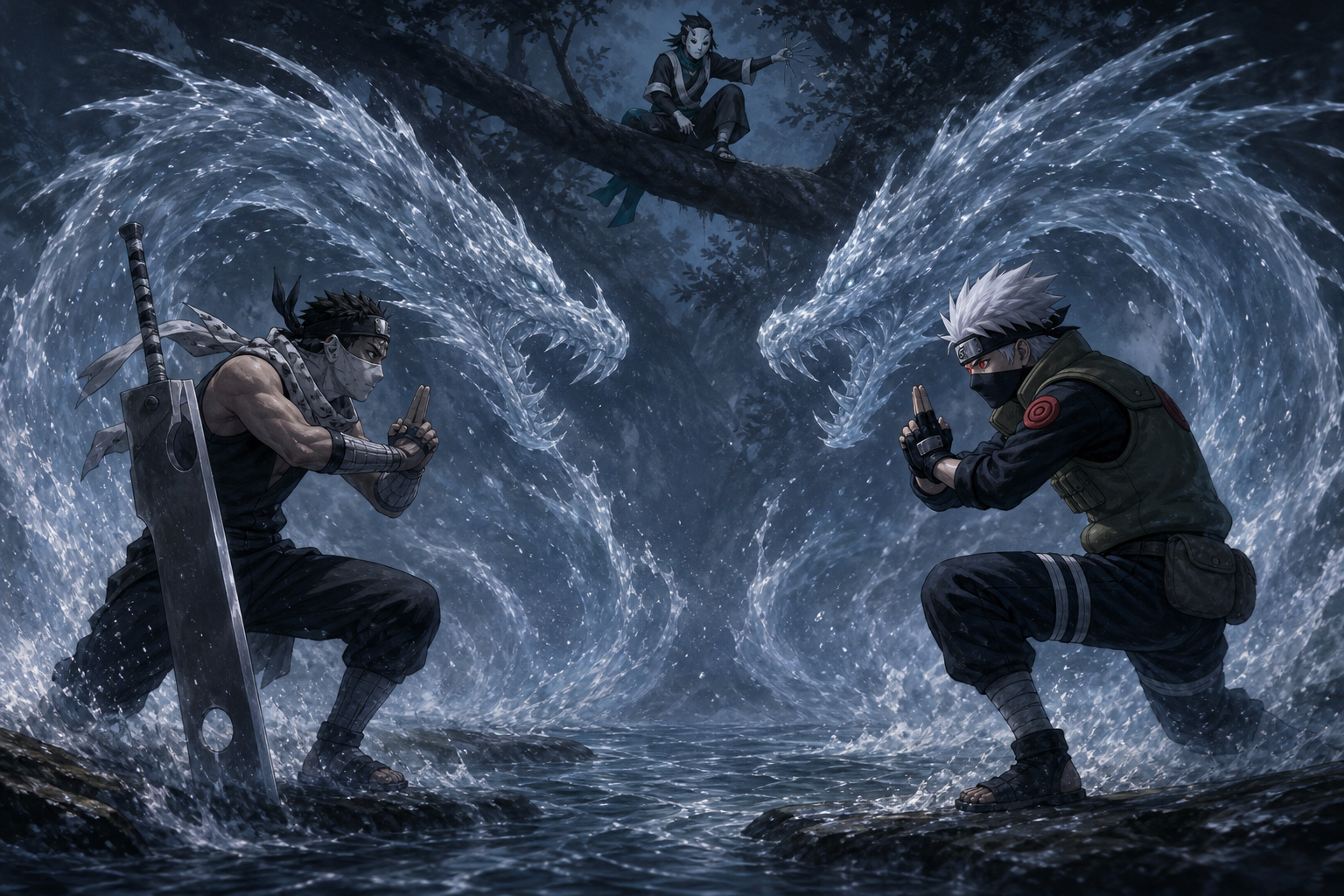
Jutsu
Ninjutsu, genjutsu, taijutsu, hand seals, ranks, inherited methods, and the limits hidden behind spectacle.
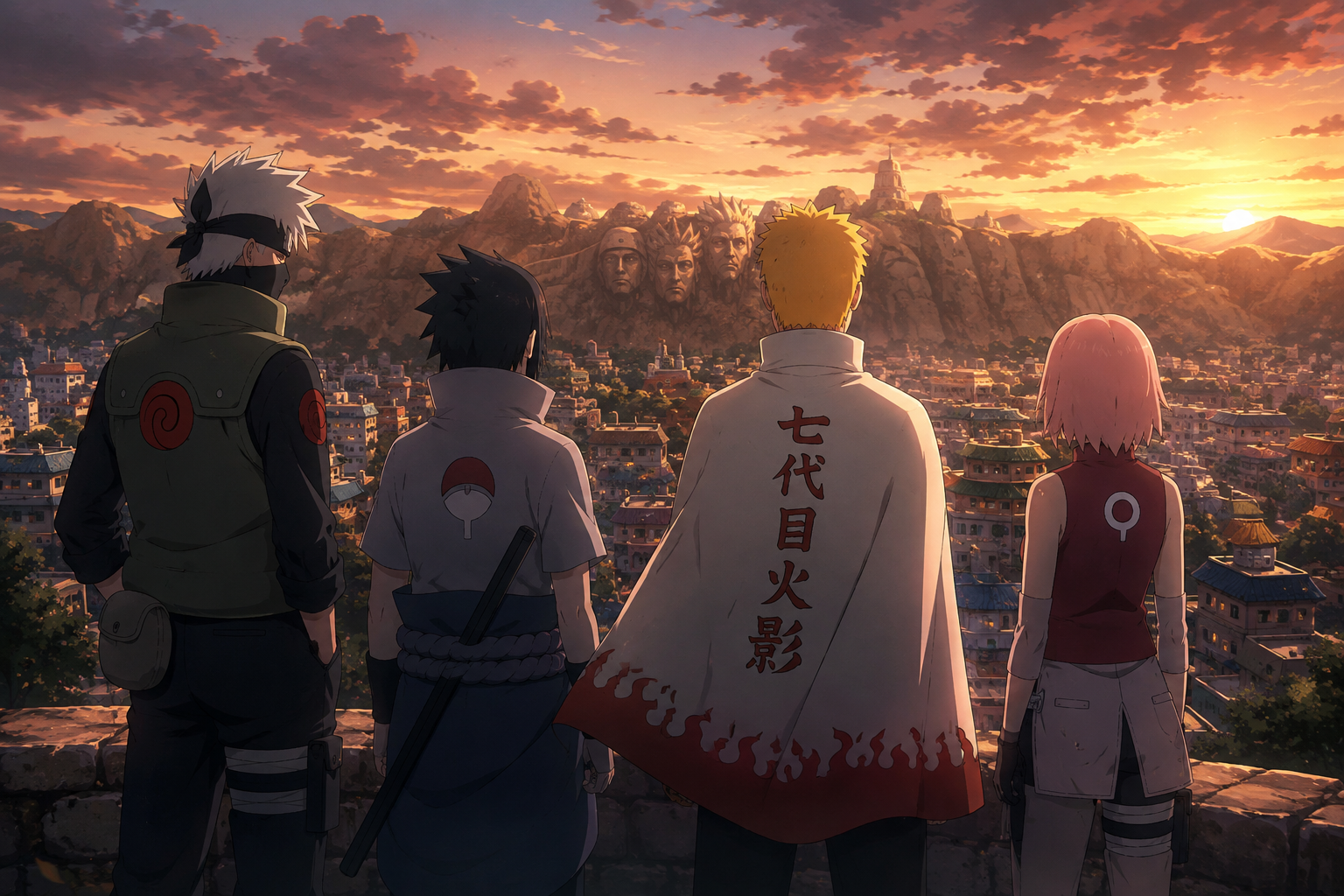
Hidden Villages
Countries, daimyō, Kage, military labor, village rivalry, and the unfinished politics hiding beneath hometown loyalty.
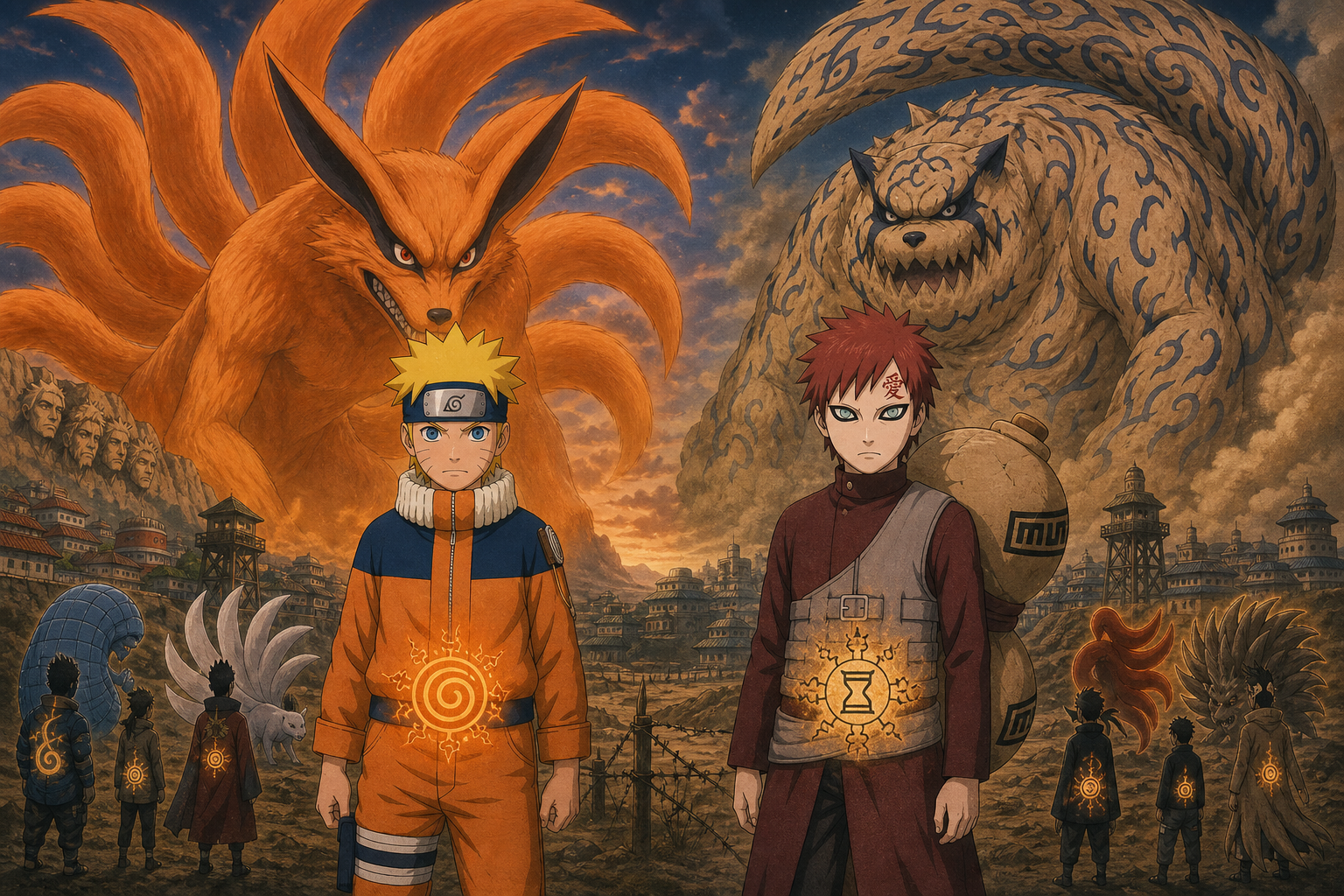
Jinchūriki & Tailed Beasts
Hosts, seals, state weapons, stigma, relationships, and the people buried beneath military vocabulary.
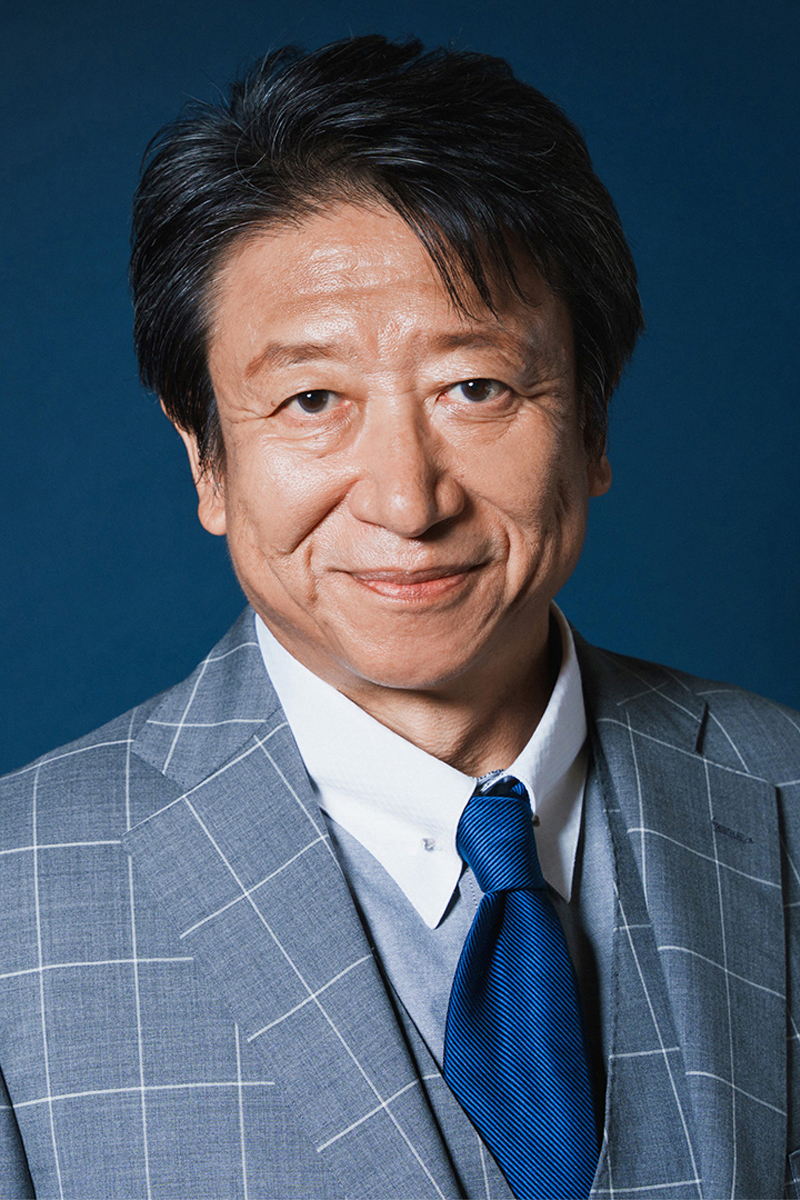
Japanese performances at the center of Naruto
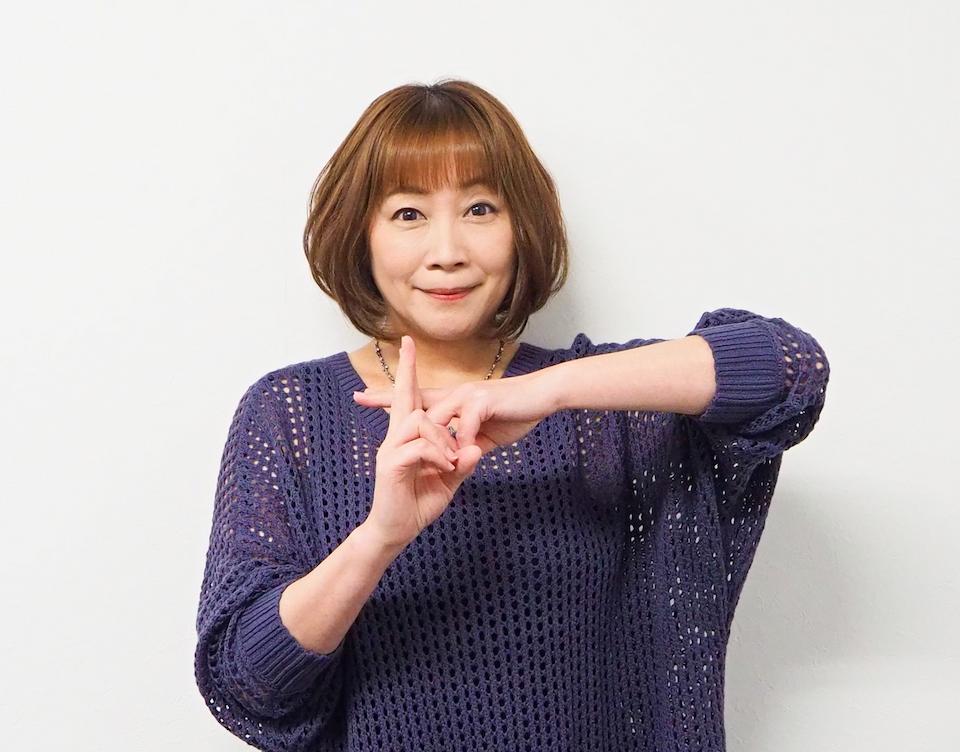
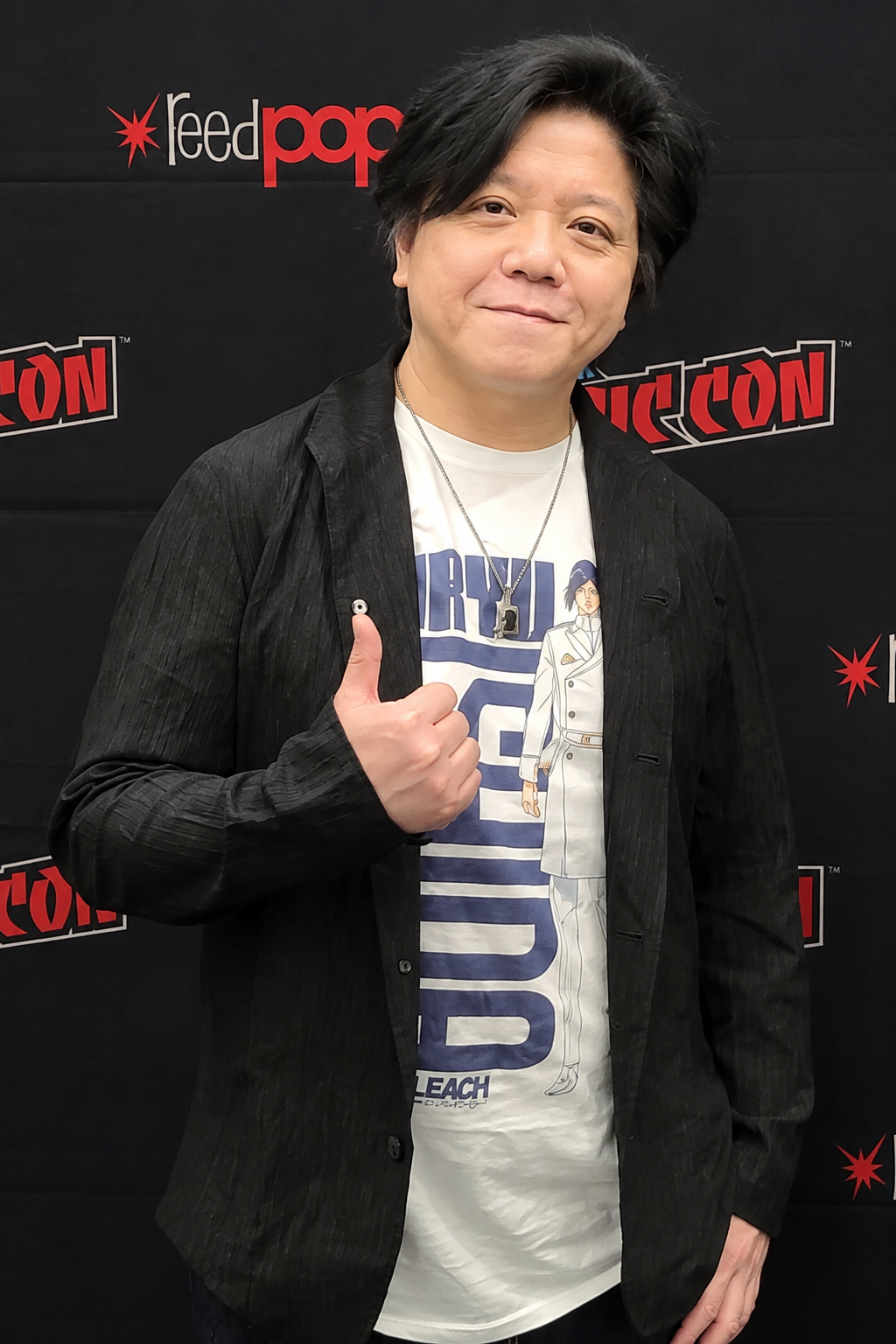
Real performers use real WordPress-hosted photographs. Their profiles connect verified career history to the Japanese scenes RaeRae can honestly hear and analyze.

Classified village decisions need receipts
Naruto Tea separates confirmed canon, reported information, adaptation detail, fandom reading, and RaeRae’s judgment before anybody turns a theory into village policy.
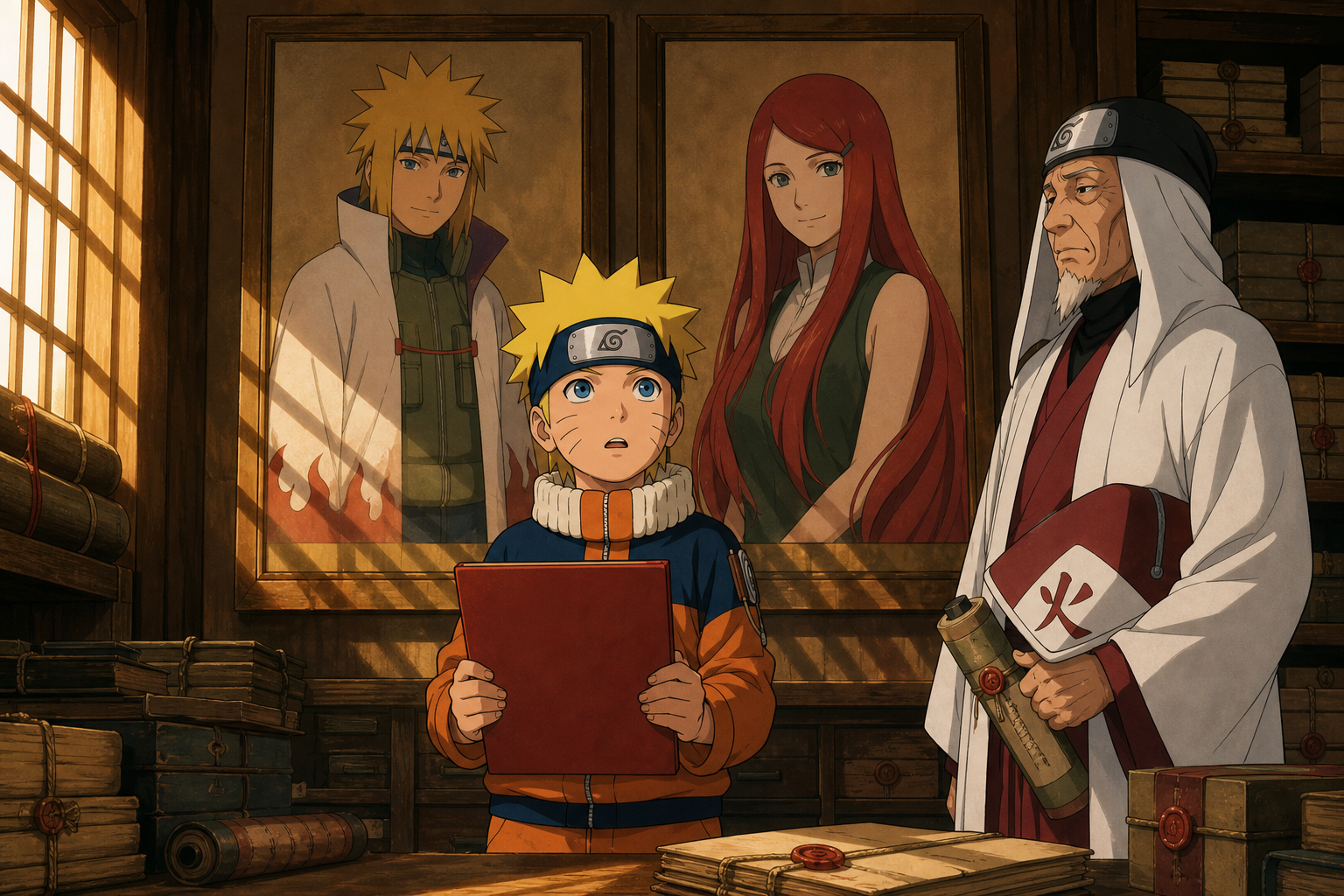
Who Knew About Naruto’s Parents?
A receipt-based timeline of the adults holding pieces of the classified truth.
This hub follows the people, then makes the institutions show their paperwork
Naruto is easy to reduce to fights, forms, rankings, and filler charts. Those tools help viewers find an episode. They do not explain why the episode hurts. CVM Sekai keeps the action visible while tracking the choices, labor, grief, village policy, and inherited obligations underneath it.
Start anywhere, but follow the labeled road. The episode directories preserve broadcast order. Reacts stay tied to their exact episodes. Arc guides gather consequences across several installments. Reviews judge complete works. Rants take a position when the village, clan, teacher, government, or fandom interpretation deserves an argument. Anime 101 guides explain systems without pretending a glossary is the same thing as analysis.
That separation matters. A React should reconstruct what happens and tell you what RaeRae thinks while the scene is still warm. A Review needs enough distance to judge pacing, adaptation, production, and payoff. A profile follows one person across the relevant record without turning them into a list of attacks. Tea keeps confirmed information, adaptation detail, reporting, theory, and editorial judgment from borrowing each other’s clothes.
The Japanese performance remains the primary performance lens. Voice-actor files use real local photographs and verified career information. Episode and character writing discusses the scenes the site can honestly support. No invented studio anecdote gets dressed up as access, and no performance claim appears just because a biography needs another paragraph.
The same boundary applies to canon. Manga, television anime, anime-original material, films, OVAs, novels, games, and Boruto-era developments can all matter without pretending they occupy one uninterrupted timeline. Each page should tell you which record supports the claim before the analysis begins swinging.
Naruto wins when recognition becomes responsibility
Naruto’s childhood makes recognition feel like the finish line. If the village sees him, the loneliness will end. The story grows up when being seen becomes the beginning of a harder obligation. Naruto learns people’s names, hears the histories attached to their anger, and keeps demanding choices that do not hand the same wound to another child. He does not succeed because forgiveness magically reforms every institution. He succeeds because relationship gives him leverage that domination never earns.
Sasuke keeps the argument from becoming comfortable. Sakura keeps labor, study, and medical responsibility inside a story addicted to inherited power. Kakashi shows what happens when a gifted child survives every system adults call necessary. Gaara, Nagato, Obito, Kurama, Killer B, and the next generation keep testing whether understanding harm means excusing the person who reproduces it. It does not. Compassion without accountability is sentiment. Accountability without history becomes another excuse to punish the easiest body in reach.
The CVM Sekai promise for this library
Every published Naruto-family reference should lead somewhere visible, labeled, and useful. Posts appear as image cards instead of disappearing into long text lists. A card uses the same canonical local image as the destination’s featured image and hero. Character cards say Open profile. Directories, reviews, Reacts, Rants, Tea, and guides say Read More. Images keep their own colors; the page supplies readable contrast around them. The writing stays human, opinionated, researched, and willing to say when canon, adaptation, or fandom did not finish the job.
This hub is the front door, not a substitute for the rooms. Use the routes above to move from franchise overview to episodes, arcs, characters, editorials, lore, and performances without losing chronology or context. Naruto, Shippuden, and Boruto share history. They do not need to share one undifferentiated pile.