
Three generations. One ninja world that keeps sending children the bill.
Follow the major arcs across Naruto, Naruto: Shippuden, and Boruto. Every route keeps the animated series, episode range, story consequence, and deeper reading together, with pictures because nobody came here to stare at a spreadsheet wearing lipstick.
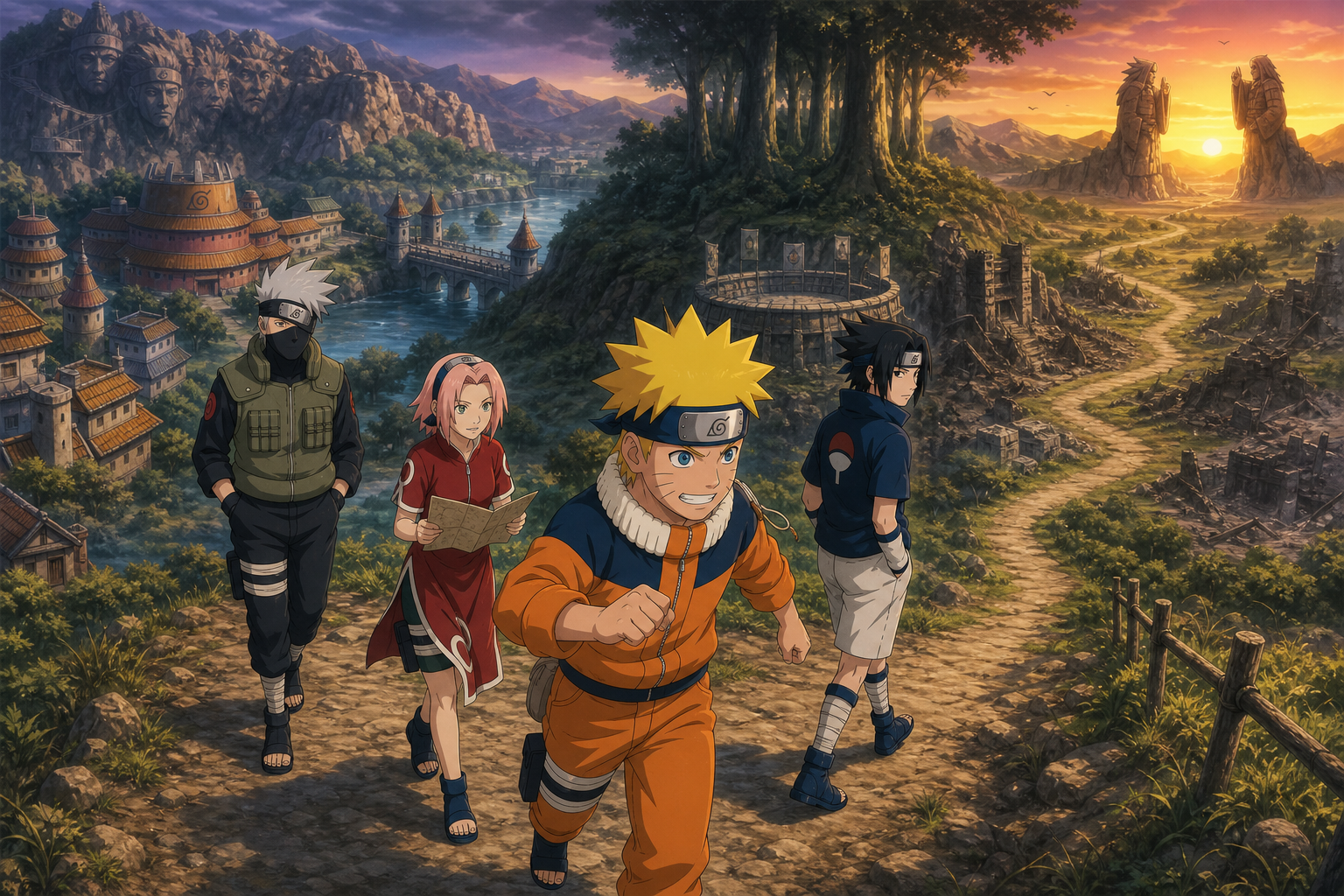
Pick the generation, then follow the damage
These are not three copies of the same coming-of-age story. Original Naruto builds the wound, Shippuden makes the wider world answer for it, and Boruto asks what peace does to children raised beneath heroic names.
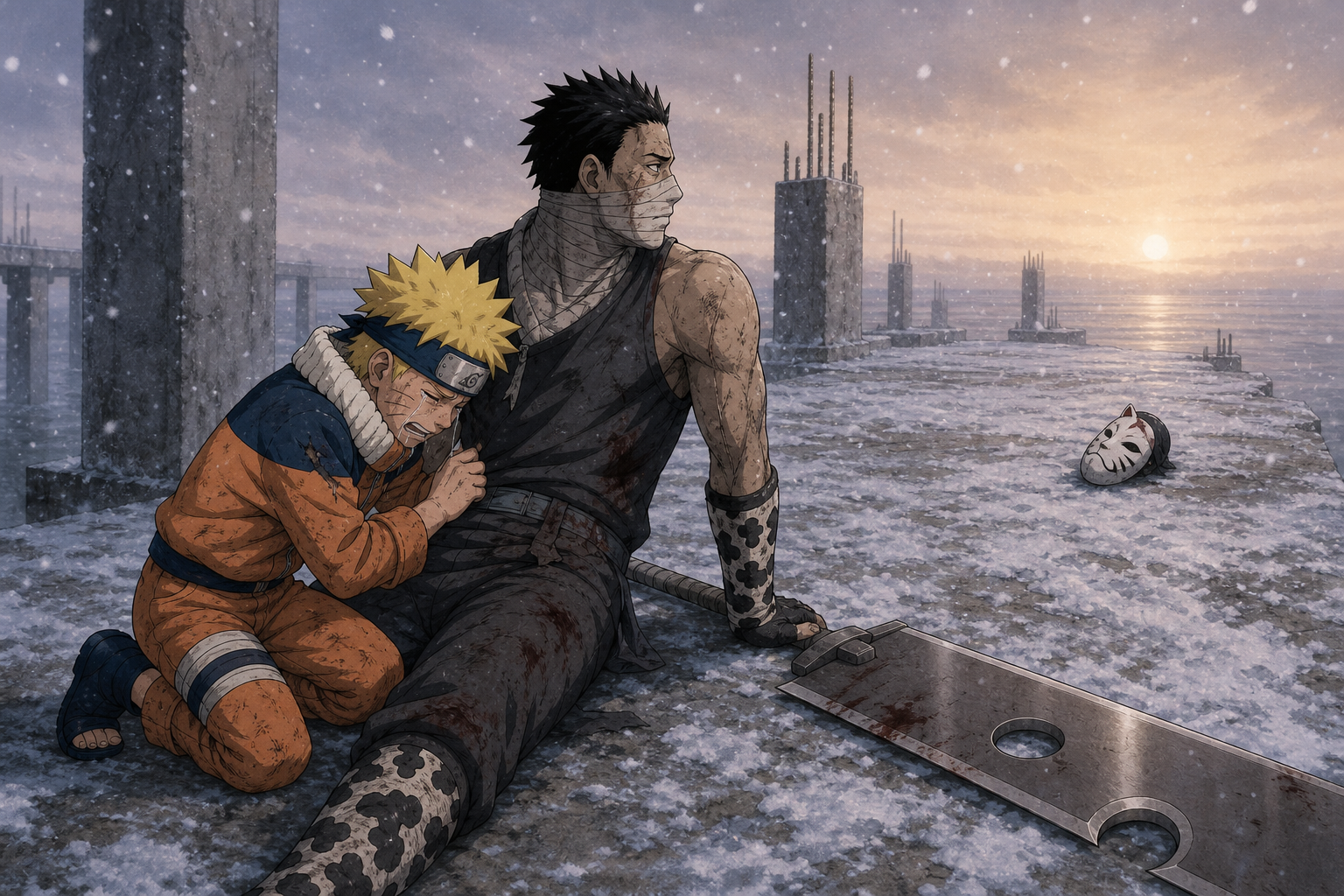
Land of Waves
A bridge mission exposes corporate occupation, child soldiers, mercenary labor, and the first people who force Naruto to ask whether shinobi are human beings or tools.
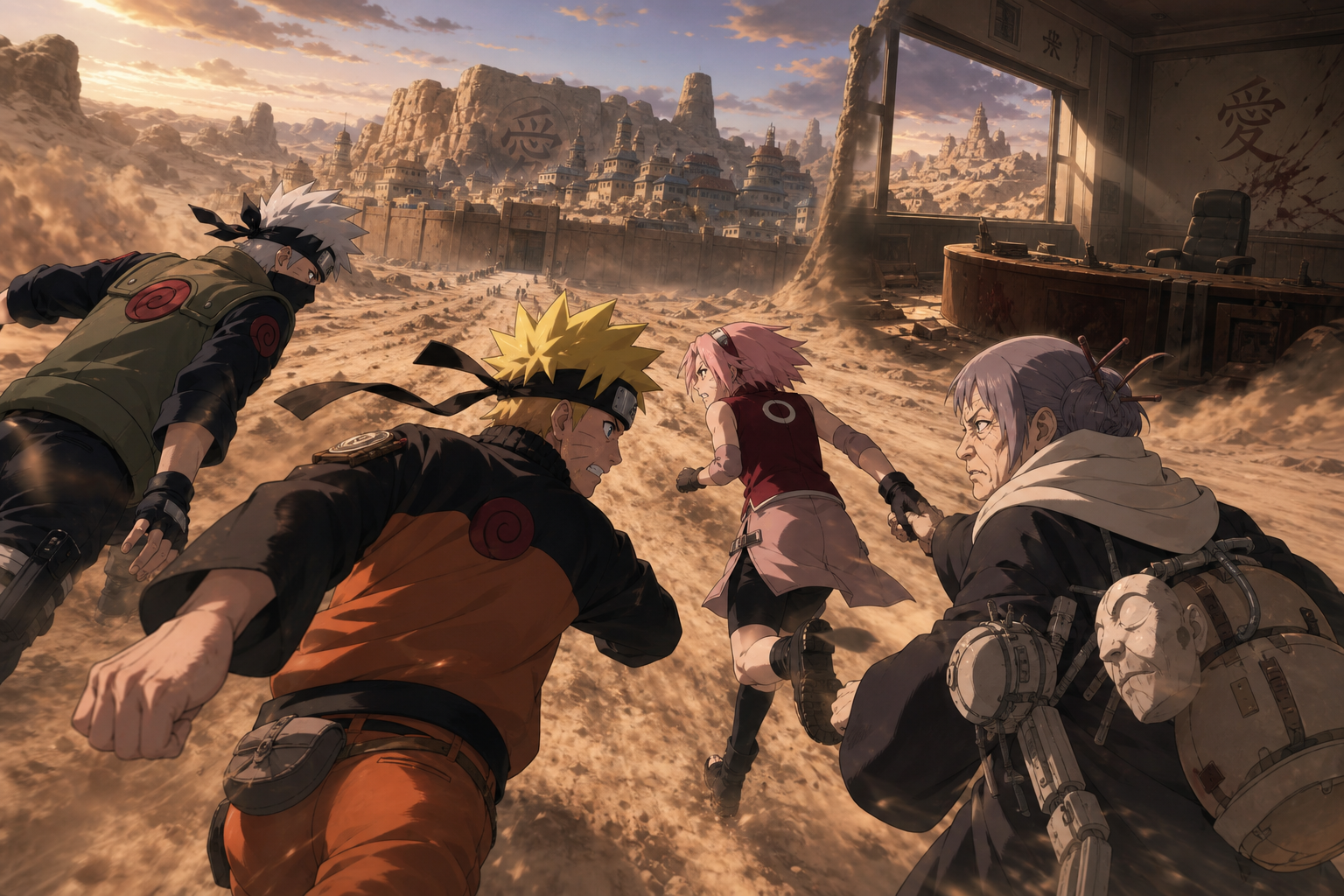
Kazekage Rescue Mission
Gaara is no longer the lonely weapon Naruto once fought. He is Kazekage, which means Akatsuki can turn one abduction into a political crisis and a very personal warning.
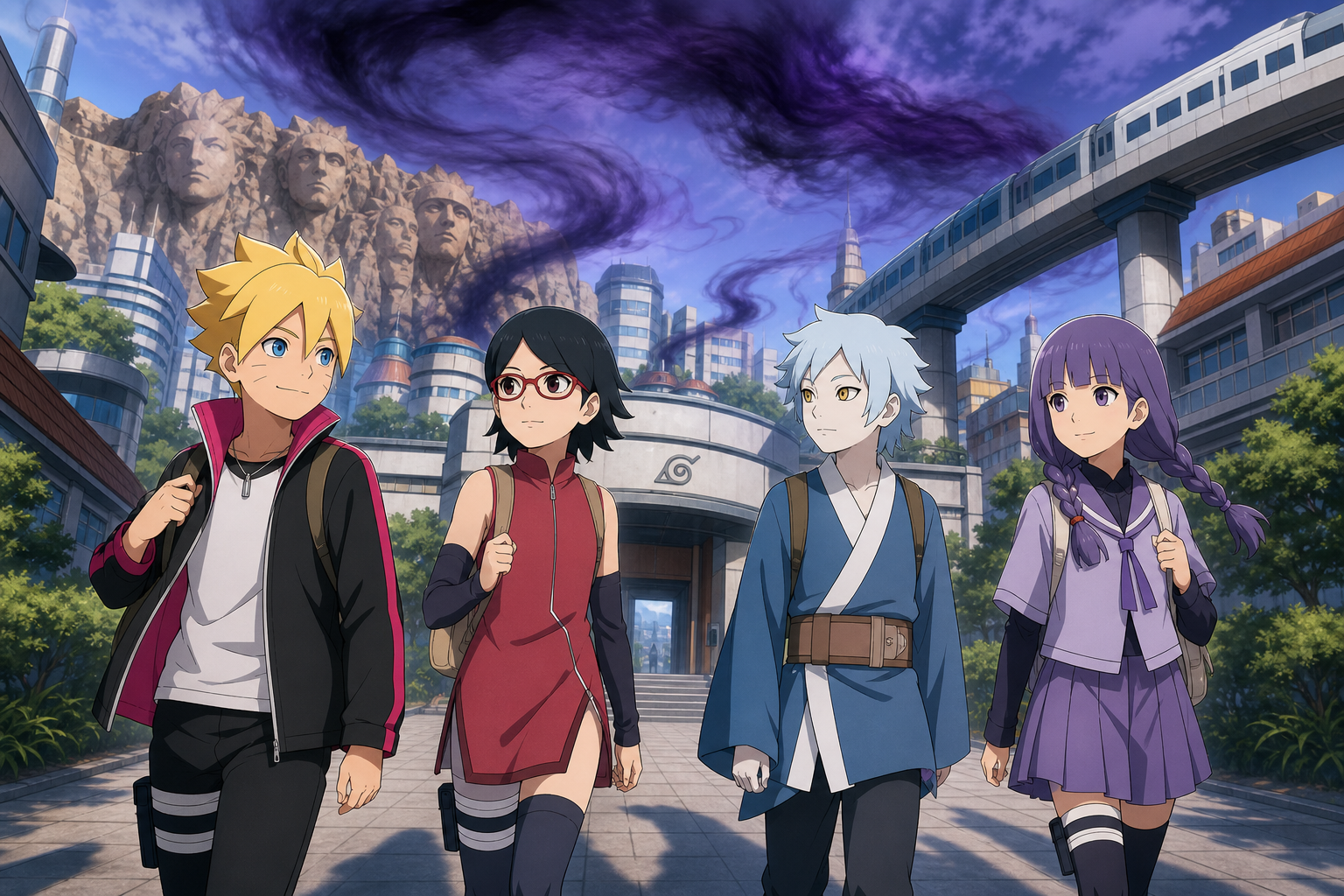
Academy Entrance Arc
Modern Konoha has trains, screens, peace, and children who still inherit the emotional mess adults failed to clean up. The Ghost incidents make that contradiction visible.
Land of Waves is where the cute ninja premise gets its first invoice
Tazuna lies about the mission because Gatō’s monopoly has made honest protection unaffordable. That detail matters. Team 7 does not stumble into random evil. They enter an economy where transport, labor, food, and violence have all been bent around one wealthy man’s control.
Zabuza and Haku then drag the shinobi system’s favorite lie into daylight: calling a person a tool does not stop that person from loving, grieving, choosing, or being exploited. Naruto’s rage is not abstract morality. He is looking at a possible version of himself and Sasuke.
The bridge becomes more than scenery. It is public infrastructure, collective resistance, and proof that a community can build a route out of isolation. The arc earns its place as Naruto’s first great story because every fight changes what Team 7 thinks a mission is for.
The Kazekage Rescue Mission makes Gaara’s survival political
Shippuden opens by showing the result of an argument original Naruto only began. Gaara has become Kazekage, not because his childhood stopped mattering, but because he decided power could protect the village that once treated him as a weapon.
Akatsuki’s attack turns that victory into a target. Deidara does not merely defeat Gaara. He exploits Gaara’s duty to protect civilians, while the extraction ritual treats a jinchūriki’s body as storage that can be emptied and discarded.
Sakura and Chiyo’s battle with Sasori gives the arc its sharpest answer. Skill is inherited, taught, revised, and shared across generations. Chiyo cannot undo Suna’s institutional sins, but she can decide what her remaining life repairs. Sakura is not standing behind the boys waiting for relevance. She is diagnosing poison, reading mechanisms, and helping defeat one of Akatsuki’s most dangerous members.
Gaara’s return does not erase the cost. It proves that communal grief can become responsibility instead of spectacle. That is the emotional contract Shippuden makes with the audience before the larger war begins.
The Academy Entrance Arc asks what peace forgot to teach
Boruto enters an Academy built in the peaceful village Naruto helped create. That should make childhood easier. Instead, the arc shows how peace rearranges pressure rather than deleting it. Technology accelerates life, famous parents cast long shadows, and adults mistake safety for emotional attention.
Boruto’s resentment toward Naruto is not proof that he is spoiled beyond repair. It is the complaint of a child whose father belongs to the village in public and keeps disappearing from the family in private. Naruto’s labor matters. So does the cost his family pays for it. Both facts can sit at the same table.
The Ghost incidents turn buried resentment into visible danger, while Sumire’s story links the new generation to violence inherited from the old one. Sarada, Mitsuki, Shikadai, Chōchō, and the wider class also establish that Boruto is an ensemble, not one famous surname doing a sequel victory lap.
The arc’s best move is refusing to pretend modern Konoha has graduated from consequence. The buildings changed. The children are still carrying adult history into class.
The 220-episode spine
Team 7 Forms
The bell test exposes the difference between obeying a rule and understanding the people a mission depends on.
Full Survival Test arc →Chūnin Exams
Promotion, clan politics, predators, underdogs, and traumatized children collide inside a tournament that keeps becoming a war preview.
Full Chūnin Exams arc →Konoha Crush
The exam becomes cover for invasion, forcing village leadership and jinchūriki weaponization into the same public disaster.
Full Konoha Crush arc →Search for Tsunade
Konoha needs a Hokage, Naruto needs a teacher, and Tsunade needs a reason to touch the grief she has spent years avoiding.
Full Search for Tsunade arc →Sasuke Recovery Mission
Team 7 breaks as Sasuke chooses power over a bond he experiences as both rescue and chain.
Full Sasuke Recovery arc →Anime-original road and departure
Rotating missions widen village life before Naruto leaves with Jiraiya and the original series hands its unresolved promises to Shippuden.
Browse all 220 episodes →Arc labels help readers. They are not sacred law.
Databases split and merge smaller missions differently, especially anime-original material. CVM Sekai keeps episode numbers and series labels visible so a naming disagreement never strands anybody between stories.