
Anime Binge
I watch a lot of animation, and apparently I also need to know who wrote it, where the story came from, what changed in the adaptation, why a character made that decision, and whether everybody else noticed the same thing I did.
Japanese anime makes up a lot of this section, but CVM Sekai also covers Chinese donghua, Korean animation, Western animation, animated movies, and other work that belongs in the same conversation. When a story began as a manga, light novel, game, or another source, I keep that history connected to the animated world instead of splitting the same story into separate corners of the site.

Find the world you came for
Every anime or animated property I cover gets its own home on CVM Sekai. Naruto can grow into hundreds of episodes, movies, characters, and side stories while a standalone movie may only need one focused mini-hub. Both belong in the same Anime Binge world.
Reviews, Reacts, and Rants
These three sections do different jobs. Reviews look at finished movies, seasons, series, and larger bodies of work. Reacts follow individual episodes while I am still moving through the story. Rants start wherever the problem starts, which means one episode, an adaptation choice, a trope, a fandom argument, or an entire industry habit can all end up there.
 RaeRae Reviews
Reviews come after I have enough of the work to judge the whole thing. Movies, completed seasons, full series, and franchise retrospectives belong here. I look at the story, characters, pacing, animation, cultural context, production choices, and whether the ending earned what the story asked me to feel.
 RaeRae Reacts
Reacts are episode by episode. I recap what happened, follow the characters, look at what the episode is setting up, and write from the knowledge available at that point in the story. If one of my theories turns out to be completely wrong three episodes later, the evidence stays on the site.
 RaeRae Rants
Rants do not need to belong neatly to one episode or even one series. Sometimes the problem is an adaptation decision. Sometimes the same trope keeps showing up everywhere. Sometimes fandom or the industry itself gives me enough material, and then I start collecting receipts.

Things the story assumes you already know
Anime 101 covers the culture, terminology, mythology, history, genres, production language, fandom vocabulary, and story systems that can make a scene confusing when nobody stops to explain them.
Some topics belong to one series. Others show up across anime, donghua, manga, light novels, games, and other parts of CVM Sekai. I explain the subject once, keep the cultural context intact, and connect that guide back to the worlds where the information matters.
Browse Anime 101 →RaeRae Reviews
Movie Reviews, Season Reviews, Series Reviews, and larger retrospectives. Each card tells you what work I reviewed and what kind of review you are opening before you click.
- Naruto: The Original Series Review
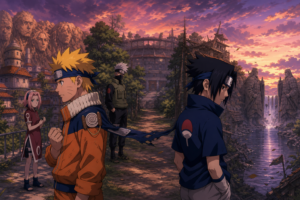 Naruto’s original 220 episodes reviewed with receipts: Team 7, major arcs, filler, Japanese performances, music, politics, flaws, and lasting impact.
 - Evangelion: 3.0+1.0 Thrice Upon a Time Review
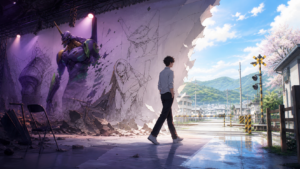 Evangelion: 3.0+1.0 Thrice Upon a Time closes the Rebuild continuity through Village Three, Gendo’s confession, the Anti-Universe, and Shinji’s final choice.
 - Evangelion: 3.0 You Can (Not) Redo Review
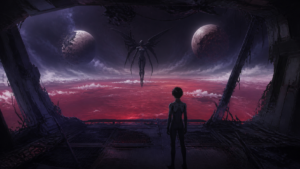 Evangelion 3.0 wakes Shinji fourteen years late and turns WILLE, Kaworu, the spears, and Fourth Impact into a brutal argument about shame, secrecy, and the fantasy of undoing harm.
 - Evangelion: 2.0 You Can (Not) Advance Review
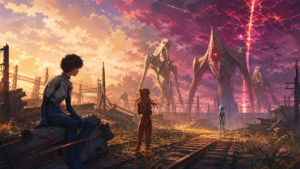 Evangelion: 2.0 You Can (Not) Advance breaks the remake route through Asuka, Mari, Rei, Eva-03, Zeruel, Near Third Impact, and Shinji’s dangerous belief that love can overpower a system.
 - Evangelion: 1.0 You Are (Not) Alone Review
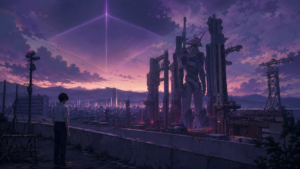 Evangelion: 1.0 You Are (Not) Alone rebuilds the opening six episodes into a cinematic argument about coercion, isolation, national labor, and a continuity already changing beneath Shinji.
 - Evangelion: Death & Rebirth Review
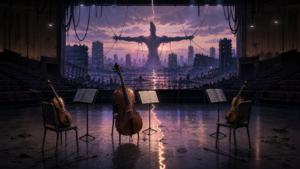 Evangelion: Death & Rebirth turns the television series into a musical memory trial, then delivers half of a promised theatrical ending. RaeRae reviews the recap, production history, symbolism, controversy, criticism, and current viewing route.
RaeRae Reacts
Episode Reacts stay attached to the series they belong to. Naruto, Naruto: Shippuden, and Boruto need their own series identities even though all three live inside the larger Naruto world. Simpler series do not need extra labels when the name already tells you where you are.
- The Summoning Jutsu: Wisdom of the Toad Sage!
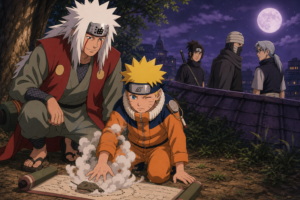 Naruto’s tiny summons expose the gap between access and control while Hayate discovers a conspiracy he may not survive long enough to report.
 - Fairy Tail Episode 79 React: Fairy Hunting
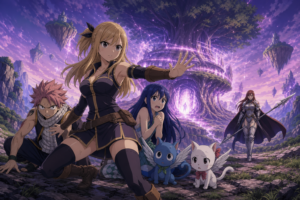 RAERAE REACTS • FAIRY TAIL EPISODE 79 Fairy Tail Episode 79 React: Fairy Hunting Edolas Fairy Tail survives as an outlawed mobile guild while familiar faces… Read more: Fairy Tail Episode 79 React: Fairy Hunting
 - Fairy Tail Episode 78 React: Edolas
 RAERAE REACTS • FAIRY TAIL EPISODE 78 Fairy Tail Episode 78 React: Edolas Edolas treats magic as a limited resource, other worlds as supply closets, and… Read more: Fairy Tail Episode 78 React: Edolas
 - Fairy Tail Episode 29 React: My Resolve
 RAERAE REACTS • FAIRY TAIL EPISODE 29 My Resolve Lucy returns home to say no in person, then walks back toward the people who noticed she… Read more: Fairy Tail Episode 29 React: My Resolve
 - Long Time No See: Jiraiya Returns!
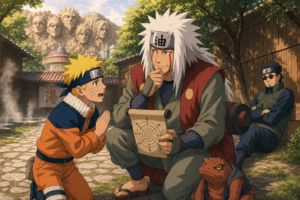 Jiraiya arrives as a legendary teacher with terrible boundaries, then finds the hidden seal disrupting Naruto’s chakra. Episode 53 makes the joke carry a serious consequence.
 - Fairy Tail Episode 28 React: Fairy Law
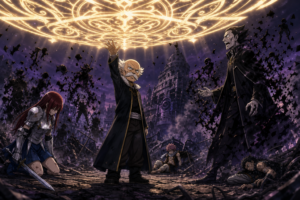 RAERAE REACTS • FAIRY TAIL EPISODE 28 Fairy Law Makarov saves Erza first, then uses judgment Jose was never disciplined enough to hold. Makarov ends the… Read more: Fairy Tail Episode 28 React: Fairy Law
RaeRae Rants
Some Rants belong to a specific anime. Others start with a trope, adaptation problem, fandom argument, production choice, or industry practice that crosses several worlds. The headline and short description tell you what I am arguing without forcing every Rant into a franchise label that does not belong there.
- Surveillance Does Not Become Safety Because the State Says So
 Ghost in the Shell proves surveillance can catch a threat without proving surveillance is safety. RaeRae follows Section 9 into power, privacy, and public accountability.
 - A New Mind Is Not Government Property
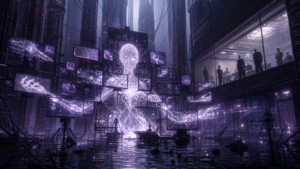 Ghost in the Shell asks whether a consciousness born inside a state project belongs to the government. RaeRae follows the Puppet Master’s demand to become a legal subject.
 - A Hacked Memory Cannot Give Consent
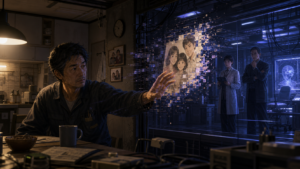 Ghost in the Shell turns a hacked memory into a consent crisis. RaeRae follows the garbage man’s counterfeit family into law, medicine, work, and surveillance.
 - Your Employer Should Not Own Your Body
 Ghost in the Shell makes the employer-owned body look sleek. RaeRae follows the contract underneath the chrome and asks whether Motoko can ever leave Section 9 freely.
 - The Cure Is Not Consent
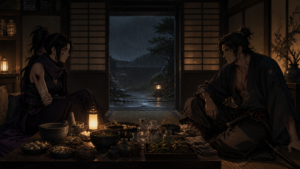 Dakuan poisons Jubei and turns the antidote into a labor contract. RaeRae examines coerced service, medical dependence, Kagero’s weaponized body, and why treatment must restore choice before anybody asks for obedience.
 - Ninja Scroll Did Not Make Anime Adult
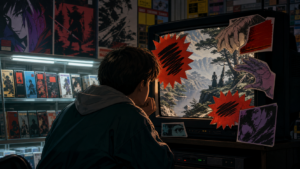 Ninja Scroll helped VHS distributors sell graphic content as proof that anime had become adult. RaeRae examines what the marketing opened, what the shock pitch flattened, and why difficult animation deserves better than a fandom hazing ritual.