RaeRae Reacts · One Piece Episode 1178
Robin and Gaban Answer Sommers With History, Fury, and One Glorious Entrance
One Piece Episode 1178 React follows Robin attacking Sommers, Ronja’s devastating courage, Sommers rebuilding himself, and Gaban arriving with the force Elbaf needed.
One Piece Episode 1178 React: Robin hears Sommers threaten children and Ohara’s surviving history, then answers with her whole body. Episode 1178 understands exactly why that choice feels both triumphant and terrifying. She tries to drive him beyond the range controlling the children, accepting a brutal amount of risk because the archive and the kids cannot become separate causes in her mind. Sommers turns even dismemberment into arrogance by pulling himself back together. Ronja gives the crisis its most painful human scale. Then Scopper Gaban arrives, and the episode finally lets Elbaf exhale through a hit animated with real appetite.
My bottom line on Episode 1178
Robin owns the emotional center, Ronja owns my heart, and Gaban owns the loudest entrance. The episode works because spectacle arrives after sacrifice has already defined the stakes. A gorgeous attack feels earned when viewers know exactly whom the blow protects.
Sommers remains frightening even while being torn apart because regeneration turns punishment into delay. Robin can outthink his range, but she cannot assume ordinary damage will finish him. Gaban changes the pressure without magically simplifying the hostage crisis.
Robin chooses action before grief can freeze her
The threat to Elbaf’s library reaches straight into Robin’s oldest wound. She could have been written as stunned or rescued from her own memory. Instead, she acts.
That agency matters. Ohara shaped Robin, but trauma does not reduce her to a child waiting for somebody stronger. The woman who survived now protects other children and the knowledge adults tried to carry toward her future.
Her plan targets the control radius
Robin does not strike Sommers only because he deserves pain. She tries to move his body away from the children so his ability can no longer hold them within reach.
The tactical thinking keeps anger from becoming empty spectacle. Robin understands that the rescue condition matters more than landing the prettiest attack. Every limb she manifests serves a practical answer to a cruel system.
The apparent sacrifice is hard to watch
Robin’s commitment looks frighteningly close to self-destruction. She places herself in the path of damage because waiting would leave children marching and history exposed.
I cheered and worried at the same time, which feels correct for Robin. Her calm can make terrible risk look reasonable. Friends should still recognize when courage has started borrowing too heavily from a survivor’s belief that her own body is expendable.
Ohara gives the attack weight without taking over
The episode does not need to replay Robin’s entire past. A few emotional connections let longtime viewers bring Ohara into the present while the immediate rescue continues moving.
That economy respects the audience. The history matters because Robin applies the lesson now. Memory becomes action instead of a decorative flashback inserted to demand tears on schedule.
Sommers treats pain like a temporary inconvenience
His composure after massive damage keeps the Holy Knights from feeling like ordinary opponents with fancy titles. He can afford to mock resistance because his body refuses the consequence everybody expects.
That confidence is infuriating in the useful way. A villain becomes scarier when a satisfying hit fails to settle the account. The audience receives the thrill and then has the receipt snatched back.
Regeneration turns body horror into policy
Watching Sommers rebuild himself is more than a flashy ability reveal. His body behaves like the institution behind him, absorbing violence while assuming everybody else remains disposable.
The skeletal imagery gives that arrogance texture. Bones and flesh returning to place make invulnerability look unnatural rather than holy. Power wants reverence, but the animation lets us see something grotesque underneath.
The animation sells every ugly stage of recovery
The sequence does not skip from damage to a clean restored body. Movement lingers through reconstruction, giving weight to an ability that could have felt like a cheap reset.
That production choice matters because recovery becomes an event with its own dread. Robin’s effort remains visible even when Sommers survives. The attack happened, the cost happened, and his return feels obscene because the episode refuses to erase either.
Ronja gives the hostage game a child’s voice
Ronja is not valuable merely as somebody the adults must save. Her words reveal a child trying to understand an impossible situation and deciding what courage might demand from her.
The emotional blow comes from how unfair that reasoning is. No child should need to calculate whether falling is better for everyone else. Sommers created the conditions, so his cruelty sits behind every brave syllable.
Her courage is not permission to abandon her
A brave child can make adults feel proud, but pride must never become an excuse to accept her sacrifice. Ronja’s willingness sharpens the duty around her.
One Piece often lets young characters speak with astonishing resolve. The best response is not to romanticize their danger. Adults must build a world where such courage receives rescue, care, and a future.
The children remain people, not a countdown clock
The episode continues giving the hostages expressions, names, and choices inside the limits imposed on them. Their presence prevents the crisis from becoming a generic deadline before the next fight.
Every tactical move therefore has a face attached. Robin’s range calculation and Gaban’s timing matter because a mistake reaches particular children. Specificity keeps the action honest.
Nami understands the logic of hostages
Nami’s reaction carries history whether the script names Arlong, Caesar, or any earlier captor. She knows villains absolutely use vulnerable people to control stronger ones.
The anime wisely lets her sound experienced rather than strangely surprised by the concept. Character continuity often lives in small line choices. Nami should recognize this cruelty because recognition was carved into her childhood.
Franky keeps the rescue physical
Franky’s presence anchors the episode in practical action. While legends, history, and impossible powers dominate the conversation, somebody still has to move, shield, build, and react in the immediate space.
That balance is one of the crew’s strengths. One Piece can discuss a century of erased history, then remember that a friend needs help right now. Franky makes urgency feel muscular and local.
Gaban arrives at the exact emotional temperature
By the time Gaban enters, viewers have watched Robin risk everything, Ronja confront terror, and Sommers reject ordinary consequences. The episode has earned a release.
His arrival works because timing transforms strength into relief. A powerful man appearing too early would steal Robin’s decision. Appearing now lets him answer a crisis she has already defined.
The entrance does not erase Robin’s work
Gaban delivers the blow people will clip and replay, but Robin created the opening and identified the real rescue problem. Her intelligence remains the spine of the sequence.
That distinction protects the scene from becoming a simple rescue of a helpless woman. Robin fights, plans, suffers, and changes the board. Gaban joins her answer rather than replacing her voice.
One hit carries decades of reputation
Scopper Gaban has lived in One Piece fandom as a name, silhouette, and promise for years. Episode 1178 finally gives that reputation movement.
The strike feels larger because the audience has waited so long to measure him. Thankfully, the animation brings enough speed and impact to meet the anticipation without drowning the rescue beneath legend worship.
The production team lets impact breathe
Good action is not only a pile of frames. The approach, contact, recoil, and reaction must tell viewers what changed. Gaban’s sequence understands that rhythm.
The result feels heavy rather than merely busy. Sommers has been treating bodies as disposable pieces. A clean, forceful counter finally interrupts his control of the scene and gives the audience a deserved shout.
Sakuga serves the story instead of pausing the story
The most polished movement arrives where emotional pressure peaks. Robin’s risk and Gaban’s response remain connected, so visual ambition carries narrative meaning.
I love animation flexing loudly when the flex has a reason. Pretty motion alone can become a demo reel. Here, every flourish says Elbaf is no longer listening quietly to Sommers set the terms.
History and the future become one cause
The official title pairs history with the future, and the episode earns that pairing. Books preserve what happened. Children decide what surviving knowledge can become.
Sommers tries to force a choice between those responsibilities. Robin and Gaban reject the premise through action. Protecting one without the other would leave Elbaf incomplete.
Elbaf’s legends must protect living people
Gaban carries enormous mythic weight, but the episode places that weight beside endangered children rather than inside a nostalgia museum. Reputation gains value through present responsibility.
That choice keeps the old generation relevant without handing them ownership of the story. A legend should not exist only for fan applause. A legend should know when somebody smaller needs the room changed.
The Holy Knights finally lose control of the tone
Sommers begins from smug certainty. Robin’s attack makes his body grotesque, Ronja makes his game morally unbearable, and Gaban turns his stage into a battlefield he cannot narrate alone.
Control has not vanished, but the emotional direction changes. The victims are no longer only responding to demands. They are creating new conditions, which is the first taste of freedom this nightmare game has allowed.
The episode still leaves dangerous questions open
Regeneration means the hit may not settle Sommers. Gunko, Killingham, the marching children, and the wider Holy Knight plan remain active. Gaban’s arrival changes the odds, not the entire structure.
That unfinished pressure is welcome. A weekly React should capture exhilaration without pretending the arc has delivered every answer. I can celebrate the entrance and keep both eyes on the children.
Episode 1178 is a React, not a Review
This response belongs to Robin’s decision, Ronja’s courage, Sommers’s regeneration, Gaban’s entrance, and the episode’s production choices. A Review must judge a complete movie, series, or resolved arc.
The distinction protects honest criticism. Weekly excitement can be intense and provisional. The final meaning of this rescue depends on consequences still ahead, so today’s receipt stays attached to today’s hour.
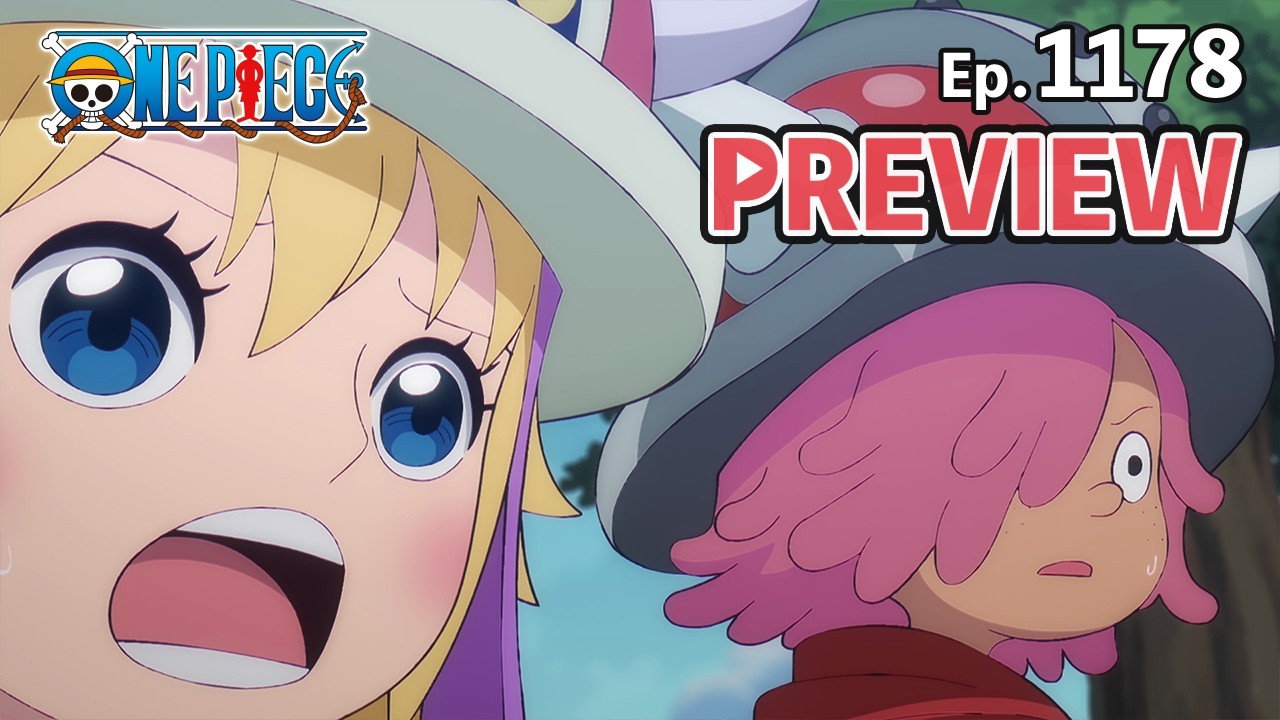
The official image belongs to this episode alone
The Episode 1178 preview frame is stored locally in WordPress with title, alt text, caption, description, and source metadata. One attachment supplies the feature, hero, directory card, and social image.
No other One Piece post reuses this art. The site’s visual system stays consistent while the picture remains specific to the episode, giving readers a recognizable card without forcing the image to dictate the page design.
What stays with me after the credits
Robin and Gaban also represent two different kinds of survival standing in the same fight. Robin survived an institution that wanted her language, memory, and very existence removed. Gaban survived an era whose legends have become stories for younger pirates. Neither person is useful here because fans recognize a famous name. They matter because experience becomes protection instead of entitlement. Robin reads the mechanism behind the hostage power. Gaban reads the moment when force can open space. Their choices complement each other without pretending age, reputation, or suffering automatically produces wisdom.
I keep returning to Ronja because every grand idea needs that grounding. History sounds noble until a child believes she should fall to save everybody else. Freedom sounds glorious until controlled feet keep carrying children toward danger. Legendary strength sounds thrilling until viewers ask whether that strength reached the vulnerable person in time. Episode 1178 keeps those questions inside the action, which prevents the entrance from becoming empty fan service. The applause has a destination. We cheer because somebody finally interrupts a system that demanded sacrifice from children and called the demand order.
The lingering concern is Robin herself. Her willingness to gamble her body makes emotional sense, but survival should give her more than another opportunity to volunteer for pain. The Straw Hats have spent years proving she is wanted, protected, and allowed to imagine a future. I want the story to honor that promise even while celebrating her courage. Let Robin be furious. Let her be brilliant. Let her throw hands, wings, and every impossible limb at the people threatening Ohara’s legacy. Then let her friends catch the part of her that still assumes she must pay the whole price alone.
Robin refusing Sommers’s false choice is the heart of Episode 1178. She fights for children and books because both carry lives the World Government keeps trying to classify as disposable. Ronja’s courage makes that principle hurt. Gaban’s entrance makes the room roar. I do not need to pretend the rescue is complete to enjoy the release. Sommers can rebuild his body, but he cannot rebuild the authority he had at the start of the hour. Robin exposed the limit behind his hostage control, and Gaban answered his smug performance with force that finally belonged to Elbaf’s side. The next episode still owes us safety for the children, consequences for the Holy Knights, and space for Robin to survive her own bravery. For now, history and the future have stopped waiting politely for permission.