RaeRae Reacts · One Piece Episode 1177
Sommers Turns Elbaf’s Children and History Into One Cruel Hostage Game
One Piece Episode 1177 React faces Sommers’s hostage demands, Brook’s refusal of Gunko, Robin’s Ohara wound, and Elbaf being ordered to choose between its children and its history.
One Piece Episode 1177 React: Sommers does not merely threaten Elbaf in Episode 1177. He stages cruelty as a public negotiation and expects frightened parents to finish the violence for him. The children are still walking toward danger, the nightmare beasts still wear familiar faces, and every adult now hears the price of resistance. Meanwhile, Gunko tries to reduce Brook to a collectible voice from her past. Brook answers with the kind of loyalty that makes a silly skeleton suddenly feel ten feet taller. Then Sommers drags the school, the library, and Ohara’s surviving knowledge into his demand. Robin does not need a speech to tell us what that means. Her face carries an entire destroyed island.
My bottom line on Episode 1177
This hour works because every threat attacks a relationship before attacking a body. Parents see beloved faces in the monsters. Brook hears admiration shaped like ownership. Robin hears scholarship treated as bargaining material. Sommers knows that fear becomes more useful when victims must name what they cannot bear to lose.
The episode also refuses to let the rescue settle into a simple power contest. Strength matters, but brute force cannot untangle sleeping children, nightmare creatures, thorns, arrows, and a public ultimatum at the same time. Elbaf needs judgment under pressure, which is exactly where the Holy Knights expect panic to do their work.
Sommers makes cruelty sound administrative
Sommers speaks like somebody announcing policy rather than threatening children. That polished delivery is the poison. He turns kidnapping, cultural destruction, and forced recruitment into terms on a list, as if the giants should appreciate receiving instructions.
One Piece has always understood that institutional violence often arrives wearing calm language. Sommers does not rant because he believes authority already belongs to him. His composure asks everyone else to accept the World Government’s appetite as common sense. I wanted somebody to knock that certainty sideways immediately.
The broadcast turns fear into a weapon
By addressing Elbaf publicly, Sommers makes every listener part of the hostage scene. No parent can privately manage terror when the same demand echoes across the island. The broadcast spreads helplessness faster than any blade.
Public pressure also protects the bully. If Jarul hesitates, everybody watches. If one family panics, everybody hears. Sommers wants grief to break solidarity before the Holy Knights need to win a real battle. That tactic feels uglier than a flashy attack because frightened people are being drafted into enforcing his deadline.
Ten children become a whole nation’s wound
The captured group may be small beside Elbaf’s population, but the episode never treats those children as numbers. Each sleeping body represents a family, a future, and a trust the adults believed their homeland could protect.
That scale matters. Saving history while abandoning children would poison whatever history survives. Saving children by surrendering the island’s autonomy would teach them that terror deserves obedience. The impossible choice is designed so either answer damages the people Elbaf hopes to remain.
Collun tries to stand with the warriors
Collun being counted among the endangered children sharpens the crisis because courage does not erase childhood. He can want to be treated as a warrior and still fear the monsters coming down the path. Both feelings belong in the same small body.
I loved that the episode leaves room for bravery without turning fear into failure. Elbaf praises warriors so loudly that a child could mistake trembling for shame. Collun’s presence quietly argues that protection is not disrespect. Young courage deserves adults willing to carry the heavier part.
The nightmare creatures know exactly where to hurt
Killingham’s monsters are not random beasts. Familiar faces make every defensive move hesitate. A giant can swing at a creature, but recognition interrupts the arm. That pause gives the nightmare power beyond teeth or size.
The ridiculous details around food, drink, and domestic memory keep the scene painfully One Piece. Comedy does not cancel fear. The jokes prove these adults know the people being imitated, which makes every distorted face more invasive. A nightmare borrowed from love leaves a different bruise.
Elbaf’s adults are forced to distrust their eyes
The giants are used to meeting danger at full size. Here, perception becomes unreliable. A beloved face may hide an enemy construct, while a sleeping child may walk straight past every shouted warning.
That confusion steals the confidence usually attached to Elbaf. The island’s scale cannot solve a threat that manipulates recognition and command. I appreciate the reversal because giant strength remains impressive without becoming an automatic answer to every kind of violence.
Gunko hears Soul King instead of Brook
Gunko’s fascination with Soul King begins with celebrity, not personhood. She recognizes a famous voice and immediately talks as if admiration gives her a claim. Brook becomes an object from her private history instead of a man choosing where he stands.
The scene is funny for half a breath because Brook meeting an intense fan should be perfect comedy. Then possession enters the conversation, and the laugh catches in my throat. Celebrity worship becomes another version of the Holy Knights’ worldview: desire is treated as permission.
Brook refuses to become somebody’s property
Brook’s answer lands because his loyalty is chosen. Luffy did not purchase his music or command his gratitude. The Straw Hats gave him companionship after decades of loneliness, and Brook built his second life beside them.
Gunko offers status through ownership. Brook answers with honor through belonging. Those ideas sound similar only to people who cannot understand consent. His refusal protects more than his captain’s name. He protects the right to decide what his restored life means.
A skeleton talking about death still hits
Brook saying he would rather die than betray that bond could have sounded routine after everything he has survived. Instead, the line carries the weight of a man who already spent years alone with death as his only company.
His willingness is not cheap bravado. Brook knows the cost better than nearly anyone aboard the Sunny. That history turns loyalty into something deliberate and a little heartbreaking. Gunko hears a defiant musician. Fans hear Laboon, the Rumbar Pirates, and a promise still moving across the sea.
Gunko cannot process a refusal she cannot redirect
Her power draws paths across the battlefield, so Brook’s moral refusal becomes especially satisfying. She can force motion, bend attacks, and determine routes, yet she cannot make his devotion point somewhere else.
That limit is the scene’s real victory even before the physical exchange finishes. Authoritarian power hates an inner life outside its reach. Brook standing firm proves a commanded body and a convinced heart are not the same prize.
The attack after Brook’s answer exposes Gunko
Gunko responds to rejection with violence because admiration was never generous. She liked the version of Brook that might decorate her world. The actual man, complete with loyalty and boundaries, becomes disposable once he declines.
That turn strips away the cute fan moment. I can still enjoy her excitement and recognize the menace beneath the performance. One Piece lets those reactions collide instead of sanding Gunko into a single mood.
Sommers wants Elbaf’s children for a future war
The demand is not only about surrender today. The World Government looks at Elbaf’s next generation and sees military inventory. Children are being measured by what their bodies might provide later.
That detail makes the hostage game colonial in the plainest sense. Sommers wants obedience, resources, memory, and future soldiers. Elbaf is not being invited into a partnership. The island is being told to hand over tomorrow so somebody else can weaponize tomorrow.
Jarul receives a choice built to destroy him
Jarul must answer as an elder, guardian, historian, and representative of a proud people. Sommers deliberately makes those duties collide. Any quick answer could look like betrayal from one direction.
I felt the cruelty most sharply in the silence around his decision. Leadership often looks grand in One Piece until a villain forces one person to carry everybody’s terror. Jarul cannot solve the trap with a stirring slogan, and the episode respects that burden.
The school is more than a building
Walrus School represents children learning what Elbaf can become beyond inherited violence. Threatening the school targets a place where the island’s future receives language, memory, and alternatives.
Destroying classrooms would not only erase walls. Such destruction would tell young giants that education cannot protect them from power. Sommers understands symbolic targets, which makes his demand feel planned rather than impulsive.
The library carries Ohara into the present
Elbaf’s books are proof that the World Government failed to erase every witness from Ohara. Knowledge crossed the sea because people risked their lives to keep history available.
When Sommers threatens that archive, the old Buster Call stops being backstory. The same appetite returns with a new uniform and another deadline. Robin has lived long enough to recognize the method before anybody explains the stakes.
Robin’s face holds the episode’s loudest answer
Robin does not need a long monologue. A change in her expression connects Saul, Ohara, the books, and the scholars who threw knowledge toward survival while fire closed around them.
That restraint is stronger than exposition. Fans already know the receipt. The episode trusts memory and lets Robin’s reaction turn a political demand into something painfully personal. Her stillness feels like the moment before grief chooses motion.
History is not an abstract treasure to Robin
Robin carries knowledge in her body because reading the forbidden language made her a target as a child. The library is therefore not a collector’s prize. Those books are voices she was never supposed to hear again.
Sommers treats history as leverage because authority fears evidence. Robin values history as relationship. Every surviving page keeps somebody’s work from disappearing into the Government’s preferred silence. That difference gives the coming fight moral heat.
Saul’s rescue keeps paying forward
The books reached Elbaf because people refused to accept destruction as the final word. Saul’s survival and protection of that legacy transformed one rescue into decades of resistance.
Episode 1177 reminds us that preservation needs caretakers, hiding places, teachers, and communities. A dramatic save begins the work. Quiet people carrying heavy books through danger keep the work alive.
The Holy Knights attack freedom from several directions
Gunko controls routes, Killingham manufactures fear, and Sommers turns attachment into pain. Their powers differ, but each one interferes with choice. Bodies move without consent, eyes receive weaponized images, and leaders face rigged decisions.
The coordination makes the group frightening. No single trick needs to defeat Elbaf alone. Layers of coercion create a battlefield where every natural response feeds another trap. The Straw Hats must restore choice before they can claim a conventional win.
This pacing earns the dread
The episode moves between Brook, the marching children, the listening adults, and Robin without losing the central threat. Each cut shows another person discovering what the ultimatum costs.
A faster version could have raced toward combat. This arrangement lets the demand settle across different histories. By the time Robin reacts, the audience understands that Sommers has threatened family, culture, and memory in the same breath.
Comedy never lets the danger become generic
One Piece keeps strange faces and exaggerated reactions inside a genuinely cruel situation. That tonal mixture does not weaken the hostage crisis. The silliness keeps Elbaf populated by specific people rather than anonymous victims.
Fandom needs those odd details. I remember a threat more clearly when characters remain themselves while facing danger. Grim sameness would flatten the island. Laughter gives the fear somewhere human to land.
Episode 1177 is a React, not a Review
My response belongs to this episode’s construction: the broadcast, Brook’s refusal, Robin’s expression, and the stopping point before retaliation. A full arc Review must judge how the rescue, Holy Knights, and Elbaf conflict resolve over time.
Keeping that boundary matters. I can praise this hour’s pressure and still reserve a larger verdict. Episode reactions preserve pacing, performance, and the exact theories viewers carry into the next week.
The official image belongs to this episode alone
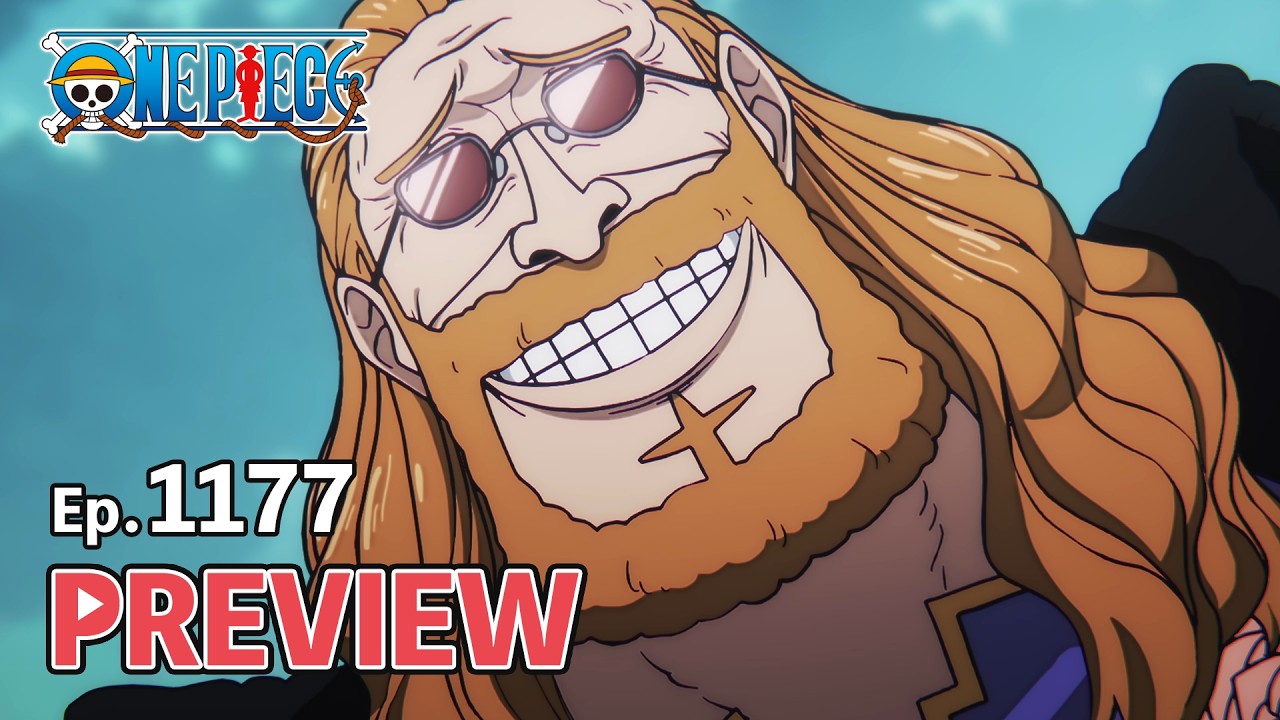
The Episode 1177 preview frame is stored locally in WordPress with complete source and descriptive metadata. The same attachment appears as the featured image, top hero, static directory card, and social image.
No earlier One Piece post shares this feature image. Visual continuity comes from layout and typography, not recycled art. The card can therefore identify this specific episode before a reader touches the title.
What stays with me after the credits
Brook’s refusal is the cheer-worthy moment, but Robin’s face is the receipt I carry out of Episode 1177. Sommers believes every bond can become leverage. Brook proves loyalty can resist ownership, while Robin reminds us that memory survives because people decide some truths are worth protecting again and again. Elbaf cannot accept the terms because the terms erase Elbaf no matter which box Jarul checks. Children without freedom are not saved. Books without readers are only trophies. A future built by surrendering both would belong to the people making the threat. The episode leaves everyone at the edge of action, and I am ready for Robin to answer the same machinery that burned Ohara with all the calm fury she has earned.