
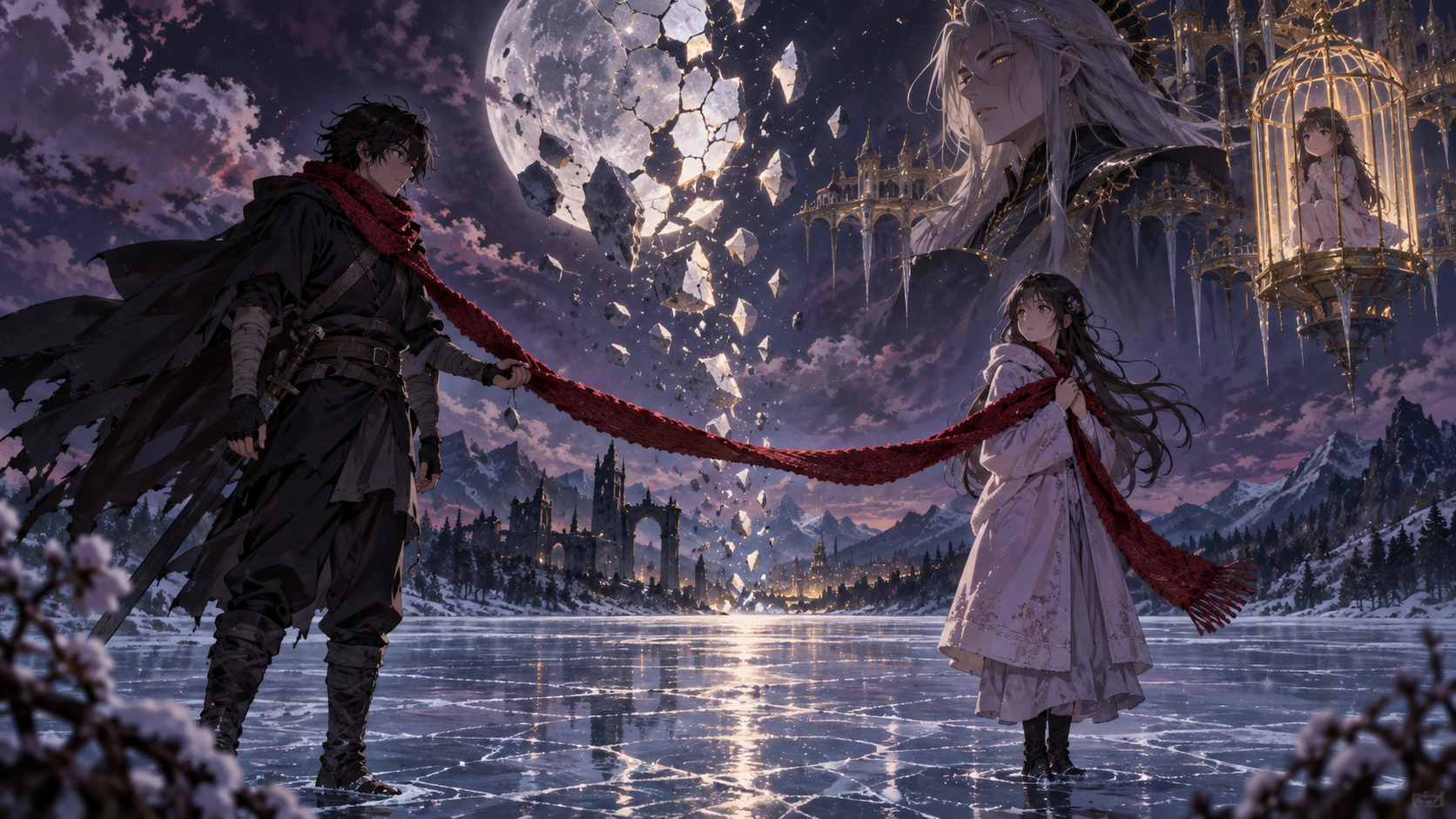
Excerpt: The Last asks Naruto to learn the difference between loving attention, loving an idea, and loving the person who has consistently seen him.
Focus keyword: The Last Naruto the Movie review
SEO title: The Last: Naruto the Movie Review | CVM Sekai
Meta description: Our The Last: Naruto the Movie review examines Naruto and Hinata, Toneri, the red scarf, Hanabi, romantic recognition, coercion, and the canon epilogue bridge.
Naruto Saved the World Before He Learned What Love Meant
Two years after the Fourth Shinobi World War, Naruto is famous.
Children admire him. Young women gather around him. The village that once treated him like contamination now treats access to him like a prize. He has finally received the attention he spent childhood demanding.
He still does not understand Hinata.
That is the emotional gamble of The Last: Naruto the Movie. The hero who could recognize loneliness inside enemies, pull grief out of violence, and carry an international war on his back remains astonishingly undereducated about romantic love. He knows attachment, loyalty, admiration, hunger, and obsession. He loves ramen. He loves Sakura. He loves being acknowledged. He has used the same word for feelings that do entirely different work.
The movie asks him to separate them.
Meanwhile, the moon is falling toward Earth. Toneri Ōtsutsuki has taken Hanabi, targeted Hinata, and framed coercion as destiny. The planetary threat is enormous, but the film’s real task is intimate: can Naruto recognize the woman who has seen him consistently without reducing her devotion to another form of applause?
The answer is emotionally satisfying, occasionally clumsy, and long overdue.
The Last is not optional romance packaging. It is the canon bridge between the war-era ending and the adult family structure the epilogue assumes. That importance raises the standard. The film succeeds because Hinata’s steady interior life finally becomes central, even while parts of the romance rely on a memory device to do work the series should have done earlier.
The Red Scarf Is Labor, Not Decoration
Hinata knits Naruto a red scarf. The object is simple enough to become sentimental, but its meaning comes from time.
Every stitch records attention without demanding that Naruto witness the effort. Hinata is making something useful, intimate, and ordinary for a person whose childhood contained very little domestic care. The scarf is not a declaration delivered once. It is accumulated labor.
That matters because Naruto has spent his life learning to recognize spectacular loyalty. People leap into battles, make speeches, and risk death. Hinata has done those things too—most famously against Pain—but the scarf asks him to notice care outside crisis.
Romantic love cannot survive only as emergency sacrifice. It also has to live in objects made slowly, meals remembered, absences noticed, and the decision to keep showing up after nobody applauds.
The scarf is repeatedly interrupted, damaged, replaced, and misunderstood. Those disruptions mirror the relationship. Hinata’s feelings have existed for years, but the path between her interior world and Naruto’s understanding is full of missing information.
When he finally understands the object, he is not merely receiving a gift. He is recognizing the history inside it.
Naruto’s Emotional Ignorance Is Plausible—and Convenient
Naruto’s confusion about love makes sense. He grew up without parents modeling romantic partnership, without stable caregiving, and without anyone consistently teaching him emotional vocabulary. His crush on Sakura developed alongside rivalry with Sasuke and hunger for recognition. Wanting Sakura was tangled with wanting to win.
That does not mean his feelings were fake. It means they were adolescent, competitive, and attached to needs he could not yet separate.
The movie’s claim that Naruto’s love for Sakura resembled his desire to compete with Sasuke is useful but too neat. Years of emotion are compressed into an explanation designed to clear narrative space for the canon pairing. Naruto can have genuinely loved Sakura in one way and later understand that the feeling did not contain the mutual recognition required for partnership.
The stronger version of the argument is growth, not retroactive cancellation.
Naruto’s ignorance also reveals a structural weakness inherited from the series. Hinata’s love was visible to the audience, but Naruto’s movement toward her was underwritten for too long. The Last has to perform years of emotional education inside a feature film because the main narrative prioritized war, Sasuke, and destiny.
The movie does the work earnestly. It should not have had to do all of it at once.
Hinata’s Love Is Strongest When It Includes Strategy
Hinata is often described through devotion, and devotion can become a trap for female characters. If her only narrative function is to believe in Naruto, then her interior life shrinks around his importance.
The Last gives her more difficult work.
Toneri takes Hanabi’s eyes and threatens Earth. Hinata agrees to accompany him, appearing to accept his proposal, because she intends to reach the Tenseigan and protect both her sister and the world. Naruto interprets the choice through his newly awakened feelings and experiences it as rejection.
Hinata is not choosing Toneri. She is operating under coercion while trying to create access from inside the threat.
That distinction is essential. She is not a prize passed between men. She is a shinobi making a dangerous decision with incomplete support.
The movie sometimes undermines her strategy by requiring rescue and placing Naruto’s emotional reaction at the center. Still, Hinata’s willingness to let him misunderstand her rather than compromise the mission demonstrates agency sharper than passive loyalty.
Her love does not erase responsibility to Hanabi or the world. It exists beside them.
Toneri Calls Possession Destiny
Toneri inherits an interpretation of Hamura’s will and decides the shinobi world must be destroyed. He also decides Hinata belongs beside him.
His language blends cosmic obligation with personal entitlement. Marriage becomes fulfillment of lineage. Hinata’s body, bloodline, and symbolic position are treated as components inside a plan already written.
This is coercion dressed as sacred order.
Toneri’s isolation gives him emotional context. He grew up separated from ordinary society and inherited duty without community capable of challenging its interpretation. Like many Naruto antagonists, he is a lonely child grown into dangerous certainty.
Context does not make his pursuit romantic.
He targets Hanabi, manipulates Hinata, destroys the scarf, and assumes power grants access to consent. His palace may be beautiful, his lineage ancient, and his grievance cosmological. The relationship he offers remains a cage.
The film’s contrast is clear. Toneri sees Hinata as the role she can perform in his destiny. Naruto finally learns to see the person who has been acting beyond the role he assigned her.
One man calls possession love. The other has to learn that love begins with recognition.
The Genjutsu Memory Sequence Does Necessary but Awkward Work
During the mission, Naruto and Hinata become caught in a genjutsu-like field of memories. Naruto witnesses moments from Hinata’s perspective and finally understands the continuity of her feelings.
The sequence is emotionally effective. It also functions like a compressed archive inserted because ordinary conversation apparently could not carry the revelation quickly enough.
Naruto sees the Chūnin Exams, the Pain confrontation, childhood attention, and the red thread connecting years of care. For him, the memories reorganize familiar events. Hinata was not simply “there.” She was choosing him repeatedly.
The device risks making empathy technological. Naruto understands because he receives access to her interior evidence, not because he has learned to ask and listen over time.
Yet the sequence suits a character who has always read action more easily than implication. Hinata’s reserve and Naruto’s emotional blind spots created a communication gap that memory makes impossible to ignore.
The montage is not the love story. It is the moment Naruto becomes capable of reading the love story that already happened around him.
Sakura Is the Emotional Adult Naruto Needs
Sakura’s role in The Last is quietly important. She understands Hinata’s feelings, recognizes Naruto’s confusion, and refuses to make his emotional awakening about her own romantic history.
That maturity deserves credit.
The film uses Sakura to explain that Naruto’s old pursuit of her was tied partly to rivalry with Sasuke. As noted, the explanation is overly tidy. But Sakura’s broader behavior is generous without becoming self-erasure. She helps Naruto name what is happening because she knows him well enough to see the difference between hurt pride and genuine heartbreak.
She also respects Hinata as a person acting under pressure. There is no manufactured rivalry between the women. The story does not require Sakura to be humiliated so Hinata can become the correct choice.
That matters in a franchise whose romantic writing has often treated women’s feelings as evidence about male importance.
Sakura remains connected to Naruto through a bond that survived unreturned love and Team 7’s fractures. Friendship is not presented as a failed version of romance. It is its own durable relationship.
Hanabi Is More Than the Sister Who Gets Taken
Hanabi’s abduction initiates the mission, and Toneri’s use of her Byakugan provides the Tenseigan’s power. The plot risks reducing her to valuable eyes and a reason for Hinata to act.
Her position inside the Hyūga family gives the threat additional meaning. The clan has long organized bodies through inheritance, branch hierarchy, and control of bloodline ability. Toneri’s theft is an external version of a logic the Hyūga know too well: eyes are power, and family members can become vessels for that power.
The film does not fully explore that parallel. Hiashi’s role and the clan’s history could support a much deeper confrontation with the way sacred inheritance becomes bodily entitlement.
Still, Hinata’s determination to save Hanabi prevents the romance from consuming her entire motivation. She is a sister before she is a bride.
The mission’s emotional credibility depends on keeping that priority visible.
The Moon Plot Is Beautiful and Occasionally Too Much
The falling moon gives the film striking imagery: meteor fragments, ruined landscapes, celestial chambers, frozen water, and a threat visible to everyone who looks up. The scale appropriately marks a postwar world where Naruto’s power has become planetary.
It also competes with the romance.
The most effective scenes are small: Hinata knitting, Naruto eating, Sakura explaining, a hand reaching across misunderstanding. The film must then alternate those moments with world-ending mechanics, Ōtsutsuki lore, and large combat.
Sometimes the cosmic plot amplifies emotion. The moon literally falling makes the end of adolescence feel appropriately dramatic. At other times, exposition interrupts the relationship the movie exists to establish.
The final battle works because Naruto and Hinata fight toward the same goal rather than treating Hinata as an object to retrieve. Their combined action matters more than Naruto simply defeating Toneri.
The lunar spectacle is memorable. The scarf remains the film’s strongest image.
The Kiss Is an Ending and a Beginning
Naruto and Hinata’s kiss arrives through a visual passage of shared memories, carrying them from childhood isolation toward adult commitment. The moment is designed as emotional completion.
For the franchise, it is also narrative infrastructure. The later wedding arc, family, and Boruto-era relationships depend on this bridge.
The romance would benefit from more time after recognition—more conversation, awkwardness, and ordinary adjustment. Falling in love is not the same as learning how to be partners. The film ends near the point where that work begins.
Still, the kiss is earned through the movie’s central shift. Naruto is no longer responding only to being loved. He is choosing Hinata with awareness of her personhood, history, and courage.
That is the difference between gratitude and partnership.
The post-credits family imagery confirms where the bridge leads, but the emotional victory is simpler: Naruto finally understands that somebody did not love the symbol, hero, or future Hokage. Hinata loved the lonely, failing, loud child before the village learned how useful he could become.
He sees her back.
Japanese Cast and Performance Notes
Junko Takeuchi gives older Naruto a slight maturity without erasing his emotional clumsiness. His realization scenes work because confusion sounds vulnerable rather than stupid. The famous hero becomes briefly young again when confronted with feelings he cannot fight.
Nana Mizuki carries the film’s emotional center. Hinata’s restraint contains fear, calculation, longing, and resolve. Her quietness never means emptiness; the performance makes silence feel active.
Jun Fukuyama gives Toneri the cultivated distance of someone who mistakes inherited certainty for moral clarity. His gentleness can feel more threatening than open rage because coercion arrives as a reasonable expectation.
Chie Nakamura’s Sakura supplies grounded emotional intelligence, keeping the central romance connected to the relationships that preceded it.
Where It Fits—and Why It Is Essential
Watch The Last after Naruto Shippuden episode 493 and before the wedding stories in episodes 494–500. It takes place roughly two years after the war and functions as the bridge into Naruto and Hinata’s relationship.
Unlike the earlier theatrical side stories, this film is part of the main continuity. The later family structure and wedding-era material assume its emotional outcome.
Calling it “just another Naruto movie” creates a real narrative gap. Viewers can debate how efficiently the romance is written, but the franchise treats the events as foundational.
Final Verdict
The Last: Naruto the Movie carries more narrative responsibility than any earlier Naruto film. It has to resolve a romance the main series underdeveloped, introduce Ōtsutsuki history, threaten the planet, preserve Hinata’s agency under coercion, and connect the war ending to the wedding future.
It does not balance every piece perfectly.
Naruto’s past feelings for Sakura are simplified. The memory sequence performs emotional work that should have unfolded across more ordinary scenes. Hanabi and the Hyūga history deserve deeper treatment. The cosmic plot occasionally interrupts the intimacy.
But the heart lands.
Hinata’s love is shown as labor, courage, strategy, and endurance—not merely admiration. Naruto learns that receiving devotion is not the same as reciprocating it. Toneri’s sacred entitlement is rejected in favor of freely chosen recognition.
The hero who spent childhood shouting “look at me” finally learns to look carefully at somebody else.
Rating: 8.5/10 — An essential, emotionally rewarding canon bridge whose red-scarf intimacy survives crowded lunar mythology and years of delayed romantic development.