
Junko Takeuchi
Junko Takeuchi has spent decades giving young heroes enough noise to charge into a room and enough vulnerability to make the silence afterward hurt. Naruto Uzumaki became the role most international anime fans associate with her, but Naruto is only one branch of a career that stretches through anime, games, Japanese dubbing, narration, radio, CD drama and live theater.
If you know the voice before you know the name, there is a decent chance you have already met her somewhere else: Gon Freecss, Mamoru Endō, Takuya Kanbara, Metabee, Cure Rouge, Kuromi, Red, Sabo, Mokuba Kaiba, or one of the many other characters scattered across her résumé.
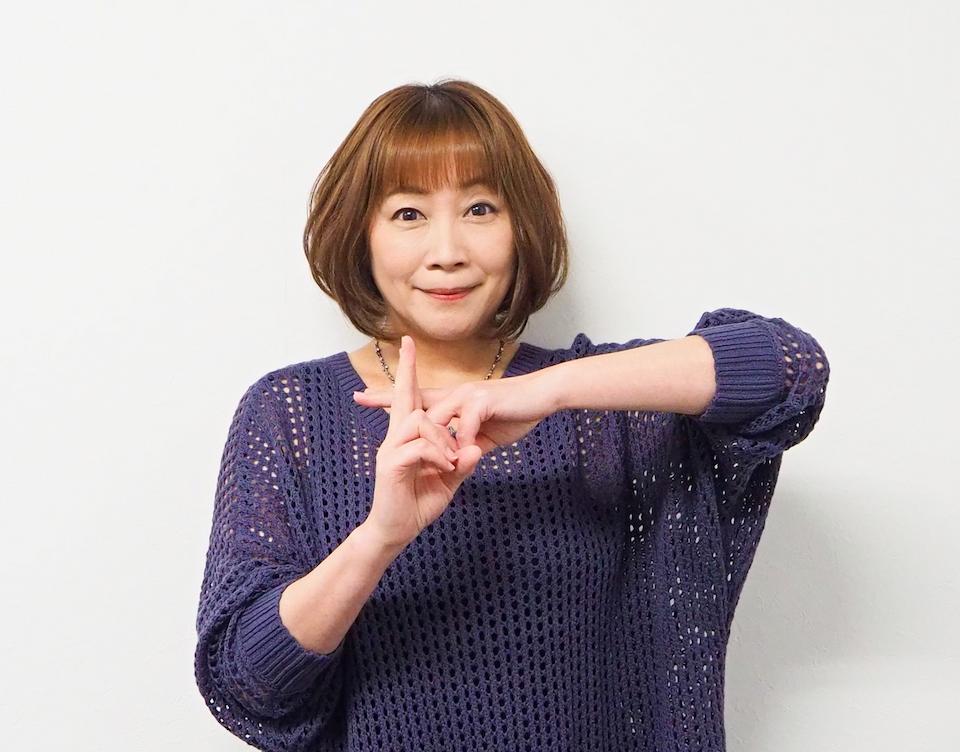
A career that does not fit inside Konoha
International fans can be forgiven for seeing Junko Takeuchi’s name and immediately hearing Naruto yell. That association is enormous, and the franchise has occupied a major part of her working life. But her official agency résumé is closer to a map of several decades of Japanese voice performance than a single-franchise biography.
Her credits stretch across television animation, theatrical anime, OVAs, foreign-film and television dubbing, games, radio, narration, commercial narration, CD dramas and stage productions. The range matters because it explains why Takeuchi is useful in so many different ensemble positions. She can carry the loud protagonist, play the cheerful rival, become the strange little creature sitting in the corner, switch into comedy, then show up somewhere else with a voice that barely resembles the character fans first attached to her.
Her official voice samples make that range unusually easy to hear in one place. The agency separates samples for an energetic elementary-school boy, a cheeky boy, a high-school student, narration and a fairy-like character. That is a much better summary of her working toolbox than simply calling her “the Naruto voice actor.”

Her official profile also identifies illustration as a hobby and ballet as a special skill. Neither fact magically explains a voice career, but they are useful reminders that performance training is rarely only about a microphone. Physical timing, movement, rhythm and visual imagination can all feed into how an actor builds a character.
Naruto Uzumaki: the role that grew up with her
Takeuchi’s relationship with Naruto is unusual because the job did not stop when one television series ended. She voiced Naruto through the original NARUTO, NARUTO: Shippuden, theatrical films, games, anniversary projects, NARUTO SD, and eventually BORUTO: Naruto Next Generations, where the loud child from the first episode has become a father and Hokage.
The difficult part of that kind of role is continuity. Naruto has to remain recognizably Naruto while his emotional vocabulary changes. Early Naruto often attacks a room with volume before anybody has the chance to dismiss him. The bravado is funny because it is excessive, but the same excess also protects a lonely child who expects rejection.
Later performances cannot simply deepen the pitch and call that adulthood. Naruto gains authority, grief, responsibility and patience, but he never becomes a completely different person. Takeuchi keeps pieces of the original rhythm, impatience and comic timing even when the character is standing in situations that the twelve-year-old version of himself could barely have imagined.
Her agency résumé lists Naruto not only in the television series but across multiple films, including The Last: Naruto the Movie, Boruto: Naruto the Movie, Road to Ninja, Blood Prison, and other Naruto theatrical releases. That long-running continuity is one reason the performance is so tightly fused with the character for Japanese audiences.
The career does not stop at one orange jumpsuit
The easiest way to hear Takeuchi’s range is to put several of her long-running roles beside one another. Many are young or energetic characters, but that does not mean they are interchangeable copies of Naruto.
Her official credits continue far beyond those examples: roles in Little Witch Academia, Reborn!, Monster, Claymore, Gintama, Pokémon Sun & Moon, Pop Team Epic, Iruma-kun, One Piece, Fafner Exodus, Ouran High School Host Club, Shamanic and fantasy material, children’s animation and many other productions. The useful lesson is not to memorize every credit. It is to stop treating one famous role as the boundary of the performer.
Voice and performance: forward motion without one-note sameness
Takeuchi is especially effective at characters who feel as if standing still would be a personal defeat. Naruto rushes forward because he needs recognition. Gon rushes forward because curiosity and attachment pull him. Endō pushes an ensemble through optimism. Takuya carries the momentum of a transformation-driven adventure.
That is a pattern, but it is not a single voice. The distinction matters because women voicing boys are often flattened into a novelty category: “she can sound like a boy.” The harder job is sustaining character-specific rhythm, breath, emotional temperature and comic timing across hundreds of scenes.
Takeuchi also works comfortably at the border between comedy and sincerity. Naruto can make a fool of himself, scream about food, throw a tantrum and then move into grief without the performance asking the viewer to erase the comedy that came before. Kuromi can push the comic side much further. Cure Rouge, narration samples and adult dubbing work show that youthful male protagonists are only one tool in the box.
Japanese dubbing: a second career hiding beside the anime résumé
Anime credits dominate English-language discussions of Takeuchi, but her agency profile also lists substantial Japanese-language dubbing work for international film, television and animation.
Disney and Pixar titles are part of that list. She voices Deputy Mayor Dawn Bellwether in the Japanese dub of Zootopia and Giggle McDimples in Toy Story 4. Those roles sit far away from Naruto’s heroic center of gravity and are useful examples of how a recognizable performer can disappear into very different character shapes.
Her agency also credits dubbing work on productions such as BULL, Touch, Criminal Minds, Supernatural, Grey’s Anatomy, The Hurt Locker, The Golden Compass, Private Practice, Pearl Harbor and other international film and television projects.
Dubbing demands a different kind of discipline from original animation. The actor is not only interpreting a character but fitting an existing performance, timing and mouth movement while preserving emotional credibility in Japanese. That work deserves to be part of the biography instead of being treated as a footnote after the anime list.
Games, OVAs and audio work
Takeuchi’s official game credits include roles in Granblue Fantasy, Genshin Impact, Cookie Run: Kingdom, Radiata Stories, Ape Escape 3, Code Age Commanders, Garou: Mark of the Wolves, and other titles.
Games can ask for a strange mixture of acting skills. A performer may need complete dramatic scenes, battle calls, repeated menu lines, tiny reactions and dozens of variations on exertion that still have to sound like one person. Actors with Takeuchi’s animation background are particularly comfortable in that fragmented environment because they already know how to make a short vocal gesture carry character information.
Her OVA work includes titles such as Kakurenbo, R.O.D, Photon and Early Reins. Her agency also lists an extensive CD-drama résumé, including projects where she played multiple youthful or fantasy characters and productions where she held starring or planning responsibilities.
Stage, radio and narration: the microphone was never the whole job
Takeuchi’s official profile separates her career into voice and stage work for a reason. Her theatrical résumé stretches across years of BQMAP productions, readings, musical theater and other live performances.
She played Gon onstage in Hunter × Hunter productions in the early 2000s, including a musical and a later real-stage production. That is a fun career loop: the same actor associated with Gon’s animated voice also carried the character into live performance.
The agency page documents regular BQMAP appearances across the 2000s and 2010s, with productions continuing into the 2020s. Live theater removes the safety net of retakes and close microphone work. Timing has to reach a room, movement has to support the voice, and the performer has to sustain a character physically through an entire scene.
Radio is another major piece of her résumé. Programs listed by her agency include Junko Takeuchi’s Take a Chance Radio, Oh! Naruto Nippon, Naruto Shippū Jinrai, Hunter × Hunter R and other productions.
Her narration credits include television programs and commercial work, and the agency even provides a dedicated narration voice sample. That matters because narration asks the performer to control information rather than inhabit a fictional body in the same way. It is another reason “Naruto’s voice” is accurate but incomplete.
Selected career credits
This is not intended to reproduce every line on Takeuchi’s agency résumé. It is a selected map of roles that show the breadth of the career.
| Work | Role | Area |
|---|---|---|
| Naruto franchise | Naruto Uzumaki | Anime · films · games |
| Hunter × Hunter (1999) | Gon Freecss | Anime · stage |
| Inazuma Eleven | Mamoru Endō · Kanon | Anime |
| Digimon Frontier | Takuya Kanbara | Anime |
| Yes! Precure 5 | Rin Natsuki / Cure Rouge | Anime · films |
| Onegai My Melody | Kuromi | Anime |
| Medabots | Metabee | Anime |
| Pokémon Origins | Red | Anime special |
| Yu-Gi-Oh! Duel Monsters | Mokuba Kaiba | Anime |
| Little Witch Academia | Croix Meridies | Anime |
| Monster | Dieter | Anime |
| Zootopia | Dawn Bellwether | Japanese dubbing |
| Toy Story 4 | Giggle McDimples | Japanese dubbing |
| Touch | Jake Bohm | Japanese dubbing |
| Granblue Fantasy | Kurokko / Shirokko | Game |
| Genshin Impact | Ahau | Game |
| Cookie Run: Kingdom | Brave Cookie | Game |
CVM Sekai connections
Junko Takeuchi is filed under Behind the Worlds → Cast & Creators and currently connected to the Naruto series taxonomy. That relationship is intentional. It means the future Naruto hub can pull Takeuchi automatically into a Cast & Creators section without duplicating this biography.
If CVM Sekai later builds hubs for another series in her résumé, the same page can simply gain another Series relationship. One person, one canonical biography, as many legitimate connections as the site eventually needs.
Panda Side Quests: the details hiding outside the credit list
- Illustration: her official agency profile lists drawing as a hobby.
- Ballet: her agency lists ballet as a special skill, a useful reminder that performance training can be physical as well as vocal.
- Stage work: Takeuchi has continued performing live rather than treating theater as an abandoned pre-voice-acting chapter.
- Radio: Naruto and Hunter × Hunter both followed her into radio work, where personality and improvisation matter as much as scripted character performance.
- Range: her official agency samples include young boys, a high-school student, narration and a fairy-style voice.
- Franchise endurance: Naruto, Precure, Inazuma Eleven, Digimon and other properties brought her back repeatedly rather than limiting her to a single appearance.
Sources and deeper reading
- OgiPro THE NEXT · Junko Takeuchi official profile and career credits
- NARUTO 20th Anniversary · Junko Takeuchi special interview and portrait used for the hero image.
- Human Academy · earlier Junko Takeuchi promotional portrait used in the career section.
- CVM Sekai · Anime Voice Actors
- CVM Sekai · Anime Binge