
Kazuhiko Inoue
Kakashi Hatake sounds lazy, lethal, ridiculous and bereaved without becoming four unrelated men. Kazuhiko Inoue makes the mask feel like behavior, not decoration.
The verified career record is already wild before we reach Konoha
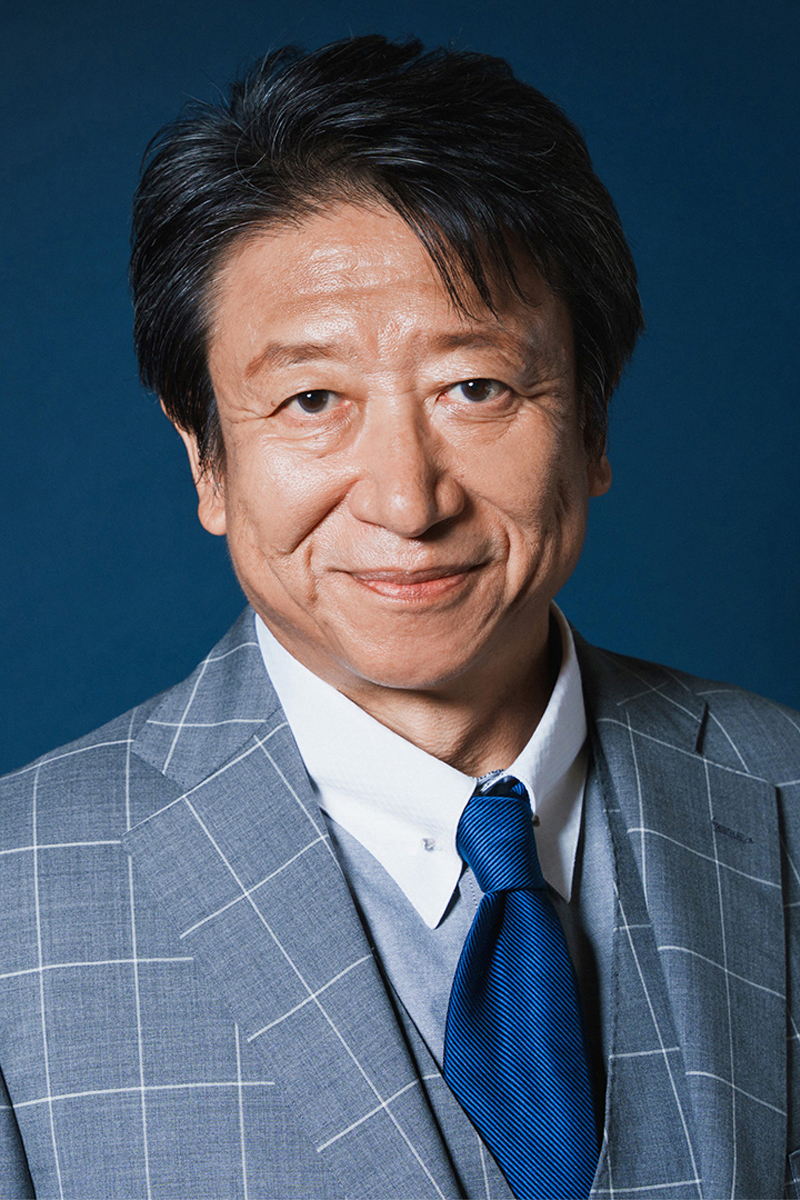
Kazuhiko Inoue is a Japanese voice actor from Kanagawa Prefecture represented by B-Box. His official agency profile lists a March 26 birthday, a height of 173 centimeters, and hobbies that include windsurfing, road cycling, bowling and fishing. B-Box dates his professional debut to 1973. That means his career began decades before Naruto premiered and continued long after Kakashi stopped being the newest famous name on his résumé.
The official profile identifies Anthony in Candy Candy, Joe Shimamura in Cyborg 009, Kakashi Hatake in Naruto Shippuden, and both Nyanko-sensei and Madara in Natsume’s Book of Friends as representative animation roles. It also documents foreign-film dubbing associated with Mads Mikkelsen in Indiana Jones and the Dial of Destiny and Mark Harmon in NCIS. Music releases, live work, stage acting and screen appearances sit beside anime and dubbing rather than underneath them.
That breadth matters because Kakashi is easy to mistake for the role that explains Inoue. It does not. Kakashi arrives after Inoue already knows how to sustain heroic leads, elegant antagonists, romantic tension, comedy, transformed voices and live performance. The actor brings a long professional memory into a character whose entire personality is built around carrying memory without letting it crush the room.
Kakashi’s laziness is a survival system, not an empty gimmick
Kakashi enters Team 7 as a man who is late, reads pornography in public, smiles with one visible eye and can become terrifying before the students understand what changed. The joke works because the danger is real. Inoue does not need to announce the switch with a villain trailer. The softness narrows. The pace stops wandering. Attention becomes audible.
The performance also carries grief without turning every scene into an obituary. Kakashi has lost Sakumo, Obito, Rin and Minato before he begins teaching Naruto, Sasuke and Sakura. He has served in war and ANBU. He knows exactly what a child soldier can become when rules, loyalty and shame are allowed to eat the person. Yet he does not give Team 7 a grief lecture on the training field. He gives them a bell test, a meal rule and a consequence.
That is the point of the mask. Kakashi’s emotional reserve is not proof that nothing is happening. It is control learned so early that control became personality. Inoue makes the humor part of that system. Lateness gives Kakashi distance from obligation. The book gives him privacy in public. The mild voice keeps other people from seeing when his attention has become surgical. Fans call it cool because the surface is attractive. The story keeps showing the bill.
Team 7 slowly changes the purpose of the system. Kakashi still uses reserve, but he begins using it to protect continuity between generations instead of merely surviving the past. He teaches Sasuke the Chidori, invents a training method for Naruto, trusts Sakura’s growth and eventually tells the reunited team that he loves them. Inoue lets the same controlled man become more emotionally available without suddenly turning him into somebody who narrates every feeling.
A performance chronology across Kakashi’s life
Child prodigy
Young Kakashi uses rules as armor after Sakumo’s disgrace and death. Competence arrives before emotional flexibility, so correction sounds like moral certainty rather than ordinary childhood stubbornness.
Team Minato
Obito and Rin force relationship into the rule system. The Kannabi Bridge mission turns professional confidence into a lifelong argument about comrades, promises and the price of arriving too late.
ANBU years
The anime expands this period. Inoue must carry a younger man whose flat efficiency is functional but not healthy. Adaptation material belongs in its own continuity lane.
Team 7 teacher
Comedy, danger and instruction coexist. Kakashi does not simply test skill; he tests whether three isolated children can stop treating one another as obstacles.
War commander
The Fourth Shinobi World War pulls every unresolved loss back into the present. Command language, Obito’s return and Rin’s memory collide without erasing battlefield responsibility.
Sixth Hokage and adulthood
Leadership becomes institutional rather than squad-sized. Later appearances let the performance carry earned ease, but retirement never means ignorance of what the village asks from children.
Relationship atlas: the same voice does different work with different people
Naruto Uzumaki
Kakashi begins by containing chaos and gradually speaks to Naruto as a shinobi capable of surpassing him. Praise becomes less reluctant because Naruto repeatedly turns inherited pain into relationship instead of isolation.
Sasuke Uchiha
Sasuke is Kakashi’s most uncomfortable mirror. Talent, loss, lightning technique and the temptation to make vengeance into identity all sit between them. Inoue’s restraint matters because Kakashi knows the speech may fail and gives it anyway.
Sakura Haruno
Kakashi underestimates how much of Sakura’s strength will become medical, emotional and organizational. Later coordination carries the respect due to a veteran, not the indulgence given to the least dangerous child on day one.
Obito Uchiha
Obito begins as irritation, becomes a moral inheritance, then returns as accusation and choice. Kakashi’s voice has to hold love, rage, guilt and professional focus inside battles where none of those feelings can safely take the whole body.
Rin Nohara
Rin is not a symbol Kakashi gets to own. Her death becomes bodily memory and moral injury, but the profile refuses to turn her into decorative pain for two men. Consequence belongs to her lost future as well as their grief.
Minato Namikaze and Might Guy
Minato represents the teacher Kakashi could not save from history. Guy represents relationship that survives by refusing Kakashi’s preferred distance. Inoue’s comic responses to Guy are not filler. They are proof somebody kept knocking.
The complete Naruto performance shelf
Inoue performs Kakashi across the original Naruto series, Naruto Shippuden, theatrical films, original video animations, games and New Era appearances. The role crosses Team 7’s formation, the Land of Waves, the Chūnin Exams, Sasuke’s defection, Akatsuki conflicts, Pain’s assault, the Fourth Shinobi World War, the Sixth Hokage era and later village life.
Those formats do different work. Weekly television carries long relationship development. The anime expands Kakashi’s childhood and ANBU period beyond the manga. Films compress the role according to mission and alternate-premise needs. OVAs use special-event comedy and side stories. Games turn performance into battle calls, recreated scenes, alternate matchups and system prompts. Licensed participation is real career evidence, but it does not make every game branch manga canon.
The War arc places the largest emotional burden on the performance. Kakashi faces reanimated comrades, commands soldiers, learns who stood behind the mask, and confronts the fact that Obito built a world-ending ideology from wounds they share. Inoue cannot make empathy sound like acquittal. Kakashi understands Obito and still opposes him. That distinction is the whole adult job.
Later Kakashi matters because survival changes how earlier grief reads. He becomes Hokage, helps stabilize the village and lives long enough to watch his students reshape the world. The story does not reward him by returning the dead. It gives him responsibility after them. That is less sentimental and more useful.
Five decades beyond Kakashi
Joe Shimamura in Cyborg 009 places Inoue inside one of Japanese science fiction’s enduring hero lineages. Anthony in Candy Candy belongs to an earlier era of television anime and romantic melodrama. Jerid Messa in Mobile Suit Zeta Gundam asks for pride, rivalry and political violence from a very different production tradition.
Natsume’s Book of Friends makes the range impossible to ignore. Nyanko-sensei can be comic, greedy and physically ridiculous, while Madara carries supernatural scale and threat. The voices belong to one being in different forms, so contrast must remain connected rather than becoming a party trick. Kakashi’s mild surface and combat severity prepare fans to hear that skill, but Inoue’s career did not begin with Kakashi and does not need Kakashi to explain every choice.
Other widely recognized work includes Eiri Yuki in Gravitation, Kars in JoJo’s Bizarre Adventure, and recurring animation, game and drama-CD roles across changing industry eras. A five-decade shelf is not proof that every credit deserves equal analysis. It is proof that longevity requires adaptation. Microphone technique, production schedules, audience expectations and franchise economics changed while Inoue kept working.
Dubbing, narration and the face already on the screen
Foreign-film dubbing creates a different problem from anime. The Japanese actor works with translated dialogue, an existing edit and another performer’s visible body. B-Box identifies work associated with Mads Mikkelsen and Mark Harmon. Inoue must honor timing and physical expression already captured while making the Japanese line feel spoken rather than stapled on.
That labor also complicates fandom’s obsession with a single signature voice. Anime may permit greater stylization depending on production conditions. Live-action dubbing answers to mouth movement, breath, camera distance and performance already present. Narration asks the voice to organize information without relying on a character relationship. Music and live appearances put the performer’s own body back in public.
The résumé therefore reveals an actor moving between embodiment systems. Kakashi’s mask hides half a face. Dubbing gives him somebody else’s entire face. Narration may give him no face at all. The common skill is not coolness. It is control over where the audience looks and what the voice is responsible for carrying.
Longevity is not magic; it is labor, reputation and adaptation
A career beginning in 1973 crosses generational changes in anime production, dubbing, home media, games, streaming and global fandom. Inoue’s continued visibility is not evidence that the industry treats every veteran gently. It means he has remained useful across formats while building relationships that survive changing markets.
There is a cultural temptation to treat veteran status as automatic authority. Confucian respect for seniority can support gratitude and craft transmission, but it can also hide labor conditions or turn a living actor into a monument. The better response is specific: identify the work, name the production context, and notice how a performer keeps learning instead of praising age like age recorded the lines by itself.
Kakashi also carries this industry problem inside the story. He is a veteran asked to turn war experience into education. Seniority gives him authority, but authority is only valuable when it protects the next generation from repeating the same damage. Inoue’s performance keeps Kakashi credible because weariness never becomes an excuse to stop paying attention.
The mask, the book and Japanese social performance
Kakashi’s mask is often treated as fandom bait because the series repeatedly turns his hidden face into comedy. That joke works, but the mask also organizes social distance. People meet a covered adult who controls what they can read. In a shinobi culture built around hidden information, uniforms and role obligations, concealment is not eccentricity. It is professional language.
Inoue’s performance supplies what the drawing withholds. The visible eye, posture and voice have to communicate enough that the audience does not experience Kakashi as blank. This creates a useful tension between tatemae, the face presented to society, and honne, private feeling. Kakashi’s public ease is not simply false. It is a usable social self. His private grief is not the only true Kakashi hiding underneath. Both are real because people survive through roles as well as confessions.
The orange book complicates the image. It is comic, inappropriate around children and an easy way to look unavailable. It also gives Kakashi a portable boundary. He can occupy public space without inviting conversation. RaeRae is not turning pornography into a sacred grief relic. Sometimes a dirty book is a dirty book. The meaningful part is how consistently Kakashi uses objects, schedules and mildness to control access.
Buddhist attachment language also helps if we do not use it like spiritual glitter. Kakashi suffers because he clings to guilt and to the fantasy that vigilance might retroactively save the dead. Letting go does not mean forgetting Obito, Rin, Sakumo or Minato. It means refusing to make their deaths the only authority over his next action. His students matter because care pulls him back into the present.
Teaching as consequence, not redemption wallpaper
Kakashi’s value as a teacher is uneven, and fans are right to argue about it. He gives Team 7 a powerful lesson in cooperation, intervenes when Sasuke’s revenge escalates and designs critical training for Naruto. He also misses needs, arrives late, and works inside a village system that sends children into lethal assignments. Competence does not cancel institutional complicity.
The bell test nevertheless establishes his core educational argument. Technical talent without reciprocal duty is failure. That principle comes directly from his own past. Young Kakashi privileged rules while Obito insisted on comrades. Adult Kakashi turns the wound into curriculum. Confucian duty appears here as responsibility inside relationship, not blind obedience to rank. A teacher owes students formation, protection and honest correction. Students owe effort and responsibility to one another. The hierarchy earns meaning only through reciprocity.
Maslow’s hierarchy also exposes why Team 7 cannot learn as if they are ordinary classmates. Naruto lacks stable belonging and recognition. Sasuke has safety, family and identity ripped away. Sakura has social insecurity but more ordinary material support. Kakashi gives them the same exercise, yet each child is solving a different survival problem. The team becomes useful when belonging stops being a prize awarded after performance and becomes part of how performance is possible.
That does not make Kakashi a perfect foster father in a flak jacket. It makes him an adult trying to interrupt one part of a machine that formed him. The consequence lens matters more than sentimental praise. Naruto develops trust without losing ambition. Sakura learns to place skill inside care. Sasuke still leaves, which proves that one good teacher cannot outmuscle grief, political violence, Orochimaru and Itachi’s manipulation by himself.
Inoue’s long-form task is to make these partial successes and failures belong to one man. Kakashi can save a mission and fail a student. He can understand trauma and still say the wrong thing. He can love Team 7 without possessing the power to keep them intact. That contradiction is not a flaw the profile must polish away. It is why the performance lasts.
Six fandom shortcuts that shrink Kazuhiko Inoue’s work
- “Kakashi is just the cool teacher.” Coolness is the readable surface of grief management, tactical attention and professional care.
- “The lazy voice means he does not care.” Kakashi often lowers social intensity while monitoring everything.
- “One serious tone covers every battle.” Command, private grief, interrogation, teaching and reunion require different relationships to restraint.
- “Nyanko-sensei proves he only does comic voices outside Naruto.” The same role also includes Madara’s supernatural weight, and the wider résumé crosses heroes, villains, romance and dubbing.
- “A veteran résumé explains itself.” A list proves participation. It does not explain craft, labor or consequence.
- “Understanding Obito redeems every choice.” Kakashi’s empathy does not erase Obito’s victims or turn shared pain into innocence.
What this profile can prove, and what it refuses to fake
Biographical facts, debut year, official hobbies and representative credits come from B-Box. Kakashi’s story chronology comes from the manga, anime and licensed franchise record with adaptation boundaries kept visible. RaeRae interpretation begins when the profile explains how grief, humor, command and teaching function together.
Scene-level claims about pitch, timing and breath require close listening to the Japanese scene. This profile does not invent a studio diary from memory. It can analyze the role’s changing dramatic jobs and relationship structure without pretending every remembered pause has been measured.
Primary sources: B-Box official profile · Naruto official Japanese cast record · Naruto official Kakashi chronology.