Animated Series
Evangelion Episodes 1–26
Every original anime episode in order, with concise recaps that preserve the weekly experience before later endings rewrite the conversation.
Bottom line: The original anime contains twenty-six episodes. Each entry below uses 3–5 substantive sentences to record the immediate conflict, character movement, revealed lore, and ending beat. Episode reactions remain a separate editorial layer, while this directory gives fans the factual route first.
Return to the Evangelion hub or open the Evangelion Movies hub. Netflix currently lists all twenty-six episodes in the United States; availability was checked in August 2026.
Episode 01
Angel Attack
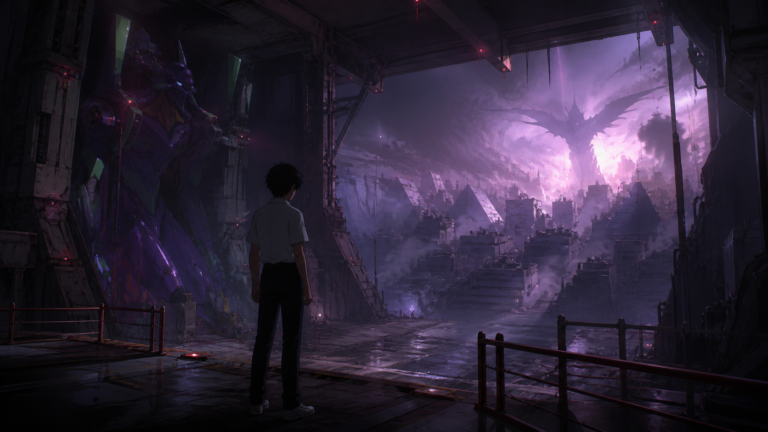
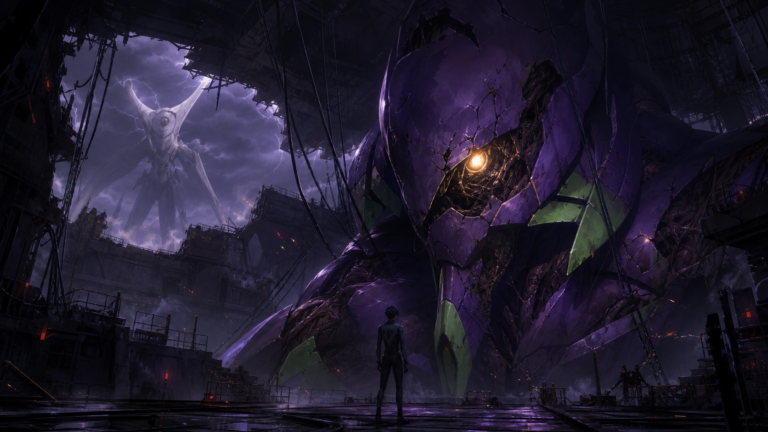
Shinji Ikari arrives in Tokyo-3 during an Angel attack and discovers that his estranged father summoned him to pilot Evangelion Unit-01. Gendo presents combat as an order rather than a choice, while injured Rei becomes the pressure used to force Shinji’s agreement. The premiere makes the franchise’s central abuse plain: adults call a child indispensable only after building a system that treats him as replaceable.
Episode 02
Unfamiliar Ceilings
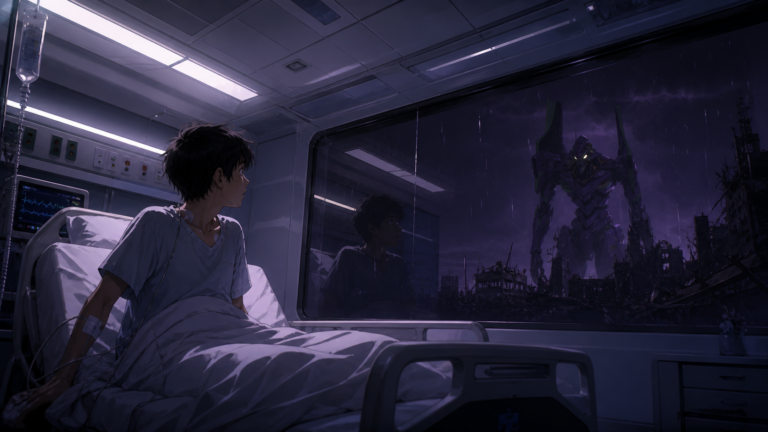
Shinji wakes in a hospital with no memory of how Unit-01 defeated Sachiel, while the audience learns that the Eva moved beyond his control. Misato takes him home, hoping ordinary domestic care can soften NERV’s violence. The unfamiliar ceiling becomes a pattern for dissociation, displacement, and the strange rooms where Shinji repeatedly survives without feeling safe.
Episode 03
The Silent Phone
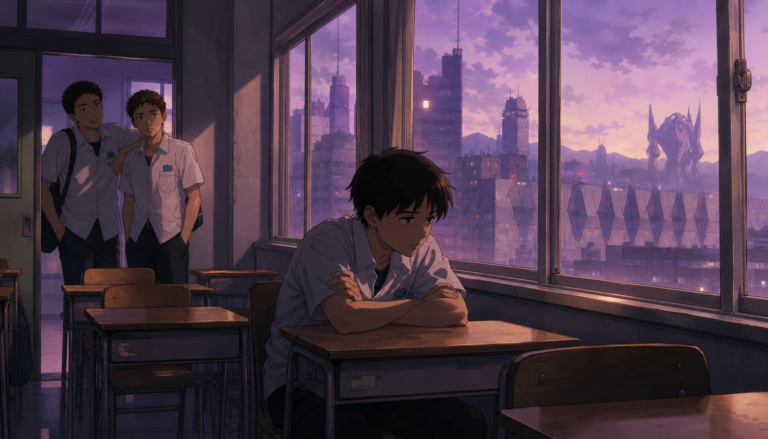
School reveals the civilian cost of Angel battles when Toji punches Shinji over injuries suffered by Toji’s sister. Another attack forces Shinji back into Unit-01, and Toji witnesses the terror inside the cockpit after entering the entry plug with Kensuke. Shinji follows Misato’s retreat order too literally, exposing how obedience and resentment can produce the same reckless result.
Episode 04
Rain, After Running Away
Shinji leaves NERV and wanders through trains, streets, cinema seats, and countryside while avoiding the decision waiting at headquarters. Kensuke offers a temporary refuge, yet no friendship can answer whether Shinji wants to remain a pilot. The station reunion with Misato matters because both arrive after choosing contact, even though neither can promise that contact will become healthy.
Episode 05
Rei I
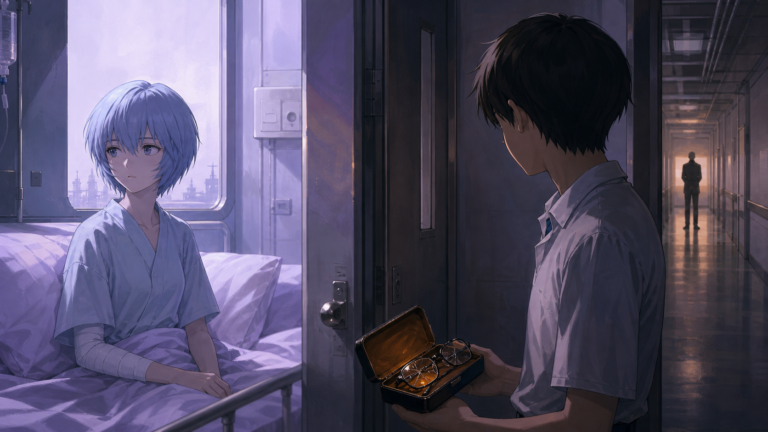
Shinji becomes curious about Rei after noticing Gendo’s unusual warmth toward her. His visit to Rei’s apartment turns awkward and invasive, then a test accident injures her again while Gendo burns his hands opening the plug. Rei’s loyalty looks mysterious from outside because Shinji has not yet learned how completely Gendo shaped her sense of purpose.
Episode 06
Rei II
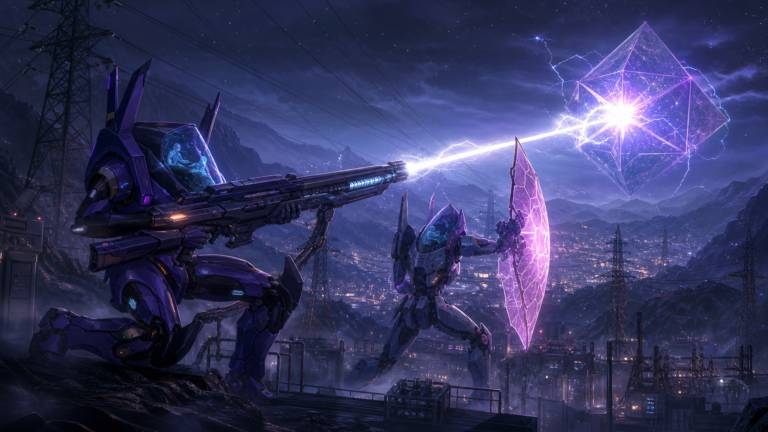
Ramiel’s precision makes ordinary combat impossible, so Misato organizes Operation Yashima around Japan’s electrical power and a long-range shot. Rei agrees to shield Shinji without treating her own survival as valuable. Shinji’s tears after rescuing her create a tiny emotional opening, and Rei answers with a smile borrowed from the only model of warmth he can offer.
Episode 07
A Human Creation
A rival company presents Jet Alone as a human-built alternative to Evangelion, complete with corporate confidence and a public demonstration. The machine’s reactor crisis sends Misato inside a walking disaster while Ritsuko quietly knows more than she admits. The episode shows that competition between institutions can manufacture danger, then market the rescue as proof of competence.
Episode 08
Asuka Strikes!
Misato escorts Shinji and friends to a naval fleet where Asuka Langley Soryu makes an entrance designed to control every first impression. Gaghiel attacks, forcing Asuka and Shinji into Unit-02 together before either wants cooperation. Asuka’s skill is real, but the performance of superiority already sounds like survival rather than simple confidence.
Episode 09
Both of You, Dance Like You Want to Win!
Israfel defeats the pilots because the Angel splits and coordinates better than Shinji and Asuka. Misato makes them live and train together until movement, timing, and breath become synchronized. The dance succeeds as action comedy and emotional warning: technical harmony can be rehearsed without producing trust.
Episode 10
Magma Diver
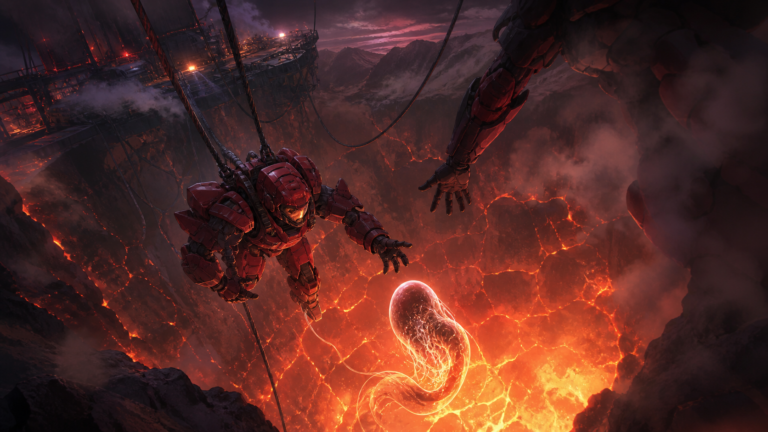
NERV sends Asuka into a volcano to capture the embryonic Angel Sandalphon before the threat matures. Her specialized equipment becomes another body she must master while adults watch from a safe distance. Shinji’s rescue proves that teamwork has grown, though Asuka quickly restores her armor through irritation and embarrassment.
Episode 11
The Day Tokyo-3 Stood Still
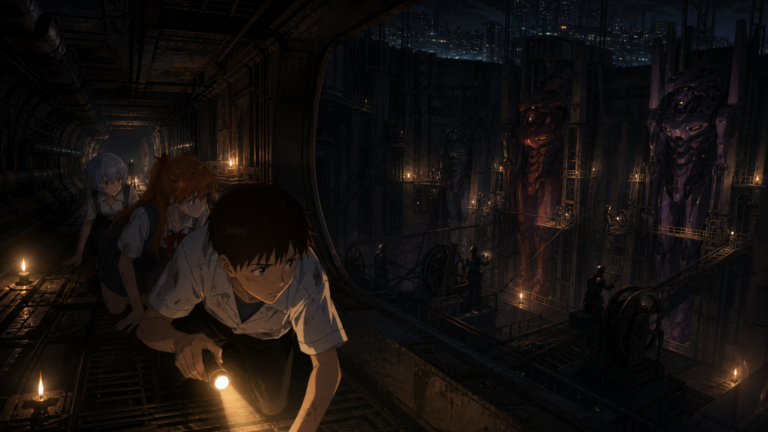
A citywide blackout traps NERV without normal power while an Angel approaches. The pilots navigate the dark city together, and the command staff manually prepares the Evangelions through labor hidden by ordinary automation. The crisis reveals how much survival depends on workers, procedures, and cooperation rather than one heroic pilot.
Episode 12
She said, “Don’t make others suffer for your personal hatred.”
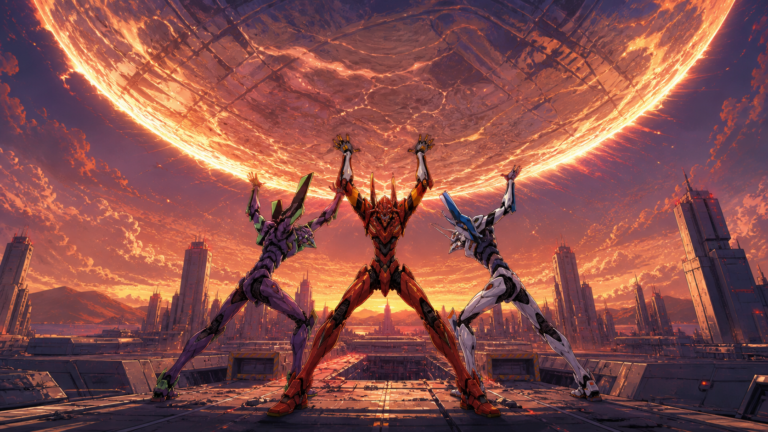
Sahaquiel threatens to crash into Tokyo-3, forcing all three pilots to catch the falling Angel with their Eva units. Misato’s strategy succeeds, but Ritsuko challenges the personal anger toward Angels beneath Misato’s command decisions. The pilots receive a rare meal and praise, creating a temporary family shape that the series will later dismantle.
Episode 13
Lilliputian Hitcher
The Angel Ireul infects NERV’s systems and evolves through the Magi supercomputers faster than ordinary defense can respond. Ritsuko enters the logic of her mother Naoko’s three-part personality to design a counterattack. Technology becomes family archive, workplace authority, and inherited wound inside the same machine.
Episode 14
Weaving a Story
A recap and interrogation structure revisits earlier Angel battles while SEELE questions NERV’s conduct. Repetition changes the meaning of familiar victories because the committee’s suspicions reveal another layer of command. The episode also pauses the action long enough to show how official records turn children’s terror into data for adults.
Episode 15
Lies and Silence
Misato and Kaji confront the emotional mess beneath their earlier relationship while Shinji, Asuka, and Rei continue failing to speak honestly. Kaji takes Misato beneath NERV and reveals the giant body she assumes is Adam. Secrets become intimate weapons because affection survives beside surveillance, divided loyalty, and fear.
Episode 16
Splitting of the Breast
Leliel traps Unit-01 inside a shadow that leads Shinji into an internal confrontation with loneliness and the imagined voices of others. NERV prepares a rescue that may kill him, while the Eva’s buried agency answers first. Unit-01 tears free in a birth-like eruption, making clear that the machine contains a will beyond NERV’s official explanation.
Episode 17
Fourth Children
NERV selects Toji as the Fourth Child without telling Shinji, even as classmates and adults understand pieces of the truth. The secrecy converts friendship into another hidden operational risk. Toji accepts partly because NERV can support his sister, showing how institutions turn family need into consent.
Episode 18
Ambivalence
Bardiel infects Unit-03 during activation, trapping Toji while NERV identifies the Eva as an enemy. Shinji refuses to attack because another pilot remains inside, so Gendo activates the Dummy Plug and makes Unit-01 destroy the target without Shinji’s control. The discovery that Toji occupied the plug shatters any remaining belief that piloting follows an honest contract.
Episode 19
Introjection
Shinji quits again after Gendo’s use of the Dummy Plug, but Zeruel’s attack brings the consequences of departure directly into view. Mari does not exist in this continuity, so Asuka and Rei face the Angel with their own failing strategies before Shinji returns. Unit-01 devours the Angel and crosses into something godlike, turning rescue into another terrifying loss of control.
Episode 20
Weaving a Story 2: oral stage
Shinji remains absorbed inside Unit-01 while consciousness, memory, body, and self lose clear boundaries. Misato and Ritsuko confront another limit of scientific recovery, and Shinji experiences an internal world shaped by the women he desires and fears. His physical return arrives through an unstable reconstruction, not a clean medical rescue.
Episode 21
He was aware that he was still a child.
The series reveals more of NERV’s history, Yui’s disappearance, Naoko Akagi’s death, and the relationships binding Gendo, Fuyutsuki, Ritsuko, and SEELE. Kaji’s investigation reaches the point where divided loyalties become fatal. Misato receives his final message after his death, leaving grief trapped inside evidence she cannot answer.
Episode 22
Don’t Be.
Arael attacks Asuka’s mind from orbit, forcing buried memories of her mother, abandonment, and humiliation into consciousness. Rei uses the Spear of Longinus to destroy the Angel, removing a crucial object from SEELE’s immediate control. Asuka survives physically but loses the performance of superiority that protected her identity.
Episode 23
Rei III
Armisael invades Rei’s Eva and confronts her with loneliness, desire, and the possibility that her feelings have a shape. Rei sacrifices Unit-00 to save Shinji, then returns in another body without the emotional continuity he expects. Ritsuko destroys the empty Rei clones and exposes Gendo’s replacement system, turning the Dummy Plug facility into a grave.
Episode 24
The Beginning and the End, or “Knockin’ on Heaven’s Door”
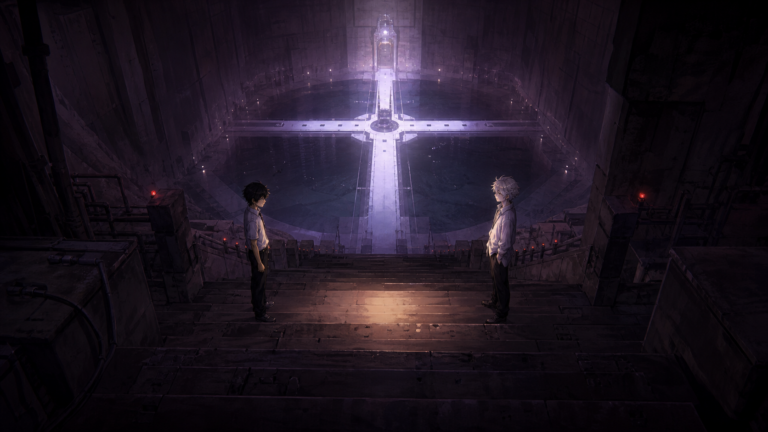
Kaworu Nagisa arrives as the Fifth Child and offers Shinji immediate kindness during the boy’s deepest isolation. Kaworu descends toward Terminal Dogma, recognizes Lilith rather than Adam, and asks Shinji to choose humanity’s survival over his life. The long pause before Unit-01 closes its hand makes the killing feel like a moral injury rather than a victorious battle.
Episode 25
Do You Love Me?
Instrumentality begins inside a stage of questions, memories, repeated images, and hostile interpretations of the self. Shinji, Asuka, Misato, and Rei confront the distance between the identities they perform and the judgments they imagine from others. The episode abandons ordinary external chronology because the crisis now concerns the boundaries that make one person separate from another.
Episode 26
Take Care of Yourself.
Shinji experiences alternate possibilities, including a school-comedy world where familiar people occupy different roles. The possibility of another self loosens the belief that one painful identity must define every future. The final congratulations mark an internal breakthrough rather than a full account of the external apocalypse, leaving the theatrical ending to stage another route through the same crisis.
Where the series ending meets the movies
Episodes 25 and 26 complete the original anime through an internal Instrumentality stage. The End of Evangelion presents theatrical episodes 25′ and 26′ after episode 24, showing the external assault and apocalypse. Fans can watch both without declaring one ending fake.