
Evangelion Episode 6: Rei II
Evangelion Episode Reaction
Tokyo-3 turns an entire country into one weapon, but the real victory comes when Rei finally gives Shinji a reason to believe he is not fighting alone.
Bottom Line
Japan saves Tokyo-3, while two children pay the bill
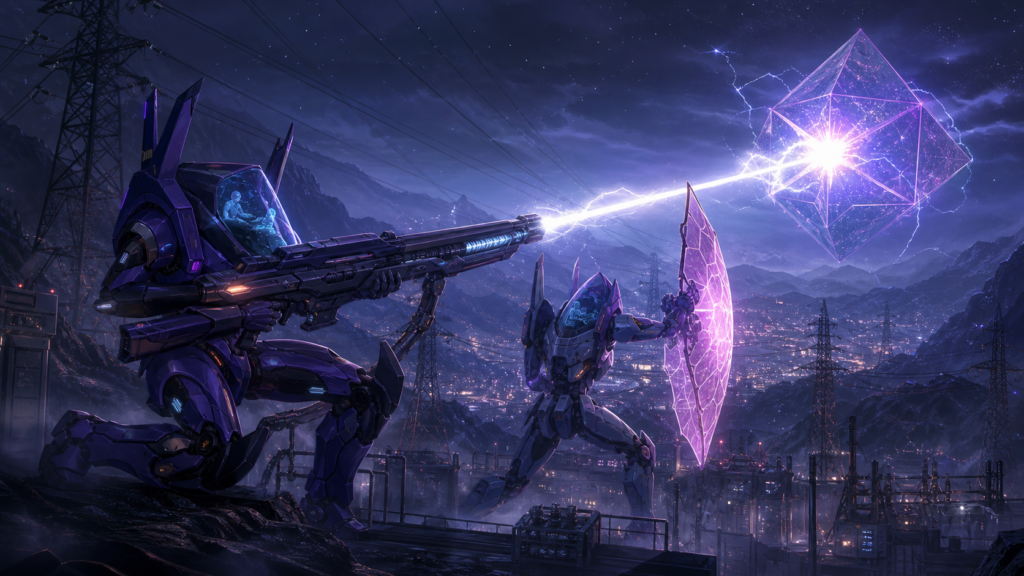
Episode 6 is where Evangelion stops looking like a strange robot show and starts showing the full price of its world. Operation Yashima is thrilling because an entire country contributes electricity, engineering, labor, and trust to one impossible shot. The episode is also ugly in the most honest way because all that national power still ends at the hands of a frightened fourteen-year-old who almost died minutes earlier. Adults create a miracle of logistics, then place the trigger back in Shinji’s hands.
The complaint is not that Shinji and Rei fight. Ramiel is drilling toward the GeoFront, and refusing to act would kill everyone below. The complaint is that NERV has built a system where children are treated as irreplaceable equipment and replaceable people at the same time. Shinji is the only pilot who can fire the rifle, so the institution needs his body. Rei can shield him, so the institution needs hers too. Their fear matters only when fear affects the mission.
What the episode gets right is the difference between sacrifice and solidarity. Every home that loses power, every technician who runs a cable, and every worker who prepares the rifle joins a shared emergency. That cooperation feels earned because people contribute part of their normal lives to a public defense. Shinji and Rei face something different. Their contribution may cost their lives, and neither child has enough power inside NERV to negotiate the terms. Cooperation becomes exploitation when one group chooses danger for another.
Episode 6 never turns that conflict into a lecture. The episode lets the machinery hum, the lights die, and the children wait. By the time Shinji and Rei speak after the battle, the huge national operation has narrowed to one open entry plug and one face that does not know how to smile. That shift is why the episode lands. The spectacle earns attention, but recognition between two lonely children gives the spectacle meaning.
Operation Yashima
A national grid becomes a weapon
Misato’s plan is beautifully reckless. Conventional attacks cannot reach Ramiel because the Angel detects threats and fires before an Evangelion can close the distance. NERV responds by building a sniper operation around a positron rifle powered by electricity drawn from across Japan. The plan has an 8.7 percent chance of success, which sounds less like confidence than a number adults use so panic can wear a uniform.
The preparation sequence understands that scale can be exciting without becoming noisy. Crews move equipment. Transmission towers stand over the landscape. Cities go dark so one weapon can charge. The episode treats infrastructure as action, which makes every cable and switch feel more important than another explosion. A country is not saved by a lone genius here. A country is saved by thousands of people doing ordinary jobs under extraordinary pressure.
That distinction matters because Evangelion often traps viewers inside NERV’s command rooms. Operation Yashima briefly opens the story outward. Tokyo-3 is not an isolated playground for commanders, pilots, and scientists. Hospitals, homes, rail systems, power stations, and workers all exist beyond the armored city. The battle consumes their shared resources. Public safety becomes visible as a network instead of a slogan.
Misato deserves credit for seeing a path nobody else sees. She turns a nearly impossible technical limit into a coordinated plan and gives both pilots precise roles. She also sends Shinji back into combat after Ramiel’s first shot nearly kills him. The episode does not erase that contradiction. Competent leadership can still operate inside a rotten structure. A smart plan does not become humane just because the plan works.
Shinji receives the rifle because he has the best synchronization score. Rei receives the shield because someone must stand between him and Ramiel’s beam. NERV presents those assignments as clean tactical decisions, but the emotional math is brutal. Shinji must hold still while the enemy can fire first. Rei must trust equipment that may not survive a direct hit. Their partnership is born through danger adults designed around their bodies.
The Angel
Ramiel is terrifying because Ramiel does not perform
Ramiel does not posture, roar, or chase anyone through the streets. The Angel floats, observes, transforms, and fires. The geometric body refuses the familiar language of a monster. No face tells viewers where to look. No limbs reveal a fighting stance. Ramiel resembles a perfect object dropped into an imperfect city, and that visual coldness makes the threat feel less alive and more absolute.
The drill is even worse. Ramiel does not need to understand the people below the city. The Angel only needs to keep moving toward the GeoFront. That steady purpose turns the battle into a countdown. NERV cannot distract Ramiel with emotion because Ramiel offers none. Human fear has to compete with mechanical patience.
Sound carries much of the horror. The charging beam, the distant machinery, and the long pauses before each shot make the audience wait with Shinji. Waiting becomes physical. A faster battle would let viewers hide inside excitement, but Episode 6 forces everyone to sit inside uncertainty. Shinji does not win by moving more quickly than Ramiel. He wins by remaining present long enough to fire again.
The first missed shot is essential. A perfect first attempt would turn Operation Yashima into a demonstration. Failure exposes the plan’s fragile reality. Equipment shifts, calculations collapse, and Ramiel prepares another attack. Rei moves the shield into position because the mission no longer has the luxury of a clean diagram. The plan survives only because a person chooses to protect another person when the numbers stop being useful.
Rei and Shinji
The smile matters because nobody knows what to do with care
Rei’s shield is not a romantic confession, and treating the scene that way makes her character smaller. Rei performs the role assigned to her, but she also remains in place while the shield burns apart. Her choice shows trust in Shinji and commitment to the mission, yet the moment carries the conditioning of a child who has learned to treat her own survival as optional. Courage and damage exist together.
Shinji’s response changes the relationship. After the battle, he rushes to Rei’s entry plug and opens it himself. Episode 5 showed Gendo burning his hands while rescuing Rei. Episode 6 repeats the shape of that memory with a different emotional result. Gendo’s rescue binds Rei more tightly to the commander who controls her world. Shinji’s rescue offers recognition from another child who understands what NERV asks them to endure.
Shinji cries because he does not have better language. He is relieved, frightened, embarrassed, and angry at once. Rei does not know what expression belongs to the moment. Her question is not proof that she lacks emotion. Her question shows that emotion has rarely been safe or useful in her life. NERV taught her procedures, commands, and replacement. Nobody taught her what to do when someone is simply glad she survived.
Shinji tells Rei to smile. The line can sound controlling when removed from the scene, and the story should not receive a free pass because the result is famous. Inside the moment, however, Shinji is not ordering Rei to perform happiness for him. He is reaching for the only memory of care he can describe. He remembers a smile connected to Gendo and hopes the expression can bridge a distance he cannot cross with better words.
Rei’s smile works because the episode keeps the gesture small. No swelling speech explains what has changed. Rei does not suddenly become open, cheerful, or healed. Shinji does not become confident. Two children recognize that the other one came back alive. For a series built around people failing to reach one another, that tiny exchange is a major event.
The scene also exposes NERV’s greatest lie. The organization acts as though emotional connection is a distraction from the mission, yet connection is what saves the mission. Rei protects Shinji because a human bond has begun to form. Shinji fires again because Rei gives him time. Their synchronization is not merely a machine reading. The system survives by consuming the relationships it refuses to nurture.
Culture and Systems
Collective duty looks different from forced obedience
Operation Yashima draws power from a cultural fantasy of national coordination. A crisis arrives, institutions cooperate, citizens accept hardship, and specialists build a solution before dawn. The fantasy is attractive because modern life depends on invisible systems working together. Electricity, transportation, medicine, communication, and public safety only function when strangers trust one another enough to maintain them.
Evangelion complicates that fantasy by placing children at the sharp end. Public cooperation can be noble while the chain of command remains abusive. The lights going dark across Japan represent shared contribution. Shinji being told to aim again after nearly dying represents a hierarchy deciding whose suffering is acceptable. Those two truths do not cancel each other.
The episode feels current because societies still celebrate young people for carrying failures adults refused to repair. Gifted students become unpaid symbols for schools. Young workers are praised for resilience while institutions normalize impossible demands. Children facing climate disasters are asked to inspire adults rather than receive protection from them. NERV turns the same habit into science fiction and gives the burden a rifle.
A more believable and better system would not remove the danger. Ramiel still has to be stopped. The improvement would begin with honest consent, psychological preparation, independent advocates for the pilots, and authority to refuse assignments without punishment. Adults would share risk instead of only sharing command. Survival after the battle would count as part of mission success, not an optional bonus.
Episode 6 does not build that system. The story is stronger because the victory remains compromised. Japan’s electricity returns. Ramiel is defeated. NERV continues. Shinji and Rei gain one human memory inside machinery designed to use them. The result is not hopeful in a clean way, but the moment is real enough to matter.
The episode also understands that public emergencies reveal priorities. Japan can redirect a national grid overnight when an Angel threatens the center of power. NERV can organize engineers, weapons, transport, and command staff with astonishing speed. The same institution cannot organize ordinary emotional care for Shinji or Rei. Technical urgency receives endless resources because leaders can measure the result. Loneliness remains private because nobody has built a control panel for it.
That imbalance is not accidental background. Shinji and Rei become useful precisely because they have been isolated. A child with strong outside support might question orders, demand explanations, or leave. NERV benefits from pilots who believe they have nowhere else to go. Episode 6 gives the children one connection the institution did not authorize, and that small bond threatens the logic that keeps them obedient. Their smile is gentle, but the meaning underneath is political.
RaeRae’s Verdict
A perfect battle episode with an ugly institutional center
Episode 6 earns its reputation because every layer supports the same argument. Ramiel’s cold geometry makes human vulnerability visible. Operation Yashima turns infrastructure into suspense. Rei’s shield turns a tactical assignment into an act of trust. Shinji opening the plug turns victory into recognition. Nothing needs a motivational speech because the emotional change is already clear.
The episode also refuses to pretend success proves NERV is right. A country working together is impressive. A military organization depending on traumatized children is still a failure. Misato’s plan saves lives, but the adults remain comfortable calling survival a mission outcome instead of a responsibility. That tension is the real engine beneath the famous shot.
My bottom line is simple: Ramiel is not the scariest system in Episode 6. Ramiel is honest about being a threat. NERV smiles, calculates, and calls exploitation duty. Shinji and Rei win anyway, not because the system deserves them, but because they begin to see each other as people.
Episode File
Episode 6, “Rei II”
Original air date: November 8, 1995. Runtime: about 22 minutes. Watch: Netflix. Next: Episode 7, “A Human Work.”