
The subtitles assumed you already knew.
A character says one word, everybody on screen understands the social earthquake that just happened, and I am sitting there wondering whether I accidentally skipped Anime Orientation.
Animation carries genre rules, religious references, school customs, historical baggage, mythology, power-system vocabulary, fandom language, and storytelling shorthand that rarely pauses to explain itself. Anime 101 is where we pause for it.
The goal is not to turn a fun show into homework. I just want enough context to understand why a title matters, why somebody used that honorific, why the fox statue keeps appearing, or why everyone except me apparently understood what “cour” meant.
Context, not a vocabulary landfill.
The shelf for everything the story did not stop to define.
Some things are specific to one series. Others travel everywhere. Honorifics show up across hundreds of titles. Daoist ideas can wander from donghua into cultivation stories, games, novels, and other parts of CVM Sekai. Mythology, folklore, historical periods, genres, and storytelling devices do not care which menu you happened to enter through. So this shelf follows the concept, not an imaginary border between fandom sections.
What lives in Anime 101?
The labels help organize the shelf, but plenty of entries naturally overlap. A myth can become a character archetype. A historical custom can shape a modern school scene. A genre term can also tell you exactly what kind of emotional damage you have signed up for.
Some terms refuse to stay in one section.
If a concept appears in anime, Chinese animation, webnovels, wuxia, cultivation stories, games, or another CVM Sekai space, I am not going to rewrite the same explanation five times just so every category can claim its own copy.
The main reference entry explains the concept once. From there, individual series and worlds can link back to it and add their own specific interpretation. That keeps the definition consistent while still leaving room to explain how one story uses the idea differently from another.
Find a Term
Search a genre, custom, myth, historical idea, power-system term, storytelling device, or whatever word the subtitles tossed onto the screen and then abandoned. You can also browse alphabetically if you have accepted that this is apparently research now.
Showing the complete Anime 101 library.
Open the Reference Shelf
Entries can connect to more than one series, fandom, or story world when the concept genuinely travels. Tags describe the idea itself: genre, culture, myth, history, belief, or story machinery. They do not exist to list every title that happened to use the word once.
Learn the shared idea here, then follow the links into the specific worlds that use it.

How My Neighbor Totoro Uses a Child’s Eye Level
Doors, stairs, grass, shadows, and adult distance change when the camera respects the physical scale of a child. This guide maps how Totoro builds emotion from height and…

Rain, Waiting, and Sound in My Neighbor Totoro
The bus-stop sequence is famous for Totoro, but its emotional force comes from waiting, rain, tiny sounds, and Satsuki holding more than an umbrella.
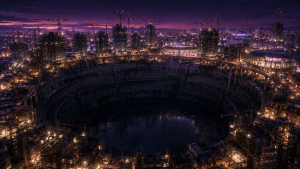
Why Akira Is About 1945 and 1988 at Once
Akira opens with a city erased by white light, then jumps thirty-one years to a society rebuilt on the crater by the institutions that caused it. Otomo drew…
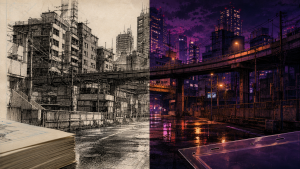
Akira Manga and Film Compared: What the Movie Left Out
Katsuhiro Otomo published the Akira manga across six volumes from 1982 to 1990. The film arrived in 1988, two years before the story finished, so Otomo adapted roughly…

Everything Akira Touched: The Influence Trail, Verified
Kanye West restaged the hospital sequence in a music video. The Duffer brothers named Otomo as a direct influence on Stranger Things. Kaneda’s bike appears in Ready Player…
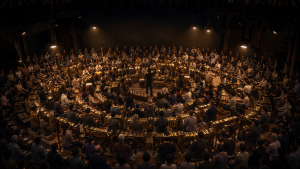
Akira’s Score Explained: Geinoh Yamashirogumi and 200 Amateurs
The most recognizable score in anime was performed by Geinoh Yamashirogumi, a collective of several hundred people who mostly held day jobs in science, business and education. They…
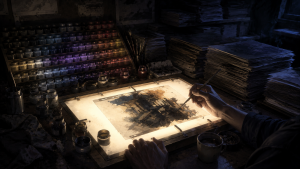
Akira’s Animation Explained: 160,000 Cels and 327 Colors
More than 160,000 hand-painted cels, a palette of 327 colors, a budget near 1.1 billion yen, and dialogue recorded before the animation existed. Akira held the record for…
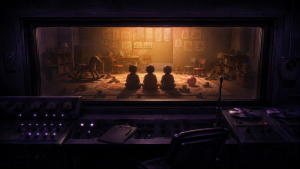
The Numbers Explained: Kiyoko, Takashi, Masaru and Akira
Kiyoko, Takashi and Masaru are numbered 25, 26 and 27. Akira is 28. They are the children the state took, tested, and kept, and they are the evidence…
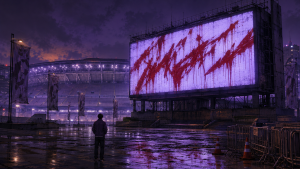
Akira’s 2019 and the Olympic Countdown Explained
Akira is set in 2019 and puts an Olympic countdown board in the background with protest graffiti across it. Tokyo really did win 2020, the Games really were…

Akira’s Bosozoku Explained: The Real Gangs Behind the Capsules
Bosozoku were real Japanese motorcycle gangs, mostly boys aged 17 to 20, who ran modified bikes through Tokyo at night in embroidered tokko-fuku coats. Katsuhiro Otomo lived where…
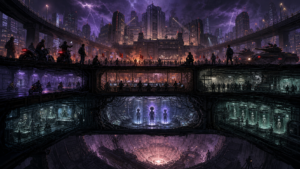
Akira Lore and Neo-Tokyo
A fan-focused guide to Neo-Tokyo, psychic power, military control, youth rebellion, adaptation choices, and the buried systems that make Akira more than a cyberpunk spectacle.
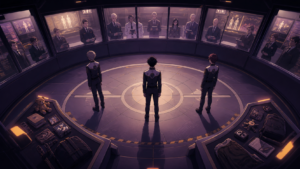
NERV Manufactures Compliance
NERV calls child deployment protection. RaeRae follows the coercion, hazardous labor, surveillance, and adult systems that make refusal almost impossible.
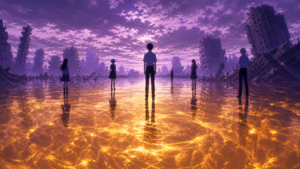
What Human Instrumentality Actually Is in Evangelion
Human Instrumentality promises an end to loneliness by removing the boundaries between people. This guide explains the plan, competing versions, and emotional cost.
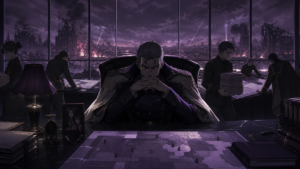
Gendo Ikari: Grief Does Not Excuse Governance
Gendo’s grief explains his obsession. His grief does not excuse using Shinji, Rei, NERV, and Instrumentality to make private pain everybody else’s government.
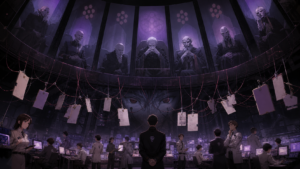
NERV and SEELE Explained
NERV fights the Angels while SEELE controls the scenario behind the curtain. This guide maps the factions, leaders, money, secrets, and competing apocalypse plans.
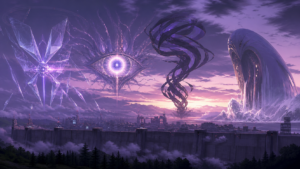
Evangelion Angels Explained
Evangelion’s Angels are not one species with one strategy. This guide explains their names, bodies, attacks, goals, and connection to Adam, Lilith, and humanity.
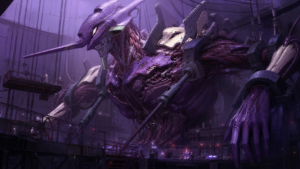
Evangelion Units Explained: Not Robots, Not Quite Gods
Evangelion Units look like giant robots, but armor hides living bodies, human souls, and biological systems. This guide explains what each Eva actually is.
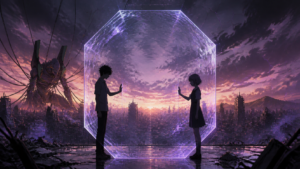
AT Fields Explained: The Wall Between One Self and Another
AT Fields are defensive barriers, soul boundaries, and one of Evangelion’s central metaphors. This guide explains who creates them, how they break, and why every person has one.
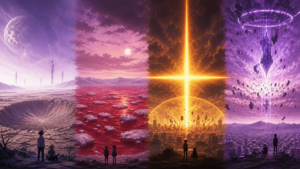
First, Second, Third, and Near Third Impact Explained
Evangelion’s First, Second, Third, and Near Third Impacts are different disasters with different triggers. This guide separates the names, timelines, and continuities.
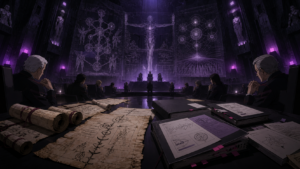
The Dead Sea Scrolls and SEELE’s Scenario Explained
Evangelion’s Secret Dead Sea Scrolls guide SEELE’s scenario without functioning like a simple prophecy. This explainer separates plans, predictions, and manipulation.
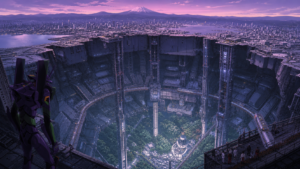
Tokyo-3, GeoFront, and the City Built for the End
Tokyo-3 is a fortress city above the GeoFront, built to retract, fight, and hide NERV’s deepest secrets. This guide maps the city, defenses, schools, shelters, and underground world.
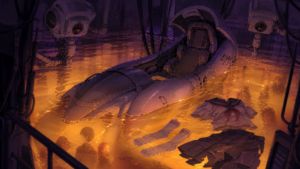
LCL Explained: Blood, Breath, Memory, and Return
LCL fills the entry plug, carries breath and signals, and becomes the sea of shared human existence. This guide explains its biology, symbolism, and role in Instrumentality.
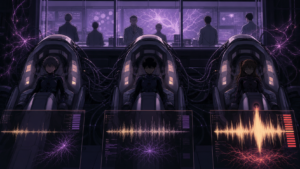
Synchronization Ratios and Entry Plugs
Synchronization links a pilot’s mind and body to an Eva through the entry plug. This guide explains ratios, contamination, pain feedback, compatibility, and the human cost of higher…
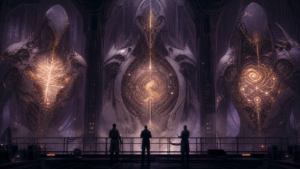
The Soul Inside an Eva: Yui, Kyoko, and Unit Identity
An Evangelion needs more than biology and machinery. This guide explains the human souls inside the Evas, Yui, Kyoko, Unit identity, protection, rejection, and berserk action.
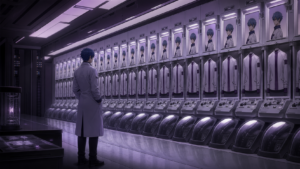
Rei Ayanami, the Dummy System, and Manufactured Personhood
Rei Ayanami is a person living inside a replacement system. This guide explains her bodies, soul, memories, Lilith connection, dummy plugs, and the difference between access and identity.
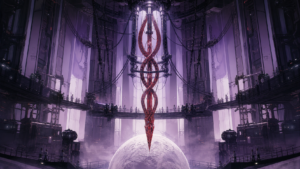
The Spear of Longinus and Evangelion’s Control Weapons
The Spear of Longinus can restrain Seeds of Life, pierce AT Fields, and reshape an Impact. This guide tracks the weapon across the original and Rebuild continuities.
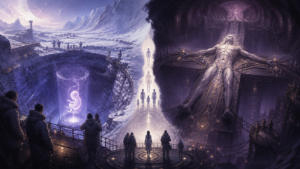
Adam, Lilith, and Why Humanity Counts as an Angel
Adam and Lilith are Seeds of Life whose collision makes Earth’s history an accident. This guide explains Angels, Lilin, souls, moons, and why humanity counts as the final…
Evangelion World, Lore & Guides
Explore Evangelion’s organizations, Angels, Eva units, Impacts, Instrumentality, AT Fields, artifacts, and hidden systems through connected lore guides.
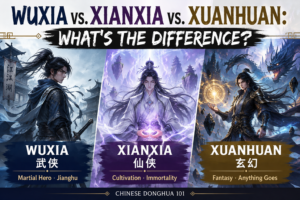
Wuxia vs. Xianxia vs. Xuanhuan: What’s the Difference?
Chinese Donghua 101 · Fantasy & Storytelling Wuxia vs. Xianxia vs. Xuanhuan: What’s the Difference? You start watching Chinese fantasy and everything seems reasonably manageable. There are swords.…
How Chinese Web Novels & Manhua Become Donghua
Chinese Donghua 101 · Adaptation & Production How Chinese Web Novels & Manhua Become Donghua A Chinese story can begin as millions of words published chapter by chapter…
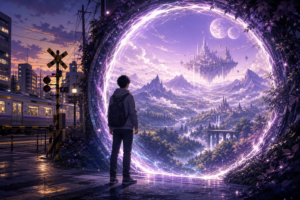
What Is Isekai? Another-World Stories Explained
Isekai means “another world,” but the portal is only the beginning. Learn how transportation, reincarnation, summoning, reverse isekai, light novels, anime adaptation, and real worldbuilding fit together.
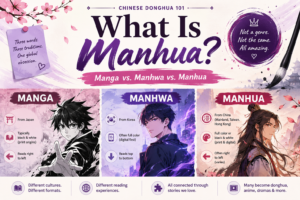
What Is Manhua? Manga vs. Manhwa vs. Manhua
Chinese Donghua 101 · Comics & Publishing What Is Manhua? Manga vs. Manhwa vs. Manhua Manga. Manhwa. Manhua. Three words that look close enough to make a new…
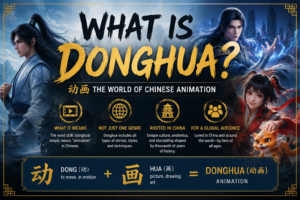
What Is Donghua?
Chinese Donghua 101 · Start Here What Is Donghua? If somebody told you donghua means “Chinese anime,” they gave you an answer that is useful for approximately thirty…
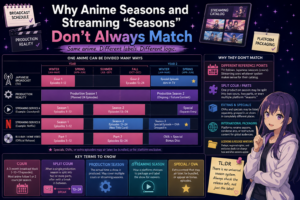
Why Anime Seasons and Streaming “Seasons” Don’t Always Match
Why don’t anime seasons match streaming seasons? Learn how cours, licensing, episode numbering, platform packaging, and regional releases create confusion.
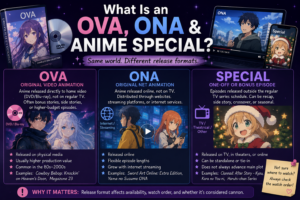
What Is an OVA, ONA & Anime Special?
What is an OVA, ONA, or anime special? Learn how these Japanese anime formats differ by release route, episode purpose, continuity, and production history.

What Is a Seiyuu?
What is a seiyū? Learn how Japanese voice actors work across anime, games, dubbing, music, agencies, auditions, recording, and live events.
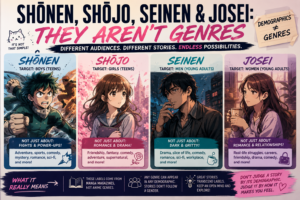
Shōnen, Shōjo, Seinen & Josei: They Aren’t Genres
Shōnen, shōjo, seinen, and josei are publishing demographics, not genres. Learn what each label means, how editors use them, and why stories overlap.

How Manga and Light Novels Become Anime
How do manga and light novels become anime? Follow the adaptation process from source rights and planning through scripts, production, broadcasting, and streaming.
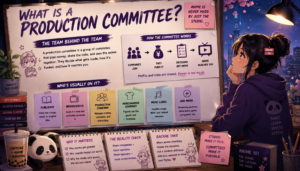
What is a Japanese Anime Production Committee?
What is a Japanese anime production committee? Learn who finances anime, how companies divide rights and risk, and why the animation studio may not control every decision.
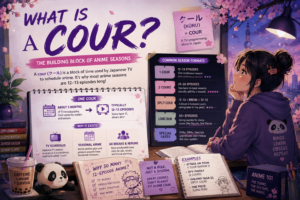
What is Cour?
What is a cour in anime? Learn why 12- and 13-episode runs keep appearing, how split cours work, and why a cour is not the same as a…

Who Knew Naruto Was Minato’s Son? The Complete Classified Parentage File
RaeRae Rants · Naruto · Classified Family File Who Knew Naruto Was Minato’s Son? Several powerful adults knew the truth about Naruto’s parents. The harder question concerns why…
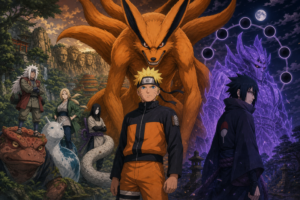
Naruto Folklore, Buddhism and Japanese Myth Explained: Foxes, Sannin, Six Paths and Divine Names
Naruto 101 · transformed sources, symbols and story memory Folklore, Buddhism & Japanese Myth Nine-tailed foxes, giant toads, white snakes, wrathful guardian forms, death gods, reincarnating brothers and…
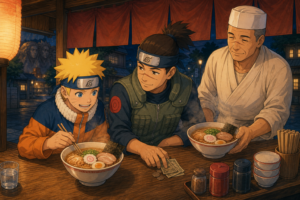
The Naruto Food File: Ichiraku Ramen, Soldier Pills, Barbecue and the Meaning of Being Fed
Naruto 101 · hunger, hospitality and military fuel The Naruto Food File Ramen gives an orphan a regular seat. Barbecue gives a team somewhere to become friends after…
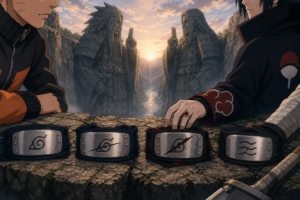
Naruto Village Symbols and Forehead Protectors Explained: Allegiance, Missing-Nin and Meaning
Naruto 101 · allegiance, uniform and visible dissent Village Symbols & Forehead Protectors A metal plate and strip of cloth can certify graduation, identify an army, protect an…
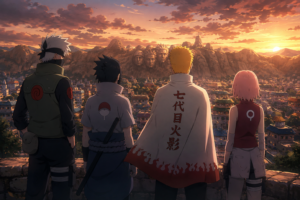
Naruto Shinobi, Kunoichi and Nindo Explained: Language, Gender and the Ninja Way
Naruto 101 · language, labor and chosen identity Shinobi, Kunoichi & Nindō “Ninja” sounds like a costume. “Shinobi” names a profession, a history of concealment and a person…
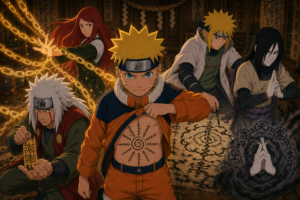
Naruto Seals and Fuinjutsu Explained: Formulas, Cursed Marks, Containment and Consent
Naruto 101 · written power, containment and consent Seals & Fūinjutsu A seal can imprison a tailed beast, lock away a technique, suppress another seal, store weapons, bind…
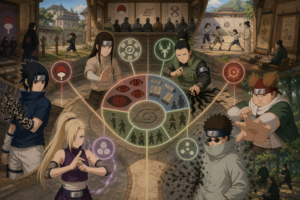
Naruto Clans, Hiden and Kekkei Genkai Explained: Inheritance, Secrets and Power
Naruto 101 · Families, Knowledge and Inheritance Clans, Hiden & Kekkei Genkai A clan can preserve a biological trait, guard a teachable technique, control land and marriage, run…
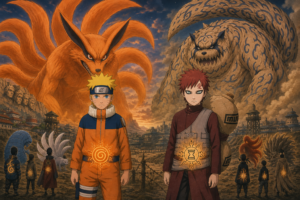
Naruto Jinchūriki and Tailed Beasts Explained: Hosts, Seals, Politics and Meaning
Naruto 101 · Bodies, Beasts and Village Power Jinchūriki & Tailed Beasts The ninja world calls them containers, hosts and weapons before it calls them children. This file…
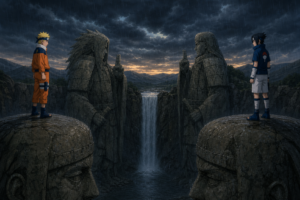
Naruto Sasuke Recovery Mission Arc
Naruto Arc File · Episodes 107–135 · Full-Series Spoilers Sasuke Recovery Mission Five genin chase a coffin through the forest because one teammate mistakes power for freedom. Every…
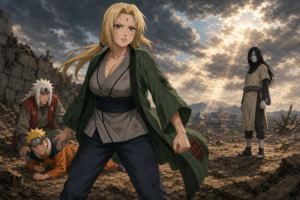
Naruto Search for Tsunade Arc
Naruto Arc File · Episodes 81–100 · Full-Series Spoilers Search for Tsunade Konoha goes looking for a Hokage and finds a woman who has survived too much to…