
Memory, Sorrow, and Thorn
Four published volumes, one original trilogy architecture, three swords in the title, and an entire kingdom built over what it would rather forget.
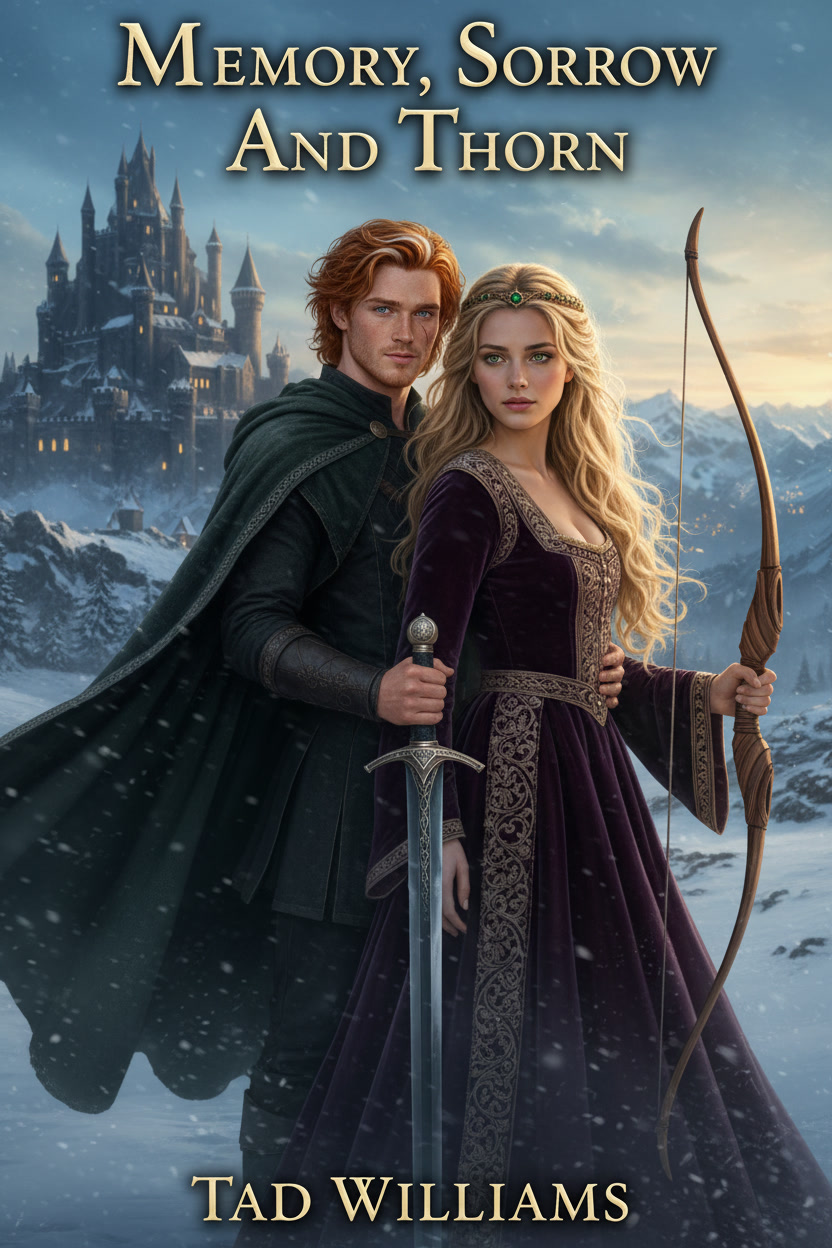
Overview
The kingdom begins on borrowed stone—and ends by refusing the throne
Four published books carry one original trilogy from Prester John’s deathbed to King Seoman and Queen Miriamele’s rebuilt Great Table. The human Hayholt is Sithi Asu’a under another name. The legendary swords are not salvation but the keys to Ineluki’s return. Bloodlines surface, prophecies betray their readers, and a kitchen boy becomes sovereign only after insisting that ancestry did not make him worthy.
Story Plotline
One story, three different ways to take it apart
Chronology tells us what happened. Character arcs expose what it cost. Tropes and themes show how the familiar fantasy machinery was quietly loading the trap.
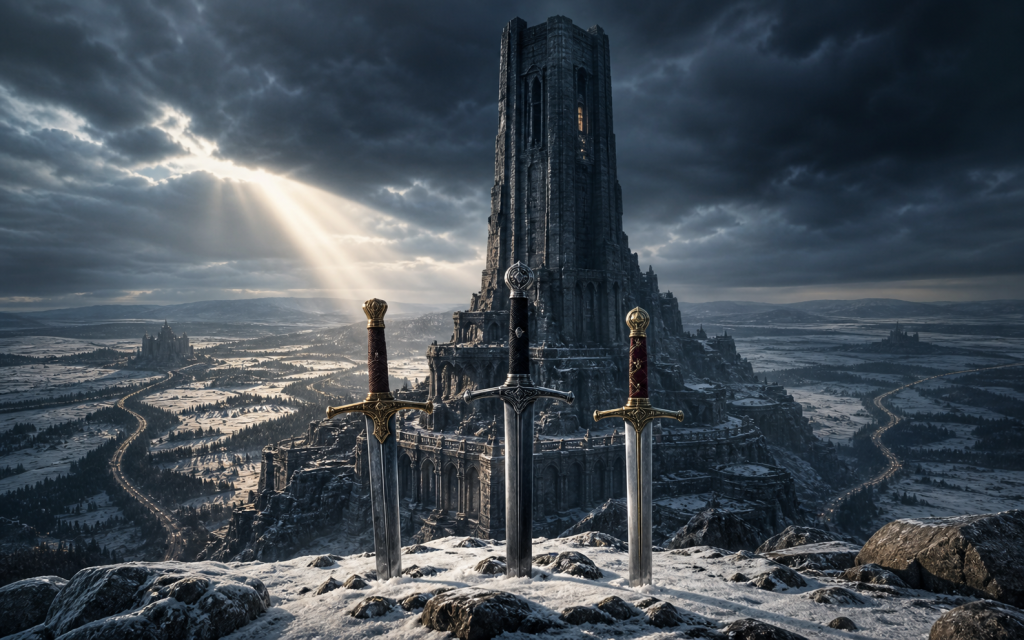 Complete series plot
Memory, Sorrow, and Thorn: The Complete Series Plot
A false quest carries three swords into the heart of an old catastrophe—and then asks what actually breaks the circuit.
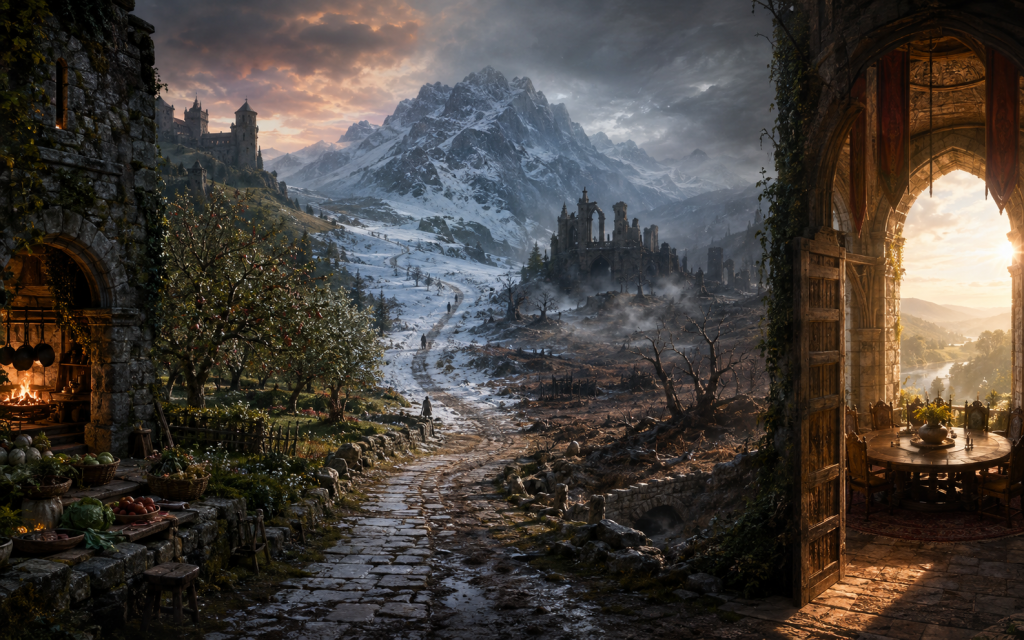 Complete character arcs
Memory, Sorrow, and Thorn: The Complete Character Arcs
Simon, Miriamele, Josua, Elias, Cadrach, Camaris, and the people history keeps filing under support.
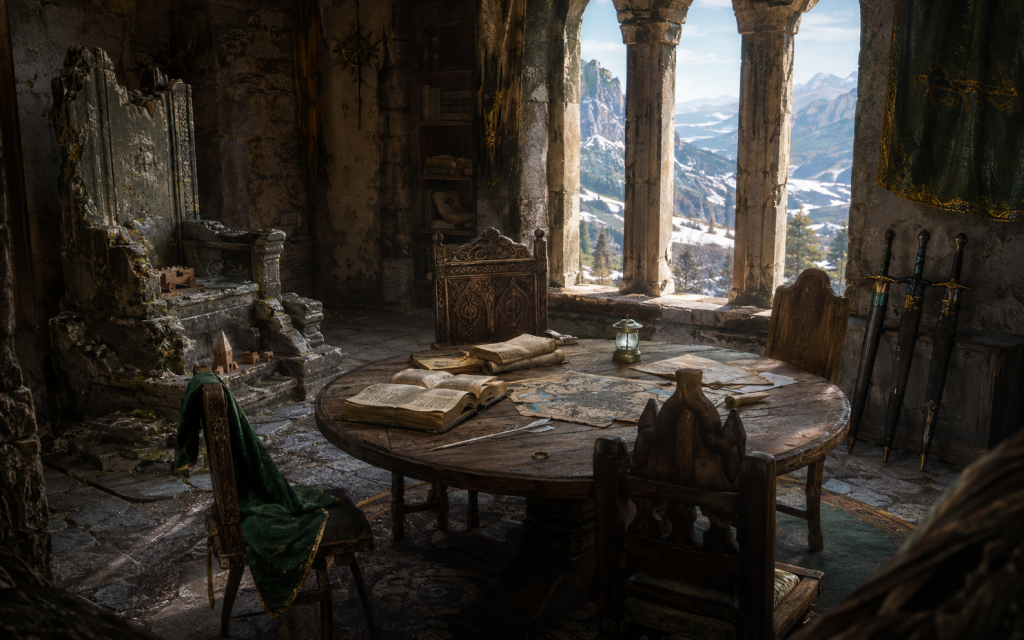 Complete tropes & themes
Memory, Sorrow, and Thorn: Tropes & Themes Across the Complete Series
The hidden heir, the fulfilled prophecy, the magic swords, occupied history, invisible rank, and hope built as hospitality.
Books in the Series
An original trilogy published here as four books
The final narrative volume, To Green Angel Tower, is split into Parts I and II in the owned Kindle set. CVM Sekai therefore tracks four published volumes without pretending the story was designed as a four-novel sequence.
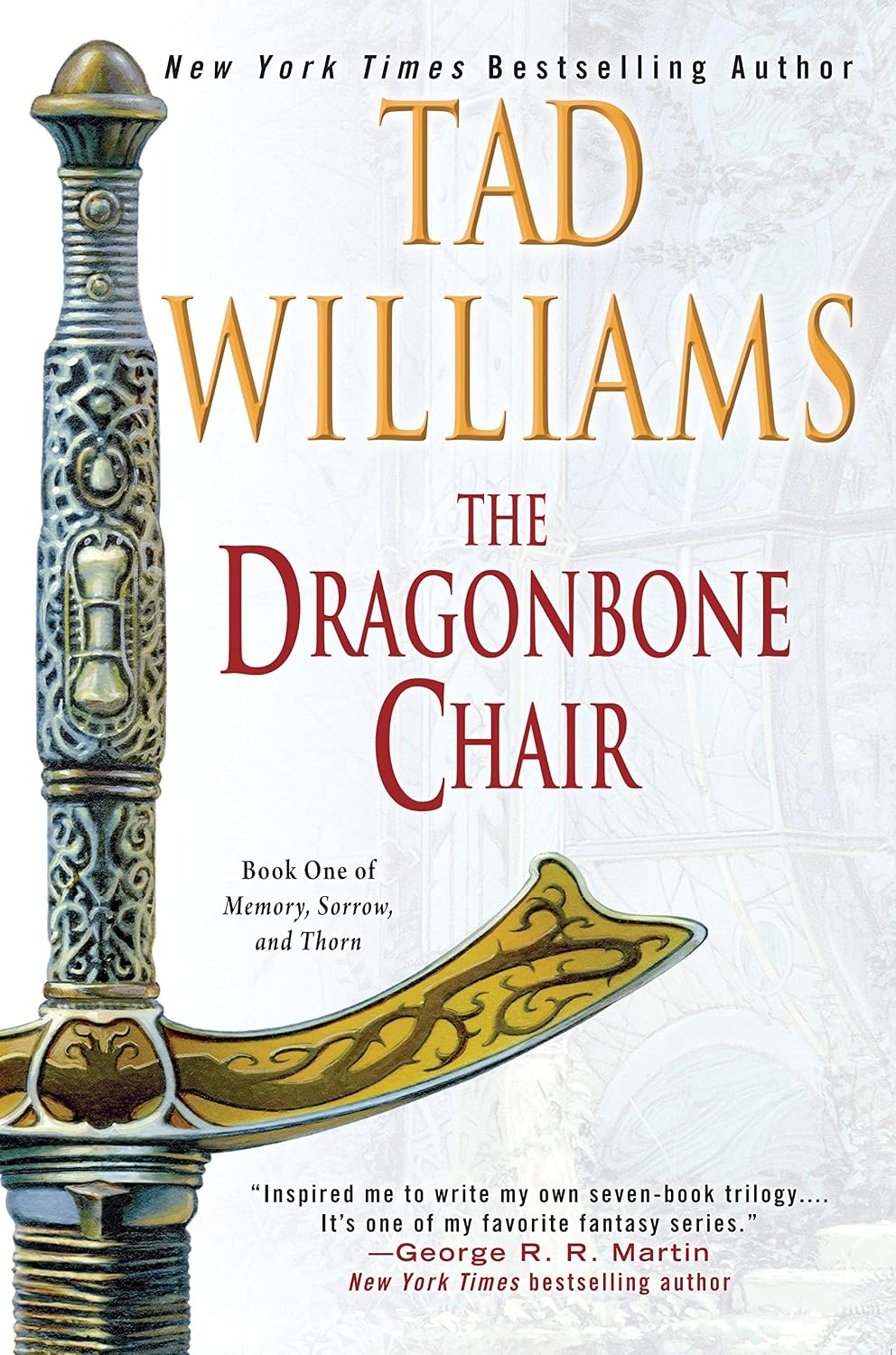
The Dragonbone Chair
All 44 chapters and the complete reference back matter are verified through page 652 of 652.
Open book hub →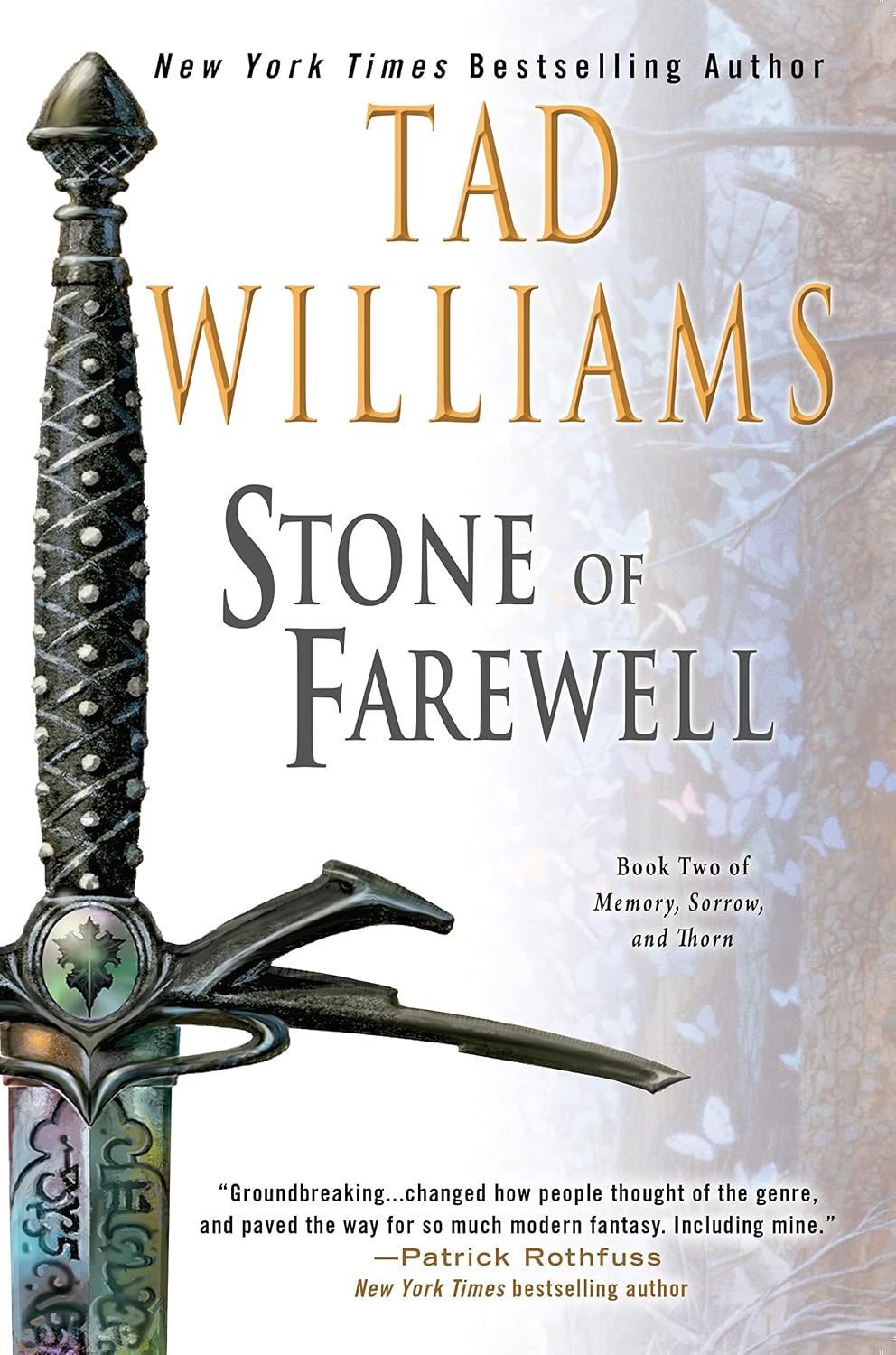
Stone of Farewell
All 28 chapters and the complete reference layer are verified through page 589: false refuge, converging resistance, Amerasu’s silencing, and Simon’s reunion with Binabik.
Open book hub →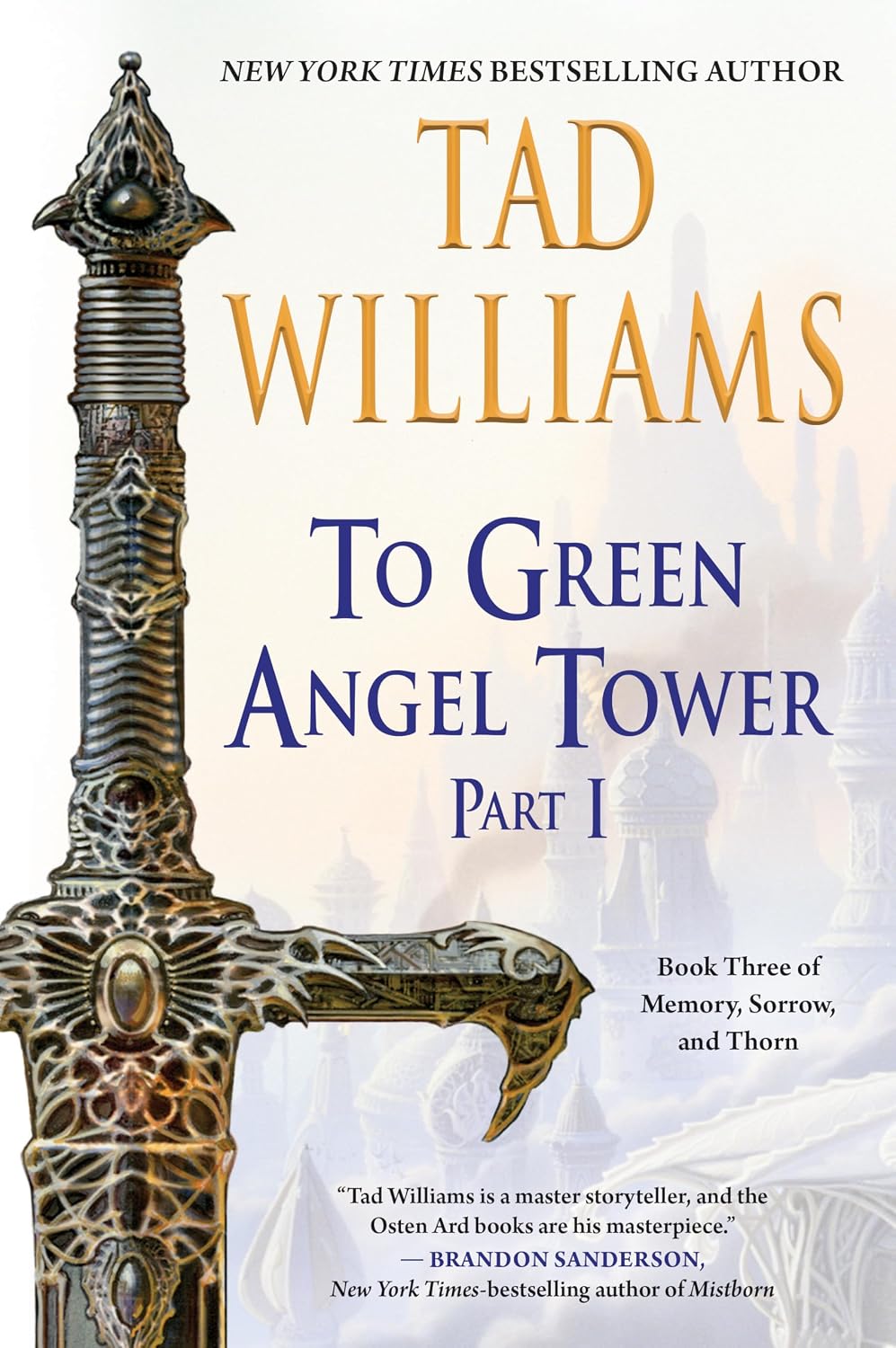
To Green Angel Tower, Part I
All 26 chapters and the complete reference layer are verified through location 12656: the Talons breach the camp as Miriamele rides on a secret mission and Simon follows as her champion.
Open book hub →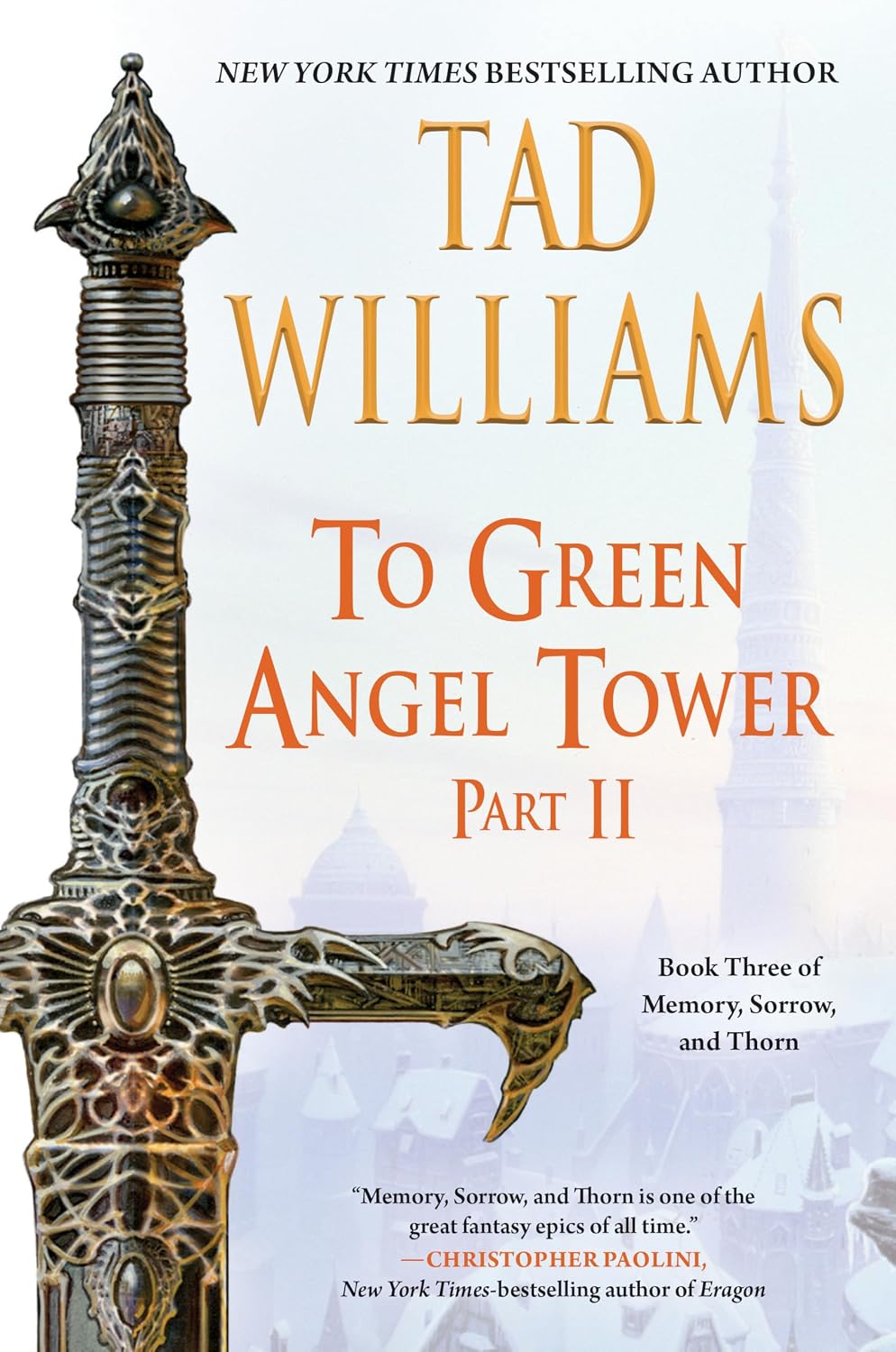
To Green Angel Tower, Part II
All 34 chapters and the complete reference layer are verified through location 12,850: the swords deliver the trap, compassion breaks it, and King Seoman and Queen Miriamele rebuild.
Open book hub →Characters
One complete life, every book-era milestone
Each named character receives one canonical profile, then appears on the series shelf and every book shelf where they belong. No duplicate biographies. No supporting character sacrificed to a tiny cast limit.
 Protagonist · Alive · King Seoman
Simon / Seoman Snowlock
The castle mooncalf becomes dragon-marked knight, Eahlstan’s discovered heir, and the person who breaks Ineluki’s hatred-circuit without letting blood explain his worth.
 Protagonist · Alive · Queen Miriamele
Miriamele
Princess, fugitive, Malachias, Marya, archer, and the woman who crosses the world for her father before refusing to let any court choose her husband again.
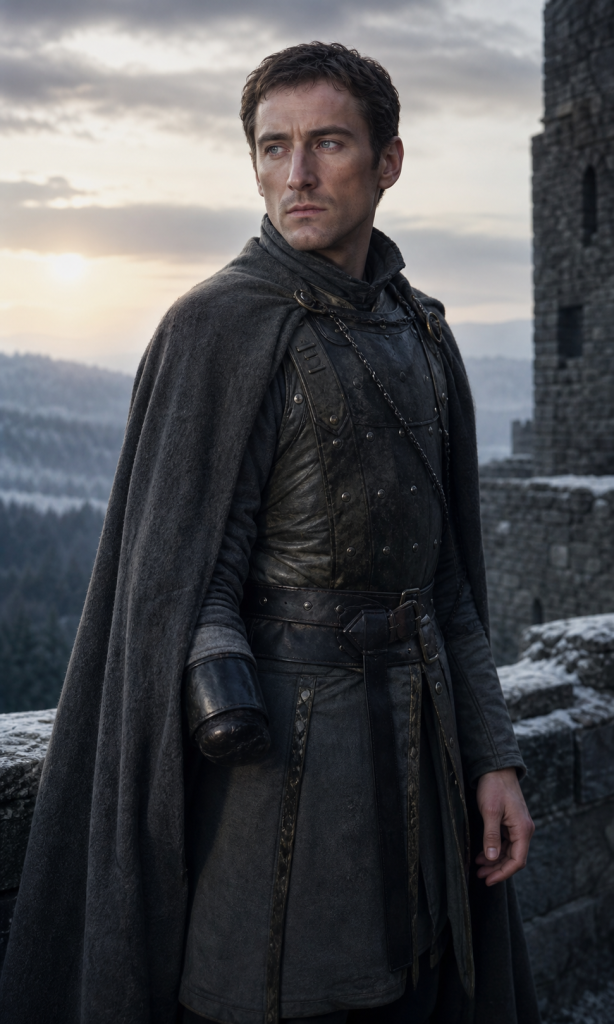 Prince · Scrollbearer · Alive
Prince Josua
The resistance leader who survives the tower, refuses the crown, retrieves Vorzheva and their children, and chooses useful obscurity over another inherited throne.
Reviews
Four book verdicts and one series verdict
No averaged-out star soup. Each volume gets judged for the job it performs, and the complete-series review gets to ask what all that suffering finally bought.
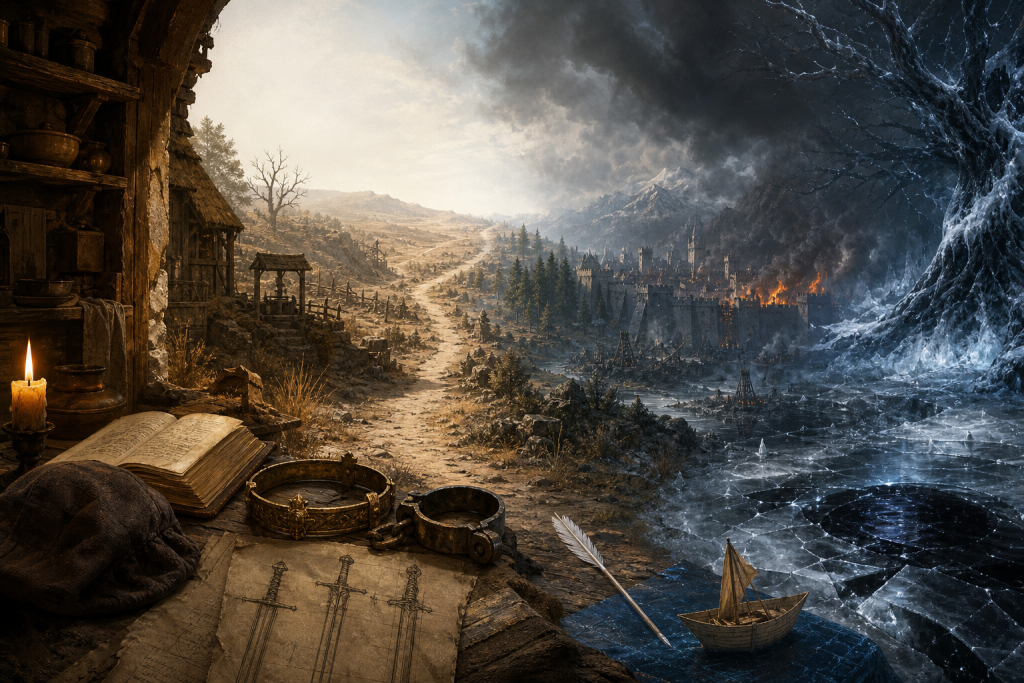 Book 1 review
RaeRae Reviews: The Dragonbone Chair
The deliberately slow road, the devastating acceleration, and why Simon earns every inch of his becoming.
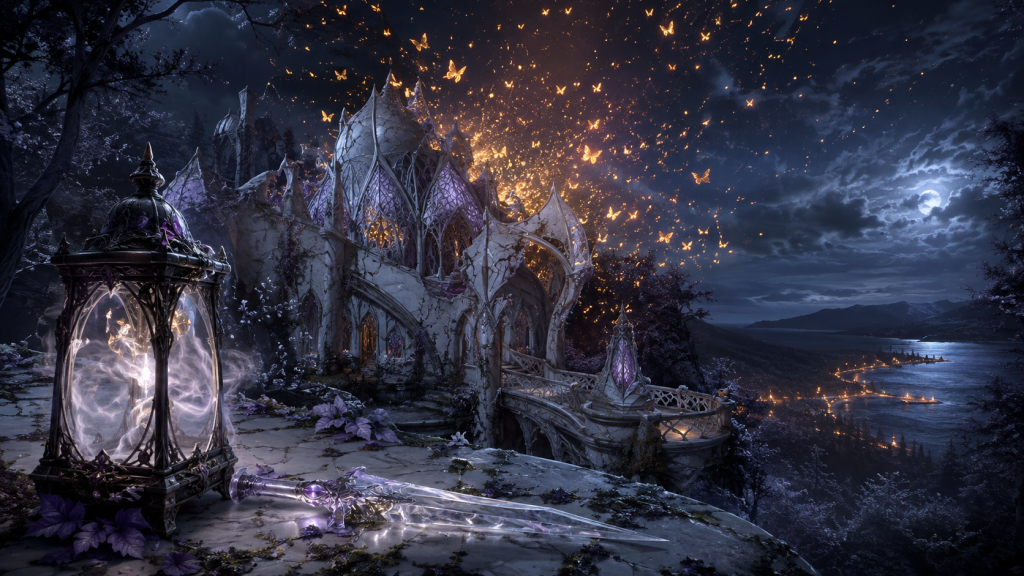 Book 2 review
RaeRae Reviews: Stone of Farewell
A sanctuary novel that knows refuge is work, grief has logistics, and winter keeps collecting its bill.
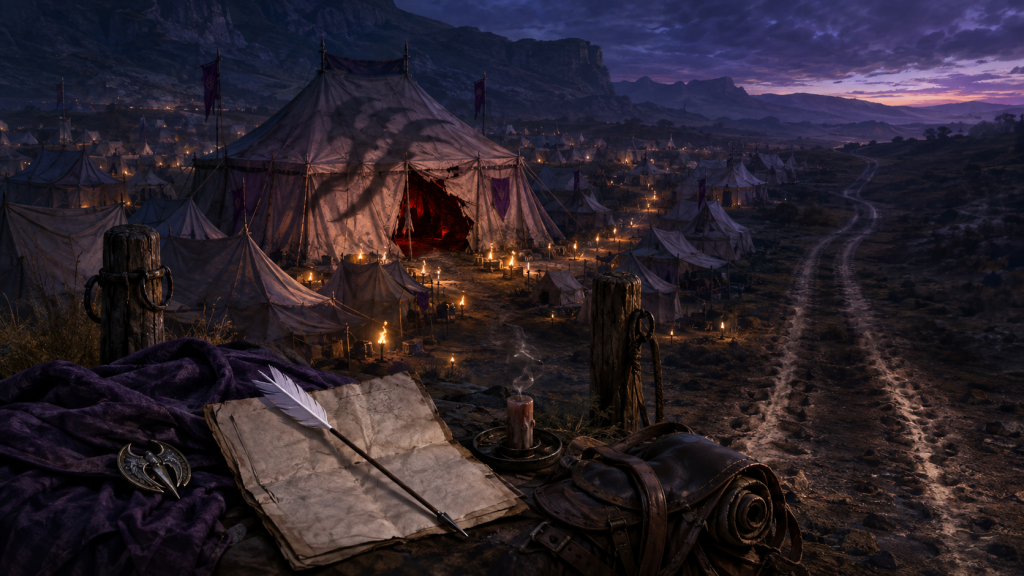 Book 3 review
RaeRae Reviews: To Green Angel Tower, Part I
Convergence becomes departure: the Talons enter the camp, Miriamele rides, and Simon makes his champion vow operational.
 Book 4 review
RaeRae Reviews: To Green Angel Tower, Part II
Every planted blade, buried lineage, broken promise, and intimate choice comes due at Green Angel Tower.
 Complete series review
RaeRae Reviews: Memory, Sorrow, and Thorn — The Complete Series
The swords were the trap. The actual victory is breaking inherited hatred without pretending the wound never happened.
RaeRae Reacts
Four books, four scenes that still have fingerprints on me
Reacts are memorable moments, not chapter recaps. One scene from each published volume opens into the complete franchise shelf.
 Book 1 · Chapter 44
Simon Remembers His Name Inside the Dragon
A dragon offers Simon the whole spinning world. He survives by remembering the small, stubborn life that is actually his.
 Book 2 · Miriamele
“I Have No Home” Is the First Disguise That Does Not Lie
Her disguise works because “I have no home” is the first name she gives that does not feel like a lie.
 Book 3 · Simon
Simon Writes That He Is a Bad Knight Trying to Do the Right Thing
His farewell note is awkward, ashamed, painfully sincere—and more knightly than the ceremony he thinks he failed.
 Book 4 · Simon & Miriamele
“Sir Seoman. My Simon. You Are My Love.”
No treaty, no title-game, no almost. She names him as her love, and the entire long road finally exhales.
RaeRae Rants
The argument starts with a receipt
Every Rant is earned by the owned text. One per volume previews the larger case against conquest, neutrality, invisible rank, and inherited blame.
 Book 1 · The old peace
Prester John’s Peace Was Already Coming Apart
John’s golden age was already cracking; conquest merely had better public relations when the victor wrote the inscription.
 Book 2 · Sanctuary
Sanctuary Is Not Neutrality When Evil Already Knows Your Address
Neutrality stops being noble when evil already knows the address and somebody else must absorb the consequences.
 Book 3 · Rank
The Rule Says Simon Cannot Love Miriamele. Nobody Can Find Where It Is Written.
Everyone obeys a rule forbidding Simon and Miriamele—yet nobody can point to where that rule was written.
 Book 4 · Blame
Miriamele Inherits Her Father’s Blame While Men Inherit Crowns
Men inherit crowns while Miriamele inherits the crimes, rumors, and political inconvenience created by men around her.
Story 101
Osten Ard, explained without sanding off the weird parts
These are the guides for the moment when the swords, songs, family trees, ritual geography, and ancient grudges start looking at you funny.
 Book 1 · History 101
Who Was in Osten Ard First?
The “first people” question detonates the clean human founding myth before the quest has learned what it is carrying.
 Book 2 · Object 101
The Mist-Lamp and the Witness Network, Explained
A tiny light becomes a witness network, a map through danger, and proof that connection can cross impossible distance.
 Book 3 · Sithi/Norn 101
Nenaïs’u and Drukhi, Explained: How a Family Tragedy Became the Sithi–Norn Fracture
One family catastrophe opens the emotional wound beneath the Sithi–Norn split and the politics built on top of it.
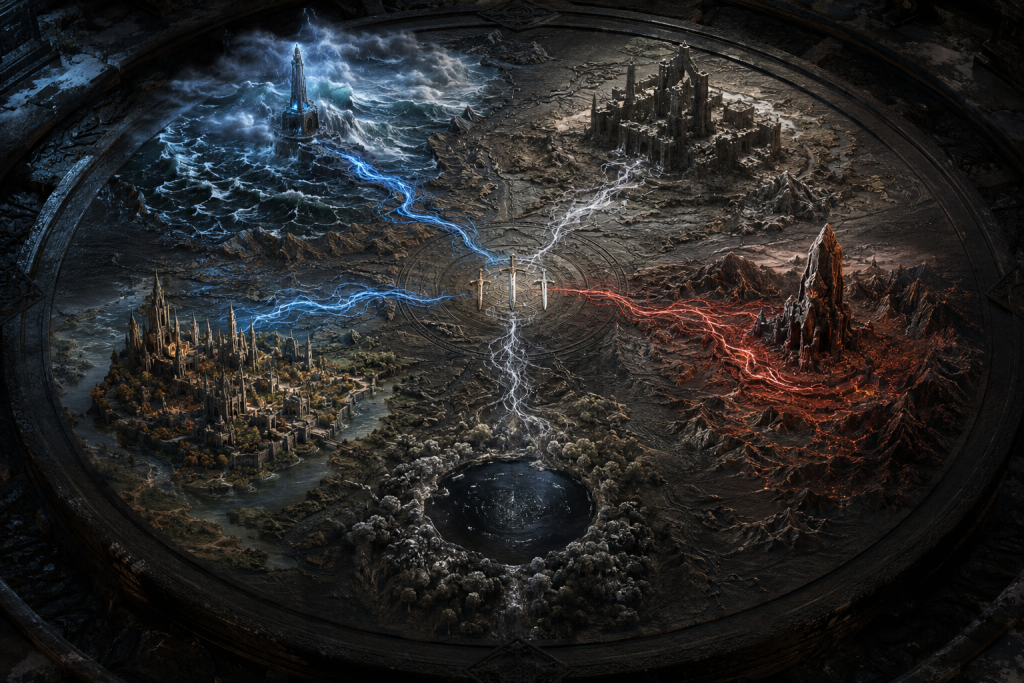 Book 4 · Ritual 101
The Five Houses, Explained: How Terror Across Osten Ard Powers One Ritual
Five distant Houses become one ritual machine, turning terror across Osten Ard into power at the tower.
The Author
Tad Williams builds the floor before he drops it

Tad Williams
Odd jobs, art, radio, a rock band called Idiot, the cat novel DAW rescued, the editorial road into Osten Ard, the 1,650-page finale, writing craft, full bibliography, current work, and the fandom side quests the fact box misses.
Open the complete author rabbit hole →Global Impact
The fantasy bridge people keep walking without naming
Memory, Sorrow, and Thorn sits in the hinge between Tolkien-shaped secondary-world fantasy and the politically intimate modern epic. It keeps the maps, journeys, songs, old peoples, magical blades, and world-sized stakes, then makes certainty itself dangerous: the founding hero conquered somebody else’s city, the prophecy is fulfilled for the enemy, the hidden heir refuses blood as merit, and the apparent Dark Lord’s grievance is both historically real and morally insufficient.
George R. R. Martin names the ignition point
Martin has described reading The Dragonbone Chair and realizing the form could do something larger and stranger; he has also called the trilogy a favorite. That is stronger evidence than fandom’s surface-level list of similar names and frozen threats.
Read the TIME interview receipts →Christopher Paolini puts it on the advanced fantasy shelf
Asked what readers should tackle next, Paolini recommended the trilogy as a step upward from The Lord of the Rings in size and complexity. That recommendation matters because it frames Osten Ard as part of a living reading pathway, not a museum piece.
Read the Guardian interview →The legacy is permission, not a photocopy
Later epics inherit permission to begin small, let travel take time, fracture the party, dignify domestic labor, question heroic archives, and make political systems as consequential as monsters. The meaningful lineage is technique: fantasy can remain wondrous while refusing to let legend grade its own homework.
On the Record
What this shelf covers
Owned Kindle editions · complete full-spoiler reading receipts · one canonical profile per character · consistent approved identities across generated art · Tad Williams · Novel Library