
Simon / Seoman Snowlock
A redheaded castle mooncalf walks into history carrying a broom, comes out with dragon-white hair and a sword problem, and still wins by refusing to hate on command.
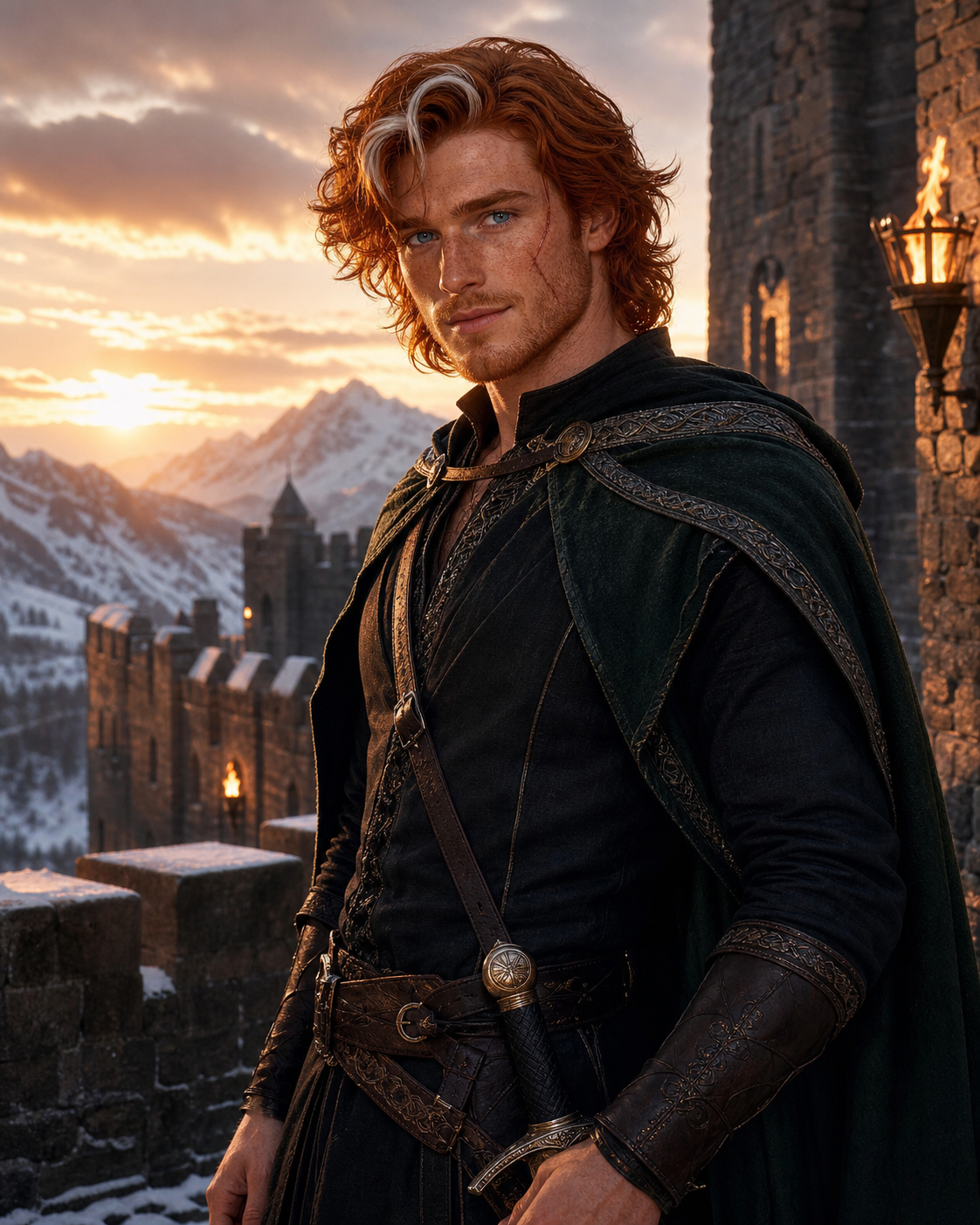
Profile
The boy everyone underestimates because his attention points sideways
Simon begins at fourteen as the Hayholt’s lanky, red-haired, freckled scullion: distractible, slouching, story-hungry, and reliably somewhere Rachel did not send him. The adults are not entirely wrong about the chores. They are catastrophically wrong about the kind of intelligence hiding inside his curiosity.
His beginning is preserved first through Rachel’s memory, not a royal archive. Nearly fifteen years earlier, the pregnant Susanna arrives bleeding two months before her time. Her fisherman husband Eahlferend is already dead. Morgenes believes he cannot save both mother and child; Susanna orders the choice herself, names her tiny white-haired son Seoman—“waiting”—and dies after trying to tell the doctor something more. A small white-haired token slips from her hand, and Morgenes pockets it with visible grief. Rachel and the chambermaids raise the baby; Rachel gives him the household name Simon. Before ancestry becomes public evidence, his identity is therefore built by a dying mother’s command, women’s labor, Morgenes’s guarded knowledge, and a kitchen that decides the orphan belongs.
His story keeps offering the familiar chosen-boy package—hidden ancestry, legendary swords, supernatural marks, royal recognition—and then asking whether any of it means what fantasy usually says it means. Simon can be Eahlstan’s heir and still know blood does not make him fit to rule. He can carry Thorn and Bright-Nail and still discover the swords are the enemy’s delivery system. He can be named Snowlock by a Sithi prince and still need the ordinary name Simon to find his way out of a dragon’s eternity.
Four published volumes · One continuous life
From beetles and broom closets to a crown he does not mistake for proof

He remembers his name inside the dragon
Simon wants stories because stories seem larger than scullery work. Morgenes gives him letters, history, and the first adult attention that does not confuse questions with laziness. Then Elias kneels to Ineluki, Pryrates murders Morgenes, and every lesson becomes inheritance before Simon feels qualified to carry it.
Elias’s tournaments briefly make military glory feel simpler than apprenticeship. Simon and Jeremias turn copper slats into practice swords while drought refugees gather outside the walls. Following Malachias into their camp, Simon tries to help a woman holding a pale child and is rejected as a “king’s man.” He has almost no institutional authority, but the castle already marks him as belonging to the people with food, walls, and guards.
His fever dream makes that danger intimate: familiar servants and nobles dance around the Dragonbone Chair, skulls join the circle, the throne sings, and a male voice speaking through a Rachel-shaped figure offers Simon the special place left for him. He refuses. Soon afterward, literacy becomes practical rather than decorative when Morgenes has him write Jeremias’s introduction to Breyugar. The apprentice begins learning that words can open real doors for somebody besides himself.
Falshire forces the glamour-versus-cost argument into the open. Simon says books, scullery work, and chambermaids contain no glory; Morgenes answers with women and children burned, guild leaders scalded, and hundreds of subjects killed by the soldiers Simon envies. Simon cries, admits the lie around Jeremias’s letter, and remains an apprentice. The lesson does not cure his hunger for importance. It gives that hunger an invoice.
Morgenes then explains that force always transfers cost and that knowledge without responsibility is Pryrates’s failure. Simon does not yet understand the Art, but he receives its governing ethic before he receives technique. That order becomes essential once flight strips him of adult supervision and turns every choice into somebody else’s bodily consequence.
Flight turns him into a reluctant courier. Binabik, Qantaqa, “Malachias,” Geloë, Jiriki, and the road repeatedly save or correct him. At Naglimund, heroism looks less like being special and more like carrying somebody else’s warning while institutions fail around you.
On Urmsheim, Simon finds Thorn and strikes Igjarjuk. Dragon blood pulls him into a world-sized consciousness where his individual life begins to disappear. He survives by choosing the gawky, ordinary name everybody else treated as insufficient: “Here I am. I am Simon.” He wakes scarred, white-streaked, and named Snowlock.
Status at close: alive on Mintahoq; marked by Igjarjuk; Thorn recovered; Binabik and Sludig imprisoned.
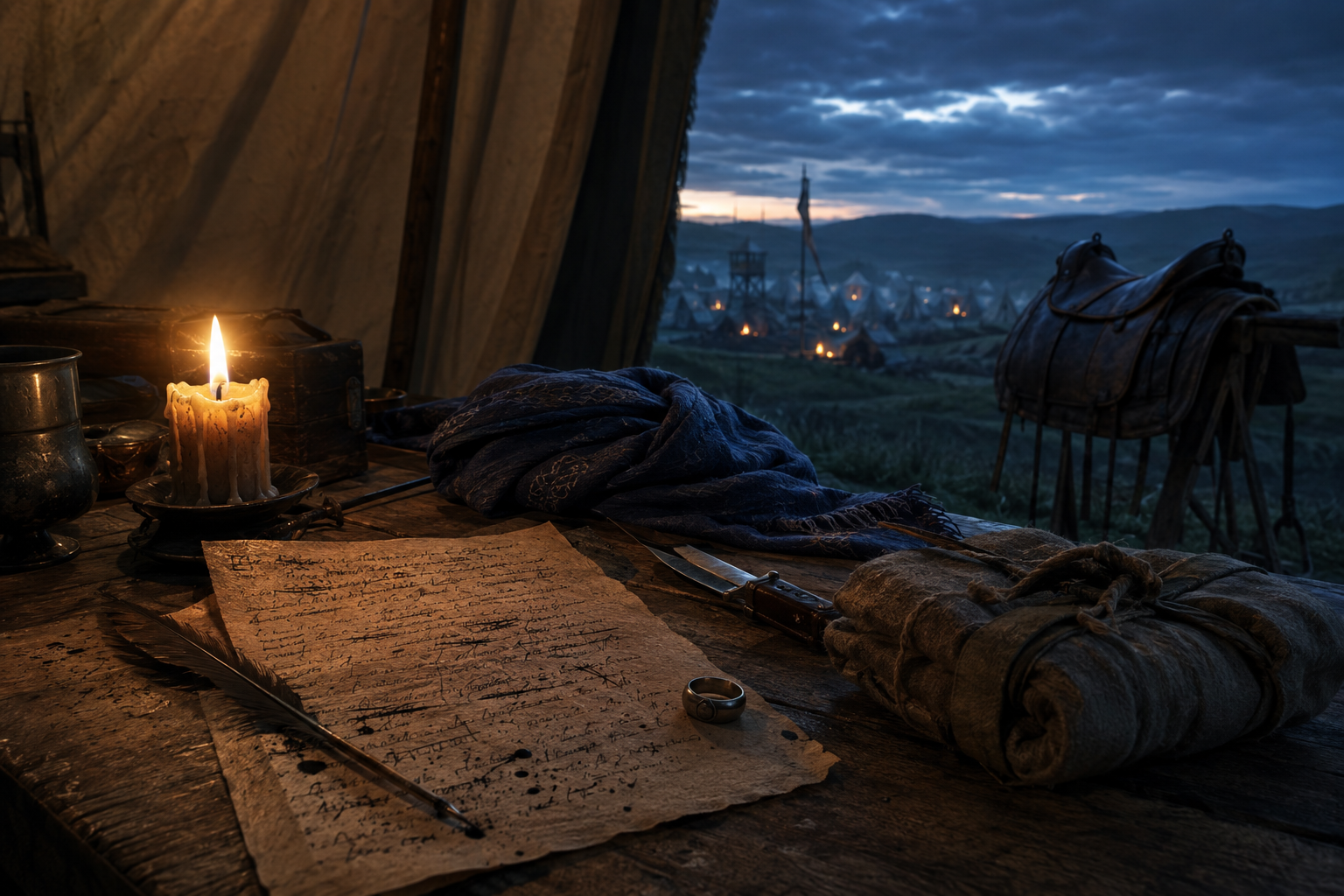
Beautiful refuge still has doors, and Simon notices when they lock
Simon leaves Yiqanuc with Thorn, training, and a growing public identity. The road teaches him that strength is not proof of superiority and service is not inferiority—a lesson Homefinder and Qantaqa make considerably harder to romanticize.
Jao é-Tinukai’i becomes the gorgeous trap at the center of his book. Simon is the first mortal welcomed beneath the Summer Gate, yet welcome becomes more than a month of confinement because the Sithi decide his safety outweighs his consent. Wonder remains real; benevolence does not become automatic.
Amerasu frees him with a charge for Josua. He returns to Sesuad’ra after her murder, finds Binabik, and finally stops holding himself together. The reunion matters because Simon’s growth has not made grief obsolete. It has given him people before whom collapse is survivable.
Status at close: alive at the Stone of Farewell; reunited with the resistance; carrying Amerasu’s final charge.
The mooncalf becomes a knight without becoming emotionally convenient
Simon is knighted, learns battlefield command, and discovers that leadership often means spending the miracle of your own survival on people still trapped behind you. Fengbald’s defeat and Camaris’s restoration do not stabilize the resistance; victory keeps producing new responsibility.
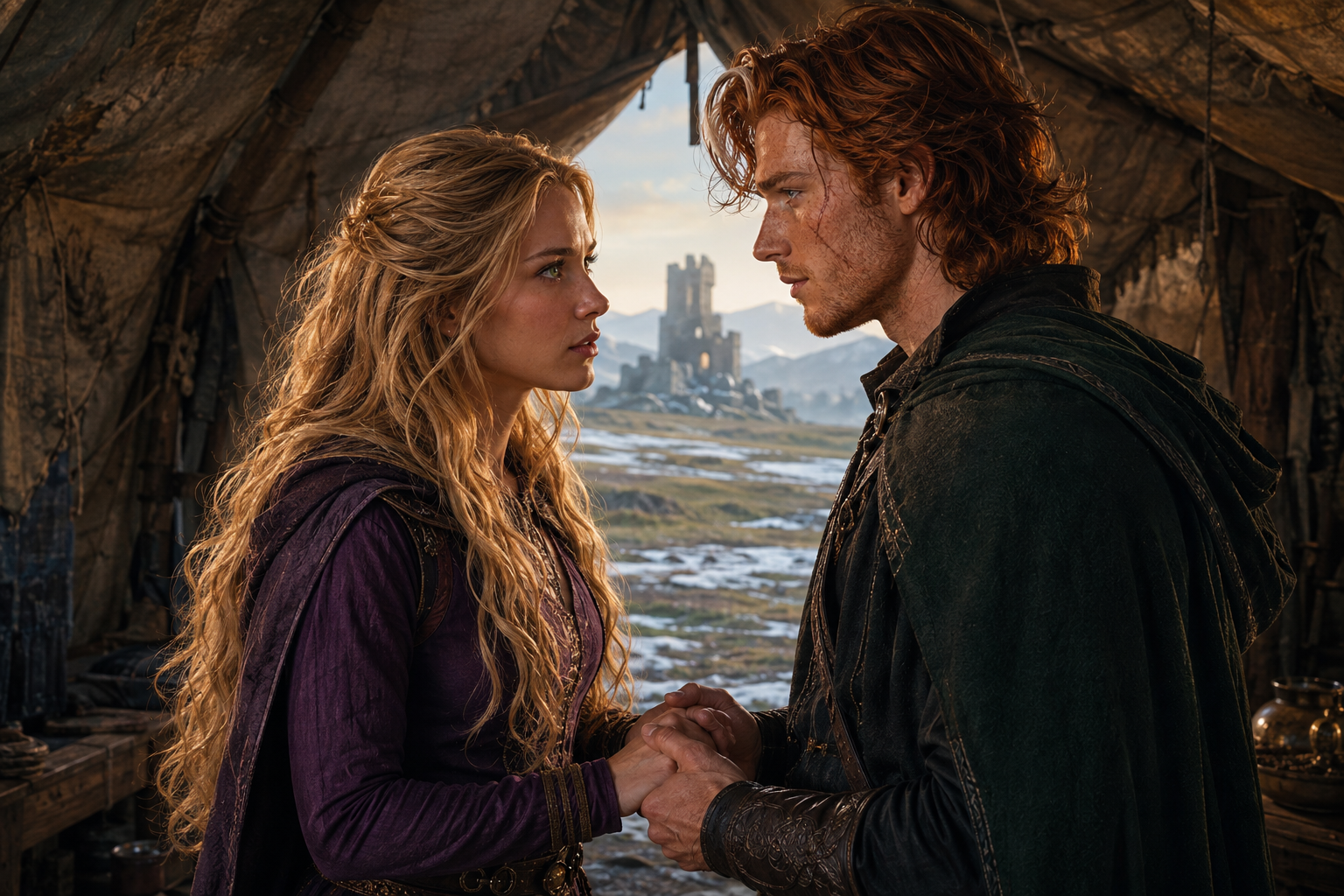
His relationship with Miriamele becomes the place where rank, friendship, desire, and insecurity collide. Simon repeatedly treats her title as a wall even when Miriamele is trying to be heard as a person. When she leaves on a private mission, his champion’s vow turns romantic—but the blotted farewell he leaves Binabik is the stronger proof of growth. He understands that following her affects people who stay behind.
He turns back for Jiriki’s White Arrow and mirror because entrusted objects are promises, not loot. Then Simon and Miriamele ride into darkness while enemy fire rises behind them, unaware the Talons have turned their departure into part of a larger trap.
Status at close: alive; Miriamele’s Protector; departing the refugee camp with her as it burns.
He carries the weapon into the trap—and compassion breaks the circuit
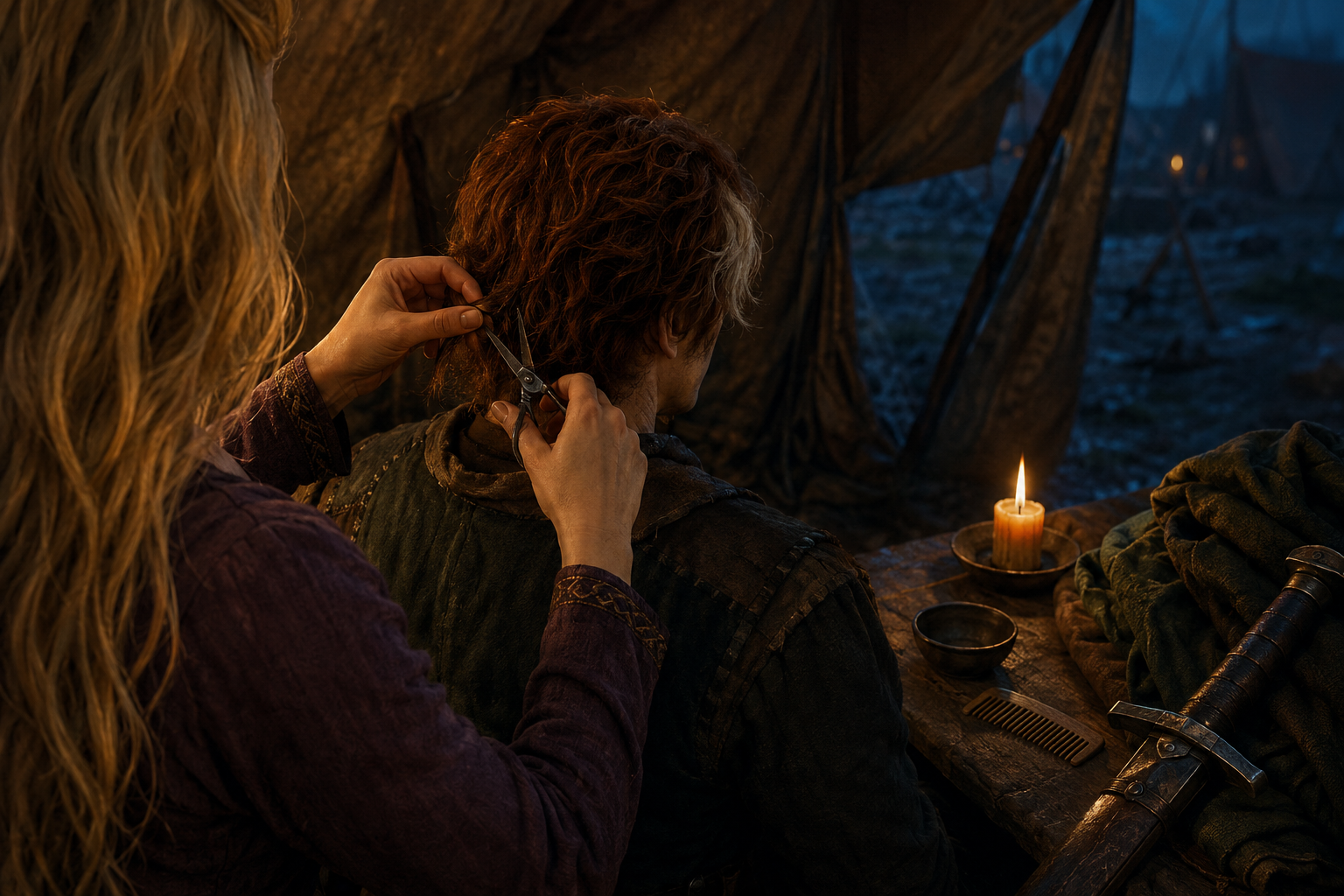
On the road, Miriamele cuts Simon’s hair and uncovers Snowlock again. The White Arrow is missing, but Simon realizes he no longer needs to hold the object to prove himself to Jiriki. The promise is real without becoming identification papers.
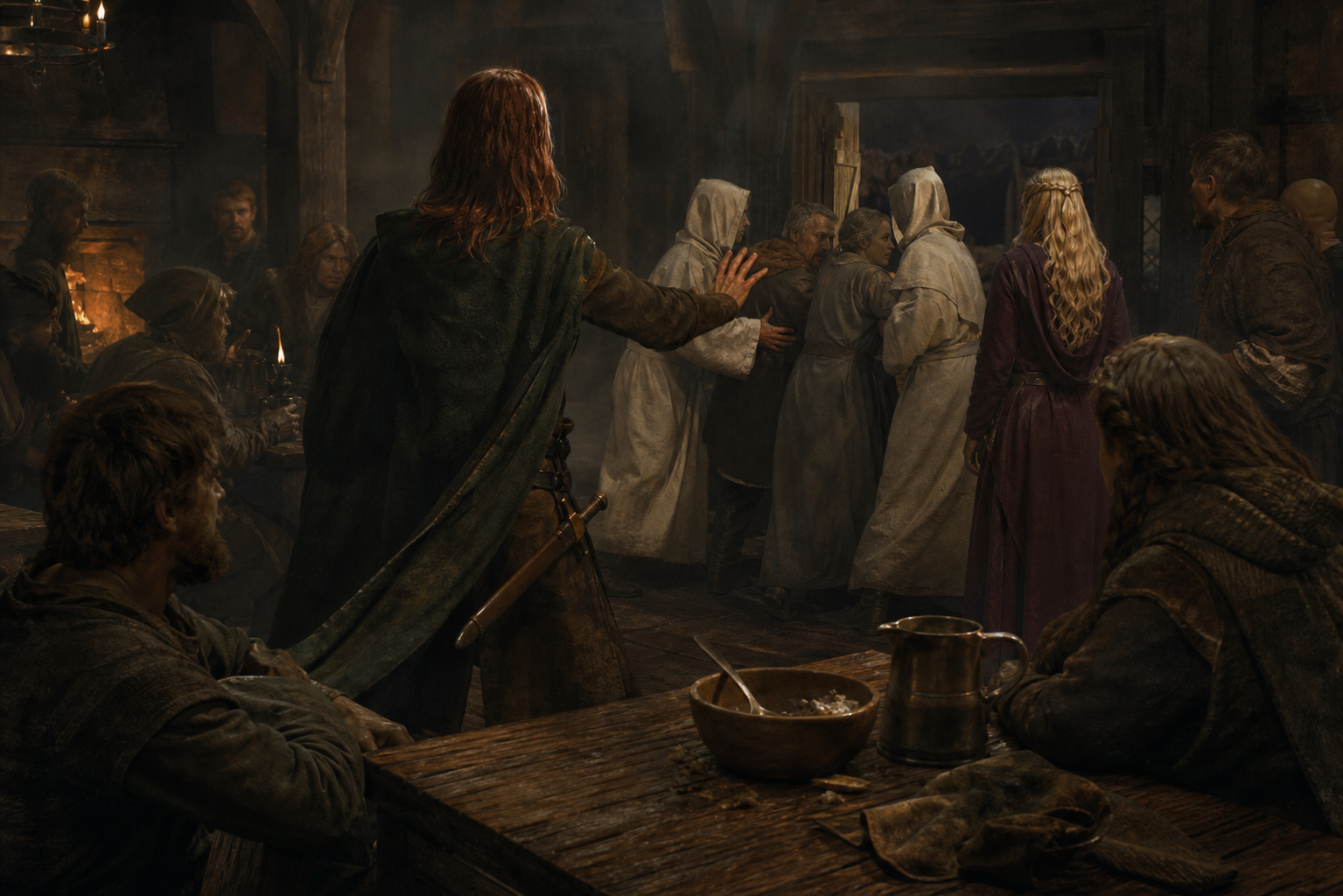
At the Tarbox, he sets down supper and becomes the first person in a crowded room to oppose three Fire Dancers abducting a couple. He asks whether the captives want to go and treats their no as actionable. Adulthood is not fearlessness; it is responsibility chosen while tactical reasons for silence remain visible.
Bright-Nail chooses Simon and pulls him toward Green Angel Tower. The Three Swords complete Ineluki’s ritual instead of stopping it. Inside the opened catastrophe, Simon recognizes the suffering that has kept Ineluki’s hatred alive. He apologizes for that suffering and refuses to answer hatred with the hatred the mechanism requires. Camaris forgives; Elias reclaims one final choice; the circuit breaks.
Afterward Simon rejects ancestry as merit, accepts Miriamele’s explicit choice, and becomes King Seoman beside Queen Miriamele. The crown is work, not proof that the kitchen boy was secretly valuable all along.
Final status: alive; married to Miriamele; rebuilding as King Seoman.
Relationships
The people who keep Simon from becoming a solitary legend
Miriamele
He begins by idealizing a princess, travels beside her disguised self, becomes her friend and Protector, and spends too long assuming rank overrules her choice. Their ending works because Miriamele speaks first and Simon finally answers the woman instead of arguing with the title.
Doctor Morgenes
Morgenes gives Simon literacy, history, work worth failing at, and the first model of knowledge as responsibility. His murder turns lessons into unfinished business without transforming the teacher into a flawless saint.
Binabik
Binabik rescues, teaches, irritates, strategizes, sings, and remains the person Simon trusts with both grief and practical aftermath. Their friendship rejects the fantasy habit of reducing the clever small companion to comic equipment.
Jiriki
The White Arrow begins as a rescue-debt, becomes proof Simon clings to, and ends as a promise he can honor without possessing. Their final farewell begins the relationship again rather than balancing a ledger forever.
Josua
Simon’s courier mission becomes loyalty, knighthood, and public trust. Josua eventually refuses the crown and tells Simon to help Miriamele rule, transferring responsibility without pretending it is a prize.
Rachel
Rachel’s discipline is laboring love in the language available to her. The boy she mourns returns as a king, and reconstruction still needs her practical authority more than another heroic speech.
Names, titles, and the identity trap
Simon keeps acquiring impressive labels and surviving by remembering the least impressive one
Simon
The ordinary name anchors him inside Igjarjuk’s overwhelming memory. It carries the scullion, student, friend, failed chore-doer, and person who existed before anybody found a prophecy-shaped use for him.
Seoman
The formal version enters public and knightly life. Miriamele’s “Sir Seoman” recognizes the adult responsibility he has earned without erasing the private person she names next.
Snowlock
Jiriki’s name honors the white streak dragon blood leaves in Simon’s red hair. It is mark, memory, and Sithi recognition—not automatic moral election.
King Seoman
The final title rests on Eahlstan’s bloodline, visible deeds, public trust, Miriamele’s partnership, and Josua’s refusal. Simon’s skepticism toward ancestry is part of what makes the title bearable.
Why he matters
The chosen one who wins by refusing what the machinery chooses for him
Simon’s arc is not a rejection of classic fantasy furniture. It is an argument conducted through that furniture. The hidden heir is real. The legendary swords are real. Prophecy changes armies. An ancient enemy returns. A princess marries the kitchen boy.
What changes is moral ownership. Blood can make a claim legible but cannot make a ruler worthy. A sword can choose a bearer and still choose him for the enemy’s purpose. Prophecy can describe history accurately and let desperate readers supply the saving ending it never promised. A supernatural mark can alter Simon without defining him.
His decisive power is relational attention: Morgenes’s lessons, Binabik’s friendship, Jiriki’s debt, Miriamele’s no, Guthwulf’s burial, Ineluki’s suffering. Simon keeps noticing the person that heroic machinery has reduced to role.
Canonical identity and milestone art
The face stays. The years leave evidence.
The owner-approved adult identity is fixed: copper-red hair with a broad white forelock, blue eyes, light freckles, healed facial scar, and a lean sword-trained build. Book-era art may adjust age, hair length, clothing, injuries, exhaustion, and status, but it may not invent a competing face.
The profile hero, featured image, directory cards, and social image all use the same canonical attachment. Scene art either uses that portrait directly as an identity reference or obscures faces while preserving unmistakable visual identifiers.
On the record
Four owned volumes, one reconciled chronology
This profile is grounded in the complete owner-accessed Kindle reading of The Dragonbone Chair, Stone of Farewell, To Green Angel Tower, Part I, and To Green Angel Tower, Part II, including their bridge synopses, narrative closes, appendices, and relevant apparatus. It uses the live reading ledger rather than a fandom summary as its evidence base.
Simon appears in all four published volumes. Status is scoped by volume on filtered cards and preserved here as a timeline; the franchise-level final status is alive, married to Miriamele, and ruling as King Seoman.