
Lady Cavendish
Nigel’s mother, and the reason the family fortune exists to be handed over. Her husband credits her wisdom and courage before her money, and the novel has not yet given her a first name.
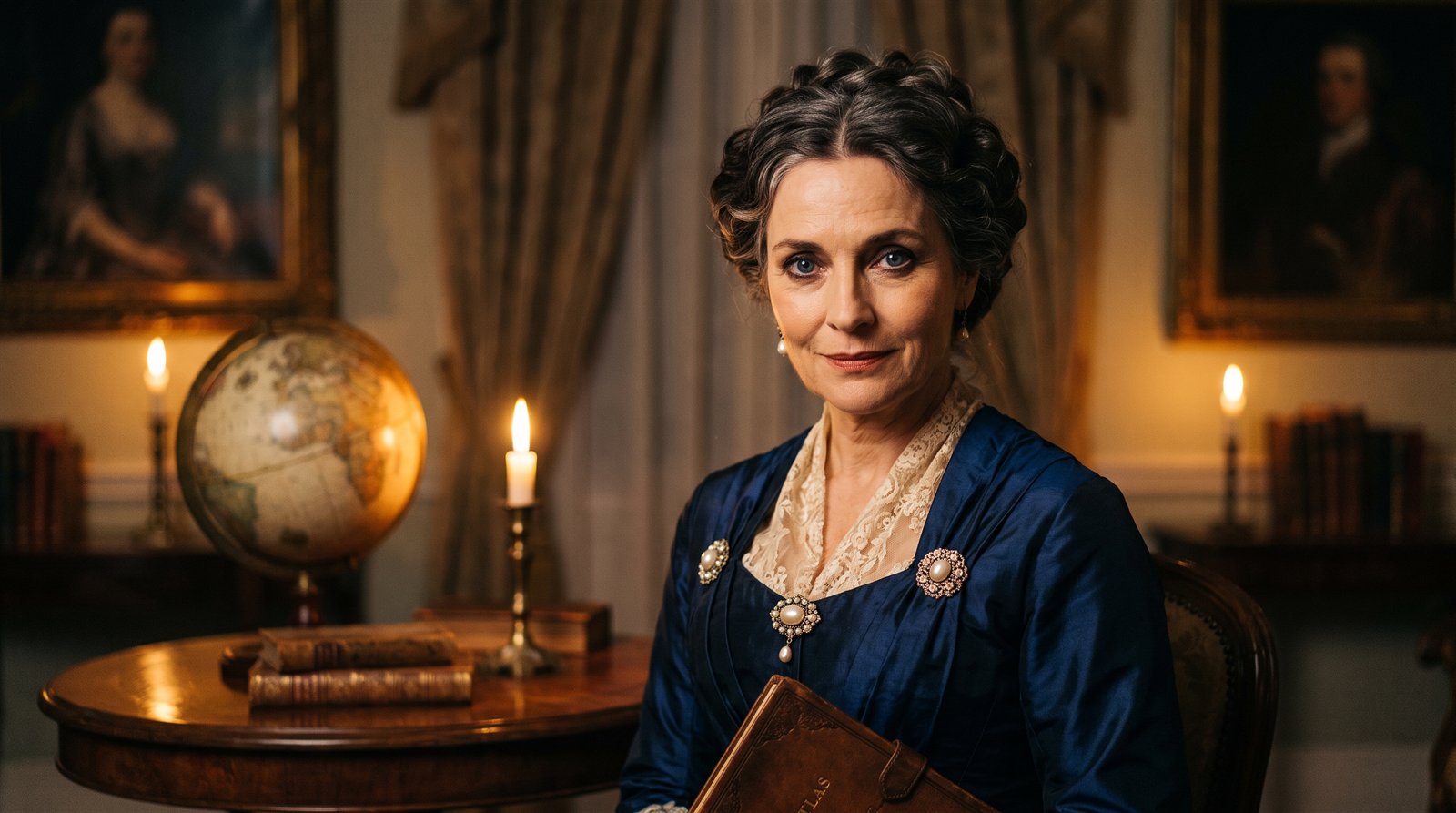 Lady Cavendish. CVM Sekai original art.
Lady Cavendish is present in every important decision in the first eighty pages and speaks in none of them. She is the reason the fortune is solvent, the reason Nigel appeared in public after the shooting, and the reason his father is handing everything over now rather than in ten years.
That last one is the detail worth having. The Viscount is not retiring and not ill. He is transferring the estate because his wife has always wanted to see the world and he has decided to stop postponing it. The plot of this book is set in motion by a woman’s unspoken wish, which rhymes rather neatly with the heroine’s.
She is also the source of the only physical description in the novel that the Viscount delivers with any tenderness, and it is about her eyes.
The file
| Name | Lady Cavendish, the Viscountess. No first name given in the pages read |
|---|---|
| Husband | Edmund Cavendish, Viscount Cavendish |
| Children | Nigel and Madeline, twins, both thirty. Robert, called Robin, in his twenties. Phoebe, sixteen |
| Eyes | Blue, and the one feature her husband describes at length |
| What she brought to the marriage | Excellent connections and an impressive dowry, which is what he went looking for. Wisdom and courage, which he now lists first |
| How the marriage began | As a deliberate financial rescue. He was explicit: “I did what men in my position have always done.” It became a love match, in his word, ultimately |
| Ambition | Has always wished to travel the world |
| On the page | Referred to constantly. Present at a family gathering at page 239. Does not speak in the pages read |
| Status as of page 80 | Alive, married, about to be taken to the south of Italy |
| Book and series | What a Lady Wants, Last Man Standing book 2, by Victoria Alexander |
Wisdom and courage, then money
Your mother’s wisdom and courage were as much help to me as her money. Today the family fortune is once again on sound footing.
The ordering is deliberate: wisdom and courage first, money second. And a page earlier the book has already told us the ordering is generous, because the Viscount states his original motive without any romance at all.
So it fell to me. I worked, borrowed, sold some property and used the proceeds to invest in estate improvements, and I did what men in my position have always done. I found a wife with excellent connections and an impressive dowry.
Nigel is visibly thrown, because he had grown up believing something else.
I was always under the impression yours and Mother’s was a love match.
It was ultimately. But I did not begin my pursuit of her because she was pretty and clever, although that certainly made it much easier, but because she had what I needed: position and fortune. Even so, I knew she was the only woman in the world for me the moment I looked into her eyes.
It was ultimately. Two words doing an enormous amount of work. The marriage the whole family understood as a love story began as a rescue transaction by a man who had just come home from war to a bankrupt estate, and it became the other thing anyway.
That reframes what she brought. Her money was the point of the pursuit. Her wisdom and courage are what he learned afterwards, which is why he now lists them first.
The eyes
I knew she was the only woman in the world for me the moment I looked into her eyes.
They were, indeed they remain, a blue so deep a man could surely drown in them and go to his death a happy man.
Nigel’s private reaction is that he knew his mother’s eyes were blue and had never found them remarkable, because she was his mother. Then, in the same half page, he catches himself having noticed the color of Felicity’s.
The novel is doing something quite precise there. The father’s romantic thesis and the son’s first unacknowledged symptom are placed within a few paragraphs of each other, and the bridge between them is a woman neither of them is looking at properly.
The reason for the six weeks
I have no intention of running off to the south of Italy with your mother and leaving you entirely to your own devices. I shall be here to advise you and guide you. But I will warn you, your mother has always wished to travel the world, and I want to indulge her before we are too old to do so.
He is not dying, not ill and not stepping back. He is clearing his calendar because his wife wants to see the world and he has noticed the clock. Everything Nigel panics about at page 68 traces to that.
Worth putting beside the heroine. Felicity wishes aloud for a life that is not staid and ordinary and gets a novel about it. Lady Cavendish has wanted to travel the world for decades, has said nothing about it on the page, and is finally being taken because her husband decided on her behalf that it was time.
Her actual authority
She is offstage and she is obeyed. After the Pomfrey shooting it is his mother’s insistence, not his father’s, that puts Nigel back in public.
He hadn’t particularly wanted to attend tonight’s ball and was here only at his mother’s insistence. She had pointed out that it was best to appear in public as soon as possible after incidents such as the one three nights ago with Lord and Lady Pomfrey to defuse the possibility of scandal.
A thirty-year-old man who has just been shot at goes to a ball because his mother tells him to, and the strategy is correct. That ball is where he meets Felicity.
Later, at a family gathering, Felicity looks at sixteen-year-old Phoebe and privately concludes that Lady Cavendish is going to have her hands full, which is the only glimpse of her as a person managing a household rather than as a reason other people act.
What the book withholds
Her first name. Not given in the pages read. Her husband is Edmund from page 58; she is only ever Lady Cavendish or “your mother”.
Any dialogue. She does not speak on the page in these chapters.
Her family and where the money came from. Nothing.
The size of what she brought, and where it came from. Her family and her fortune are not described. What went wrong with the Cavendish money is now partly answered elsewhere in the same conversation: Edmund’s father died with his affairs “in something of a mess”, and Edmund came home from Spain to find “the sorry state of the family’s finances”, pages 65 to 66. So she repaired a wreck her father-in-law left, not a vague decline. See Arthur Cavendish.
Her own account of wanting to travel. Reported by her husband. She is never shown asking.
Where she connects
Edmund Cavendish, Viscount Cavendish
Her husband, who ranks her courage above her fortune and is taking her to Italy.
CharacterThe Honorable Nigel Cavendish
Sent to the ball on her orders, where the plot starts.
CharacterPhoebe Cavendish
Sixteen, and going to be a handful.
CastAll characters
Everyone who speaks or is spoken to in this book.
The RaeRae take
The unnamed mother who fixed the family finances is a very old shape and this book leans on it without examining it once. She rescued a failing fortune, raised four children, runs the household well enough that a thirty-year-old rake still does what she says, and does not get a first name in eighty pages.
I would not call that a flaw so much as a period-accurate blind spot the novel shares with its characters. Her husband genuinely reveres her. He puts her wisdom and courage ahead of her money in the sentence, and he is rearranging his entire estate so she can finally see the world. And he still describes the whole marriage in terms of what looking at her did to him.
The parallel with Felicity is right there and the book never draws it. One woman says out loud that she refuses a staid and ordinary life and the novel rewards her for it. The other one has wanted to travel the world for thirty years, never said it where the reader could hear, and gets Italy because her husband remembered in time.
Sources
Primary source is the novel itself: What a Lady Wants by Victoria Alexander, Last Man Standing book 2, 389 pages, read front to back on Kindle and currently complete through page 80. The page 239 reference comes from in-book search.
No secondary source, wiki, blurb or adaptation has been used. Where the book does not say something, including her name, this page says that it does not say it.