
Robert Cavendish
Called Robin. Nigel’s younger brother, a scholar of antiquities, and according to their sister the Cavendish brother women actually want to marry. The novel uses him for one very good joke and then leaves him in his books.
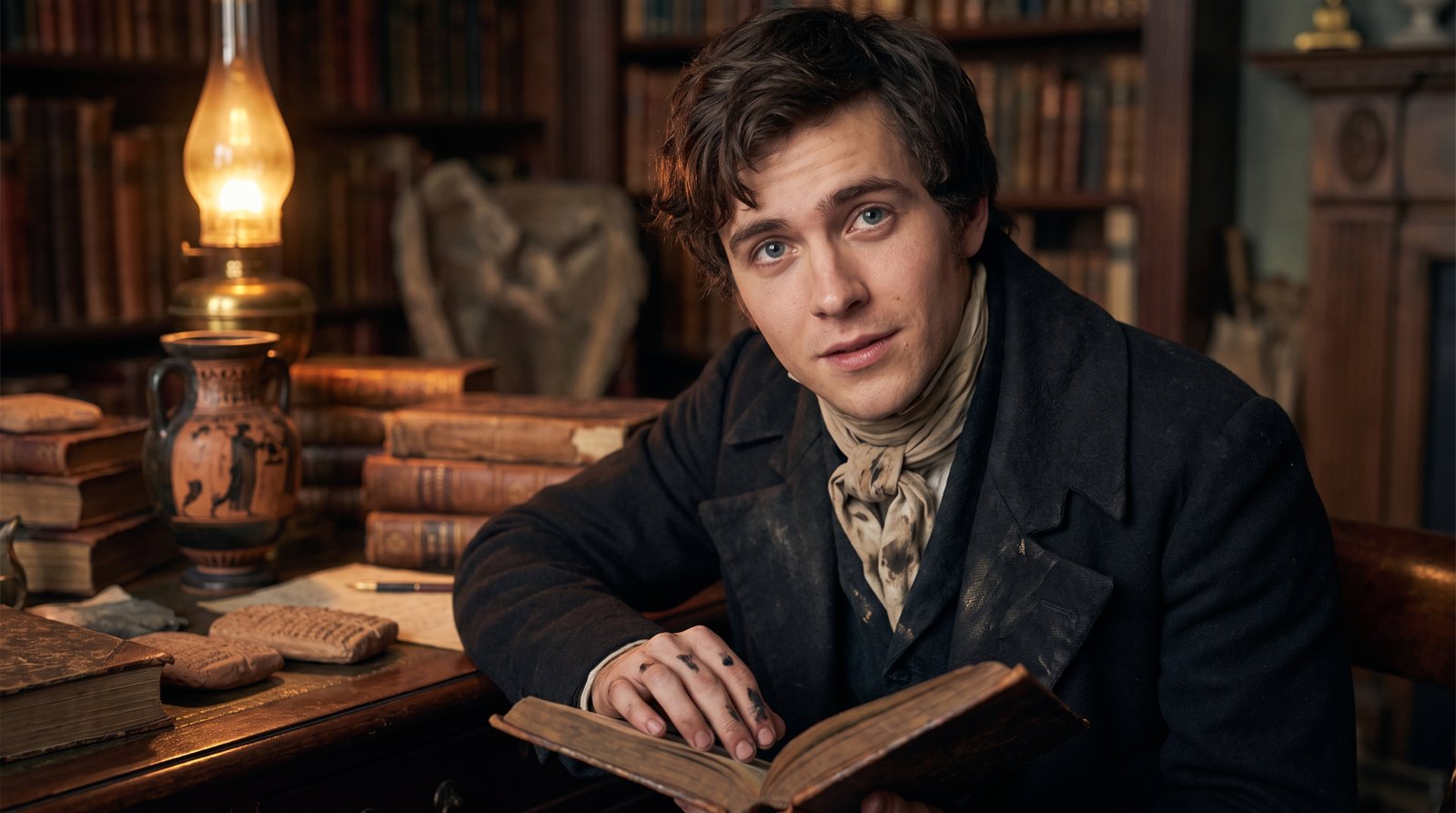 Robert Cavendish. CVM Sekai original art.
Robin exists to make one point, and it lands hard. When Felicity announces to the Countess of Windham that she intends to marry her brother, Madeline is delighted and assumes she means Robin. Felicity has never heard of him.
The mistake is the characterization. Madeline guesses Robin because Robin is the marriageable one, and the explanation she gives is the sharpest thing anybody says about Nigel in the novel. Robin is the default. Nigel is the exception women are warned about.
Beyond that he is a scholar with no interest in anything except his subject, which their father regards as a financial relief, and he stays offstage. This page is short because the book is short on him.
The file
| Name | Robert Cavendish, called Robin. His full name is given at page 73 |
|---|---|
| Age | “Barely in his twenties”, and explicitly “not nearly as old as Nigel” |
| Family | Son of Viscount Cavendish. Younger brother of Nigel and of Madeline. Older brother of Phoebe |
| Occupation | Scholar of antiquities, and destined to remain one |
| Appearance | Tall, and “very much the image of his brother”, page 239. He looks like Nigel |
| On the page | Discussed rather than shown for most of the book. Present at a family gathering at page 239 with Madeline, Lord Windham, Phoebe and Lady Cavendish |
| Status as of page 80 | Alive, unmarried, buried in his books |
| Book and series | What a Lady Wants, Last Man Standing book 2, by Victoria Alexander |
The wrong brother
“I intend to marry your brother.” Lady Windham’s eyes widened with delight. “You plan to marry Robin? How wonderful.”
It was Felicity’s turn to stare. “Who is Robin?” “My brother, of course. Robin, or rather, Robert Cavendish.”
Felicity is mortified and tries to leave, convinced she has called on the wrong house entirely. And then Madeline explains why she guessed the way she did.
When you said you wished to marry my brother, I simply assumed you were speaking of Robin because he is the sort of man women do wish to marry, whereas Nigel, well, Nigel is the kind of man marriage-minded women tend to avoid.
That is the function. Robin is the yardstick. He is younger, quieter and entirely unremarkable in society terms, and he is still the brother a mother would pick, which tells you exactly how far outside the marriage market Nigel has placed himself.
Madeline says elsewhere that Robin will be a problem of a different kind, because he is so wrapped up in his books, but that he is young enough for it not to be urgent yet.
The cheapest child
Robin is a scholar and is destined to remain a scholar. His head as well as his heart is in the study of antiquities. Scholars are notorious for having little interest in anything save the subject they pursue. Maintaining such a life is not especially costly.
Set against Phoebe, who is sixteen and, in the same breath, “extremely expensive”. The Viscount is not being unkind. He is doing arithmetic out loud for the son who is about to inherit responsibility for all of it.
Robin also appears in the list of people whose futures Nigel fears wrecking.
You have the futures of two other children to consider. Why, Robin is barely in his twenties and Phoebe is only sixteen. What ever I do will surely affect their lives. No doubt adversely.
What the book withholds
Any dialogue. In the pages read he does not speak. He is described, assumed, and listed.
What he actually studies. Antiquities, and no more specific than that.
Most of his appearance. The book gives two facts, both at page 239: he is tall, and he is very much the image of his brother. Everything else on this page’s art is interpretation, built to that resemblance.
Why women would want to marry him. Madeline asserts it as obvious. The novel never demonstrates it.
Where he connects
Madeline, Countess of Windham
The sister who assumed Felicity meant him.
CharacterThe Honorable Nigel Cavendish
The brother nobody assumes.
CharacterEdmund Cavendish, Viscount Cavendish
Their father, who prices his children out loud.
CastAll characters
Everyone who speaks or is spoken to in this book.
The RaeRae take
Robin is a joke with a load-bearing wall inside it. The scene needs Felicity to be humiliated and Madeline to be wrong, and it gets both, but the cost of the joke is a fact the novel could not otherwise state so cleanly: there are two eligible Cavendish brothers and the one everybody assumes is the younger one who never leaves the library.
He is also the family’s proof that not trying can be respectable. Robin has no ambition beyond antiquities and their father calls that destiny and notes approvingly that it is cheap. Nigel has no visible ambition either and it is treated as a crisis requiring a six-week ultimatum. The difference is that one of them is the heir, which is the whole of Nigel’s problem stated from a different angle.
Sources
Primary source is the novel itself: What a Lady Wants by Victoria Alexander, Last Man Standing book 2, 389 pages, read front to back on Kindle and currently complete through page 80, with further page-numbered receipts gathered by in-book search on the term Robin.
No secondary source, wiki, blurb or adaptation has been used. This page is short because the book gives him little, and where it gives nothing this page says so.