
Edmund Cavendish, Viscount Cavendish
A third son who was never meant to inherit, a decorated officer who refuses the word hero, and the man whose six-week ultimatum starts this book. His daughter calls him the kind of man legends are made of. That is his son’s whole problem.
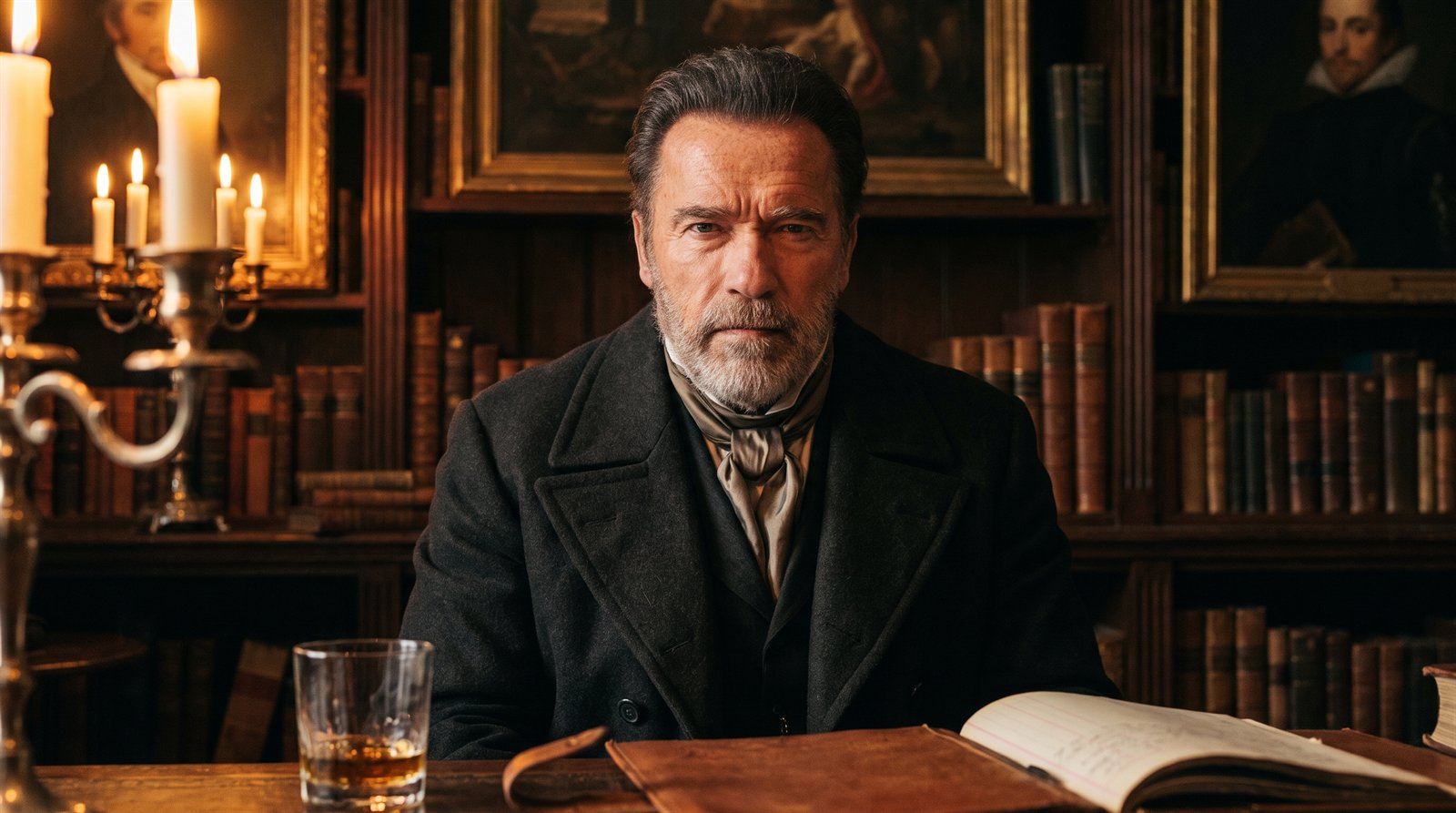 Edmund Cavendish, Viscount Cavendish. CVM Sekai original art.
The Viscount is not the disapproving father the setup promises. He has never cut his son’s allowance, never banished him to the country, and says outright that he has rather enjoyed watching the escapades. When he finally hands Nigel the family fortune, he apologizes, and the apology is not for the burden. It is for having left him without one this long.
He is also the reason Nigel is the way he is, and neither of them knows it. Edmund is genuinely formidable: Peninsular War veteran, decorated, politically active, and the man who put a damaged family fortune back on sound footing. Being the heir to that is not an inheritance, it is a comparison, and his son has quietly decided he cannot win it.
What lifts him above a plot device is that he is wrong about almost nothing and still cannot say the one thing that would help. He tells Nigel he has every confidence in him. Nigel hears parental optimism.
The file
| Name | Edmund Cavendish, named at page 58 |
|---|---|
| Title | Viscount Cavendish |
| Age | In his sixties, and described as remaining strong, healthy and vibrant |
| Position in his birth family | Third son. He did not expect the title |
| Brothers | Arthur, the eldest, trained from birth for the position. Lionel, the middle. Both dead |
| How he inherited | By page 58 he had “lost a father and two older brothers” and come into a title he had not expected |
| Military service | Fought Napoleon’s troops in Spain in his youth. Decorated repeatedly |
| Children | Nigel the heir, Madeline the Countess of Windham (Nigel’s twin), Robert called Robin, and Phoebe, sixteen |
| Wife | Not named on the page so far. Her eyes are the detail he leads with |
| What he runs | Political activity, the family estates, a centuries-old castle in constant need of repair, and a good number of successful investments |
| Politics | Publicly opposed to the Crimean War, and among the loudest of the few voices raised against it |
| Status at this point in the book | Alive. Read complete through page 77 of 389 |
| Book and series | What a Lady Wants, Last Man Standing book 2, by Victoria Alexander |
The third son, who was expendable
I never expected to be the next viscount, you know. My oldest brother, Arthur, had been trained since birth for the position. Since I was the third son, my father was happy to purchase my commission. After all, I was expendable.
He says it lightly and it is not a light fact. A commission bought for a third son in that period meant the family had decided which of its children it could afford to lose. He went to Spain on that basis and came back to a title that three deaths handed him.
Hold that next to what he is now asking of Nigel, who has been the heir from birth and has never been treated as expendable by anyone. The father is transferring a responsibility he was never trained for to a son who has been trained for nothing else and still feels unready.
Why he will not accept the word hero
Edmund Cavendish’s leadership ability and skill on the battlefield had earned him any number of medals and commendations, as well as the love and respect of his men. Indeed, many had called him hero.
The difference is in the choice one makes in a fraction of a second. Those we call heroes rarely pause to consider the consequences, while the coward thinks entirely too much. One might say the coward exhibits great intelligence while the hero none at all.
That is the best speech in the book so far and it is also, accidentally, a description of his son. Nigel’s entire public character is acting without pausing to consider consequences. By his father’s own definition that reflex is what heroism is made of, and Nigel has been spending it on balconies and other men’s wives.
The book never has either of them notice this. It simply puts the definition on page 58 and the behavior on every other page.
The war he is publicly against
The French wish to regain the influence lost after Napoleon’s defeat. The Russians want to solidify their own position, and if expansion of their power can be accomplished at the same time, so much the better. Turkey can barely cope with its internal affairs let alone international issues, and the British are concerned with all of it and its effect on our own interests.
This, more than many others, is a foolish war.
the concept of war is far more glorious than the reality of it
This is also what dates the series. The exchange turns on the dispute over the keys to the Church of the Nativity, which is the 1852 to 1853 quarrel that led to Britain declaring war on Russia in March 1854. Combined with a Peninsular War veteran now in his sixties, the arithmetic is consistent and the setting is mid 1850s, which makes this series Victorian rather than Regency whatever the cover copy says.
And when Nigel asks whether he should enlist, the answer is immediate and unhedged.
Given a choice, I would not have either of my sons experience war.
His wife, and where the money came from
Your mother’s wisdom and courage were as much help to me as her money. Today the family fortune is once again on sound footing.
Two things sit inside that sentence. The fortune had not been on sound footing, which is never explained. And she brought money, which means the marriage was at least partly a financial rescue, and he refuses to describe it that way.
I knew she was the only woman in the world for me the moment I looked into her eyes.
They were, indeed they remain, a blue so deep a man could surely drown in them and go to his death a happy man.
Nigel’s private reaction is that he knew his mother’s eyes were blue and had never thought them remarkable. Then, immediately, he catches himself having noticed Felicity’s. The book puts the father’s romantic thesis and the son’s first symptom in the same half page.
The six weeks
I want you to become familiar with the family’s interests over the next fortnight or so. Then you’ll begin spending at least a portion of each day here. In six weeks you’ll be thirty-one years of age. At that time, I will hand over management of the majority of all this to you.
“You can’t possibly be serious?” “Oh, but I am… Would you prefer to wait until I die?”
“I’m not ready for this.” “No one ever is.”
He is not dying and not retiring. He intends to stay and advise, and he wants to take his wife travelling before they are too old for it, which is the actual motive: she has always wished to see the world and he has decided to stop postponing her.
The second condition, added almost as an afterthought, is what sets the romance running: he suggests Nigel casually begin looking for a wife. Nigel refuses flatly. The father says it was simply a suggestion and drops it, which is the most effective thing he could have done.
The apology
Not about thrusting this responsibility onto your shoulders. I believe it’s time for that. But for allowing you to live your life thus far without a mind for anything beyond fun and frolic. I suppose I did so because I did not have the same opportunity at your age to be without a care in the world. I must admit, I have rather enjoyed watching your escapades.
So the indulgence was deliberate, and its source is the commission bought for an expendable third son who never got a carefree year in his life. He gave his son the youth he did not have, enjoyed it vicariously, and is now apologizing for the cost of the gift.
It also answers the question Nigel has been circling all scene, which is why he was never punished. He asks whether his father is disappointed. The answer is not yet, delivered with a smile, and then the whole history of Lionel arrives.
Being a legend at your son
My father is extremely intelligent and capable, whether that involves leading men into battle or management of the family estates or politics. In truth, he is the kind of man legends are made of. It’s rather daunting to be the heir to a legend. Nigel fears he cannot live up to Father’s standards, and therefore he makes no attempt to do so.
That is the whole father and son relationship in four sentences, and it is spoken to a near stranger in a drawing room rather than to either of the men involved.
Set it against Nigel’s own version, given to his father fifteen pages earlier and equally unheard: “It’s easier, I suppose, to live down to people’s expectations rather than live up to them.” Both of them have the answer. Neither says it to the other.
What the book withholds
His wife’s name. Not given in the pages read so far.
What went wrong with the family fortune before she arrived. Stated as fixed, never as diagnosed.
How his father and brothers died, and in what order. Only that all three are gone and the title fell to him.
Which regiment, and which battles. Spain and Napoleon’s troops is the whole of it.
Whether he knows what he does to his son. The novel gives him no interiority on that point at all. Everything about it comes from Madeline or from Nigel.
Where he connects
What a Lady Wants
Last Man Standing book 2. Plot, arcs, tropes, reacts and the full cast.
CastAll characters
Everyone who speaks or is spoken to in this book.
SeriesLast Man Standing
The tontine, the five books, and who falls in what order.
AuthorVictoria Alexander
Everything of hers on the shelf.
The RaeRae take
Romance novels are full of fathers who exist to disapprove, and this one is built to disappoint that expectation on purpose. Edmund never scolds, never threatens, never withholds money. He hands over a fortune, apologizes for having been too generous, and says he has every confidence in his son. On paper it is the warmest father and son scene the genre produces.
And it is doing damage anyway, which is the interesting part. You cannot be told you are the heir to a legend and hear it as encouragement. Nigel’s response to unconditional confidence is to privately record it as misplaced. Kindness from a formidable parent is still a measurement.
The bit I would put on the book hub is the hero speech, because it convicts the whole novel. Edmund defines heroism as acting in a fraction of a second without weighing the cost, and then spends the book worrying about a son who does exactly that, constantly, for no reason at all. The difference between his father’s medals and Nigel’s scandals is not the reflex. It is what the reflex was pointed at, and nobody has ever pointed Nigel’s at anything.
Sources
Primary source is the novel itself: What a Lady Wants by Victoria Alexander, Last Man Standing book 2, 389 pages, read front to back on Kindle and currently complete through page 77. Page numbers cited are Kindle page numbers from that read.
No secondary source, wiki, blurb or adaptation has been used. Where the book does not say something, this page says that it does not say it. This profile will be revised as the read continues.