
Phoebe Cavendish
Sixteen, not yet out, and already described by her own father as extremely expensive. She barely appears, and the one look the book gives her promises the family a great deal of trouble in about two years.
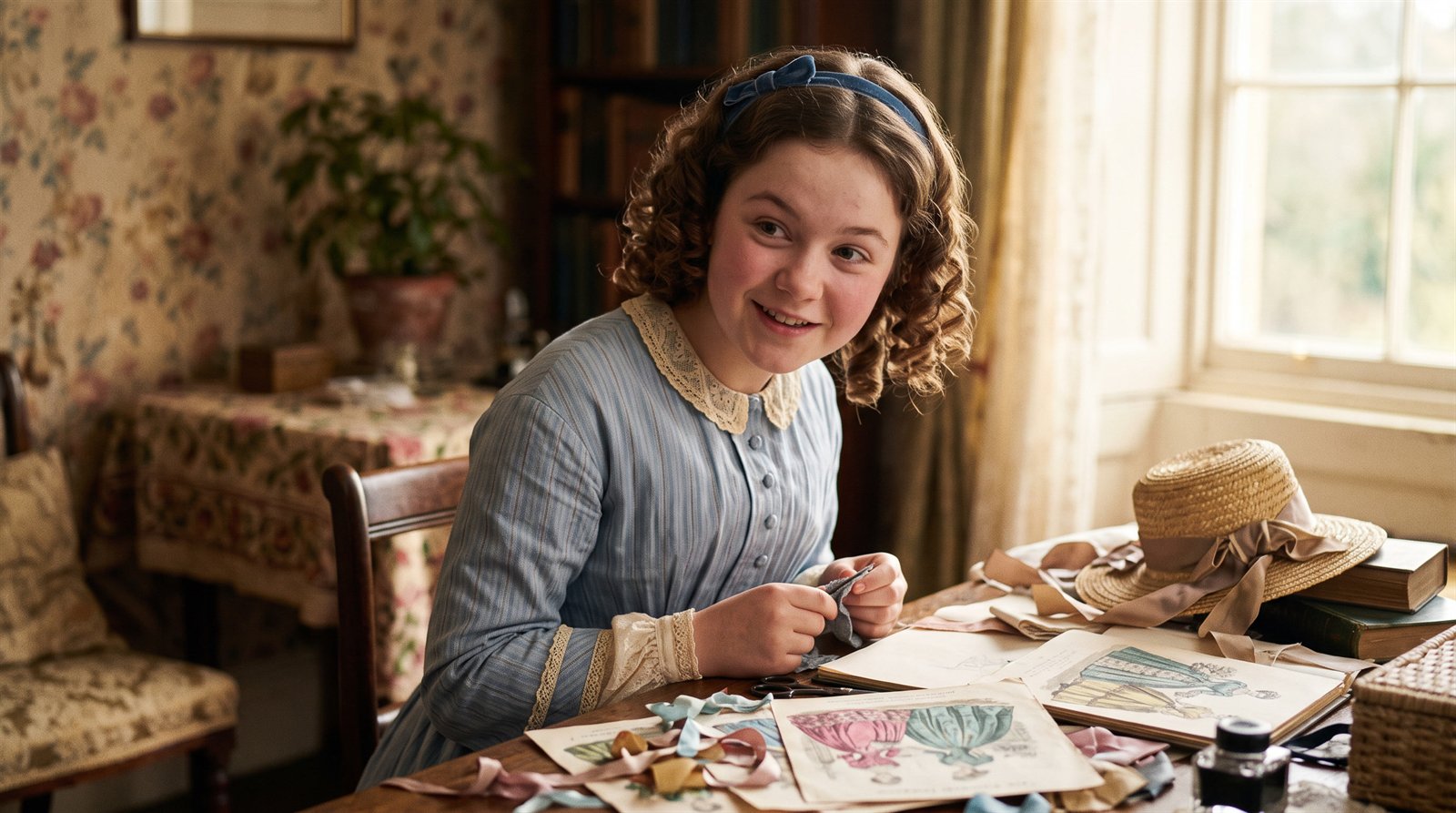 Phoebe Cavendish. CVM Sekai original art.
Phoebe is the youngest Cavendish and gets four mentions in the whole novel. She is on this shelf because the rule here is that anyone who is addressed or discussed gets a page, and because her four mentions are unusually informative about her family rather than about her.
Twice she is an expense. Once she is a future obligation her brother is afraid of failing. And once, at a family gathering, Felicity looks at her and privately concludes that their mother is going to have her hands full.
That last one is the only glimpse of Phoebe as a person rather than a line item, and it is a good one. Whatever she is going to be, the woman who has just talked her way into this family can see it coming.
The file
| Name | Phoebe Cavendish |
|---|---|
| Age | Sixteen |
| Family | Youngest child of Viscount Cavendish and Lady Cavendish. Sister to Nigel, Madeline and Robin |
| Out in society | Not yet. She is two years short of it, which is why the family talks about her in the future tense |
| On the page | Four mentions. Present at a family gathering at page 239 |
| Status as of page 80 | Alive, sixteen, at home |
| Book and series | What a Lady Wants, Last Man Standing book 2, by Victoria Alexander |
Priced by her own father
As for Phoebe… Well, daughters, especially daughters as fond of lovely things as she is, are extremely expensive. At least until they wed; then they become another man’s problem.
It is affectionate and it is a joke, and it is also the plain economics of a daughter in 1854 said out loud to the son who is about to be responsible for her. Robin, in the same breath, is cheap because scholars want nothing. Phoebe is expensive because she likes lovely things, and the expense ends when she is transferred to a husband.
She is also one of the two futures Nigel is frightened of ruining.
You have the futures of two other children to consider. Why, Robin is barely in his twenties and Phoebe is only sixteen. What ever I do will surely affect their lives. No doubt adversely.
Whatever else is true of Nigel, when he panics about the inheritance he names his little sister first among the people he could hurt.
The look
…the look in her eyes, Felicity suspected Lady Cavendish would have her hands full when…
The sentence runs past the point this read has reached, so this page quotes only what the search returned and does not guess at the ending of it. What is clear is the shape: Phoebe has a look, Felicity recognizes it, and the conclusion drawn is that the girl is going to be a handful once she is out.
It is also the first appearance in this profile of her mother under the name Lady Cavendish, which is the only form the novel has given for her so far.
What the book withholds
Any dialogue. She does not speak in the pages read.
Her appearance. Nothing is given beyond the look in her eyes. The art on this page is an interpretation.
What the look actually was. The search returns the clause and the sentence continues beyond the current read.
Her relationship with any of her siblings. Not shown. She is discussed by her father and her brother and does not interact with either on the page.
Where she connects
Edmund Cavendish, Viscount Cavendish
Her father, who calls her extremely expensive and means it fondly.
CharacterThe Honorable Nigel Cavendish
The brother who names her first when he lists who he could ruin.
CharacterRobert Cavendish
The cheap sibling, in their father’s accounting.
CastAll characters
Everyone who speaks or is spoken to in this book.
The RaeRae take
Four mentions and she still tells you something. Put her father’s line and her brother’s line side by side and you get the two ways this family talks about the same girl. To the Viscount she is a cost with an end date. To Nigel she is a person whose life he might wreck. Same sixteen-year-old, two entirely different relationships to her, and neither man notices the difference.
I would also flag the transfer language, because the book states it without flinching and most romances soften it. Daughters are expensive until they wed, and then they become another man’s problem. That is said warmly, by a good father, about a child he clearly likes. It is a useful reminder of what the marriage market in these novels actually is underneath the ballrooms, and it is sitting in the same scene where Felicity is being audited for suitability by a countess.
Sources
Primary source is the novel itself: What a Lady Wants by Victoria Alexander, Last Man Standing book 2, 389 pages, read front to back on Kindle and currently complete through page 80, with further page-numbered receipts gathered by in-book search on the term Phoebe, which returns four results in the whole novel.
No secondary source, wiki, blurb or adaptation has been used. This page is short because the book gives her four mentions, and where it gives nothing this page says so.