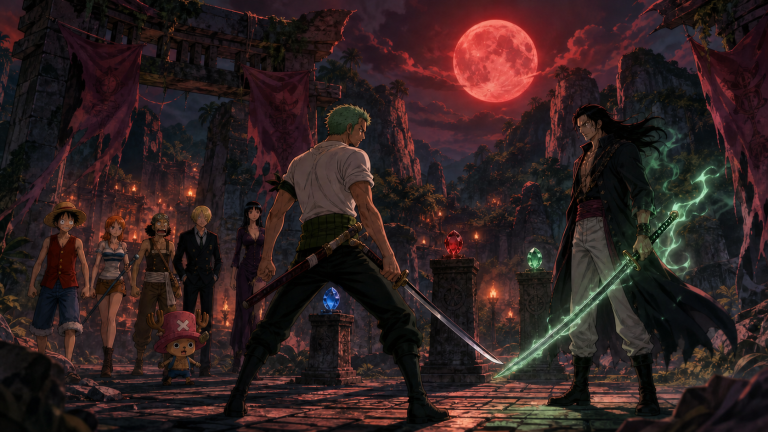
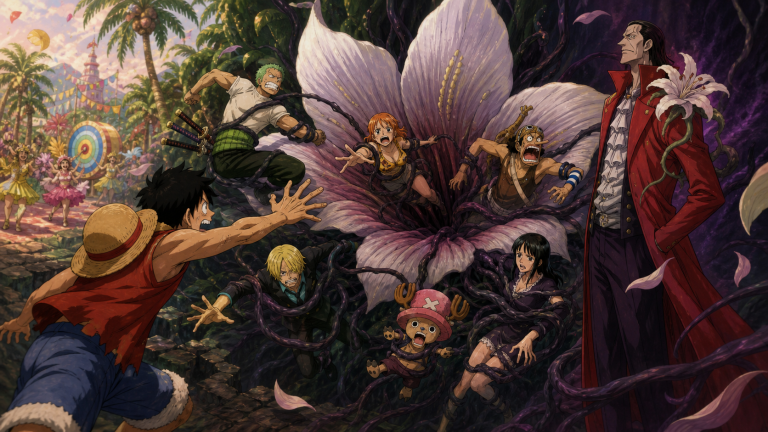
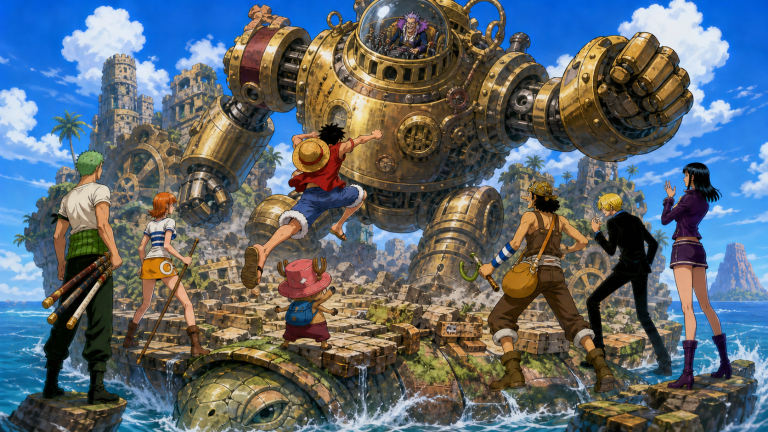
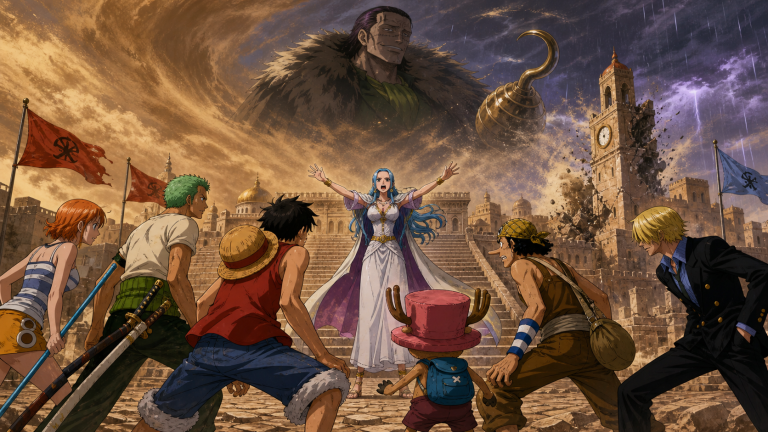
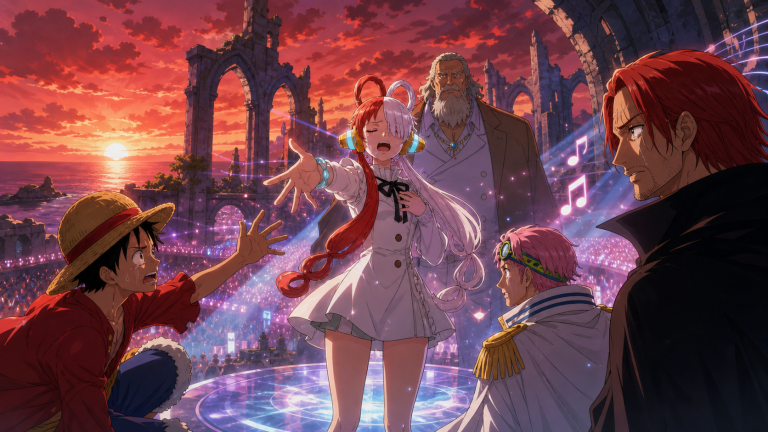
Fifteen theatrical films
The official One Piece movie archive lists fifteen animated theatrical releases from One Piece: The Movie in 2000 through One Piece Film: Red in 2022. No later theatrical anime film has been announced as released as of August 28, 2026.
How the films relate to the series
Most films tell self-contained adventures outside the strict television timeline. Some use characters, powers, and crew configurations associated with a particular broadcast era. Strong World, Film Z, Film Gold, Stampede, and Film Red have especially visible creator or franchise-event connections, but none should silently replace numbered episodes.
Directory rule
Every completed movie page receives its own local canonical image, concise story information, release date, continuity note, viewing context, and a separate full review when that review exists. Only completed movie pages appear as cards below.
Where to begin
Viewers wanting the modern event-film experience can begin with Strong World and continue through Film Red after reaching a compatible point in the television story. Completionists can watch all fifteen in release order using the viewing-order guide.
Reviews are separate
A movie information page explains what exists. A CVM Sekai review evaluates filmmaking, production, themes, cultural context, weaknesses, and impact. The two jobs remain separate so a directory summary never masquerades as a full review.
Fifteen movies do not form one continuity
The theatrical line moves through different production eras, crew rosters, visual ambitions, and relationships to Eiichiro Oda’s manga. A familiar character, costume, technique, or setting does not automatically place a film inside television continuity. Each Review identifies the release date, director, screenplay credit, studio context, Japanese cast, lawful viewing route when available, and the film’s actual continuity status.
Some movies work best as alternate adventures built around the crew chemistry of a specific television era. Others carry heavier creator involvement or introduce designs and ideas later echoed by official material. Marketing language can blur those distinctions. CVM Sekai labels what the finished film proves, what official sources confirm, and what fandom has inferred.
How to use the movie shelf
Release order gives the cleanest view of how the anime franchise changes. Early movies are compact and close to television aesthetics. Baron Omatsuri and the Secret Island foregrounds a director’s visual identity. Strong World, Film Z, Film Gold, Stampede, and Film Red arrive as large franchise events with different balances of spectacle, character work, music, and continuity pressure.
Viewing order remains optional. The numbered television anime never requires every movie. The separate viewing-order guide places each film beside a sensible crew era without pretending the story happened between two canon episodes. Readers who want judgment should open the Review card. Readers who only need placement should use the viewing-order route.
Reviews need completed works and specific arguments
Every card below opens a Review, not an episode React. A useful movie Review establishes the factual floor, names creative labor, explains the central conflict, studies the film’s visual and musical choices, follows the crew members who receive meaningful work, and gives RaeRae’s verdict early enough for readers to know the argument.
Affection cannot turn promotional spectacle into character depth, and criticism cannot erase skilled animation or performance. The shelf keeps receipts and judgment together. Featured image, hero image, card image, Open Graph image, and Twitter image remain one unique local attachment for each film.
Film cards stay in release order
The shelf begins with the 2000 theatrical film and ends with Film Red. Release order prevents popularity, streaming availability, or current marketing from rearranging franchise history. A missing lawful stream does not erase a film, and temporary availability does not become a claim of permanence.
Every image belongs only to that Review. Posters and hero art are stored locally with title, alt text, caption, description, and FileBird placement. No film borrows another film’s card simply because the crew lineup looks similar.