
HUNTR/X
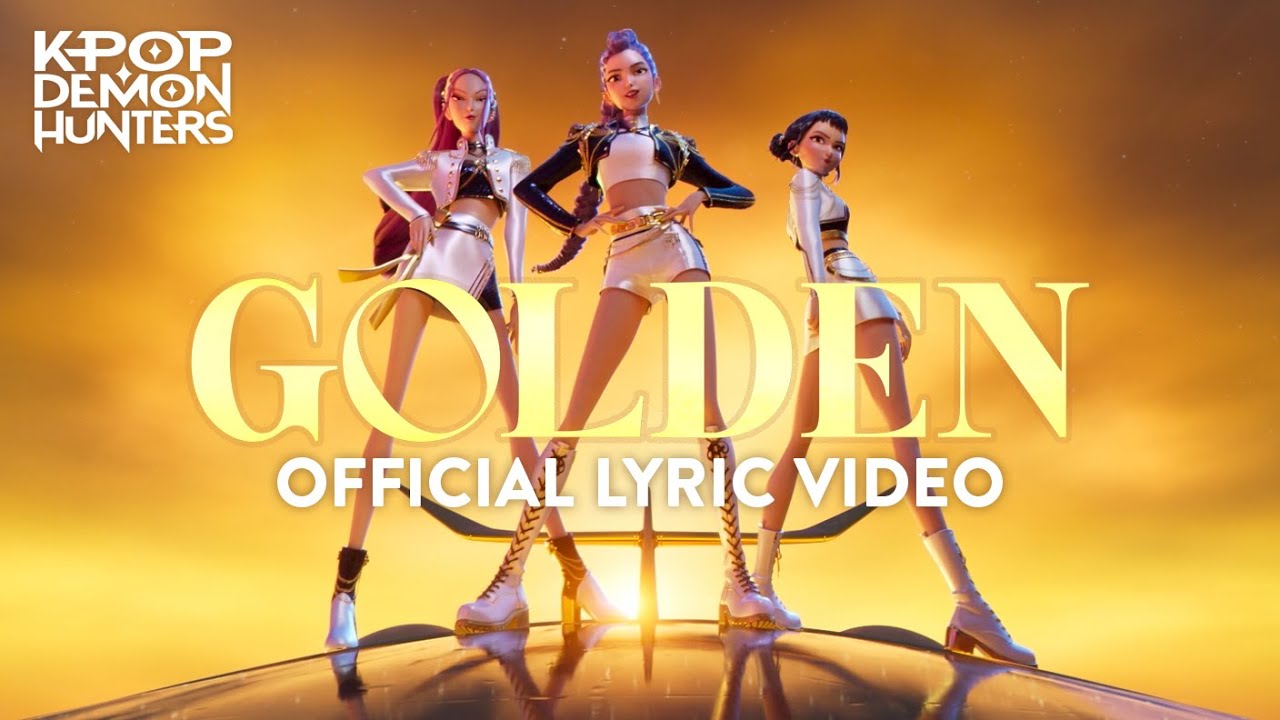
Group profile and current lineup
| Members | Rumi, Mira and Zoey |
|---|---|
| Origin | KPop Demon Hunters |
| Debut | June 20, 2025 with the film’s Netflix release |
| Current status | Active fictional trio |
| Fandom | Hunters |
Rumi, Mira and Zoey are an animated K-pop trio with a second job nobody put in the tour rider: singing demons back where they came from. KPop Demon Hunters works because the group is not a parody of idol life. HUNTR/X has positions, history, performance pressure, fandom expectations, secrets and the kind of group chemistry that makes a fictional comeback feel alarmingly real.
Formation: meet HUNTR/X
Rumi
Leader · main vocalist · demon hunter
Mira
Main dancer · visual · demon hunter
Zoey
Rapper · lyricist · demon hunter
HUNTR/X at a glance
KPop Demon Hunters, released June 20, 2025 on Netflix.
Rumi, Mira and Zoey.
Fictional active trio · 2025–present.
Directors Maggie Kang and Chris Appelhans; Sony Pictures Animation and Netflix.
The Saja Boys, a demon group with excellent cheekbones and deeply suspicious career goals.
Hunters: the audience whose light helps strengthen the Honmoon.
“How It's Done,” “Golden,” “Takedown” and “What It Sounds Like.”
Saving souls is easier than admitting what scares you to people who already love you.
THE GROUP FILE
They are idols because the story respects idol work
HUNTR/X protects the world through music. Their performances feed the Honmoon, a spiritual barrier separating humans from demons. That premise could have been glitter taped onto a superhero story. Instead, the film understands that performance itself is labor: rehearsals, breath, image management, public scrutiny and the terrifying moment when a voice refuses to obey on cue.
The group begins as an established act, not three strangers waiting for a training montage. Mira and Zoey know Rumi's habits. Rumi knows exactly when to redirect them. Their jokes have history inside them. That matters because the central betrayal is not simply that Rumi is half demon. It is that she has been hiding the part of herself she believes will make the group stop loving her.
THE MUSICAL SPINE
The songs move the plot instead of pausing it
“How It's Done” introduces HUNTR/X as professionals: swagger first, exposition smuggled inside the rhythm. “Golden” is an aspiration song with panic under the high notes. “Takedown” turns anger into a mission statement. “What It Sounds Like” only lands after the polished performance identity has cracked open.
The Saja Boys answer with “Soda Pop,” bright enough to make poison look refreshing, and “Your Idol,” which stops pretending seduction is harmless. “Free,” sung by Rumi and Jinu, creates the impossible little room where two people from opposite sides can imagine choosing themselves. This is a soundtrack written as story architecture, not a playlist somebody stapled onto the credits.
The people inside the animation
RUMI
One character, two performances
Arden Cho gives Rumi her speaking voice. EJAE gives her the singing voice—and co-wrote “Golden,” “How It's Done,” “Your Idol” and other soundtrack material. That split performance is not trivia hiding at the bottom of a cast list. Rumi needs an actor who can carry secrecy in a conversation and a singer who can make impossible notes sound like a person trying not to break.
MIRA
The rebel daughter became the group's spine
May Hong voices Mira, while Audrey Nuna supplies her singing voice. Mira was designed as the group's cool visual and main dancer, but her useful role in the story is emotional: she senses when something is wrong and gets angry because loyalty matters to her. The sharp edges are not a substitute for affection. They are how she guards it.
ZOEY
The funny one still gets an interior life
Ji-young Yoo voices Zoey; Rei Ami is her singing voice. Zoey is the rapper and lyricist, born in California and caught between cultural identities. Her speed and humor keep scenes moving, but the film lets insecurity sit underneath them. She is not comic relief abandoned when the plot becomes serious.
THE SAJA BOYS FILE
A rival group built from temptation
Jinu leads the Saja Boys for demon king Gwi-Ma. Their job is to steal fans—and the souls attached to them—while weakening the Honmoon. The members use familiar idol archetypes as supernatural bait: the leader, the mystery, the romance, the baby-faced maknae, the body. The joke works because pop marketing already asks fans to recognize a personality in three seconds.
“Saja” means lion, but it also sounds like the Korean word associated with a messenger of death. The group's name is doing two jobs before anybody sings.
THE CULTURE FILE
Korea is not decorative wallpaper here
Maggie Kang has described wanting a story rooted in Korean culture rather than sanding every detail into generic fantasy. The movie uses dokkaebi, jeoseung saja imagery, Korean food, bathhouses, architecture, beauty routines, idol promotion and specific family pressures as story material. The visual language jumps between concert spectacle and folk-art shapes without treating either one as less legitimate.
That specificity is why the movie traveled. It does not pause every thirty seconds to apologize for knowing where it comes from.
Soundtrack path for the newly possessed
Start with the group introduction: “How It's Done.”
For the giant emotional thesis disguised as a vocal flex: “Golden.”
For bright demonic recruitment: Saja Boys' “Soda Pop.”
For the mask coming off: “Your Idol.”
For the relationship that cannot safely exist: Rumi and Jinu's “Free.”
For the ending earned by everything before it: “What It Sounds Like.”
WHY IT HIT
KPop Demon Hunters did not become enormous because somebody put K-pop, animation and demons in a blender. It gave young viewers spectacle, adult viewers a story about shame, fans a catalog worth replaying and Korean audiences enough recognizable detail to feel the difference between representation and a costume. The soundtrack then escaped the movie and behaved like a real global release.
FANDOM NOTES
Words you will keep seeing
Honmoon: the protective barrier strengthened by singers and fans.
Golden Honmoon: the supposedly perfect version Rumi has been trained to create.
Demon patterns: markings Rumi hides because they expose her ancestry.
Derpy Tiger and Sussie: Jinu's supernatural messengers and certified merchandise thieves.
HUNTR/X: pronounced like “Huntrix.” The slash is doing branding work. Let it live.
THE PANDA SIDE QUEST
Keep digging after the credits
The voice split between speaking actors and singers is its own treasure map. Follow EJAE, Audrey Nuna and Rei Ami into their real catalogs. Then read how the songwriters developed music alongside the screenplay, how Maggie Kang pulled Korean visual references into the film, and how “Golden” changed shape before becoming the version everybody tried to sing in kitchens with no vocal insurance.
Also: the tiger and magpie are connected to Korean folk painting. They are adorable, yes. They are not random mascot confetti.
RAERAE TAKE
The movie understands something a lot of “girl power” stories miss: confidence is not the absence of shame. It is what happens when shame stops getting private voting rights. HUNTR/X wins when the polished lie fails and the messy truth finally has harmony. Also, whoever made “Soda Pop” that catchy while telling us the boys were stealing souls knew exactly what they were doing. I respect the trap while complaining from inside it.
OFFICIAL LINKS
Enter the Honmoon safely
- Netflix Tudum · official KPop Demon Hunters hub
- Watch on Netflix
- YouTube · @Netflix
- YouTube · @SonyAnimation
INSIDE THE PANDA PILE
CVM Sekai reviews
Why shame gets a soundtrack and loses
Why cultural specificity mattered
“What It Sounds Like” RaeRae React
“Free” RaeRae React
EJAE artist profile
Receipts and deeper reading
- Netflix Tudum: cast and character guide
- Netflix Tudum: official soundtrack guide
- Netflix Tudum: “Golden” oral history
- Netflix Tudum: Danny Chung on the music
- Associated Press: the film's Korean cultural roots
YouTube video tracking history
Official videos connected to this profile. Current total views and daily gains are supplied automatically by the CVM Sekai YouTube Tracker.
The three-member map
HUNTR/X works because the trio is not three copies of one heroic archetype. Rumi carries leadership, the highest vocal stakes and a secret that turns perfection into a trap. Mira supplies choreographic authority, blunt skepticism and the instinct to notice when the emotional math is wrong. Zoey writes and raps from the position of a Korean American trying to belong without erasing either side of herself. Their friendship is the group’s real power system.
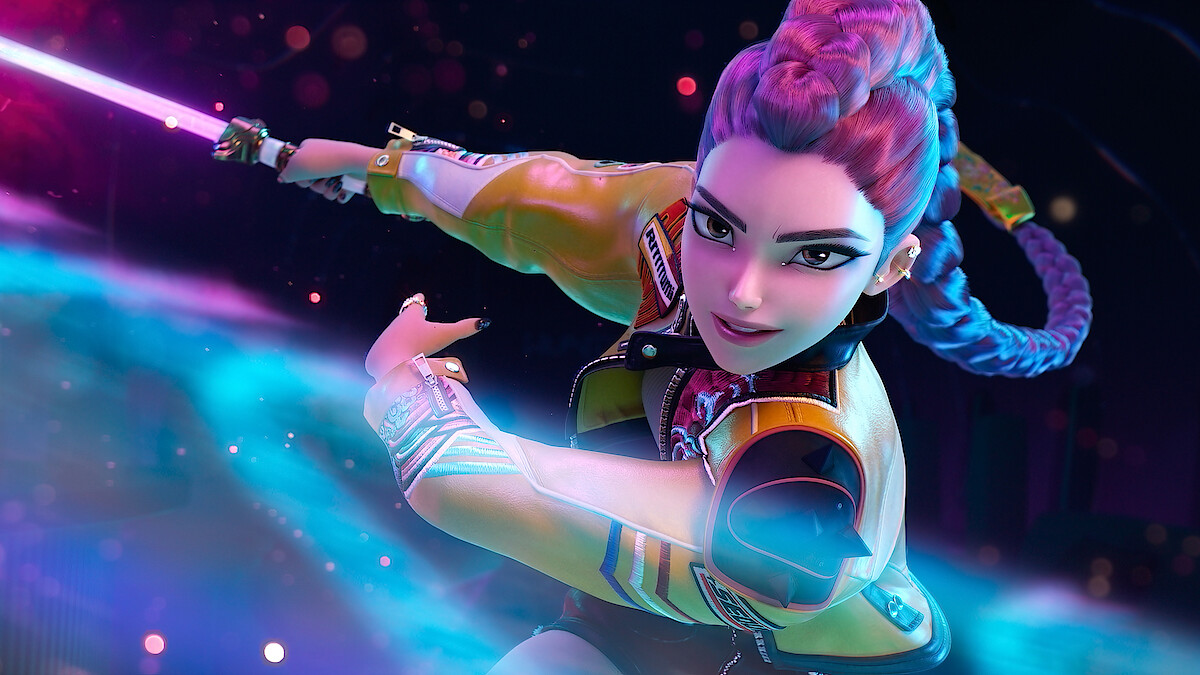
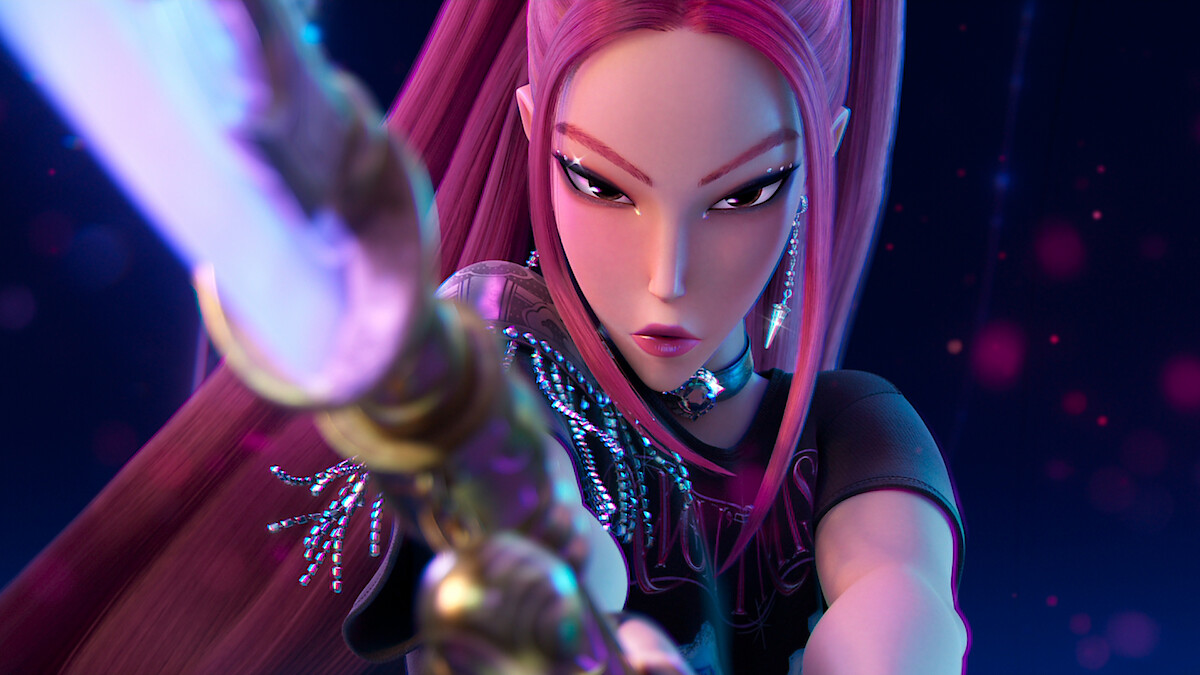
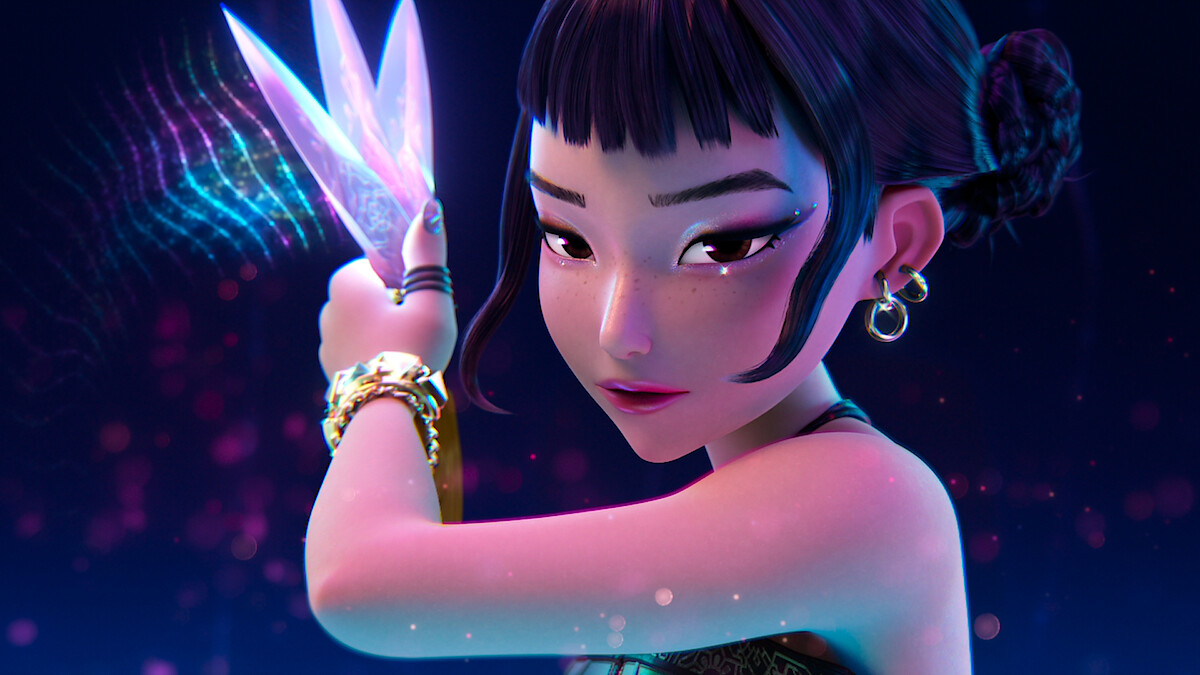
The voices behind HUNTR/X
The character and music credits belong together, but they are not interchangeable. Arden Cho speaks Rumi, May Hong speaks Mira and Ji-young Yoo speaks Zoey. EJAE, Audrey Nuna and REI AMI perform the trio’s songs. That split is part of animation craft: one performance team builds dialogue and character timing while another builds a believable K-pop vocal unit. EJAE also helped write “Golden” and other soundtrack material, so her relationship to Rumi is both vocal and compositional.
Why the songs function as story
“How It’s Done” introduces the trio through competence: fight, rap, dance and stadium arrival share one continuous pulse. “Golden” turns their public dream into Rumi’s private fear. “Takedown” makes a diss track dangerous because Rumi is being asked to condemn the part of herself she hides. “What It Sounds Like” resolves the argument by replacing polished concealment with imperfect harmony. These are not songs paused inside a movie; they are scenes whose dialogue happens to have hooks.
Official-video tracker
Golden
What It Sounds Like
Free — Rumi and Jinu
How to follow HUNTR/X without losing the real artists
- Use Sony Pictures Animation and Netflix as the film’s official visual sources.
- Use the soundtrack credits to follow EJAE, Audrey Nuna and REI AMI as independent artists rather than treating them as anonymous character voices.
- Keep the character profiles and performer profiles connected, but do not merge their biographies.
- Use exact video IDs when matching a React to its source; clips and lyric reposts are not substitutes for the official upload.
Sources and receipts
- Netflix Tudum — cast guide
- Netflix Tudum — soundtrack and song credits
- Sony Pictures Animation — official film page
- Sony Animation — Golden official lyric videoDaily+1.8MTotal views1.8B
React image cards
The HUNTR/X hub routes “What It Sounds Like” and “Free” to separate React cards because the finale and duet solve different story problems. Each card uses its own local canonical still, keeping the trio’s group portrait reserved for this hub.
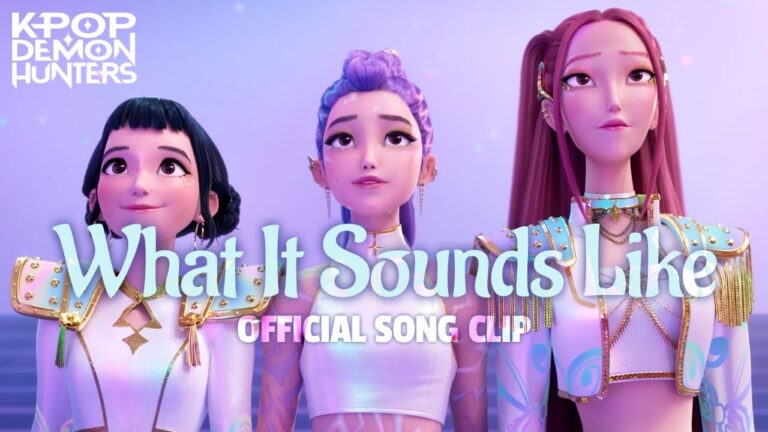
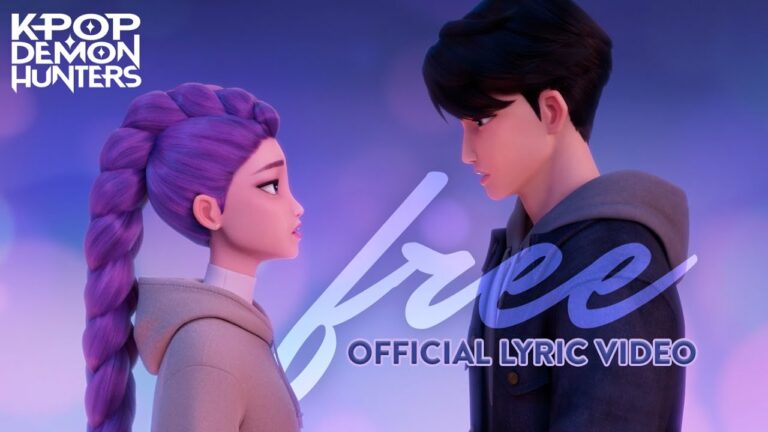
The 2026 file: HUNTR/X is officially returning
Netflix confirmed in March 2026 that KPop Demon Hunters is getting a sequel, with Maggie Kang and Chris Appelhans returning to direct. That is the current hard fact. A release date, new antagonist, soundtrack list and character outcome have not been announced, so anybody selling a detailed sequel plot is decorating a blank page and calling it insider access.
The confirmation matters because the first film ends by rebuilding the group’s purpose rather than restoring the old system. Rumi destroys the idea that purity creates safety; Mira and Zoey return with their own accountability intact; the Honmoon becomes collective rather than a perfect wall maintained by one frightened leader. A sequel cannot simply reset the demon meter and replay the same shame lesson without making that ending cheaper.
Kang said there is more to the Korean world and its characters, while Appelhans described the next chapter as a chance to challenge and evolve them. That language leaves the right questions open. How does a trio perform after its biggest secret became public inside the group? What does demon hunting mean after the old binary collapsed? How does fame change when the soundtrack has escaped the fictional universe and behaved like a real global catalog?
This hub will treat every future update with date labels. Confirmed production news belongs in the current file. Rumored songs, fan-cast wish lists and synthetic trailers do not become facts because enough accounts copied them. HUNTR/X may be fictional; the sourcing standard is not.
The chart story became bigger than the movie
By 2026, Netflix described KPop Demon Hunters as its most popular film ever and reported more than 500 million views. The soundtrack passed 10 billion global streams, while four songs occupied the Billboard Hot 100 top ten simultaneously. “Golden” made HUNTR/X the first K-pop girl group credited with a Hot 100 number one and later became the first K-pop song to win a Grammy.
That achievement needs careful language. HUNTR/X is a fictional group performed by EJAE, Audrey Nuna and REI AMI, supported by songwriters, producers, animators and two dialogue casts. Saying the characters achieved the record is useful shorthand for chart billing; saying three animated women independently made it erases the real labor. The fun survives accurate credits. In fact, the accomplishment becomes stranger and more impressive when the entire machine is visible.
The success also broke the usual wall between soundtrack and pop release. Listeners did not only replay songs because they loved the film. The songs carried clean hooks, distinct vocal colors and narrative pressure that still worked after the screen went dark. “Golden” can function as ambition pop before a casual listener knows Rumi is singing herself into a physical crisis. “What It Sounds Like” can work as communal release before the Honmoon lore is explained.
Calling that crossover inevitable would be nonsense. Many animated films have large platforms, famous producers and aggressive merchandise plans. Very few manufacture a fictional act whose songs enter ordinary listening habits without needing novelty disclaimers. The soundtrack earned that escape route through craft.
The credit map: characters are not the performers
Rumi’s spoken performance belongs to Arden Cho; EJAE performs her singing voice. Mira is spoken by May Hong and sung by Audrey Nuna. Zoey is spoken by Ji-young Yoo and sung by REI AMI. The songs also carry writing and production teams that change by track. The split is not evidence that one side is more authentic. Animation builds a character through multiple specialists.
“How It’s Done” credits EJAE, Mark Sonnenblick, Danny Chung, 24, IDO and TEDDY as writers, with 24, IDO, TEDDY and Ian Eisendrath producing. “Takedown” was written and produced by Lindgren with production by Eisendrath. “What It Sounds Like” was written by Jenna Andrews, Stephen Kirk and Sonnenblick, then produced by Andrews, Kirk and Eisendrath. Exact credits beat the lazy phrase ‘the HUNTR/X writers’ every time.
EJAE’s relationship to Rumi has extra layers because she sings, writes and brings her own history with idol expectations to the performance. That does not turn EJAE into Rumi. Audrey Nuna’s grain and controlled cool help Mira’s musical identity; REI AMI’s bright attack and rhythmic snap help Zoey’s. Their canonical artist pages remain separate because three real careers should not be swallowed by character pages.
What the sequel has to protect
The first film gives all three members a function. Rumi is not the only person with interior conflict; Mira’s distrust and loyalty create the group’s pressure test, while Zoey’s Korean American belonging question gives her constant idea-making a vulnerable underside. A sequel has room to expand them, especially if it resists turning Rumi’s resolved shame into the permanent sun around which everybody else rotates.
It also needs new music with new story jobs. “How It’s Done” introduces competence, “Golden” exposes the cost of perfection, “Takedown” weaponizes certainty and “What It Sounds Like” rebuilds harmony. Copying their surface sounds would miss why they worked. The next catalog should force different choices, even if the chorus still understands the assignment and refuses to leave our heads.
My non-negotiable is cultural specificity. The first film traveled because Korean food, architecture, spiritual imagery, beauty routines, idol systems and folk-art references were treated as story material, not an international-accessibility obstacle. A larger franchise should go deeper instead of sanding the edges now that the audience has proved it can keep up.
Current verdict
HUNTR/X is a fictional group with a real cultural footprint, and that combination requires more accurate coverage rather than less. The trio’s story is about refusing a purity system; the production story is about many real artists making three animated performers believable; the chart story is about songs strong enough to leave their plot behind.
The sequel confirmation means this profile is no longer a closed-film memorial. It is a current group hub awaiting a second chapter. Until official material arrives, the correct status is active fictional trio, sequel confirmed, details pending. No invented comeback calendar. No AI trailer treated as Sony footage. No rumor promoted because the thumbnail used the right font.