
HUNTR/X · FICTIONAL CHARACTER · KPOP DEMON HUNTERS
Mira
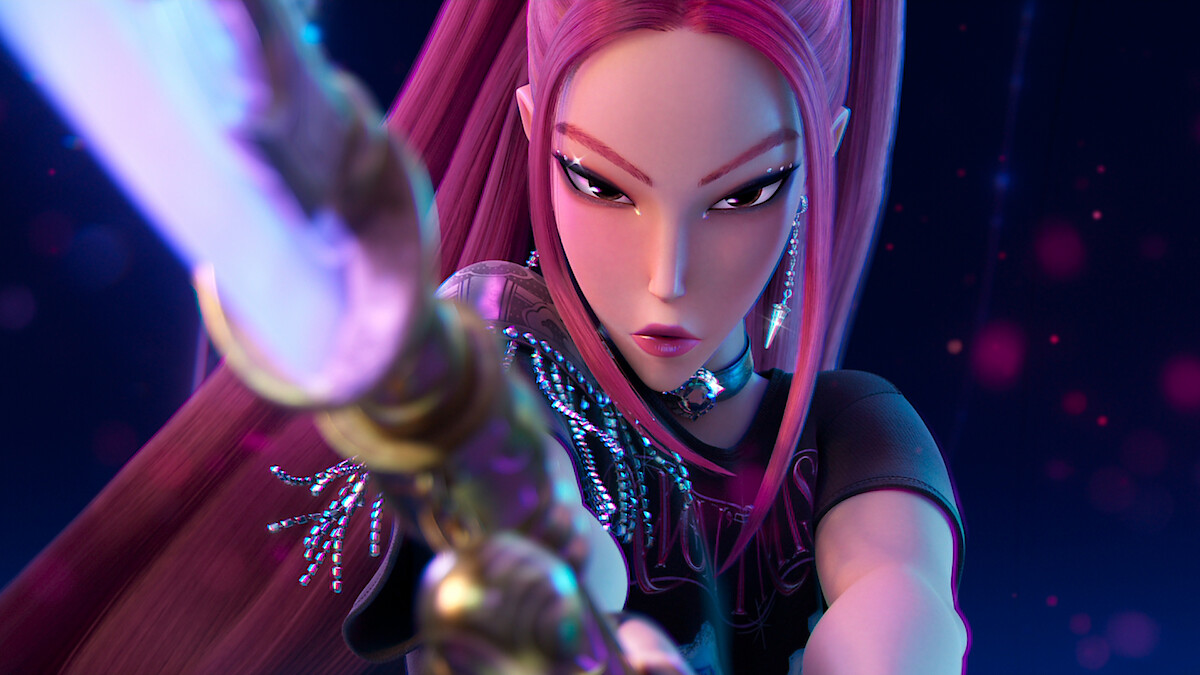
Mira is HUNTR/X's main dancer and visual, the member designed to look untouchable while caring far too much underneath. She notices fractures before Zoey does, challenges Rumi when the leader starts lying badly, and expresses loyalty through confrontation instead of a comforting speech prepared by committee.
Back to the HUNTR/X group profile
Profile
| Character | Mira |
|---|---|
| Fictional group | HUNTR/X |
| Story role | Main dancer, visual and demon hunter |
| Speaking voice | May Hong |
| Singing voice | Audrey Nuna |
| Story | KPop Demon Hunters |
| Current status | Active HUNTR/X member; original film arc complete |
Before the Honmoon cracked
The official character file frames Mira as the rebellious daughter of a wealthy family—the one who refused the neat role waiting for her. HUNTR/X becomes the place where her sharpness is useful rather than embarrassing. That history explains why deception hits her hard: she chose this group as family, so being managed instead of trusted feels like being pushed back outside.
Music, battles and character work
Mira's long lines and controlled movement give the trio visual balance. “How It's Done” introduces her as the blade of the formation. “Golden” exposes the fear that she is difficult to love. “Takedown” gives her anger somewhere loud to go, while “What It Sounds Like” asks her to return without pretending the betrayal did not happen.
The panda side quest
May Hong gives Mira her dry speaking rhythm. Audrey Nuna provides the singing voice and brings a real alternative R&B and hip-hop catalog with her. Follow Audrey's music if Mira's cooler vocal color grabbed you. Then look at the film's character design work: Mira's silhouette was built to read instantly beside Rumi and Zoey, even while all three share a performance identity.
Fandom notes and things the fact box misses
- Family position: the rebel label existed before the group, which is why HUNTR/X matters as chosen family.
- Fashion: Mira's styling uses long, sharp shapes and fewer apologetic choices.
- Temper: she is angry because she is paying attention, not because the script needed a mean girl.
- Soft center: the fandom loves every moment the armor moves two inches and pretends it did not.
YouTube video tracking history
Mira’s canonical video record begins with Sony Animation’s official “How It’s Done” lyric video, which documents HUNTR/X as a performing group while preserving the animated members as the credited character identities. Later official HUNTR/X music and performance uploads should remain attached to Mira, the HUNTR/X group page, and Audrey Nuna’s separate Artist profile where her singing credit applies. That three-way attachment does not justify a duplicate Mira page.
Sources
- Netflix Tudum · official Mira character bio
- Netflix Tudum · official cast and character guide
- Netflix Tudum · official soundtrack guide
- CVM Sekai HUNTR/X profile and related reviews
The verified performance file
- HUNTR/X role: lead dancer and choreographer
- Speaking voice: May Hong
- Singing voice: Audrey Nuna
- Group: HUNTR/X
- Story: KPop Demon Hunters
- Status: fictional member with separately credited speaking and singing performers
The character argument
Mira’s directness can look like simple toughness, but the useful detail is perception. She distrusts quickly because trust matters permanently once given. That makes her the member most likely to recognize a false note in the group’s emotional arrangement, even when she cannot yet name what Rumi is hiding.
That distinction protects the profile from becoming a facts card. Mira matters because the film gives a familiar idol position an emotional cost, then lets friendship expose what the polished role cannot solve alone.
How the music carries Mira
As choreographer and lead dancer, Mira gives HUNTR/X a body-level authority. In “How It’s Done,” her movement does more than decorate the rap sections; it tells the viewer this group can fight and perform without switching identities. Audrey Nuna’s vocal and rap texture adds an unpredictable edge that suits a character who refuses to make rebellion look apologetic.
Mira’s soundtrack route begins with physical authority in “How It’s Done,” hardens into the dangerous certainty of “Takedown,” and returns through the accountable harmony of “What It Sounds Like.” Follow how her weight changes with the argument.
The replay assignment
On replay, track the moments before Mira challenges somebody. Her face usually registers the inconsistency before the dialogue arrives. In group formations, watch how her angles create contrast with Rumi’s vertical command and Zoey’s quicker, more buoyant energy. The trio reads clearly because nobody has been sanded into the same silhouette.
Replay Mira by pairing May Hong’s dry, guarded dialogue with Audrey Nuna’s heavier musical color. The animation preserves the connection through posture and timing while allowing each performer’s credit to remain exact.
Canonical profile and React trail
Official video tracker
Sources and receipts
- Netflix Tudum — Mira and the HUNTR/X cast
- Netflix Tudum — soundtrack credits
- Sony Pictures Animation — official film page
Why Mira is the group’s pressure test
Mira’s skepticism is not a failure of warmth. It is the standard she uses before deciding a relationship is safe enough to trust. Once that trust exists, loyalty becomes fierce and practical. This is why Rumi’s concealment wounds her so deeply: the lie does not only reveal a secret identity; it makes Mira question whether the bond she defended was built on information she was never allowed to see.
As choreographer, Mira also occupies the role most attuned to alignment. She understands when three bodies are sharing a count and when one performer is compensating for something the others cannot name. The story turns that professional instinct into emotional intelligence. She notices fracture in the group before the plot provides a complete explanation, and her bluntness forces tension into the open.
Her visual design and fighting style continue the same argument. Long lines, sharp pivots and a polearm-like weapon make space around her feel deliberate. She does not fight like Rumi or Zoey because the trio should not become interchangeable when the costumes disappear. Distinct silhouettes let the action preserve member identity even at its fastest.
May Hong’s dialogue performance gives Mira the dry rhythm that prevents toughness from becoming a single-note pose. Audrey Nuna’s singing and rap performance supplies grain, bite and unpredictability in the songs. Keeping both credits visible shows how animation assembles one character from multiple kinds of performance without erasing the artists.
Mira’s reconciliation with Rumi matters because it is not passive forgiveness. She returns after anger, grief and evidence have changed the terms. The restored trio is stronger precisely because trust is no longer defined as never asking a difficult question.
The choreography question
A character profile should change the next watch, so use Mira as the film’s choreography guide. Notice when the trio performs perfect public symmetry and when combat breaks that symmetry into separate specialties. Mira often controls the transition between those states. Her dance role is not a decorative fact beside the story; it is one of the ways the story teaches us to recognize leadership distributed across three people.
That distribution also corrects the easiest reading of HUNTR/X. Rumi may be the leader, but the group does not survive because one exceptional woman finally becomes exceptional enough. It survives because Mira can challenge, Zoey can reconnect and Rumi can stop confusing isolation with responsibility. Mira’s authority remains visible after the friendship is repaired.
React image cards
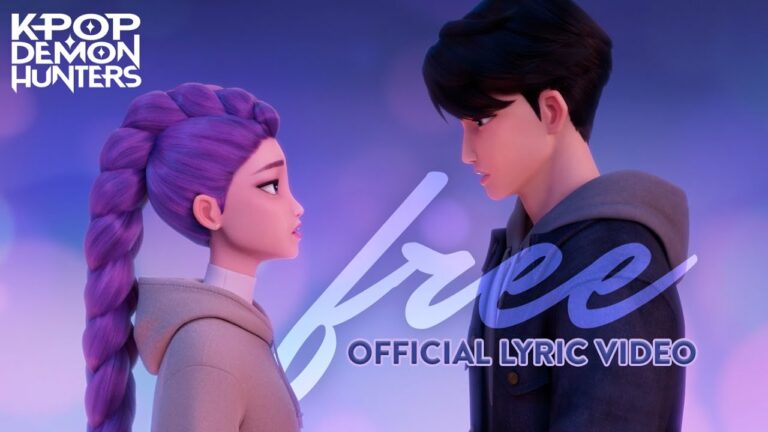
Mira’s tracker connects exact HUNTR/X videos in which she appears, including the finale React. Its card uses the official-video still; this profile keeps Mira’s own Netflix character image for hero, featured and social surfaces.

Mira’s official character file
Netflix identifies Mira as HUNTR/X’s lead dancer and choreographer. She comes from a traditional family, pushes against its expectations and approaches trust skeptically. May Hong described her as someone who bonds for life once trust is earned. That combination explains both the group’s physical precision and the size of her anger when Rumi’s secret surfaces.
May Hong performs Mira’s dialogue; Audrey Nuna supplies the singing voice. Hong gives the character dry timing and heat kept under control. Nuna gives the songs grain, low-end weight and a delivery that can sound unimpressed without becoming disengaged. Animation joins those performances through posture: long lines, decisive angles and a face that notices trouble before the script names it.
Her weapon and movement design preserve the same identity in battle. Mira takes space directly. She does not float like Rumi or dart like Zoey, and the trio remains legible when concert choreography becomes combat. That is good action design and good group design at once.
Choreography is how Mira reads the room
A choreographer trains attention toward alignment. Mira knows when three people share weight, when a transition is late and when somebody is compensating for a problem she refuses to name. The film converts that professional skill into emotional perception. She senses Rumi pulling away before she understands the demon patterns or the failing voice.
That does not make Mira telepathic or automatically correct. Suspicion can protect her, but it can also make Gwi-Ma’s manipulation easier once betrayal appears plausible. The interesting part is that her strength has a failure mode. Reading fracture quickly is useful; deciding what the fracture means still requires trust and evidence.
In “How It’s Done,” choreography expresses the trio’s established competence. Mira’s authority does not need a speech because the formation already shows it. In the finale, restored geometry communicates reconciliation before anyone can deliver a long explanation during a demon attack. She helps the group speak through bodies when language is overloaded.
Anger is not the opposite of love
Mira’s reaction to Rumi is sharp because loyalty was real. She defended a relationship under terms that were incomplete, then discovered the person she trusted had decided she could not handle the truth. The hurt is not proof that Mira rejects demon heritage. It is proof that concealment changed what her consent and protection meant.
The film lets her anger become exploitable without declaring it illegitimate. Gwi-Ma does not invent the wound; he isolates it from context and feeds it certainty. That distinction matters. Stories often demand that the blunt woman apologize for having boundaries while the secretive protagonist receives all emotional sympathy. Mira gets to be wrong in what she concludes without being wrong that the lie mattered.
Her return is therefore an action, not a reset button. She rejects the demon king’s version of events, admits her own susceptibility and chooses a new group arrangement where truth has entered the room. Forgiveness does not erase the pressure test. It changes what the relationship can survive next.
Audrey Nuna’s musical work
Audrey Nuna performs Mira inside the HUNTR/X songs rather than recording a generic cool-girl layer. Her darker texture creates contrast with EJAE’s elevated lead and REI AMI’s brighter rhythmic attack. Harmony works because the voices stay identifiable; blending does not require sanding them into one synthetic idol tone.
In “Takedown,” Mira’s force supports the song’s certainty, even as the plot makes that certainty morally dangerous for Rumi. In “What It Sounds Like,” her return has to carry accountability and support without becoming a backing-vocal pardon. Nuna’s weight helps the response feel like a separate person choosing the shared line.
The real artist and fictional character remain separate records. Audrey Nuna’s independent catalog, credits and career belong to her artist profile when present; Mira’s page tracks character appearances and HUNTR/X participation. One voice connects them. It does not merge their identities.
What the sequel owes Mira
The sequel should not reduce Mira to Rumi’s lie detector. Her family history, choreographic authorship and own relationship to performance give the story room to test her outside somebody else’s secret. What does rebellion look like after she has found a chosen family? What happens when skepticism blocks a necessary risk rather than exposing a danger?
Musically, she deserves material where choreography changes the narrative and her vocal color carries more than a supporting warning. A trio remains strongest when each member can lead a song’s emotional problem without the others becoming accessories.
My bottom line: Mira is the group’s pressure test because she refuses easy trust and then loves without half measures. Her arc does not teach her to stop questioning. It teaches her to question manipulation too, including the manipulation that tells an injured person certainty is the same as truth.
Current official sources
- Netflix Tudum — official sequel confirmation, March 12, 2026
- Netflix Tudum — official cast and character guide
- Netflix Tudum — soundtrack performers, writers and producers
Mira replay guide
First, watch the opening performance for how Mira sets weight and completes lines while the trio moves between fighting and concert choreography. Second, follow her eyes when Rumi’s voice begins failing; the film plants perception before confrontation. Third, replay the breakup without asking whether anger makes her likable. Ask what information she had, what Gwi-Ma added and why certainty felt safer than ambiguity.
Then watch “What It Sounds Like” for her reentry. Mira does not dissolve into Rumi’s lead. Her posture, vocal weight and fighting style remain distinct while the geometry becomes shared again. That is the group’s thesis in miniature: harmony is not sameness, and reconciliation is not the disappearance of edges.
A careful profile also separates choreography credit inside the story from production credit outside it. Mira is canonically the HUNTR/X choreographer. Real animators, choreographers, performers and filmmakers designed what viewers see. Celebrating the fictional role should point toward that labor, not replace it.
The current file ends with sequel confirmed and details pending. No official plot says Mira leaves, takes over leadership, gets a solo or reconciles with her family. Those are possible stories, not present facts. Her next chapter deserves better than being spoiled by somebody’s confident guess wearing a news headline.
Mira’s profile will keep judging the full construction rather than one cool screenshot. Dialogue timing, Audrey Nuna’s vocal color, animated weight, formation logic and the writing of her choices all contribute to the character. That layered credit is especially important now that HUNTR/X charts beside real groups. Fictional billing can be celebrated without pretending the animation created or performed itself. When sequel footage arrives, the first questions will be whether Mira receives an independent dramatic problem, whether choreography still communicates character and whether her skepticism evolves without being scrubbed into easy agreeableness. A second chapter should make her larger, not merely louder.
Official video archive
Official Socials
HUNTR/X are fictional and do not have real personal accounts. Use Netflix Tudum’s official character material, Sony Pictures Animation’s official YouTube, and the canonical HUNTR/X hub.