
HUNTR/X · FICTIONAL CHARACTER · KPOP DEMON HUNTERS
Zoey
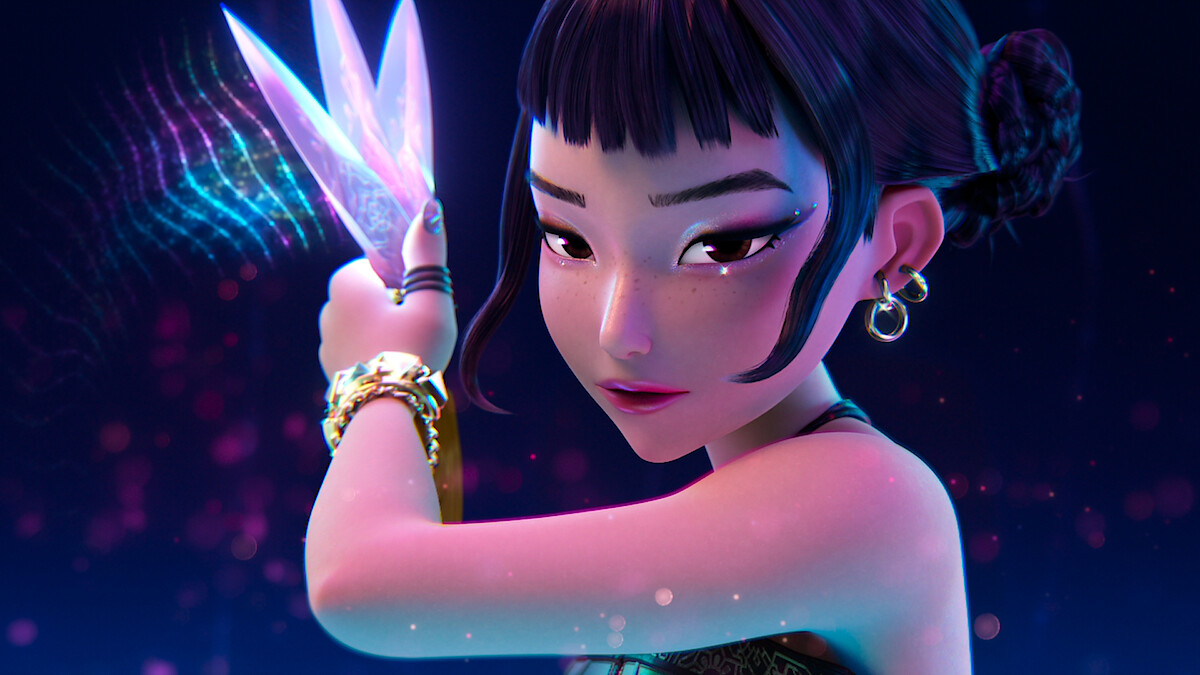
Zoey is HUNTR/X's rapper, lyricist and Korean American maknae. She is fast with a joke, faster with a blade and quietly worried that she is never Korean enough in one room or American enough in another. The film gives that split identity to the person writing the group's words, which is not accidental.
Back to the HUNTR/X group profile
Profile
| Character | Zoey |
|---|---|
| Fictional group | HUNTR/X |
| Story role | Rapper, lyricist, maknae and demon hunter |
| Speaking voice | Ji-young Yoo |
| Singing voice | REI AMI |
| Story | KPop Demon Hunters |
| Current status | Active HUNTR/X member; original film arc complete |
Before the Honmoon cracked
Born and raised in Burbank, California, Zoey comes to Korea carrying enthusiasm and a cultural identity that does not fit a clean checkbox. HUNTR/X gives her belonging, but belonging does not instantly remove insecurity. Her section of “Golden” is about doubt and identity, not a random breakup hidden in a fantasy movie.
Career: Music, battles and character work
Zoey's rap changes the energy of HUNTR/X songs without separating her from the vocal story. In battle, she uses throwing knives and speed. In the group, she uses humor to keep pressure from sitting still too long. When Rumi's secret breaks open, Zoey is hurt and confused rather than reduced to a neutral peacekeeper.
The panda side quest
Ji-young Yoo voices Zoey in dialogue; REI AMI provides the singing voice. REI AMI's own work jumps between sweetness, menace, rap and alt-pop, which makes the casting click immediately. Also inspect the Korean folk-art thread behind Derpy Tiger and Sussie. Zoey may be the maknae, but the actual side-quest champions are still a tiger shaped like a dropped dumpling and one judgmental magpie.
Fandom notes and things the fact box misses
- California file: Burbank is part of her identity, not a footnote used to explain English lyrics.
- Lyrics: Zoey helps write HUNTR/X songs, giving the youngest member control over language.
- Knives: small, fast and accurate—basically her performance style with sharper consequences.
- Maknae energy: bright does not mean emotionally uncomplicated.
YouTube video tracking history
Zoey’s canonical video record begins with Sony Animation’s official “How It’s Done” lyric video. It documents HUNTR/X as an in-story group while keeping Zoey, Mira and Rumi as the member identities. Official song uploads should be attached to Zoey’s profile, the HUNTR/X group profile and REI AMI’s separate Artist profile when her singing credit applies. The shared recording creates linked credits, not duplicate character pages.
Sources
- Netflix Tudum · official Zoey character bio
- Netflix Tudum · official cast and character guide
- Netflix Tudum · official soundtrack guide
- CVM Sekai HUNTR/X profile and related reviews
The verified performance file
- HUNTR/X role: rapper, lyricist and maknae
- Speaking voice: Ji-young Yoo
- Singing voice: REI AMI
- Group: HUNTR/X
- Story: KPop Demon Hunters
- Status: fictional member with separately credited speaking and singing performers
The character argument
Zoey’s brightness is not proof that she has fewer complications. As the Korean American member raised in Burbank, she carries the anxious work of proving she belongs in a Korean group while also protecting the American part of her history. Her constant ideas and affectionate energy can therefore be joy and insurance at the same time.
That distinction protects the profile from becoming a facts card. Zoey matters because the film gives a familiar idol position an emotional cost, then lets friendship expose what the polished role cannot solve alone.
How the music carries Zoey
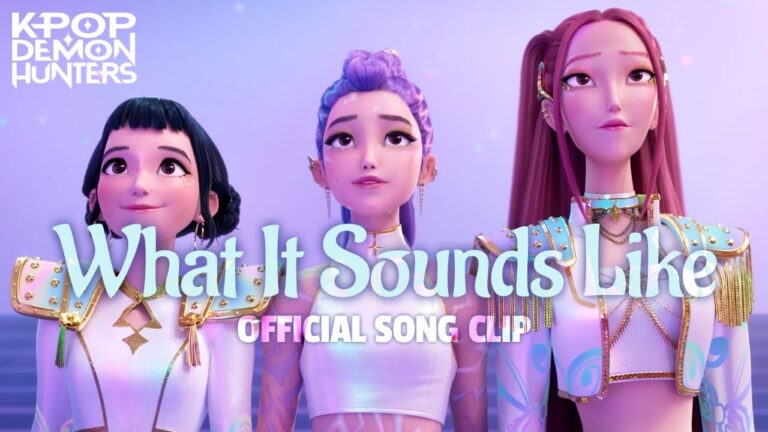
The lyricist role matters because Zoey’s words help the group turn private conflict into shared music. REI AMI gives her rap lines a quick, elastic attack that can sound playful without losing force. “What It Sounds Like” is the payoff: Zoey does not solve belonging by choosing one cultural side. She helps build harmony spacious enough to keep contradiction.
Zoey’s song sequence tracks language under pressure: fast confidence in “How It’s Done,” collective certainty in “Takedown,” then a return to shared speech in “What It Sounds Like.” Her rap function changes as the group’s trust changes.
The replay assignment
Replay the edges of scenes. Zoey often reacts first with her whole body, then recalibrates when the room changes. In songs, listen for the way a fast rap interrupts grander vocal architecture without breaking it. That interruption is her function in the trio: new information, delivered with enough momentum that the others have to move.
Replay Zoey by hearing Ji-young Yoo’s eager interruptions beside REI AMI’s bright rhythmic attack. The animators connect both through quick reactions and knife-fast movement without pretending the performances came from one person.
Canonical profile and React trail
Official video tracker
Sources and receipts
- Netflix Tudum — Zoey and the HUNTR/X cast
- Netflix Tudum — soundtrack credits
- Sony Pictures Animation — official film page
Belonging is Zoey’s hidden verse
Zoey is often the funniest and most openly affectionate member, so it is easy to mistake her for the uncomplicated one. Her Korean American background makes that reading too shallow. She has grown up negotiating whether she is Korean enough in one room and American enough in another. The urge to keep producing ideas can be read as creativity, but also as the anxious belief that usefulness will guarantee belonging.
That history makes the lyricist position exact rather than decorative. Zoey is practiced at finding language across contexts, translating feeling into a line other people can carry. When the group fractures, the loss is therefore not only friendship. The shared language she helped maintain stops functioning, and no amount of fast talk can repair a truth that has not yet been faced.
Her maknae energy changes the trio’s tempo. Rumi tends toward vertical command and Mira toward guarded force; Zoey darts, reacts and fills silence. In action sequences, her knives extend that speed into combat. In music, compact rap phrases create the same effect: a rapid arrival of information that forces the arrangement forward.
Ji-young Yoo’s speaking performance balances eagerness with the small hesitations that expose insecurity. REI AMI’s musical performance gives Zoey a bright attack capable of turning suddenly hard. The contrast keeps sweetness from becoming weakness and makes the rapper role feel embedded in character rather than assigned from a generic position chart.
Zoey’s final choice is not to become less needy, less American or more conventionally Korean. She returns to a friendship capable of holding the whole record. That is the film’s strongest answer to her belonging question: irreplaceability does not have to be earned every morning through usefulness.
The lyricist question
Zoey’s writing role invites a different replay. Follow who gives language to a feeling first and who turns somebody else’s confession into a phrase the trio can share. Lyrics are social technology in this story: they can conceal, condemn, recruit or reconnect. The youngest member is therefore entrusted with more than speed and jokes. She helps decide which emotions become singable.
Her cultural position sharpens that work. A Korean American character inside a Seoul-based K-pop group can be close to home and still translating herself. The film does not resolve that tension with a citizenship test or a perfect Korean identity. It lets Zoey belong through reciprocal friendship, creative contribution and the right to be understood as more than the energy she supplies.
React image cards
Zoey’s tracker connects the exact HUNTR/X uploads in which she participates. The finale React keeps its own local video still, while Zoey’s canonical character image remains unique to her profile and directory card.
Zoey’s official character file
Netflix describes Zoey as HUNTR/X’s youngest member, resident rapper and a Korean American raised in Burbank, California. Ji-young Yoo explained that Zoey keeps offering ideas because she worries usefulness will secure a place she does not fully believe she owns. That official description turns her constant energy from a cute position trait into a belonging strategy.
Ji-young Yoo performs the dialogue, catching the speed, eagerness and brief hesitations beneath it. REI AMI performs the singing and rap voice, supplying a bright attack that can harden without losing agility. Zoey’s knives extend the same design into action: quick, compact and capable of changing direction before a heavier opponent finishes deciding where she was.
Maknae is a group-position fact, not an instruction to treat her like a child. She writes, fights, performs and helps translate emotion into language. The profile keeps the playfulness without shrinking the labor.
The lyricist is maintaining a shared language
Zoey’s writing role matters because every major song changes what the trio can say together. “How It’s Done” turns professional confidence into group identity. “Golden” packages aspiration around a truth the members do not share. “Takedown” lets certainty become a weapon. “What It Sounds Like” builds new language after the old one failed.
The film does not hand Zoey sole authorship of those fictional songs, and the real credits belong to named writers. Inside the story, however, calling her the lyricist establishes why idea production becomes part of her self-worth. If she can keep finding the line, perhaps the group will keep needing the person.
That belief is exhausting because belonging becomes a subscription she thinks must renew every morning. Her arc matters when the group chooses her after usefulness has failed to prevent fracture. She is irreplaceable before the next clever line arrives.
Korean American does not mean half-finished Korean
Zoey’s cultural position is not a quiz she eventually passes. Growing up in Burbank and working in Seoul can produce closeness, fluency, distance and self-consciousness at the same time. The film gives her enough specificity that the outsider feeling has a location rather than becoming generic teenage insecurity.
Her quick humor can function as translation: reading the room, filling silence and offering a version of herself that moves before anybody can reject it. That makes the funny lines enjoyable and slightly painful. Comedy is not evidence that the character lacks interior life. It is one of the tools she uses to manage it.
A sequel should resist solving this by declaring her perfectly secure forever. Belonging shifts with audience, language, family and work. The better continuation would let Zoey become more honest about when she is translating, when she is performing ease and when she simply wants to be understood without producing value first.
REI AMI gives the songs their snap
REI AMI’s delivery separates Zoey from a generic animated rapper. The attack is bright enough for pop spectacle, while rhythmic edges keep the lines from floating away inside orchestration. Against EJAE and Audrey Nuna, that color completes a triangle rather than ranking three interchangeable leads.
In “How It’s Done,” speed helps establish the team’s confidence. In “What It Sounds Like,” Zoey’s return must sound like personal admission and restored group language at once. REI AMI lets vulnerability enter without draining the energy that defines the character.
The credit boundary stays firm. REI AMI’s real releases and biography belong to her artist record; Zoey’s fictional appearances belong here. Fans can follow the voice into the artist’s catalog without pretending the character wrote or lived it.
What the sequel owes Zoey
Zoey deserves a conflict that cannot be solved by supplying the right phrase for somebody else. Let her choose what she wants when usefulness is not the entrance fee. Let the lyricist encounter a feeling she cannot immediately make catchy, then discover the group can stay in the uncomfortable silence with her.
Musically, a Zoey-led track could explore bicultural rhythm and language without turning identity into a classroom presentation. The first film trusted Korean specificity; the sequel can trust a Korean American perspective to remain complicated rather than translating it into a tidy slogan.
My bottom line: Zoey is the group’s connective tissue, but she is not required to hold everybody together alone. Her humor, rap and ideas are contributions, not rent. The finale works because the friendship finally answers the fear underneath all that motion: she belongs when she has nothing left to pitch.
Current status: Current official sources
- Netflix Tudum — official sequel confirmation, March 12, 2026
- Netflix Tudum — official cast and character guide
- Netflix Tudum — soundtrack performers, writers and producers
Zoey replay guide
First, follow Zoey in scenes where nobody is directly addressing her. Her reactions reveal how quickly she monitors the group and how often she prepares another idea before the room asks. Second, replay her rap passages for the relationship between speed and control. REI AMI’s attack makes the lines exciting, but clean rhythmic placement keeps energy from becoming noise.
Third, watch the fracture through the belonging question. Zoey is not only losing friends; she is receiving apparent proof that the place she worked to secure was conditional. Gwi-Ma’s manipulation succeeds because it attaches itself to an existing fear. Her return matters because Mira and Rumi do not demand one more useful contribution before making space.
The sequel can deepen her Korean American identity without making her explain two countries to the audience. Family, language switching, creative disagreement and the difference between being marketed as global and actually feeling at home could all become story. None has been officially announced, so this profile records them as questions the character opens, not claims about the script.
Officially, Rumi, Mira and Zoey will return with Kang and Appelhans directing. That is all the character outcome currently proves. Zoey has no announced solo, relationship or departure. Synthetic songs and fan trailers remain fan work even when algorithms place them beside real Sony clips. Exact-source discipline protects the artists as much as the canon.
The next update should come from official footage, credits or a dated Netflix/Sony notice. Until then, Zoey’s record is already substantial: rapper, lyricist, youngest member, Korean American, demon hunter and the person whose relentless motion hides a very human question about whether she can rest and remain wanted.
Zoey’s profile will follow the same layered-credit rule. Ji-young Yoo’s dialogue, REI AMI’s musical performance, the screenwriters, animators and song teams all build the character audiences recognize. Chart success under the HUNTR/X name does not erase those people, and real-artist credits do not make the fictional story meaningless. When official sequel material arrives, this page will look for a genuinely Zoey-shaped problem: language, authorship, belonging, ambition or the cost of always being the social spark. More jokes and a longer rap can be fun, but screen time becomes development only when it changes what she chooses or understands.
That distinction keeps the archive honest.
Official video archive
Official Socials
HUNTR/X are fictional and do not have real personal accounts. Use Netflix Tudum’s official character material, Sony Pictures Animation’s official YouTube, and the canonical HUNTR/X hub.