
Hakatri
Hakatri never walks into the trilogy’s present-day rooms, yet almost every door is hanging from his absence: Ineluki’s guilt, Sorrow’s creation, Amerasu’s grief, Shima’onari’s rule, and the dragon tooth that becomes Ti-tuno.
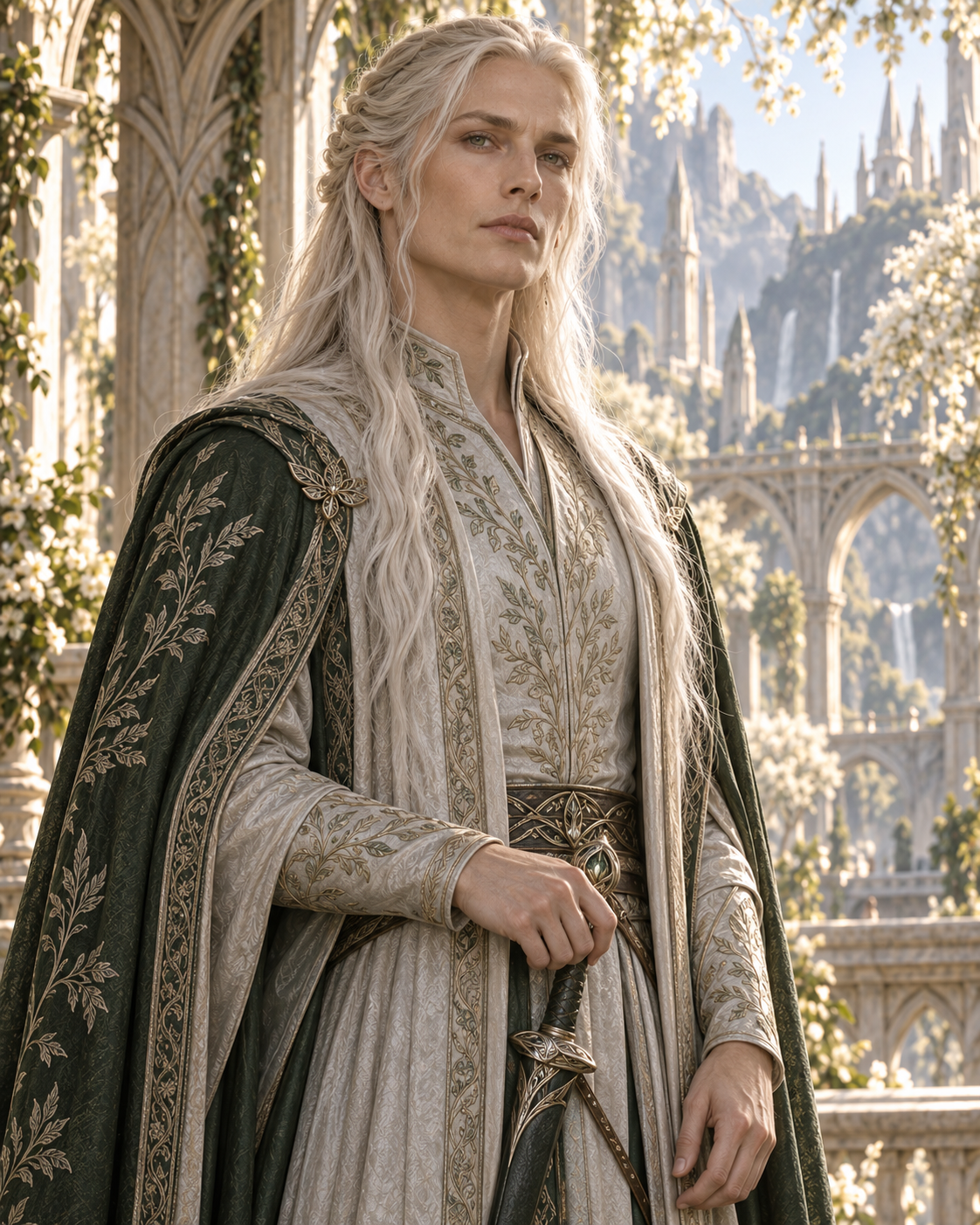
The absent heir whose pain is continually interpreted by everybody else
Hakatri is the elder son of Iyu’unigato and Amerasu, older brother of Ineluki, original heir of Asu’a, father of Shima’onari, and one of the two Sithi princes who kill the mother-dragon Hidohebhi. He survives that victory horribly burned and in unending pain. Eventually his father sends him westward by boat with a trusted servant in search of heart’s-ease. The original four-volume sequence does not bring him back or verify what follows the voyage.
That evidentiary boundary is essential. Hakatri becomes one of the saga’s most consequential characters through testimony, memory, lineage, objects, and grief, but almost never through his own voice. Jarnauga tells his history. Amerasu mourns and calls toward him. Ineluki builds a catastrophe around what he believes his brother’s suffering requires. Later generations inherit political and emotional consequences from a man whose own wishes remain largely inaccessible.
A weaker profile would convert that absence into permission to invent personality. This one does not. We can say Hakatri fought Hidohebhi beside Ineluki, survived terrible injury, departed west, fathered Shima’onari, and remained loved. We cannot honestly turn those receipts into a complete temperament, private philosophy, or endorsement of the war committed in his name.
A legendary victory that refuses to behave like one
Hakatri and Ineluki fight Hidohebhi the Black, also remembered as Drochnathair, mother of red Shurakai and white Igjarjuk. The brothers kill her. Fantasy grammar invites a clean reward: dragon slain, princes glorified, kingdom secured. Instead, Hakatri leaves the encounter burned beyond the healing available to the Gardenborn.
The wound changes succession and family structure. Hakatri cannot simply return to the role of elder heir. Ineluki, who fought beside him, becomes trapped inside guilt and the desire to restore what has been lost. Iyu’unigato eventually sends Hakatri west, separating treatment from family, home, and the political crisis consuming Asu’a.
The series gives no painless moral to the departure. Sending him may be care, desperation, abdication, or all three. “Heart’s-ease” names the hope without supplying a medical receipt. The choice also creates the blank space Ineluki fills with forbidden research. With Hakatri absent, nobody can ask the person in pain whether the iron-witchwood experiment, Sorrow, patricide, or apocalypse resembles help.
That is the first major thematic function of Hakatri: when the suffering person becomes inaccessible, loved ones can begin loving their own interpretation of rescue more than the person they claim to serve.
Four books of consequence without a manufactured return
Book 1: Jarnauga connects the brother to the sword
The Dragonbone Chair reveals Hakatri inside Jarnauga’s account of Asu’a’s fall. The sequence matters: dragon wound, unending pain, westward voyage, Ineluki’s unexpected succession, forbidden study, iron-poisoned witchwood, Sorrow’s forging, Iyu’unigato’s murder, self-coronation, and the tower spell. Hakatri is not an optional sad detail pasted onto a preexisting villain. His injury is one of the causal breaks through which Ineluki falls.
The dragon’s descendants also place his history inside Simon’s present. Igjarjuk’s blood scars Simon and gives him the Snowlock streak. The younger hero survives his own dragon encounter and must decide whether pain and marking grant him a special moral license. They do not. The parallel refuses to make dragon suffering deterministic.
Book 2: Amerasu speaks toward the missing son
When Skodi’s ritual leaves a door open in Simon’s mind, a musical, sorrowing woman reaches through Jiriki’s mirror and the Road of Dreams. The address is not to Simon but to Hakatri. Amerasu still calls toward the son sent away centuries earlier. Her grief is not resolved merely because history labels him “gone.”
Simon later brings Amerasu knowledge of both sons through dreams. She confirms Hakatri’s wound and westward search for heart’s-ease, explains Ineluki’s guilt and hardening, and accepts responsibility for the child she cannot understand or stop. Hakatri’s absence therefore becomes the emotional space connecting Simon to the oldest family in the war.
Book 3: lineage and artifacts keep moving
The horn Ti-tuno is identified as a Making-object fashioned from one of Hidohebhi’s teeth after the brothers’ victory. Iyu’unigato gives the horn to Prince Sinnach; it passes through Hernystiri and mortal hands, Ebekah’s dowry, Camaris, and eventually back to Amerasu. Her decision to send it through Simon returns Hakatri’s dragon battle to the mortal coalition as relationship rather than trophy.
Shima’onari’s leadership also keeps Hakatri present. The son who once helped Amerasu guide survivors away from Ineluki’s Asu’a becomes king of the Dawn Children and father of Jiriki and Aditu. The ruling family confronting the Storm King descends from the brother whose suffering helped make him.
Book 4: the ending refuses to conscript Hakatri into forgiveness
When Simon recognizes Ineluki’s suffering and Camaris calls for forgiveness, the scene does not claim Hakatri would have forgiven, approved, or returned. The living cannot borrow his unknown wishes to simplify their decision. They can only refuse to continue the machinery built around them.
Ineluki’s defeat therefore does not solve Hakatri’s fate. The swords dissolve, Elias expels the occupying shade, and the tower falls. Hakatri remains west of the verified record. The original saga closes its war without using an absent injured person as a final explanatory prop.
Brother, son, mother, father—and five centuries of people living after him
Ineluki loves Hakatri and blames himself for the dragon wound. That love becomes possessive interpretation. He pursues restoration without Hakatri’s verified consent, then calls escalating domination loyalty.
Amerasu loses one son to the West and another to hatred. Her call through the mirror shows Hakatri is not emotionally filed under ancient history. Her political courage comes partly from recognizing what unresolved family grief has become.
Iyu’unigato sends Hakatri west, then confronts Ineluki’s weapon as a wound in creation. His response separates compassion for the injured heir from acceptance of any method proposed in the heir’s name.
Shima’onari is Hakatri’s son and the line that survives. He helps Amerasu lead people out of Asu’a, later rules the Sithi, and dies resisting the forces allied to his uncle. Jiriki and Aditu inherit both branches of the family history without becoming repetitions of either.
Dragon tooth, black sword, white hair: the battle keeps changing containers
Ti-tuno turns Hidohebhi’s tooth into a horn whose history crosses Sithi, Hernystiri, Nabbanai, and Erkynlandish relationships. Its significance comes from that chain of giving, not from ownership by one “right” culture.
Sorrow is the opposite object history. Ineluki makes it from witchwood deliberately poisoned with iron. It preserves the attempt to force a solution past every warning and body. Hakatri never wields it; the blade nevertheless carries his injury as its moral alibi.
Simon’s dragon mark creates a generational echo. He, too, survives a dragon through pain, altered appearance, and other people’s projections. He can still choose care, uncertainty, and ordinary identity. The echo proves injury influences a person without writing the ending for them.
He is the human—well, Sithi—cost hidden inside somebody else’s grand solution
Hakatri matters because he keeps the villain’s origin emotionally intelligible without making it ethically acceptable. Ineluki did not begin with random hunger for darkness. He confronted suffering he could not fix and eventually decided that limits, consent, community, and creation itself were obstacles.
The absence of Hakatri’s voice is not a flaw for fandom to fill with confident invention. It is part of the tragedy. Everybody else narrates what his pain means. The most dangerous narration becomes a sword, a kingdom, and a five-century return plan.
His profile therefore belongs beside the central cast even though his direct page time is small. Page count measures visibility, not causal or thematic weight. Hakatri is the missing person at the center of the family portrait and the reminder that saving someone can become violence when their personhood disappears beneath the savior’s need to succeed.
Evidence boundary, status, and injury-conscious art
This profile covers Hakatri’s verified presence across all four owned Kindle volumes and their reference material. It does not import later Osten Ard publications to close a question the original sequence leaves open. Within this property, his fate beyond the westward voyage is unresolved.
The books do not provide a reliable full facial description. The approved identity therefore begins with family consistency—an extraordinarily beautiful adult Sitha related visibly to Amerasu, Ineluki, Shima’onari, Jiriki, and Aditu—while its silver-gold hair and gray-green eyes remain plainly labeled editorial reconstruction.
This unburned portrait is the canonical face for hero, directory cards, and future milestone scenes. The later dragon-burned depiction must retain this exact identity and a stable injury map without prettifying catastrophic injury or turning it into horror decoration.