
Shem Horsegroom
Morgenes gives Simon history. Shem gives him the songs and creatures ordinary people use to survive history. When home is gone, the boy can still carry Bold Jack Mundwode into a storm-dark valley.
Profile
Shem is one of the people who taught Simon that stories belong to workers long before books taught him history belongs to power.
Shem Horsegroom is a Hayholt stable worker and storyteller known to Simon and Morgenes as a source of folk tales about pookahs, niskies, and other “Little Folk.” His long ballad of Bold Jack Mundwode remains with Simon after flight from the castle, while Shem himself belongs to the remembered home Simon dreams about.
Book 1 does not describe Shem physically, give a formal age, identify family, or record the exact circumstances under which Simon learned every tale. His occupation, narrative reputation, friendship circle, and cultural effect are much firmer.
Shem’s stories sit beside Morgenes’s historical instruction without becoming the same thing. Morgenes insists the Sithi are not merely pookahs and niskies, correcting folk category with recovered history. The correction does not make Shem foolish. It shows different archives doing different work: stable tales preserve wonder, caution, humor, and shared imagination; scholarship separates colonized peoples from diminutive legend.
The Jack Mundwode ballad proves folk narrative is portable. During later travel, Simon sings it to steady riders through a dark valley. Sludig, usually impatient with whimsy, asks him to finish. Shem’s voice has become a tool for courage and fellowship even when Shem is absent.
He also appears indirectly in Simon’s crown-of-fire dream, where a remembered stable setting becomes corrupted by Pryrates’s rasp and inhuman language. Nightmare uses Shem’s familiar face or place because the stable once meant safety.
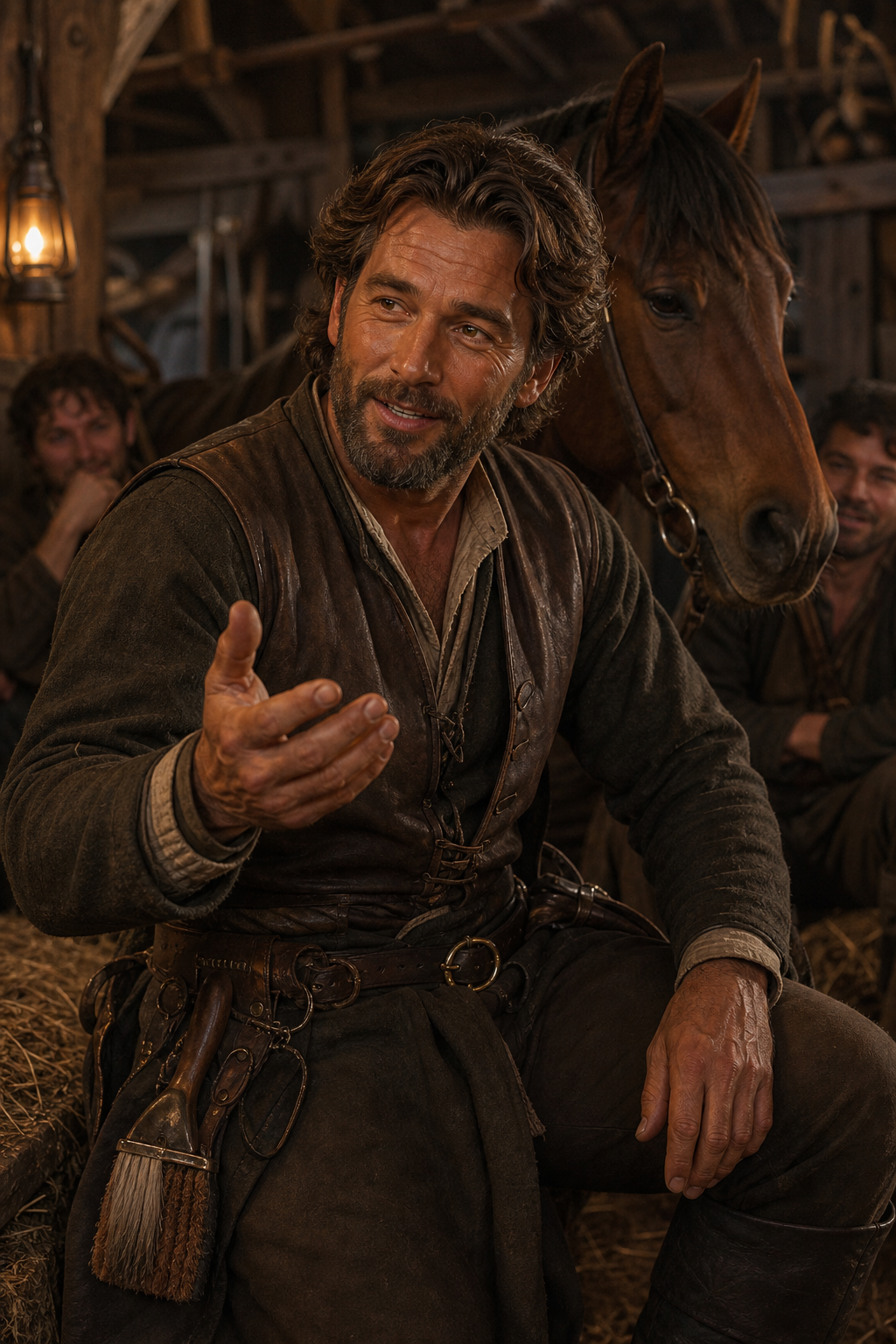
Shem remains last confirmed alive in Book 1. His portrait is a disclosed CVM continuity identity anchored in groom labor, horses, loft storytelling, and warmth rather than textual appearance.
The Dragonbone Chair · Evidence map
Stable tales, scholarly correction, Towser’s exile, a corrupted dream, outlaw disappointment, and a ballad carried into danger
Shem’s occupation and narrative reputation arrive together
Simon and Morgenes know Shem as a horsegroom associated with stories of folk beings. The stable is therefore both workplace and oral-story venue.
Book 1 does not specify whether he performs formally, sings for coin, or tells tales only among workers. “Storyteller” remains functional rather than professional title.
Folk categories shape Simon’s imagination before history complicates them
Shem’s stories include pookahs and niskies. When Simon encounters Morgenes’s account of the Sithi, the doctor insists they are not merely “Little Folk.”
The correction shows Simon’s existing vocabulary came from somebody. Shem supplies the imaginative map that scholarship must redraw rather than an empty mind Morgenes creates from scratch.
A banished court fool finds company below the royal feast
After Towser is driven out of court, he drinks with Shem and Ruben the Bear. The scene places the old jester among workers who receive him when elite entertainment turns punitive.
Book 1 does not record the conversation. Companionship is enough: Shem’s social world includes a fool carrying dangerous truth and a smith rooted in labor.
Nightmare borrows Shem’s familiarity and replaces his voice
After leaving the Hayholt, Simon dreams of the loft, Shem, and Ruben. Shem speaks with Pryrates’s rasp while Ruben answers in an immortal, inhuman voice. The familiar stable becomes a stage for coercive supernatural language.
This is dream imagery, not evidence Shem collaborates with Pryrates or possesses hidden knowledge. The horror depends on violation of a remembered safe person.
Simon discovers the road does not resemble Shem’s Jack Mundwode adventures
Fugitive hardship bears little resemblance to the bold outlaw stories Simon learned. Hunger, fear, cold, exhaustion, and uncertainty puncture romantic expectation.
The contrast does not invalidate the ballad. It distinguishes narrative pleasure from practical forecast.
Simon uses Shem’s long story to steady companions through storm and darkness
Simon sings of Bold Jack Mundwode, Hruse, Osgal, the Lord Constable, and the false Duke of Flowers whose magical rosebush supposedly grows gold Imperators. The sprawling tale occupies fear.
Sludig asks him to finish later. A Rimmersman skeptical of whimsy still recognizes the social value of continuation.
Shem’s presence survives as language after the Hayholt becomes inaccessible
Simon cannot return to stable routine, but memory and song travel. Shem becomes part of the cultural home the boy carries rather than a character who must physically join the quest.
The completed volume does not return to settle Shem’s later location or fate. His living status remains scoped to last confirmation.
Folklore versus history
Morgenes corrects Shem’s category without canceling the human need Shem’s stories answer.
The distinction between Sithi and “Little Folk” matters ethically. Treating an ancient people as pookahs or niskies can reduce dispossession, warfare, culture, and survival into nursery wonder. Morgenes restores historical specificity.
But Shem is not presented as a fraudulent historian claiming archival authority. He tells folk tales. Those tales preserve a different kind of truth: what workers fear, laugh at, imagine in darkness, and pass between generations without books.
Simon needs both forms. Morgenes teaches him how official histories lie and how peoples have been misnamed. Shem teaches him how a long impossible story can hold listeners together while weather and fear close in.
The series repeatedly asks who controls records. Kings commission chronicles. The League preserves fragments. Servants carry memories. Jesters sing dangerous parallels. Stable storytellers keep motifs alive. A complete franchise hub should link these systems rather than rank only written scholarship as knowledge.
“Pookahs and niskies” also establishes Simon’s starting point. Later encounters with actual nonhuman peoples require him to move beyond familiar categories. Growth is visible because Shem’s warm tales remain emotionally valuable even when factually insufficient.
Fandom should avoid treating folklore correction as mockery of rural or servant belief. The novel’s oral traditions often preserve clues scholarly certainty misses. The right stance is evidence discipline: a folk category is neither confirmed ethnography nor meaningless nonsense.
Bold Jack Mundwode
The ballad fails as a survival manual and succeeds brilliantly as survival equipment.
Simon recognizes that outlaw life is not the merry sequence promised by Shem’s stories. That disappointment is a necessary maturation. Roads hurt. Danger is confusing. Heroism does not arrive with convenient rhyme or magical flowers.
Yet when companions need steadiness, he reaches for the same ballad. The song gives duration to fear. Each episode promises another narrative step after the current darkness. Listeners can attend to Hruse, Osgal, the Lord Constable, and the false Duke instead of only the valley.
The magical rosebush growing gold Imperators embodies cheerful folk impossibility: money blooming where power cannot control it. The detail turns economic fantasy into comedy and desire. Workers know coins do not grow on bushes; that is why the image works.
Sludig’s request to finish is the strongest receipt. The story crosses cultural and temperamental boundaries. He need not believe the ballad to want its ending.
Shem’s authorship status remains careful. He is the source from whom Simon knows the story, not necessarily its original composer. Oral tales belong to transmission chains. The profile calls it “Shem’s ballad” in the sense of performance and custody, not legal creation.
This distinction supports future Story 101 architecture. Bold Jack Mundwode deserves a canonical folklore explainer linked to Shem, Simon, the travel scene, oral culture, and heroic parody without duplicating Shem’s biography.
The corrupted stable dream
Nightmare knows a familiar voice is more useful than a stranger’s threat.
Simon’s crown-of-fire dream returns him to the Hayholt loft with Shem and Ruben. Home appears close enough to touch. Then Shem speaks with Pryrates’s rasp, and Ruben’s voice becomes immortal and inhuman.
The dream does not reveal secret allegiance. It demonstrates psychological invasion. Pryrates’s voice occupies the mouth of someone associated with story, horses, warmth, and ordinary adult companionship.
Shem’s inclusion proves emotional importance beyond page count. Simon dreams of people who formed home, not only nobles whose decisions changed history. A groom belongs beside a smith because stable and forge are part of the boy’s internal Hayholt.
The scene also complicates storytelling. Shem normally controls frightening material by shaping it into tale. The dream removes that control and makes his form carry somebody else’s script. Familiar narrative becomes coercion.
Reread discipline matters: phrases spoken by dream-Shem belong to the nightmare force, not the real groom’s knowledge or belief. Canonical profiles must not quote dream dialogue as character confession.
Relationships
Shem’s Book 1 network links horses, servant childhood, fools, smiths, scholarship, and a ballad that outlives the scene.
Simon
Simon learns folk stories from Shem, dreams of him after flight, tests outlaw life against the tales, and carries Jack Mundwode into danger.
Doctor Morgenes
Morgenes knows Shem as a story source but distinguishes the historical Sithi from pookahs, niskies, and generalized Little Folk.
Towser
The banished jester drinks with Shem and Ruben below the court. Their company receives a truth-teller rejected by royal entertainment.
Ruben the Bear
The groom and smith share Towser’s company and Simon’s later dream. The exact depth of friendship remains unrecorded.
Bold Jack Mundwode
Jack’s adventures supply Simon with romantic expectations and later a long narrative capable of steadying companions.
Sludig
Sludig asks Simon to finish the ballad. His request proves Shem’s transmitted story can cross beyond its Hayholt audience.
Hayholt stables
Horse care, loft warmth, workers, tack, and oral storytelling form the verified role environment even when exact performance scenes are sparse.
Pookahs and niskies
These creatures mark Shem’s tale-world and the category Morgenes says is inadequate for understanding the Sithi.
Last confirmed alive
Dream appearance is not a death receipt. The volume does not verify later location, danger, escape, or final fate.
Fandom notes and evidence discipline
Shem is not “the guy who tells stories.” He is one node in the trilogy’s argument about who gets to make reality portable.
Book 1 confirms occupation, storytelling association, folk creatures, relationship to Simon’s imagination, Towser and Ruben company, dream use, and Jack Mundwode transmission. It does not describe Shem’s body, face, hair, age, family, origin, exact repertoire, or final fate.
The portrait’s handsome middle-aged face, chestnut-gray hair, beard, amber eyes, brown leather-and-wool clothing, grooming brush, horse, lantern, and loft audience are disclosed role continuity. None should be quoted as novel description.
Why Shem is attractive
The owner’s fantasy rule applies full visual dignity to workers as well as nobles. Rugged beauty, laugh lines, capable hands, and warm social presence make him compelling without turning stable labor into aristocratic costume or modern cowboy fantasy.
What the name means here
“Horsegroom” functions as occupational identifier in the canonical name. The profile preserves the exact registry title rather than silently shortening him to Shem or inventing a family surname.
Canonical identity and visual-evidence disclosure
Rugged, warm, handsome, horse-wise, mid-story—and explicitly not a face the prose describes.
The canonical image fixes Shem as a very handsome rugged adult in his late forties with sun-browned fair skin, warm laugh lines, amber-brown eyes, thick wavy chestnut hair lightly threaded with gray, short practical beard, broad working shoulders, capable hands, brown wool tunic, leather vest, grooming brush, tack, lantern, hay, and a calm horse beside him.
He gestures in a stable loft while workers listen. The image makes storytelling visible as social action rather than wizard performance. No book, magic effect, noble clothing, or stage separates him from labor.
On the record
What this profile can prove today
This canonical profile covers Shem Horsegroom through The Dragonbone Chair: stable-groom role, folk-story reputation, pookahs and niskies, Morgenes’s historical correction, Towser and Ruben companionship, Simon’s corrupted stable dream, Jack Mundwode expectations, the valley performance, Sludig’s request, cultural portability, and last-confirmed-alive status.
Source: owner-accessed Kindle edition of The Dragonbone Chair, verified front-to-back through page 652 of 652 and reconciled with the complete Book 1 character manifest. Physical appearance is not described; the portrait is disclosed visual-continuity art. Later-volume evidence is excluded until sequential reading reaches it.
The Dragonbone Chair hub → · Book 1 characters → · Simon → · Doctor Morgenes → · Towser / Cruinh → · Series hub →
Why the distinction matters
That division protects Shem from a cheap reading in which an unlettered worker exists only to be corrected by an educated man. The novel gives his oral archive a different job, then shows it succeeding under pressure when Simon performs the ballad far from home.