
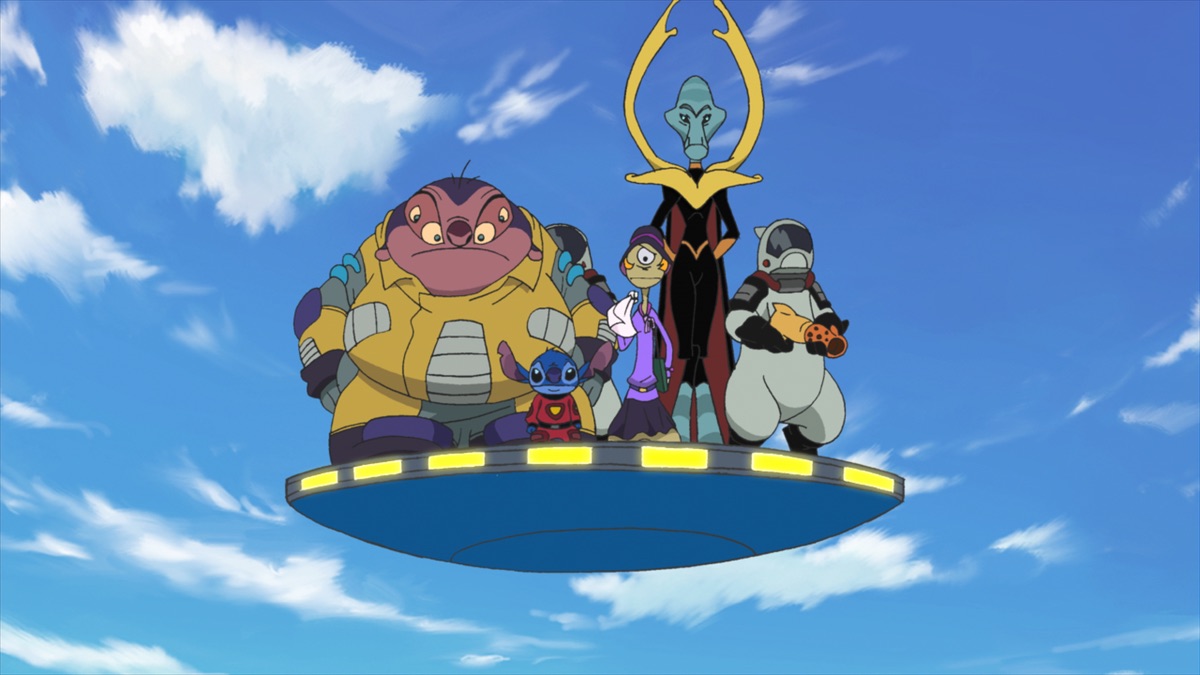
STITCH! · SEASON 2 · EPISODE 29 · REACT
Stitch! Season 2 Episode 29: Goodbye, Stitch
The counter reached 42. The final deed asked Stitch to leave the person who taught him why goodness mattered.
The episode record before Stitch says goodbye
Episode: Broadcast Season 2, Episode 29
Japanese title: さよなら、スティッチ
English card title: Goodbye, Stitch
First Japanese broadcast: June 29, 2010
Runtime: 22 minutes
Series branch: Stitch! Itazura Alien no Daibōken
Japanese voices central here: Kōichi Yamadera as Stitch and Motoko Kumai as Yuna Kamihara
Where to watch: Apple TV Japan carries the official episode record. Availability changes by region.
Stitch’s good-deed counter reaches 42, leaving one action between him and the wish he has chased across the season. A galactic war reveals that Jumba’s long-buried Experiment Zero survived. Zero is so dangerous that authorities claim only Stitch can stop him. Stitch leaves Yuna and Izayoi Island for the conflict, where Zero has prepared a final weapon. The battle forces Stitch to decide what his last good deed means and what wish is worth the cost.
My first reaction: Jumba buried a catastrophe and the universe drafted his child
The finale presents Stitch as the only possible defender, which sounds heroic until the chain of responsibility becomes visible. Jumba created Zero, judged the experiment too dangerous, and apparently disposed of the problem without confirming safety or establishing monitoring. When Zero returns, the system reaches for another one of Jumba’s creations to absorb the risk.
Stitch may choose to help. Choice matters. The claim that nobody else can do it places enormous pressure on someone whose entire season has been measuring goodness. Refusing would feel like proof that he failed, which weakens the freedom of the decision.
The good-deed counter has been training Stitch to look outside himself
Stitch began the season wanting unmatched power. The counter turned goodness into a visible path toward that desire. Sometimes he chased points, misunderstood them, or learned that an action performed for reward still affects real people.
At 42, the device becomes almost cruel. The final deed demands separation from Yuna and exposure to war. The season asks whether the number matters after Stitch has learned to recognize lives beyond the scoreboard.
A request during war should include the truth before the hero music
The Grand Councilwoman or any galactic authority needs to tell Stitch what Zero can do, what the final weapon is believed to be, which worlds are affected, what forces have already tried, and what survival support exists. Saying only that he is the one capable person turns informed consent into destiny.
Stitch should receive time to ask questions, consult Yuna and Jumba, and establish limits. Urgency can shorten the process. It cannot erase his right to understand the mission.
Jumba must disclose the complete Experiment Zero file
This is not the moment for shame, missing pages, or a dramatic confession after the first attack. Jumba should provide design goals, abilities, vulnerabilities, behavioral history, containment attempts, disposal method, and every reason he believed Zero was gone.
If he concealed the experiment from authorities, that fact belongs in the record too. Protecting Jumba from accountability could cost lives and leave Stitch fighting a version of the truth.
Calling Zero evil can hide the choices that made him dangerous
Experiment Zero may be violent and may choose catastrophic harm. He was still created for a purpose, evaluated by his creator, and buried when he became inconvenient or frightening. That history does not excuse war crimes. It explains why simple monster language is incomplete.
A safe response must stop the final weapon. Afterward, an independent process should examine Zero’s capacity, intent, treatment, and whether containment or rehabilitation is possible.
Stitch is not a weapons platform owned by the government
His strength, durability, and design make him useful in combat. They do not make his body public property. Galactic authorities should request assistance and provide support rather than command him as equipment.
If Stitch agrees, he deserves protective gear, medical care, extraction, communication with Yuna, and the right to stop when the mission changes beyond what he accepted.
Yuna deserves a goodbye with information, not noble silence
Stitch may want to protect her by leaving quickly or minimizing danger. Silence forces Yuna to imagine the worst and denies her the chance to say what she needs. She should know where he is going, why, who is responsible for contact, and what happens if updates stop.
A truthful goodbye can still be brief. Love does not become stronger by withholding the facts that allow the person staying behind to prepare.
The household needs a communication schedule before launch
One secure channel should carry check-ins at agreed intervals. Yuna needs a named liaison who can provide confirmed information without exposing military details. If Stitch cannot speak, the liaison should still report status rather than allowing silence to expand.
Jumba should provide a redundant tracker and emergency beacon. A device that fails during Zero’s interference cannot be the only bridge home.
The claim that only Stitch can win should be independently tested
Maybe his design genuinely counters Zero. Authorities should still examine whether teams, technology, negotiation, evacuation, or disabling the final weapon can reduce reliance on one fighter. Single-point hero plans collapse when the hero is injured, delayed, or manipulated.
Jumba can identify which of Stitch’s traits matter and whether those traits can be supported without cloning or experimenting on him. The goal is resilience, not manufacturing another disposable champion.
Civilian protection has to remain separate from defeating Zero
A war spans people who cannot wait for the central duel. Authorities need evacuation routes, shelters, medical corridors, food, power, and communication for affected worlds. Stitch’s battle cannot carry every part of the response.
The final weapon should be assessed for range, activation conditions, targets, and fallout. Disabling it may save more lives than pursuing Zero personally.
Zero may understand Stitch better than the authorities do
Both experiments know what it means to be built, measured, and feared. Zero can use that shared history to challenge Stitch’s loyalty, suggest that family softened him, or claim that the universe will discard him after victory.
Stitch needs an answer grounded in experience rather than obedience. Yuna and his community did not make him weak. They gave him relationships strong enough to choose what his power serves.
The battle should not become proof that one experiment deserved love and the other did not
Stitch’s growth does not retroactively make abandonment acceptable for Zero. Their different paths reflect choices and conditions. The finale can celebrate Stitch without declaring suffering a test that Zero failed.
Stopping him may require force. Humane treatment after containment remains possible even when reconciliation is not.
Jumba belongs in the risk zone, not hidden behind Stitch
Creator responsibility means more than giving technical advice from safety. Jumba should participate in disabling technology, communicating with Zero, and accepting exposure proportional to his expertise. He should not send Stitch toward a threat built from his own secrecy while protecting himself from discomfort.
That does not mean wasting Jumba’s life. It means assigning him real duty, oversight, and accountability throughout the mission.
The final weapon needs evidence preserved even during destruction
Responders should record design, materials, command links, and targeting data before dismantling what they safely can. The information may reveal collaborators, victims, or remaining copies. It also establishes responsibility for later proceedings.
Evidence collection must never delay an urgent shutdown. Remote capture and automated logging can preserve facts while Stitch focuses on survival.
The forty-third deed cannot be counted by whoever benefits from it
If galactic authorities declare Stitch’s mission a good deed because it saves them, the counter becomes another institutional reward system. The Chitama Stone should respond to intent, sacrifice, or a deeper moral condition rather than public applause.
Stitch’s choice matters because he understands what leaving costs and still considers lives he has never met. The deed belongs to him before anyone adds it to a record.
The wish reveals what the season actually changed
A wish for ultimate power would make sense for the Stitch who began counting. After Yuna, Obaa, Jumba, Pleakley, the experiments, and the island, power has acquired a purpose. The most meaningful wish protects relationship, restores lives, or creates safety rather than enlarging his ability to dominate.
Whatever he chooses should be his. The finale should not pressure him to spend the wish on public needs as another condition of being called good. Generosity has meaning only when he could have chosen differently.
Yuna’s waiting is active emotional labor
She cannot enter the battle, but she manages fear, supports the household, receives updates, and holds a place for Stitch’s return. Stories often treat waiting as empty time because the visible action occurs elsewhere.
Yuna deserves scenes that show her decisions and support network. She should not carry the entire vigil alone or remain frozen until Stitch reappears.
Returning home requires decompression before celebration
If Stitch survives, cheering may overwhelm a body leaving combat. Medical assessment, quiet, food, sleep, and time with Yuna should precede ceremonies. He may not be ready to describe everything or perform gratitude.
The household should watch for nightmares, hypervigilance, pain, guilt, and fear of future summons. Saving the universe does not make psychological impact disappear.
The galaxy owes more than a medal
Stitch deserves medical coverage, repair of damaged equipment, protection from retaliation, and a formal record that he acted voluntarily. A medal cannot replace material support or prevent the government from drafting him again.
Jumba’s role and institutional failures should be investigated. Hero recognition should never become a curtain pulled over accountability.
Zero’s victims need names after the weapon stops
A war described at galactic scale can flatten people into numbers. Recovery requires identifying the missing and dead, supporting displaced families, restoring services, and documenting harm across worlds.
Stitch may have ended the immediate threat. Governments and communities own the long reconstruction.
The counter should be retired after the wish
A device that counts goodness helped Stitch externalize a confusing idea. Keeping it afterward risks turning every relationship into evaluation. He has learned enough to make choices without watching a number rise.
Retiring it also protects him from anyone who might manipulate the metric, as Hämsterviel has already tried. Character cannot remain a dashboard owned by whoever controls the settings.
Yuna should have authority to challenge the mission terms
Stitch is capable of speaking for himself, but pressure from galactic officials may make refusal feel impossible. Yuna knows how he behaves when scared, eager to prove himself, or afraid of disappointing family. She should be allowed to ask whether the plan protects him and whether alternatives were honestly considered.
Her questions do not give her ownership of his decision. They create a counterweight to an institution that benefits from his consent. Stitch can still go after hearing her concerns, and Yuna can support him without pretending the terms were fair.
A ceasefire offer should remain available until the weapon activates
Zero may reject negotiation, yet authorities should establish clear surrender terms and a communication channel. The offer can include independent custody, medical assessment, legal review, and protection from Jumba’s private retaliation. It should never require Zero to trust the creator who buried him.
Negotiation cannot delay evacuation or allow the final weapon to charge unchecked. A parallel technical team should work on disabling it while a trained representative speaks. Offering a route out tests whether destruction is Zero’s fixed objective or the only role anyone has left him.
The family needs a plan for future galactic requests
Victory will make Stitch more visible to authorities. The household should decide who receives requests, what information must be provided, which legal advocate reviews terms, and what conditions automatically trigger refusal. Emergencies do not permit permanent on-call status.
Stitch can choose future service when he wants it. A written process protects that choice from becoming expectation. It also prevents officials from approaching him alone when they know family oversight would ask harder questions.
What the episode gets right
The finale connects the season’s smallest household lessons to its largest threat. Stitch does not become capable of saving the universe because the counter powered him up. He becomes willing to act because relationship changed what power means to him.
Experiment Zero also forces Jumba’s past into the present. Buried creations do not stop carrying the consequences of how they were made and abandoned.
What I wanted pushed further
I wanted the galactic government challenged more directly for building a universe-saving strategy around Stitch’s body. Gratitude should not disguise conscription.
I also wanted a longer aftermath with Yuna. A goodbye earns emotional weight only when the return allows both people to process what separation did to them.
The receipt I am keeping
The receipt is Stitch reaching 42 good deeds and being told the forty-third may require leaving the person who taught him why goodness mattered. The counter was never the difficult part. The goodbye was.
My second receipt is Jumba’s discarded Number Zero returning with a final weapon while Jumba’s later creation is asked to clean up the history. Buried responsibility always has excellent timing.
Final verdict
“Goodbye, Stitch” works as a finale because the last deed tests whether Stitch still wants power for himself or understands power as responsibility inside relationship. The battle matters, but the choice before it and the wish after it carry the season.
The responsible ending stops Zero, supports victims, investigates Jumba and the government, brings Stitch home with care, and retires the counter. Stitch does not prove he is good by becoming a weapon. He proves he can choose what his strength protects.
Keep watching
Return to Season 2 Episode 28 or open the complete Stitch! episode directory.