
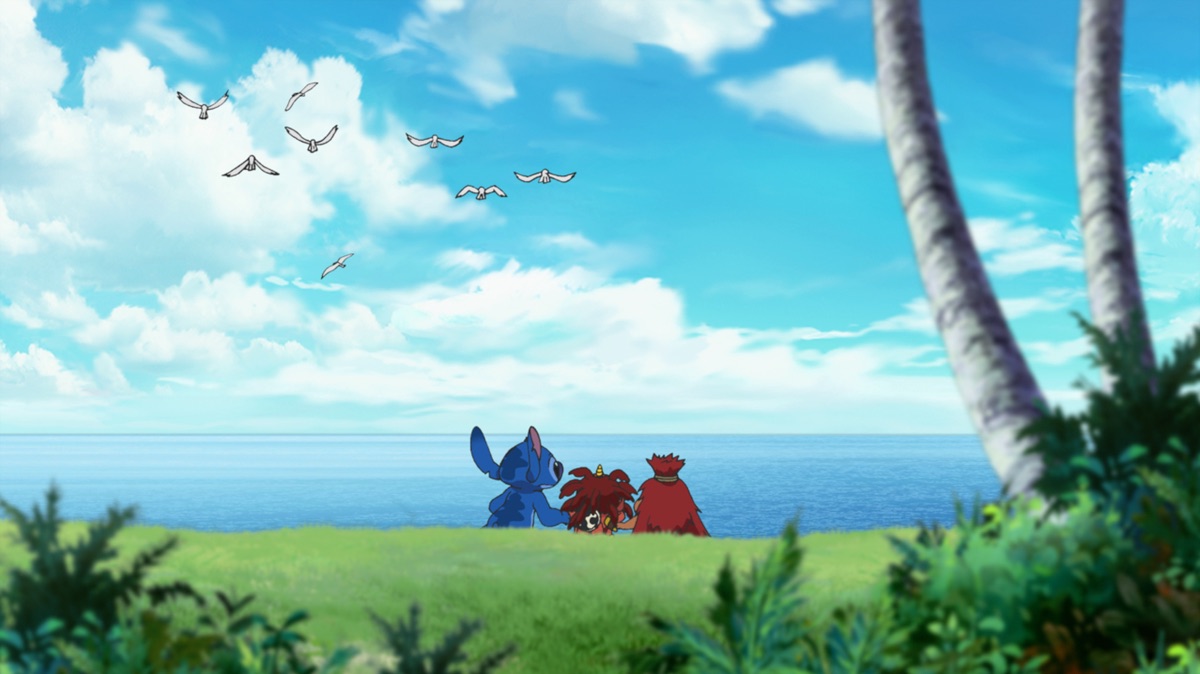
STITCH! · SEASON 2 · EPISODE 27 · REACT
Stitch! Season 2 Episode 27: Stitch Becomes a Battery
They wanted enough thunder to humiliate Zuruko. Stitch swallowed every bad decision in the room.
The episode record before Stitch drinks the hazard
Episode: Broadcast Season 2, Episode 27
Japanese title: スティッチ、電池になる!?
English card title: Stitch Becomes a Battery
First Japanese broadcast: June 8, 2010
Runtime: 22 minutes
Series branch: Stitch! Itazura Alien no Daibōken
Japanese voices central here: Kōichi Yamadera as Stitch and Motoko Kumai as Yuna Kamihara
Where to watch: VideoMarket carries the official Japanese episode record. Availability changes by region.
Yuna and Stitch learn that Zuruko fears thunder and decide to use that fear against her. A small thunder child, Thunders, falls from the sky, but his weak electrical ability fails to frighten Zuruko and leaves him crying after she turns the humiliation back on him. Stitch decides to become the thunder god himself and drinks Jumba’s canned electricity. The power works until his body cannot control the discharge.
My first reaction: everybody built an electrical emergency to win an argument
The episode does not begin with a storm threatening the island. It begins with Yuna and Stitch deciding that somebody’s fear is useful because they want to make her lose. Zuruko has harmed and manipulated Yuna before, but targeting a known fear is retaliation designed to produce distress rather than safety or repair.
Then Thunders becomes a prop in their plan, and his inability to perform enough power becomes another joke at his expense. Stitch drinks unknown stored electricity because he cannot tolerate the plan failing. The final hazard is the physical form of an escalation everybody could have stopped earlier.
Zuruko’s conduct does not make her fear public property
A person can behave badly and still retain the right not to have private vulnerability weaponized. Yuna may set boundaries, expose lies, report misconduct, and refuse contact. Deliberately recreating a feared event is different. It turns knowledge gained through relationship into ammunition.
If Zuruko used thunder fear to manipulate others, Yuna could address that behavior directly. The episode gives no emergency reason to frighten her. The goal is humiliation, which guarantees that any satisfaction will be brief and the conflict will return louder.
Yuna deserves a better route to power than becoming the person who hurt her
Zuruko often controls the room through beauty, authority, or deception. Yuna may feel that ordinary objections disappear around her. Discovering a weakness creates the first sense of leverage. That emotional logic is understandable.
A better plan collects evidence, names the conduct, brings in witnesses, and limits Zuruko’s access. Yuna needs support that makes truth effective. Without it, revenge starts looking like the only language anybody respects.
Thunders is a child, not rented special effects
The little thunder being arrives in an unfamiliar place with limited control over his ability. Yuna and Stitch evaluate him according to whether he can scare an adult on command. They do not ask whether he is lost, injured, hungry, frightened, or willing to participate.
His weak output should trigger care and assessment. It should not become evidence that he failed at being what others expected. A child’s value cannot depend on producing enough danger to satisfy a revenge plan.
Power shame lands differently when power is treated as identity
Thunders is associated with lightning. When he cannot generate much, the others behave as if his whole self is inadequate. That resembles every child told they are not talented, strong, masculine, magical, or useful enough to deserve their name.
He needs reassurance that ability develops unevenly and control may matter more than raw output. Training should be offered because he wants it and because safe self-regulation helps him, not so adults can aim him at Zuruko.
Zuruko making him cry reveals cruelty without justifying the original plan
Zuruko sees a small, struggling being and responds by humiliating him. That behavior deserves intervention. Yuna and Stitch should remove Thunders, comfort him, and state that the treatment is unacceptable.
They also need to admit that they placed him in front of Zuruko for their own purpose. Protecting him after the harm does not erase recruiting him into it.
Jumba’s canned electricity is a product safety nightmare
A drinkable container holding concentrated electrical energy should never resemble food or remain within Stitch’s reach. It needs hazard labels, access controls, tamper evidence, dosage information, and a design that cannot be consumed without authorization.
Jumba knows Stitch is impulsive and attracted to power. Storage must account for the actual household, not an imaginary laboratory where everyone reads instructions and waits.
Stitch cannot give informed consent to a substance nobody explained
He chooses to drink the electricity, but choice alone does not establish informed consent. He does not know dose, duration, bodily effects, reversibility, or what happens if he cannot discharge safely. He is also acting under embarrassment and urgency after Thunders fails.
Jumba should have assessed compatibility and provided a controlled administration plan if use were ever justified. Swallowing the full supply transforms experimentation into an emergency.
The first uncontrolled discharge should stop every argument
Once electricity leaves Stitch’s body without intent, the prank is over. Everyone should clear the area, avoid conductive surfaces, shut down vulnerable systems, and contact Jumba. Nobody should crowd him, grab him, or dare him to produce more.
Stitch needs calm instructions and a grounded isolation zone designed by somebody who understands alien physiology. Panic can make him move through populated spaces and widen the circuit.
Water, metal, and medical devices become immediate concerns
Izayoi Island contains rain, plumbing, ocean access, power lines, vehicles, and metal structures. An uncontrolled electrical body cannot be chased toward any of them. Hospitals and homes may contain devices that fail under a surge.
The response plan should map hazards, reroute people, and protect critical infrastructure. Jumba should identify whether Stitch emits continuous current, intermittent arcs, or stored pulses because each behavior changes safe distance.
Nobody should use Thunders as the solution without asking him
A thunder being may be able to absorb, redirect, or regulate energy. That possibility does not make Thunders responsible for fixing an emergency created after others mocked him. He needs a clear explanation of risk and the freedom to refuse.
If he volunteers, Jumba should provide protective support and a backup. The rescue cannot become a second test of whether the child is powerful enough.
The island needs an electrical incident lead
Several people shouting at Stitch will increase confusion. Jumba should handle technical assessment while Yuna communicates with Stitch and local authorities clear the zone. One person should track injuries and another should monitor infrastructure.
Roles matter because a familiar face may calm Stitch, but familiarity does not make Yuna qualified to approach live current. She can speak from a protected distance.
Discharging Stitch safely requires somewhere for the energy to go
The story may solve excess electricity through one dramatic release. A real plan needs a rated containment system, gradual transfer, temperature monitoring, and a shutdown if his body shows distress. Sending the charge into the ground without measuring capacity may damage utilities or wildlife.
Jumba should build multiple isolated storage cells so one failure does not return the entire load to Stitch. The process must prioritize his health over recovering valuable energy.
Stitch’s body is not a community battery after the crisis
Once people see that he can hold electricity, somebody may imagine useful applications. Emergency power, transportation, or laboratory work could turn a frightening accident into a permanent expectation that Stitch supply energy.
Any future use requires his informed agreement, medical limits, compensation where appropriate, and the ability to stop without disappointing the household. A body is not infrastructure because it performed one function under duress.
Yuna and Stitch owe Zuruko an apology with no demand for warmth
Their plan targeted her fear. They should name that conduct plainly and commit not to repeat or share the information. They can still hold every boundary related to her manipulation.
Zuruko may reject the apology or use it to claim innocence in unrelated conflicts. Yuna can keep the record accurate: frightening her was wrong, and her prior behavior remains wrong too.
They owe Thunders more than praise after he becomes useful
Adults often dismiss a child until the child solves the emergency. Sudden celebration can feel like another performance demand. Thunders needs care that is unrelated to output: food, rest, safe contact, and help finding his family or home.
If he contributed to the rescue, acknowledge the choice and courage without defining him by voltage. He should be allowed to remain small, uncertain, and loved.
Jumba needs to audit every consumable invention in the house
The canned lightning reveals a larger storage problem. Any substance that looks edible or drinkable should be reviewed, relabeled, locked, and separated from food. Instructions must be understandable to Stitch, Yuna, and emergency responders.
Jumba should also document antidotes and exposure protocols. Genius cannot remain an excuse for leaving everybody else to reverse-engineer safety after ingestion.
The episode’s masculinity joke deserves a side-eye
Thunders is treated as inadequate because his lightning is small, then Stitch compensates by consuming an absurd amount and becoming dangerous. The progression equates worth with output and embarrassment with a need to overpower somebody.
Real competence would be controlled charge, accurate judgment, and refusal to weaponize fear. The child with a tiny spark may be closer to safe power than Stitch flooding the island.
Fear exposure belongs to the person who has the fear
If Zuruko ever wants help with thunder, gradual exposure should occur with consent, preparation, and the ability to stop. Surprise storms and staged scares can strengthen fear by pairing thunder with betrayal.
Yuna is not responsible for treating her. She is responsible for not turning fear into punishment. Professional or trusted support can remain an option if Zuruko requests it.
Repair needs an incident report and a changed storage system
Once Stitch is safe, the household should document what he consumed, when symptoms began, where discharges occurred, what equipment failed, and which interventions helped. Medical follow-up matters even if he looks normal.
The report should lead to changes: secured materials, an electrical emergency kit, training, and clear authority to stop Jumba’s experiments when safety information is missing.
Zuruko’s fear should remain private after the apology
Once Yuna and Stitch have discussed thunder openly, more people may learn the information. Repair includes stopping its spread. They should ask anyone involved not to repeat it and remove recordings or staged materials that could turn the incident into gossip.
Zuruko cannot control every rumor, but the people who exposed her can refuse to feed one. Privacy is part of restitution when the stolen thing was emotional information rather than property.
Thunders needs an adult advocate separate from Jumba’s research interests
Jumba may be fascinated by a thunder child whose output differs from expectation. Scientific interest can quietly overtake care, especially after the episode proves electrical abilities useful. Someone should represent Thunders in decisions about testing, training, and where he stays.
The advocate must explain choices in language he understands, notice fatigue, and stop assessment when he wants to leave. Learning about his power should benefit his health and control before it benefits Jumba’s laboratory.
Stitch’s recovery should include a period without electrical demands
After discharge, everybody may assume the danger ended. Stitch’s body could remain exhausted, sensitive, or unstable. Jumba should monitor him, limit strenuous activity, and keep him away from systems that might trigger another arc until readings normalize.
Yuna can support rest without turning it into punishment. He needs food, hydration, calm company, and a clear explanation of what symptoms require help. The household should not joke about plugging devices into him while the experience is still frightening.
What the episode gets right
The story makes escalation visible. One mean idea recruits a vulnerable child, humiliation produces overcompensation, and overcompensation becomes a public emergency. The electrical spectacle grows from emotional choices rather than appearing from nowhere.
Stitch’s inability to control the power also separates strength from competence. More energy does not make him more capable when his body and judgment cannot direct it.
What I wanted pushed further
I wanted Yuna to recognize her role before Stitch started sparking. Her conflict with Zuruko deserves serious support, but a deliberate fear campaign should not pass as harmless mischief until somebody almost gets hurt.
I also wanted Thunders to decide what he wants after the incident. His future should not be a footnote attached to Stitch’s lesson.
The receipt I am keeping
The receipt is Stitch drinking an entire can of electricity because a child’s small spark failed to humiliate Zuruko. Every adult emotion in the room got poured into one unsafe container, and then Stitch literally swallowed it.
My second receipt is Thunders being called weak while everyone depends on understanding the very power he carries. Control was the valuable ability all along.
Final verdict
“Stitch Becomes a Battery” is funniest when the title sounds ridiculous and strongest when the episode admits how ordinary cruelty built the ridiculous emergency. Fear became leverage, a child became equipment, and stored energy became a shortcut around shame.
The responsible ending treats Stitch medically, supports Thunders without conditions, apologizes to Zuruko, secures Jumba’s inventions, and retires the revenge plan. Nobody needed more voltage. They needed better boundaries.
Keep watching
Return to Season 2 Episode 26 or open the complete Stitch! episode directory.