
STITCH! · SEASON 2 · EPISODE 26 · REACT
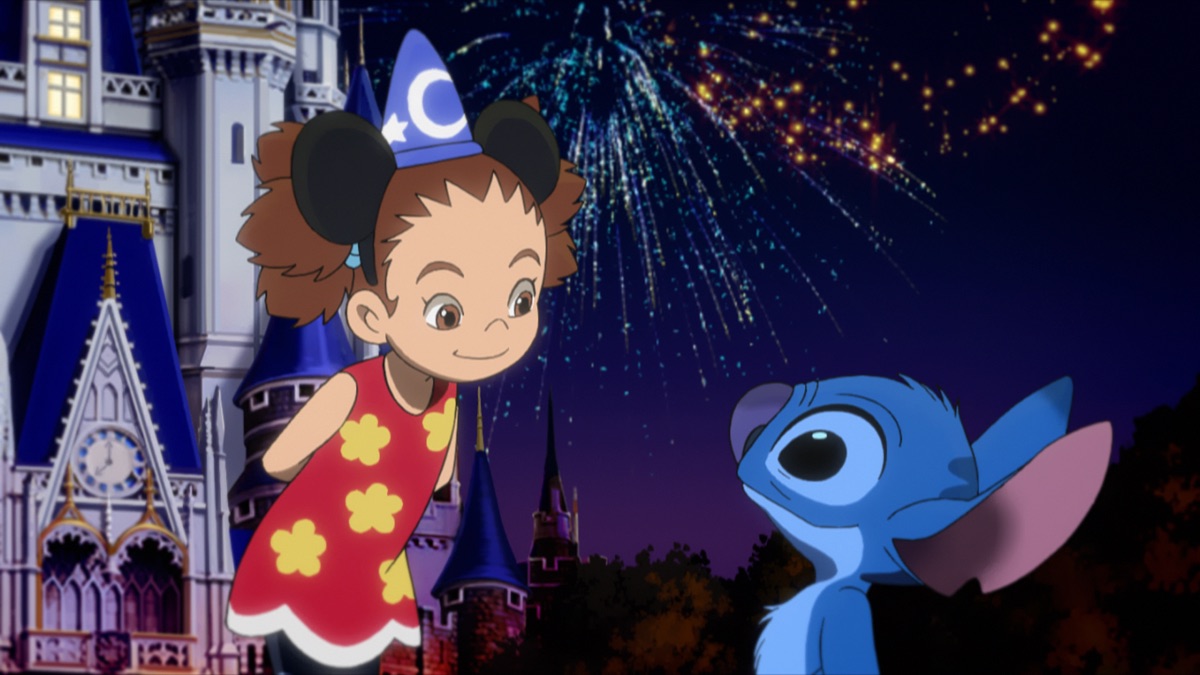
Stitch! Season 2 Episode 26: Stitch Goes to Tokyo Disneyland
Stitch had enough love to cross the distance. The family needed a plan sturdy enough to help him stand still.
The episode record before somebody misses boarding
Episode: Broadcast Season 2, Episode 26
Japanese title: スティッチ、東京ディズニーランドに行く!
English card title: Stitch Goes to Tokyo Disneyland
First Japanese broadcast: June 1, 2010
Runtime: 22 minutes
Series branch: Stitch! Itazura Alien no Daibōken
Japanese voices central here: Kōichi Yamadera as Stitch and Motoko Kumai as Yuna Kamihara
Where to watch: Apple TV Japan carries the official episode record. Availability changes by region.
Yuna’s father sends tickets to Tokyo Disneyland. Yuna and Stitch are thrilled, but Stitch gets so excited that he misses the flight. He follows on a space scooter and reaches the park, then runs through crowded spaces trying to find Yuna. Hämsterviel’s group concludes that Stitch is fleeing to another country and arrives to interfere, placing visitors, workers, Stitch, and the park itself in danger.
My first reaction: the vacation needed a lost-child plan before the tickets
Travel with Stitch was never going to survive on excitement alone. He is impulsive, unfamiliar with airport systems, visibly different, and capable of crossing enormous distances when frightened. The adults needed a written itinerary, a boarding buddy, emergency contacts, a meeting location, and a rule that nobody improvises interplanetary transportation after separation.
The missed flight is played as comic momentum, but it creates a real safeguarding problem. Yuna does not know whether Stitch remained at the airport, boarded another vehicle, or launched into open air. Stitch does not know where she will be inside a huge destination. Their affection cannot replace a communication plan.
Excitement is not misconduct until the adults fail to support regulation
Stitch’s energy is predictable. A new trip, crowded terminal, unfamiliar sounds, and a destination built around spectacle create more stimulation than he usually manages at once. Telling him to calm down after he is overwhelmed is weaker than preparing him before departure.
A visual schedule, assigned movement breaks, a small bag with familiar items, and one adult responsible for checking his location could reduce the risk. Support should preserve joy rather than punish him for feeling it loudly.
The airport should trigger an immediate coordinated search
When a member of the travel party fails to board, somebody must notify airline and airport staff before departure. Staff can check the gate area, security zones, cameras, public announcements, and medical stations. Yuna should not assume Stitch will solve the problem alone because he has unusual strength.
Jumba also needs to disclose enough information for a safe search without encouraging panic. Stitch may be listed as a companion or unusual animal in public-facing communication while trained responders receive details about language, abilities, and approach.
A space scooter is not an acceptable replacement for a missed flight
Stitch’s decision feels emotionally obvious: Yuna is going somewhere wonderful, and he refuses to be left behind. Operationally, it introduces collision, navigation, weather, fuel, visibility, and airspace risks. Nobody on the ground knows his route or expected arrival.
Jumba should disable unauthorized launch, provide a tracking beacon, and teach Stitch to contact him before using the scooter. Capability does not equal clearance.
Reaching the park does not end the separation emergency
Tokyo Disneyland is a dense public environment with multiple attractions, queues, shops, restrooms, service corridors, and thousands of moving visitors. Running randomly lowers the chance that Stitch and Yuna will occupy the same place at the same time.
Stitch should go to a staffed guest-services location, show Yuna’s name or picture, and remain at an agreed meeting point. Yuna should report him missing through the same system. A shared center can connect them faster than two parallel searches.
Park employees need useful information without being handed an alien crisis
Workers can help identify locations, restrict access to unsafe areas, make internal announcements, and monitor cameras. They do not need classified experiment history delivered in front of visitors. Jumba should designate one security contact and provide practical instructions about how Stitch responds to touch, alarms, and crowds.
Employees also deserve warning that Hämsterviel’s group may arrive. Nobody should mistake armed pursuers for performers or allow them into restricted areas because the setting already contains costumes and spectacle.
Stitch’s search can frighten visitors who do not know his intentions
He is looking for Yuna, not trying to harm anyone. Visitors only see a powerful creature rushing through crowds, climbing structures, or disrupting queues. Intent matters ethically, but public safety must respond to observable risk.
Stitch should slow down, accept help, and stop using force to move around obstacles. Staff should create space without escalating immediately to restraint. Calm containment protects visitors and makes it easier for Yuna to reach him.
Hämsterviel turns poor information into an international pursuit
He assumes Stitch is fleeing to another country and acts before checking the reason for travel. One call to Jumba could reveal the family outing. Hämsterviel prefers a narrative of escape because it justifies control and gives his team urgency.
That assumption puts an entire public venue at risk. His group should verify destination, legal authority, and threat level before mobilizing. Personal suspicion is not intelligence.
Gantu should recognize a vacation when he sees one
Tickets, Yuna’s presence, luggage, and a crowded tourist destination all contradict the idea of a covert escape. Gantu has enough field experience to pause. Following another bad order into a family park demonstrates obedience, not competence.
He should contact local security, confirm Stitch’s status, and refuse any action that endangers civilians. Reuben can document the discrepancy between Hämsterviel’s claim and the evidence in front of them.
The park cannot become cover for a fight
Attractions, themed structures, and character appearances make unusual movement look staged. Hämsterviel can exploit that ambiguity while visitors remain too close. Security needs to identify a real threat without announcing details that cause a stampede.
The appropriate response clears one controlled zone, pauses nearby operations, and directs people through established exits. Stitch should move away from crowds rather than defend himself in the middle of them.
Yuna’s father sent joy, but the adults still own the logistics
The tickets are generous. A child receiving them should not become responsible for coordinating flights, accommodations, supervision, emergency documentation, and an alien companion. The household needs to decide who travels and who holds legal authority if something happens.
Yuna can participate in planning because she knows Stitch well. Participation is different from carrying the full burden when the plan fails.
A reunion should include relief before blame
When Yuna finds Stitch, both may be frightened and angry. Beginning with a lecture could make him defend the scooter decision before his nervous system has settled. They need to confirm safety, leave the crowd, drink water, and breathe.
Accountability follows. Stitch should explain where he lost the group, why he launched, and what he did inside the park. Yuna and the adults should explain which parts of the plan failed them too.
Missing the flight is not proof that Stitch does not deserve the trip
Punishment may feel simple after so much disruption. Removing every enjoyable part of the day would connect a regulation failure with rejection and intensify the fear of being left behind. Consequences should address safety while preserving belonging.
He can remain with direct supervision, avoid high-stimulation areas until settled, and participate in repair. The family can still experience a smaller version of the outing together.
Repair includes workers whose day became crisis management
Park staff may have stopped attractions, redirected guests, secured areas, cleaned damage, and spent time searching. Stitch and his household should acknowledge that labor. An apology should identify the disruption rather than asking workers to accept chaos because he is cute.
Jumba can repair technology or property. Stitch can help under supervision. The family should also cooperate with an incident review so the venue can learn from the event.
Visitors deserve truthful, limited communication
People caught near a disruption need to know where to go, whether it is safe to return, and how to report injury or missing belongings. They do not need a fabricated story that contradicts what they witnessed.
A brief statement can describe an unusual security incident, confirm containment, and provide assistance channels without publishing alien identities. Good communication reduces rumors while protecting necessary privacy.
The episode risks turning a real place into a branded obstacle course
A destination episode naturally showcases recognizable spaces. The story still needs characters to interact with the park as a public environment, not a sequence of logos waiting for Stitch to run past. Workers, visitors, accessibility, and safety rules make the location feel inhabited.
The best details are ordinary: waiting, maps, crowded pathways, a missed connection, and the relief of finding somebody. Those experiences give the setting emotional truth beyond promotion.
Stitch’s fear of being left behind deserves direct attention
He misses one flight and responds as though the relationship may continue without him. That urgency belongs to a character whose early life taught him that removal and abandonment could happen quickly. The scooter is unsafe, but the fear underneath it is legible.
Yuna should tell him what the backup plan would have been and promise that a missed boarding does not cancel his place in the family. Then they need to rehearse what he should do next time so reassurance has structure.
The next trip needs a travel card Stitch can actually use
A card or wearable should include his name, Yuna and Jumba’s contacts, lodging, meeting point, communication needs, and a simple request to contact the listed adults. A picture-based version helps if stress limits speech.
The device should work without an open network and avoid broadcasting sensitive information. A secure scan code could reveal details only to verified staff.
The household needs one person monitoring communications during travel
Everybody searching at once can leave nobody answering the phone. One adult should remain reachable, maintain the timeline, collect updates from the airport and destination, and record which locations have been checked. That person can prevent duplicate searches and notice when information conflicts.
Jumba is the obvious technical contact, but he may also be operating tracking equipment. Pleakley or another trusted adult can manage calls while Jumba analyzes location data. Yuna should receive concise updates instead of carrying every conversation while frightened.
Hämsterviel’s arrival creates a safeguarding issue beyond ordinary security
Park staff may try to reunite Stitch with any adult who confidently claims authority over him. Hämsterviel or Gantu could exploit that procedure. Yuna and Jumba need to establish in advance who is authorized to collect Stitch and what verification staff should require.
A family code word, photographs, and direct confirmation with the registered contact would help. Stitch should also know that uniforms, confidence, and knowledge of his name do not prove someone is safe. He can remain with staff until Yuna or Jumba verifies the handoff.
The family should rehearse separation instead of merely discussing it
Rules remembered at home can disappear under noise and panic. Before another trip, Yuna and Stitch should practice stopping, finding a worker, showing the travel card, and waiting at a marked location. Jumba can simulate a failed communicator so the plan does not depend on one device.
The rehearsal should include Stitch’s urge to chase. He needs a replacement action strong enough to compete with it, such as planting both feet, counting, and contacting the travel lead. Practice turns safety from an abstract promise into a sequence his body can follow.
What the episode gets right
The story turns Stitch’s enthusiasm into both the source of comedy and evidence of attachment. He wants the trip because he wants to be with Yuna. Missing the flight feels unbearable because the destination matters less than being included.
Hämsterviel’s misunderstanding also shows how surveillance converts ordinary movement into suspicion. Stitch cannot take a family vacation without an enemy describing it as flight.
What I wanted pushed further
I wanted the reunion to spend more time on Stitch’s fear before the next chase. One honest line about believing Yuna would leave without him could connect the spectacle to the franchise’s deepest wound.
I also wanted a visible guest-services solution. Children watching should leave with the practical idea that a staffed meeting point beats running through a crowd.
The receipt I am keeping
The receipt is Hämsterviel seeing a vacation and inventing an international escape because control needs Stitch’s every movement to be suspicious. His panic tells us more about him than the tickets tell us about Stitch.
My second receipt is Stitch crossing the distance alone only to make finding Yuna harder by refusing to stand still. Love supplied the destination. Planning would have supplied the reunion.
Final verdict
“Stitch Goes to Tokyo Disneyland” works when the destination frames a recognizable family problem: separation in a crowded place, panic, unsafe improvisation, and the fear that missing one step means being left behind.
The responsible ending reunites Yuna and Stitch, removes Hämsterviel’s threat, repairs the disruption, and creates a real travel plan for next time. The vacation can remain joyful. Joy deserves logistics sturdy enough to bring everybody home.
Keep watching
Return to Season 2 Episode 25 or open the complete Stitch! episode directory.