
STITCH! · PRODUCTION SEASON 2 · EPISODE 2 · REACT
Stitch! Season 2 Episode 2: Stenchy and Skunkuna
Mr. Stenchy was cute enough to carry onto the island. Somehow, he was not dangerous enough for an adult to write a plan.
The episode record before the island starts blaming the wrong smell
Episode: Production Season 2, Episode 2
Japanese title: かわいい…けどクサい!ステンチー
English card title: Stenchy and Skunkuna
Original Japanese release: October 20, 2009
Production branch: Stitch! Itazura Alien no Daibōken
Japanese voices central here: Kōichi Yamadera as Stitch and Yūji Mitsuya as Pleakley
Where to watch: Apple TV Japan carries an official episode listing. Availability changes by region.
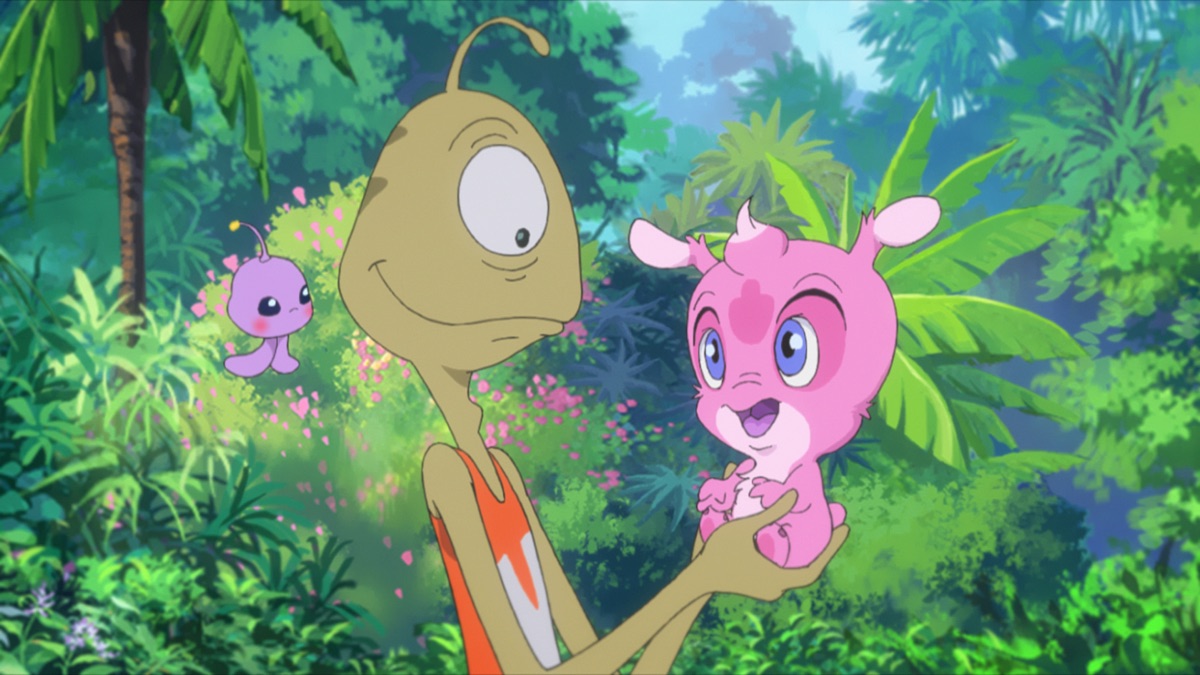
Pleakley’s parents arrive on Izayoi Island with their pet, Mr. Stenchy, also known as Experiment 254. He is tiny, affectionate, and designed to release an overwhelming odor twenty-four hours after waking. Stitch is expected to watch him and loses track of him before the deadline. Hämsterviel adds Skunkuna, another odor-producing alien, to the island. The search becomes a race against two smells, two experiments, and the easy assumption that the familiar troublemaker caused every new problem.
My first reaction: everybody called him cute before anybody made a safety plan
Mr. Stenchy is adorable. That fact becomes the episode’s first trap. Pleakley’s parents treat him like a pet they can carry into a new environment, while the adults know his biological clock ends in an island-scale stink event. Nobody establishes secure housing, an emergency response, or a clear chain of custody before handing him to Stitch.
Then Stitch gets blamed for losing him as though the entire risk appeared at the moment a childlike alien looked away. Stitch failed the assigned task. The adults failed before the assignment began. A dangerous experiment should not become safe because somebody attached a bow, chose a pet name, and smiled while introducing him.
Mr. Stenchy is family and a hazardous organism at the same time
The franchise is strongest when it refuses to reduce experiments to their functions. Mr. Stenchy is more than a smell weapon. He forms attachments, responds to affection, and belongs somewhere. Calling him family protects him from being treated as disposable equipment. It does not erase the physical effect he can have on everybody nearby.
Responsible care holds both truths. Pleakley’s parents can love him and still disclose his needs. They can celebrate his personality while preparing ventilation, containment, timing records, and a safe place for the odor cycle. Pretending the danger is impolite to mention leaves Mr. Stenchy vulnerable to panic once the smell begins.
Pet language can conceal responsibility when the animal is exotic, engineered, or capable of harming a community. Love does not replace knowledge. The person claiming guardianship owes the living being and the public a plan grounded in what that being actually needs.
Pleakley’s parents arrive with affection and a suitcase full of assumptions
Pleakley’s family often carries expectations about how he should behave, present himself, and build a respectable life. Bringing Mr. Stenchy can look like an effort to connect with the world Pleakley chose. It can also become another occasion where the parents enjoy the image of care while Pleakley manages the complicated parts.
I wanted the episode to ask who normally handles Mr. Stenchy’s odor cycle. Do the parents understand it? Have they built routines? Are they transferring responsibility to Pleakley because he lives near Stitch and Jumba? A visit should not become a surprise handoff of a high-needs family member.
Pleakley deserves room to set boundaries without proving he loves his parents less. He can welcome them, care about Mr. Stenchy, and still say the island needs advance notice. Adult family relationships improve when affection can survive a practical no.
Stitch should not be the default containment department
Stitch knows experiments better than most people on Izayoi Island. He can track scent, survive danger, and communicate with cousins whose behavior scares humans. Those abilities make him useful. They do not make him the automatic person responsible for every experiment adults bring through the door.
Assigning him alone creates foreseeable failure. Mr. Stenchy is small, mobile, and approaching a timed biological event. A reasonable plan needs at least one adult supervisor, a secure room, a tracking method, and instructions that Stitch can understand. “Watch him” is not a protocol.
When Stitch loses track of Mr. Stenchy, accountability should remain proportional. He needs to report the loss immediately, join the search, and help repair harm. He does not need to carry every adult decision that made the loss dangerous.
The twenty-four-hour clock turns a person into a bomb plot
A countdown creates clean television. It also risks teaching the audience to view Mr. Stenchy only as a device waiting to go off. The experiment’s emotional state disappears behind the deadline. Is he frightened by the new island? Is he searching for Pleakley’s parents? Does stress affect the odor release? Nobody can answer while treating him as a missing package.
Finding him requires understanding his behavior. What scents, sounds, people, or spaces make him feel secure? Where would he hide? Who does he trust? Those questions respect his personhood and improve the search. Containment without relationship becomes chasing. Relationship without containment becomes denial.
Skunkuna gives Hämsterviel the perfect cover story
Hämsterviel sends another odor-producing alien because duplicate effects create confusion. Once the island expects Mr. Stenchy to smell, every odor becomes evidence against him. Skunkuna can cause harm while the search team follows the wrong identity. The scheme depends on profiling by ability.
The experiments share a category, not a conscience. Two beings can emit a similar odor for different reasons, under different conditions, and with different intentions. Blaming Mr. Stenchy for Skunkuna’s actions repeats the franchise’s oldest mistake: assuming design determines character.
Hämsterviel benefits when everyone uses the experiment number as a verdict. A careful investigation needs time, location, witness accounts, behavioral differences, and Jumba’s technical knowledge. Smell alone identifies an effect. It does not identify who caused it.
Odor is played for comedy, but disgust can become social punishment
Smell comedy works quickly because bodies react before language catches up. People gag, flee, and accuse. The joke becomes mean when disgust turns into proof that a person is unworthy of care. Mr. Stenchy cannot change the function built into him. Skunkuna may also have motives beyond enjoying chaos, even if Hämsterviel weaponizes the ability.
Communities often confuse an unpleasant sensory experience with a moral failure. That confusion harms people with medical conditions, disabilities, unstable housing, limited access to facilities, or bodies that do not meet a preferred standard. The episode does not need to carry every real-world analogy. It should avoid making humiliation the only response available.
The island can protect air quality without stripping either experiment of dignity. Evacuation, ventilation, protective equipment, and safe distance solve more than screaming does. Practical care leaves room for humor without turning one body into the joke everybody is entitled to reject.
Jumba owes everybody accurate science before the smell arrives
Jumba created the experiments. He should know the odor mechanism, duration, dispersal, triggers, and safe mitigation options. If he does not know, he should say so and test carefully. Scientific authority means communicating uncertainty as clearly as certainty.
The island needs direct information. Is the odor merely unpleasant, or can it cause respiratory distress? Which residents need to leave first? Can filters reduce exposure? Does water help or spread the compounds? A plan built around frantic pursuit wastes the expertise already living in Yuna’s house.
Jumba also owes Mr. Stenchy and Skunkuna more than technical notes. He designed living beings around functions that make social belonging difficult. Helping them find safe routines is part of repairing the conditions he created.
The missing-pet search needs consent, coordination, and one honest map
A strong search begins with the last confirmed sighting, likely routes, trusted locations, and roles. Stitch can follow physical clues. Yuna can coordinate people who know the island. Pleakley can identify Mr. Stenchy’s habits. Jumba can prepare containment that does not injure him. Obaa can keep frightened residents informed.
People should not rush into dangerous areas or corner an anxious experiment for the sake of being helpful. A public call needs clear instructions about whom to contact, how much distance to keep, and what not to do. The point is bringing Mr. Stenchy home safely, not turning the island into a competition for the person who grabs him first.
The surprise ending should clarify identity instead of using it as a trick
The official synopsis promises a surprise ending because two odor-producing aliens invite mistaken identity. A reveal works when earlier details support it. Different odor timing, behavior, footprints, or reactions can let the audience reconstruct who was present. A last-second swap with no groundwork merely withholds information.
Identity matters because consequences depend on it. Mr. Stenchy should not apologize for harm Skunkuna caused. Skunkuna should not be reduced to a disposable double whose only purpose was preserving the pet’s innocence. Each experiment deserves an account of action, manipulation, and choice.
Pleakley has a chance to become the adult he needed
Pleakley knows what it feels like when family expectations flatten a person. He can apply that knowledge to Mr. Stenchy. Instead of treating him as a cute accessory or embarrassing biological problem, Pleakley can ask what kind of home allows the experiment to live fully without endangering others.
That means speaking honestly with his parents. If they want guardianship, they need training and resources. If Pleakley becomes the better long-term caregiver, the decision should reflect capacity and consent rather than guilt. Family is not proven by accepting every responsibility without limits.
The episode could give Pleakley a quiet victory by letting him lead the safety conversation. He does not have to become less flamboyant or more traditionally authoritative. Competence can sound like him. That would honor his growth better than another joke about his parents misunderstanding his life.
Repair begins after the air clears
Once Mr. Stenchy and Skunkuna are found, the island still needs repair. Residents may have evacuated, businesses may have closed, and people with sensory or respiratory vulnerabilities may have suffered more than a funny reaction. Stitch and the adults should acknowledge that cost.
Mr. Stenchy needs a stable odor-cycle plan. Skunkuna needs protection from Hämsterviel and an assessment of whether the behavior was coerced, chosen, or both. Pleakley’s parents need to decide whether their caregiving can meet reality. Jumba needs to prevent the same biological functions from becoming weapons again.
A reset would preserve the joke and discard the lesson. A repair plan makes the island more capable of welcoming unusual beings without pretending unusual needs never inconvenience anybody.
What the episode gets right
“Stenchy and Skunkuna” uses a familiar experiment to build a mystery around assumption. The island expects one odor source, so Hämsterviel exploits that expectation. Matching abilities make the experiments look interchangeable to frightened people, while their relationships and choices keep them distinct.
Pleakley’s parents add emotional pressure beyond the countdown. Their affection for Mr. Stenchy asks whether loving a pet includes understanding the difficult parts. Stitch losing him turns a simple visit into a test of adult planning, child responsibility, and how quickly blame follows the person everyone already expects to make trouble.
What I wanted pushed further
I wanted a real safety protocol. The twenty-four-hour cycle is known. The adults have enough information to prepare, yet the story relies on preventable chaos. Let Jumba build ventilation. Let Pleakley explain Mr. Stenchy’s behavior. Let Yuna organize the island before the deadline instead of after the first panic.
I also wanted Skunkuna treated as more than Hämsterviel’s counterfeit smell. If the alien can choose, show the pressure behind the choice. If Hämsterviel controls him, make rescue part of the ending. The franchise keeps insisting experiments are cousins. That promise should include the inconvenient cousin sent to hurt everybody.
The receipt I am keeping
The receipt is the moment everybody assumes the smell proves Mr. Stenchy is nearby. One physical effect collapses identity, intent, and evidence into a single accusation. Hämsterviel wins time because the heroes believe the category before they investigate the individual.
Mr. Stenchy can be cute, loved, dangerous, and innocent of a specific act. Skunkuna can share an ability without sharing a life. Pleakley can adore both experiments while demanding a plan. The episode works when it lets those truths remain complicated instead of spraying perfume over them.
Final verdict
“Stenchy and Skunkuna” is funny because the threat is smell, but its better idea is misidentification. Hämsterviel weaponizes an expectation already present on the island. Once people decide which experiment causes trouble, they stop looking closely enough to see another one standing inside the same sensory cloud.
The episode earns its place in season two by asking whether family can manage reality after the cute introduction ends. Mr. Stenchy deserves affection and competent care. Skunkuna deserves an identity beyond villain equipment. Stitch owes attention after losing his cousin. The adults owe a system that does not place an island’s safety inside one vague instruction to a child. Everybody deserves better than that.
Keep watching
Return to Season 2 Episode 1 or open the complete Stitch! episode directory.