
STITCH! · PRODUCTION SEASON 2 · EPISODE 1 · REACT
Stitch! Season 2 Episode 1: The Most Annoying Character in the Universe Appears!
Hämsterviel did not control Stitch. He changed the score and trusted Stitch to control himself into disaster.
The episode record before somebody lets a scoreboard grade a soul
Episode: Production Season 2, Episode 1
Japanese title: 宇宙一の迷惑キャラ、登場!
English card title: The Most Annoying Character in the Universe Appears!
Original Japanese release: October 13, 2009
Production branch: Stitch! Itazura Alien no Daibōken
Japanese voices central here: Kōichi Yamadera as Stitch and Motoko Kumai as Yuna Kamihara
Where to watch: Apple TV Japan carries an official episode listing. Availability changes by region.
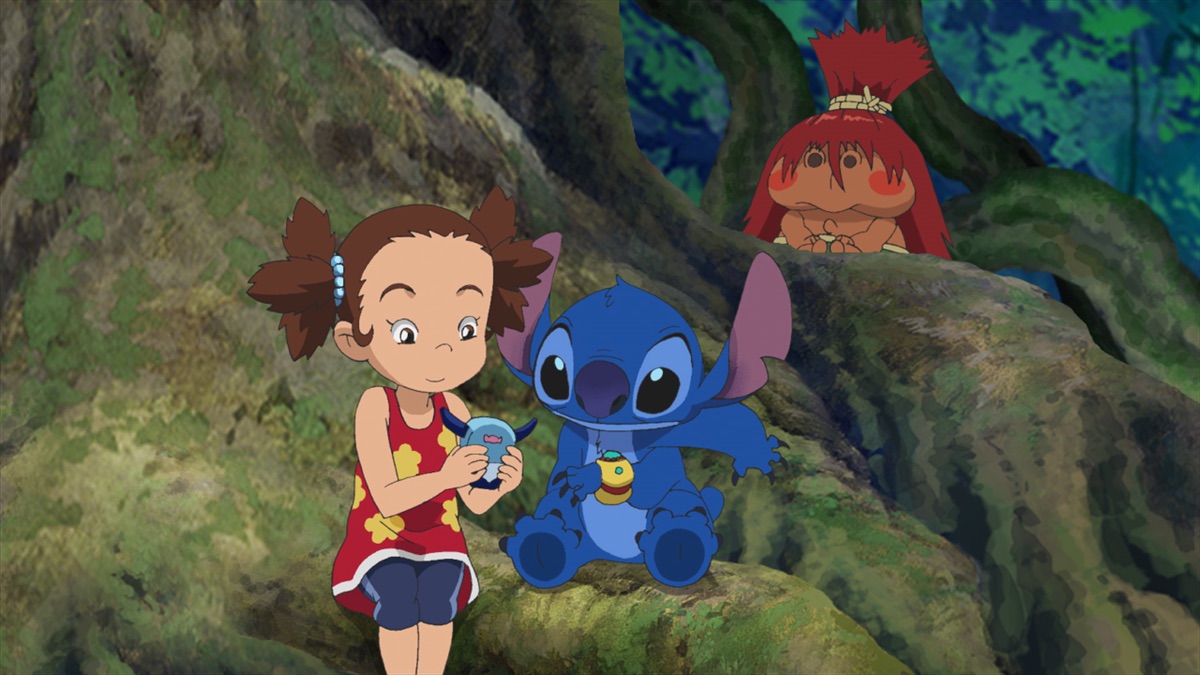
Stitch begins the new production season still performing good deeds for the Chitama Stone wish. Hämsterviel corrupts the system by reversing the Good Deed Counter. Kind actions now lower the displayed total, while harmful actions raise it. Stitch trusts the number and tears through the island trying to recover points. When Kijimunaa becomes ill, nursing him appears to make the score worse. Stitch finally throws away the counter and searches the phantom cape for the eye of a giant fish, a rumored remedy for yōkai sickness.
My first reaction: season two opened by hacking the moral app
I knew the Good Deed Counter would eventually become a liability because the first season never taught Stitch how to live without it. He learned routines, collected points, and sometimes made caring choices that exceeded the device. The finale should have retired the thing. Instead, season two opens with Hämsterviel changing one rule and watching Stitch turn his entire moral education backward.
That makes the counter more dangerous than a simple broken gadget. Stitch has outsourced judgment to it. He does not ask who benefits, who gets hurt, or whether the number has earned trust. He sees a score fall after kindness and decides kindness must be the error. Hämsterviel does not need to control Stitch’s body. He controls the feedback Stitch uses to interpret himself.
Gamified morality works until the game designer is your enemy
The Chitama Stone turns ethical growth into a reward program. Complete enough good deeds and receive a wish. That structure gave the first season a clean engine, but it also trained Stitch to treat care as measurable labor. The number was supposed to reflect character. Too often, character became whatever increased the number.
A score can help somebody track a narrow behavior. It cannot replace moral reasoning. Metrics choose what counts, how much it counts, and who gets to define success. Once Hämsterviel controls those rules, the counter still looks precise while producing nonsense. Its authority comes from the display, not from the quality of its judgment. That is how bad systems survive. They make harm look official.
The episode becomes funnier and uglier because Stitch is not cheating. He is following the device exactly. He performs bad deeds with the same determination he once brought to helpful ones. Compliance does not protect anybody when the instruction is corrupt. Obedience can turn discipline into a weapon faster than open rebellion ever could.
Hämsterviel attacks agency instead of strength
Hämsterviel knows a direct fight with Stitch creates obvious resistance. The counter hack gives him a softer route. He changes the information environment and lets Stitch make the damaging choices. Every broken object or frightened neighbor can be blamed on Stitch because Stitch physically caused it. Hämsterviel disappears behind the interface.
Manipulation does not erase Stitch’s responsibility, but it changes the repair required. Punishment alone will not teach him how the deception worked. He needs to examine why he trusted one device over Yuna, the island, and the evidence in front of his face. If the lesson ends at “Hämsterviel tricked me,” the next polished meter can do it again.
The scheme also respects Stitch as an intelligent target in a way the plot barely admits. Hämsterviel identifies his unresolved dependency, predicts how he will respond to contradictory feedback, and exploits his fear of losing the wish. The villain reads the hero’s incentive structure more clearly than the adults who allowed the counter to keep running.
Stitch does understand goodness, but panic makes him distrust it
The official synopsis frames Stitch as unable to understand what goodness means. I think the episode shows something more specific. He recognizes care through attachment. He knows Yuna’s feelings matter, reacts when friends suffer, and notices when Kijimunaa is sick. The counter creates a conflict between embodied knowledge and institutional-looking feedback.
Stitch chooses the number at first because the wish carries enormous emotional weight. A falling score threatens belonging, success, and the future he imagined. Panic makes the device feel safer than interpretation. A number offers certainty when relationships require listening, patience, and the possibility of being wrong.
His growth begins when he accepts uncertainty. Throwing away the counter does not instantly make him wise. It means he would rather act from care without a guaranteed reward than protect a reward by abandoning somebody vulnerable. That choice is moral agency. It also proves the device never owned the goodness it claimed to count.
Kijimunaa’s illness makes the score’s cruelty impossible to ignore
Kijimunaa gives the episode a test that cannot be reduced to public approval. He is ill. He needs rest, attention, and help from people who know what yōkai sickness requires. Nursing him lowers the corrupted score, so Stitch must choose between an abstract future wish and a friend suffering now.
The counter asks Stitch to treat care as a loss. Plenty of systems do the same thing with cleaner language. Time spent supporting a sick person may look unproductive. Slowing down for accessibility may look inefficient. Refusing a profitable shortcut may look like poor performance. A metric can punish the exact conduct a community claims to value.
Kijimunaa does not need Stitch to understand an entire ethical theory. He needs Stitch to stay. The episode becomes emotionally honest when presence matters before the cure quest begins. Care is not proven only by dramatic rescue. It also lives in water, comfort, observation, and refusing to abandon somebody because helping has become expensive.
Throwing away the counter is the real season premiere
Stitch’s decision to discard the counter should have changed the whole series. It is the moment he rejects outsourced conscience. The wish can remain important, and the Chitama Stone can remain part of the mythology, but the device has lost the right to define his conduct.
I wanted the story to sit with that break. What does Stitch feel when the number no longer tells him whether he succeeded? Does Yuna understand how frightening that freedom is? Does Obaa admit the trial was poorly designed? A childlike experiment has been asked to build a moral self under supernatural surveillance. Removing the surveillance requires support, not a joke and a quick transition to the next monster.
Season two could have used the counter hack as a permanent evolution. Stitch might still do good deeds, but he would evaluate them through consequences and relationships. Keeping the device after this episode would turn a breakthrough into temporary plot maintenance. Once a villain can invert morality with one technical intervention, nobody should pretend the system remains safe.
The giant fish eye cure needs adult supervision and ecological sense
The rumored remedy sends Stitch toward the phantom cape to obtain the eye of a giant fish. I understand the folktale logic. A rare creature guards a rare cure, and love sends the hero into danger. The setup also raises questions the adventure should answer instead of treating the fish as a medical supply cabinet with teeth.
Who knows the remedy works? What dose is safe? Can the ingredient be collected without blinding or killing the fish? Does Kijimunaa consent to an experimental treatment? Children should not carry those decisions alone. Obaa’s knowledge, Jumba’s science, and local yōkai tradition need to meet before Stitch attacks an animal because a rumor sounded urgent.
Urgency can make harm feel automatically justified. It is not. Saving a friend matters, and so does avoiding preventable damage to another living being. A strong resolution would find a nonlethal way to obtain what is needed, verify the remedy, and let Kijimunaa participate in the choice when he is able.
Yuna should be the human evidence Stitch trusts before any display
Yuna has spent a season teaching Stitch how actions land in a community. She can see frightened neighbors, damaged spaces, and the change in his behavior. If the counter tells him cruelty is progress while Yuna tells him people are hurting, the relationship should carry more authority.
That does not mean Yuna becomes a perfect moral compass. She is a child with her own temper and blind spots. Trusting her means entering a conversation, checking evidence together, and allowing her concern to interrupt the score. The device demands compliance. Yuna can ask why.
The repair between them matters after Stitch’s rampage. He should name what he did, help restore what he damaged, and explain the manipulation without using it as an excuse. Yuna can hold him accountable while recognizing that Hämsterviel engineered the crisis. Friendship is strongest when it can contain responsibility and compassion at the same time.
The island deserves more than a reset button
Reversed incentives create real victims. People lose property, safety, time, and trust while Stitch chases points. A comedy can repair the visual damage quickly, but the community should remember that the most powerful resident became dangerous because a gadget told him to. That is a public-safety problem.
Jumba needs to inspect the counter and explain how Hämsterviel accessed it. Obaa needs to reconsider the trial. Yuna and Stitch need a repair plan for each person harmed. The islanders deserve an apology that names actions rather than promising Stitch is good deep down. Character matters, but neighbors live with consequences.
The plot would gain warmth by showing collective repair. Stitch can rebuild, carry supplies, listen to complaints, and accept that some people remain angry. Good deeds after the hack should not restore points. They should restore relationships slowly, with no magical total announcing when forgiveness is complete.
Season one created this vulnerability and season two has to own it
The first production season repeatedly blurred learning to care with earning a wish. Several episodes showed Stitch making choices that mattered beyond the score, especially when Yuna or the island faced danger. The finale proved he would sacrifice advantage for belonging. The counter should already have become secondary.
Opening the next run with a successful reversal exposes the unfinished work. Stitch still believes the system more quickly than he believes his experience. That continuity can be excellent if the series treats it as regression under pressure rather than erasing growth. People do fall back on old measures when afraid. Recovery depends on recognizing the pattern and building a better safeguard.
I want later episodes to remember the receipt. Stitch threw the counter away for Kijimunaa. Every future point chase should carry the knowledge that a friend once mattered more. Otherwise, the premiere stages a meaningful liberation and then asks everybody to forget it before the next commercial break.
What the episode gets right
The counter reversal is a sharp premise because it attacks the mechanism holding the series together. Hämsterviel does not invent a new weakness. He uses the flaw already sitting on Stitch’s wrist. The comedy of good deeds lowering the score turns into a serious question about who defines goodness and why anybody trusted the measurement.
Kijimunaa’s illness gives Stitch a choice with emotional weight. He cannot protect both the corrupted score and his friend. Discarding the device shows that a season of relationships did teach him something the number cannot erase. The episode lets action prove the lesson instead of delivering a speech about friendship.
What I wanted pushed further
I wanted permanent consequences for the counter. Hämsterviel has demonstrated that the device can be compromised and that Stitch will follow it into harm. Repairing it and returning to normal would be reckless. Obaa should redesign the trial around judgment, restitution, and community testimony, or abandon the score entirely.
I also wanted more care around the cure quest. Kijimunaa’s illness should not authorize an unexamined attack on a giant fish. Let the island’s knowledge holders verify the remedy. Let Stitch find a way to protect both lives. The moral awakening loses force if he rejects one harmful instruction and immediately accepts another because folklore framed it as heroic.
The receipt I am keeping
The episode’s receipt is not the rising Bad Deed Counter. It is the instant Stitch throws the thing away. He gives up certainty, visible progress, and control over the wish because Kijimunaa is sick. The choice matters precisely because no screen rewards it.
Hämsterviel proves that morality built around incentives belongs to whoever controls the incentives. Stitch proves that care can survive outside them. He does not become good because the counter says so. He becomes accountable when he looks at a hurting friend, recognizes the score as wrong, and acts without asking what he will receive.
Final verdict
“The Most Annoying Character in the Universe Appears!” is a much smarter season opener than its chaotic title suggests. It takes the franchise’s central good-deed gimmick, flips one setting, and exposes how fragile Stitch’s education remains. The problem was never that he lacked feelings. The problem was teaching him to distrust those feelings whenever a machine produced a different number.
The episode earns its ending when Stitch abandons the counter and chooses Kijimunaa. It would earn even more by retiring the device, repairing the island in public, and treating the giant fish as a living creature rather than an ingredient. Still, the core lands. A score can record behavior. It cannot love a friend, accept responsibility, or decide that care matters when nobody is counting.
Keep watching
Return to production Episode 26 or open the complete Stitch! episode directory.