
ANIME 101 · CO-PRODUCTION · RELEASE HISTORY
How Stitch & Ai Was Made, Released, and Almost Lost Between Markets
Thirteen episodes were made. Not every market received all thirteen, and the missing piece changes the season.
A Chinese branch built for more than one audience
Stitch & Ai is a thirteen-episode Chinese animated branch of the Lilo & Stitch franchise. Its setting, supporting family, legendary-creature material, and production history belong to China, while Stitch, Jumba, Pleakley, the Galactic Federation, and the experiment mythology arrive from an American franchise. That combination makes the series a co-production story before the opening chase even begins.
The easy description is that Disney moved Stitch to Huangshan. The useful description asks who rebuilt his world, which language shaped the first production pipeline, where the episodes premiered, and why later audiences received incomplete or rearranged versions. Those details explain why the branch sometimes feels intimate and locally specific, then suddenly sounds like a familiar Disney television comedy.
The production partners matter
Contemporary reporting identified Anhui Xinhua Media and Panimation Hwakai Media among the Chinese production partners. Additional Chinese animation labor supported the series, and Disney personnel protected continuity around Stitch and the established franchise cast. Xinhua reported that local colleagues worked with the international production rather than supplying a decorative location after the story had already been finished.
That collaboration shows on screen. Huangshan is part of the movement vocabulary, not a postcard dropped behind generic action. Stairs, peaks, villages, family spaces, festivals, and local performance traditions repeatedly determine what Ai can do and how Stitch is seen. The branch still makes simplifications, but its setting generates story problems instead of merely recoloring Hawaii.
English production and Mandarin premiere are both true
The series was produced through an English-language pipeline, then premiered to Chinese audiences in Mandarin. Those facts sound contradictory only if language is treated as a single switch. International animation commonly moves through scripts, voice tracks, boards, revisions, dubbing, and regional delivery in different languages. A production language does not erase the cultural or industrial location of the series.
China received the complete run from March 27 through April 6, 2017. That original broadcast order contains thirteen episodes. Later English-language distribution reached parts of Southeast Asia in February 2018. The route demonstrates why a release date without a territory can mislead readers. There is no single worldwide premiere date that describes every viewer’s encounter.
Thirteen episodes became twelve in the United States
The former DisneyNOW release in the United States presented twelve episodes and omitted Episode 9, “The Phoenix.” This was not a harmless numbering difference. The missing installment carries a fenghuang-inspired story and occupies a meaningful place before the season’s final transformation conflict. American viewers received a branch with one of its clearest cultural-creature episodes removed.
The omission also created a catalog problem. A person checking the American service could reasonably believe twelve was the complete total. Fan lists based on the Chinese broadcast recorded thirteen. Both observations described real releases, but only the original thirteen-episode sequence represents the complete produced season. CVM Sekai therefore uses thirteen and labels the former American omission instead of silently copying the smaller catalog.
Titles changed as the series traveled
Episode titles are unusually unstable across the branch. Chinese broadcast titles, English production titles, translated fan records, and former platform labels do not always align word for word. Episode 11 is a sharp example: a specific reference to Nuo opera could become the generic label “Creatures,” stripping away the term viewers most needed in order to investigate the performance tradition.
A responsible directory preserves a clear display title while recording meaningful alternatives in the React. It should not pretend that one platform label is the original truth merely because it appeared in English. Titles are metadata, but metadata changes the route into a story. A flattened title can turn cultural practice into monster-of-the-week wallpaper before the episode begins.
Distribution did not preserve the branch well
A short regional series can disappear even when it belongs to one of the most recognizable character franchises in the world. Service catalogs change by country. Former pages vanish. Search results retain fragments after legal streams are gone. Clips and unofficial uploads circulate without proving that the complete series is currently licensed in a viewer’s region.
For that reason, the episode directory does not invent a permanent “watch now” promise. It records the original route and asks readers to verify the current local catalog. Availability is a dated fact. A viewing guide becomes misinformation when it treats a service that carried a program years ago as if the contract must still exist today.
The branch was designed to travel, but it was not culturally weightless
Stitch already functioned as a global character before this production. His speech, silhouette, appetite, temper, and capacity for attachment can move between languages with very little introduction. The branch uses that portability, then places him beside Ai Ling, Jiejie, Meiying, Daiyu, and a new set of military antagonists whose relationships require local explanation.
Portability is not universality. A story can be legible across borders while remaining grounded in a particular family structure, place, and performance tradition. The best episodes let Stitch’s familiar chaos expose differences rather than smoothing them away. The weakest moments reach for a generic mystical China that could have been assembled from international shorthand.
Co-production changes how authorship should be discussed
Credit cannot stop at “Disney made it.” Franchise ownership is one part of authorship. Writing, boards, animation, design, local consultation, voice performance, editorial approval, dubbing, and distribution all shape the finished episodes. Chinese companies and artists did production work that deserves to remain visible in the record, even when surviving publicity foregrounds the famous blue alien.
The reverse simplification is also unhelpful. Calling the series wholly independent Chinese animation would hide the franchise systems, imported characters, and Disney oversight that organize it. Co-production means holding both structures in view. The friction between them is part of the text, especially when Jumba’s experiment logic collides with Ai’s cultural interpretation.
Voice tracks are separate performances
Mandarin and English versions should not be treated as transparent copies of one master performance. Timing, joke construction, vocal age, emotional emphasis, and name pronunciation can change with each cast and adaptation team. When credits are incomplete or inconsistent, guessing a performer is worse than leaving the field explicitly unverified.
CVM Sekai records confirmed actors by language and era when reliable credits exist. It does not merge performers into one anonymous “voice of” line. The distinction respects labor and helps explain why viewers can experience the same scene differently across releases.
What the surviving record can and cannot prove
An official corporate article can establish a partner, release plan, or quoted production claim. It cannot independently prove every creative decision made inside a studio. A platform page can prove that a title was offered when the page was captured. It cannot prove permanent worldwide availability. A fan-maintained episode list can preserve missing metadata, but it needs comparison against original broadcasts and contemporary reporting.
This guide uses those sources for different jobs instead of asking one page to prove everything. Where the public record remains incomplete, the language stays cautious. Preservation is strongest when uncertainty is labeled, not polished away.
Why this history changes the Reacts
Production context is not an appendix stapled onto episode opinion. The missing ninth episode changes the season’s rhythm. The Nuo title change alters the viewer’s first clue. Huangshan’s physical geography shapes action. Multiple language tracks affect performance. The branch’s short length reflects an industrial decision, not a story world that naturally ran out of possibilities after thirteen adventures.
Each React therefore stays close to what the episode knows at that point while linking relevant production evidence. The series review can judge the complete arc. The guide keeps release accidents from being mistaken for creative intent.
A complete directory is a small preservation project
The episode listing does more than make navigation convenient. It puts all thirteen entries back into one visible sequence, attaches the correct image to each title, and records the React beside the viewing information. That structure resists the fragmentation created when one market loses an episode or a service renames it.
The directory also keeps future corrections possible. If a licensed stream returns, a credit is confirmed, or a better original title record surfaces, the metadata can be updated without rewriting the editorial argument. Good fandom organization leaves room for evidence to improve.
Sources and image provenance
The production foundation includes Xinhua’s contemporary account of the Chinese collaboration and Anhui setting, official Disney regional catalog records, and the complete original broadcast sequence. Platform history is described as former availability unless a current regional catalog can be verified.
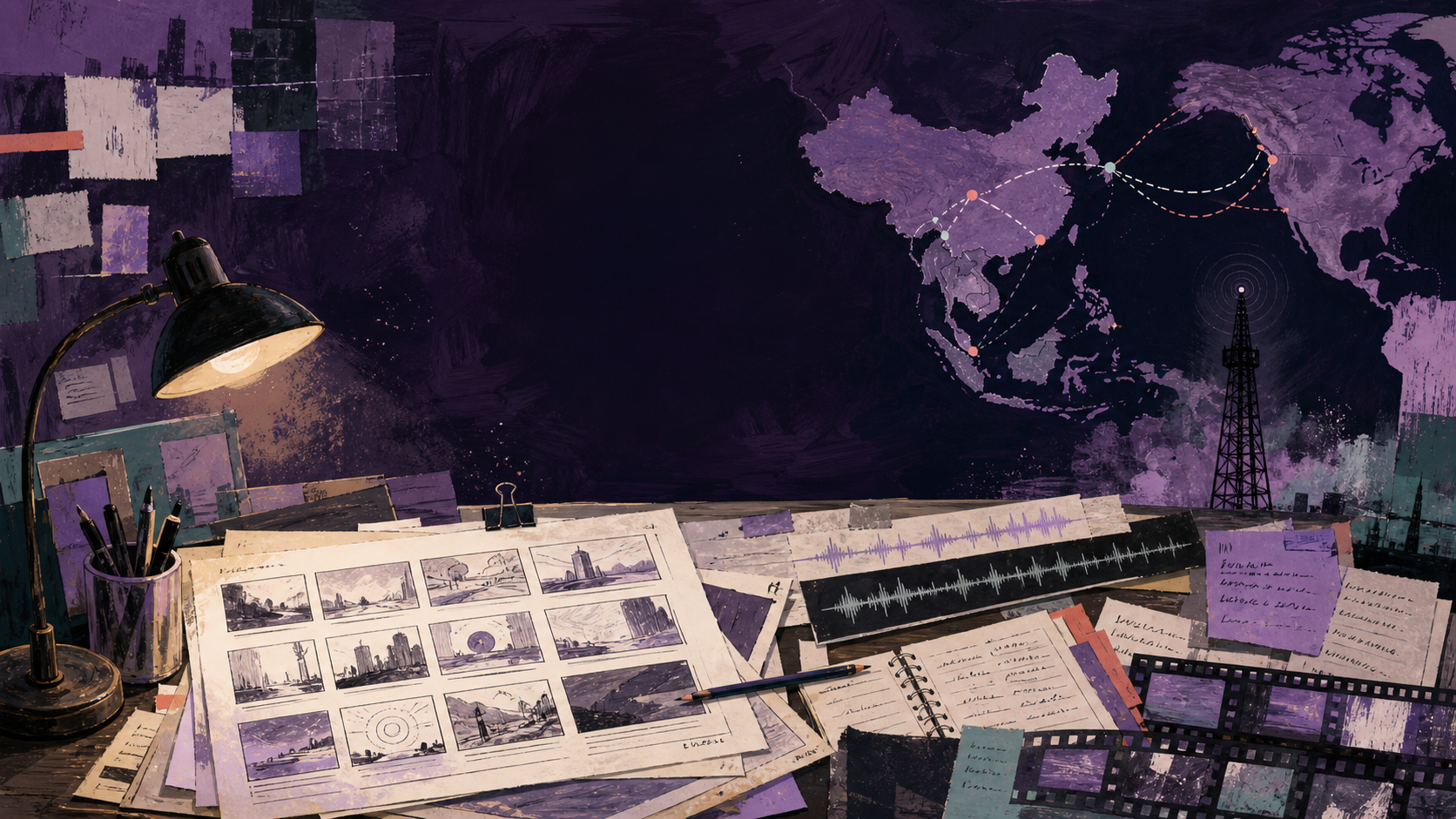
The hero is original CVM Sekai editorial artwork. Storyboards, sound tracks, film frames, a broadcast tower, and an abstract route between Asia and North America visualize the production chain. It contains no franchise characters, copied frames, logos, or imitation title lettering.
Keep exploring
Return to the Stitch & Ai hub, browse all thirteen episode Reacts, or read the full series review.
Production country, language, and franchise ownership are different facts
Stitch & Ai is a Chinese television branch within a Disney-owned franchise, developed through cross-border production relationships and released for Chinese audiences before later regional circulation. Those facts can coexist. Calling it simply an American Disney show erases the branch’s production context. Calling it independent Chinese animation erases the franchise system, rights holder, and imported character history shaping every episode.
A useful credit line names the companies and roles supported by official records, then avoids guessing which studio made every uncredited creative decision. Co-production does not produce one neat national adjective capable of explaining authorship, labor, language, distribution, and ownership at once.
Thirteen episodes are the production record
The series originally aired thirteen episodes in China. That count includes Episode 9, commonly translated as “The Phoenix,” and the connected Episodes 12 and 13 finale. A twelve-episode American catalog describes one regional release, not the complete series.
The CVM directory preserves all thirteen in original broadcast order and uses the official local title-card images. That ordering matters for character development, creature coverage, and the finale. A guide should never hide the missing episode merely because the incomplete platform list is easier to access.
Episode 9 cannot become optional because one market dropped it
When an English-language service omits an episode, search results and fandom lists begin repeating the shorter count. New viewers may assume the production skipped a number or that the missing story was a bonus. The error becomes self-reinforcing because later summaries copy the regional catalog instead of the broadcast record.
Restoring Episode 9 is not a claim about why it was omitted. Unless Disney or a production partner documented the reason publicly, the guide should not invent one. It can state the observable facts: the Chinese production includes the episode, the former U.S. release did not, and a complete directory keeps it visible.
The two-part finale needs to stay together
“Brothers” introduces the false-brother operation, Scratch and Yong’s roles, Stitch’s metamorphosis crisis, and an ending that does not resolve the emergency. “Monstrosity” continues the same chain. Treating Episode 12 as a complete standalone story weakens the review and can make Episode 13 look like an unrelated escalation.
Cards should identify the connection without renumbering either episode. Reacts can analyze each installment separately while carrying the unresolved evidence forward. The series review should judge the complete finale, including what the first part sets up and what the second part rushes or leaves unanswered.
English titles are navigation tools, not replacements for the original record
Regional titles help readers search and recognize an episode. They can also soften, generalize, or change creature and cultural terminology. A directory should preserve the original episode number, the available Chinese title or official local card, and the English title used for the React.
Where several English renderings circulate, list the selected version and explain why. Do not silently combine titles from different services into one invented official set. Translation choices belong in metadata because they affect which cultural references readers can see.
Mandarin performance is part of the intended branch
The Mandarin voice track is not a novelty dub layered over a culturally neutral product. It carries character rhythm, humor, address, family relationships, and local release context for the Chinese premiere. Later English or regional tracks are separate performances with their own scripts and timing decisions.
Profiles should name the relevant performers only when credits can be verified. If accessible official records are incomplete, the site should label the gap rather than copying an unsourced cast table. Performance analysis should identify which track the writer watched so a line reading is not attributed to the wrong actor.
Localization can change more than words
A localized release may alter titles, credits, on-screen text, episode availability, music, pacing, or the order viewers encounter material. Even when the animation remains the same, those changes affect interpretation. Viewers watching different editions may honestly remember different evidence.
The guide should record edition differences that can be verified and avoid assuming every discrepancy is censorship or error. Sometimes a service uses another master, combines metadata from elsewhere, or omits material without public explanation. Precision is more useful than a dramatic theory unsupported by a production statement.
Streaming disappearance changes the fandom record
A branch that becomes difficult to watch legally does not stop existing. It becomes harder to verify. Screenshots detach from episode numbers, unofficial uploads use altered titles, and plot summaries replace direct viewing. Search engines reward the most repeated version rather than the most complete one.
Local official stills, source URLs, title cards, and a documented episode order help preserve identification without redistributing full episodes. The goal is not piracy. It is maintaining enough metadata for criticism and navigation to remain accountable when a regional platform removes the catalog.
Official images need provenance beyond the filename
An image called “official” should have a source URL, source page, credit, alt text, and rights note. For Stitch & Ai, the title cards are especially useful because they identify episodes visually and preserve local naming. A copied image with no origin cannot carry the same evidentiary weight.
The featured image, hero, and landing card should use the same local attachment for each React. That parity prevents an unrelated promotional image from representing an episode and makes corrections manageable. If the source record changes, one attachment remains the canonical visual receipt.
A co-production guide should not invent a clean authorship hierarchy
Public credits may identify companies, directors, producers, writers, animation studios, broadcasters, and rights holders without explaining the negotiation behind every decision. The person who owns the character is not automatically the person who chose a background. The company airing the series is not automatically the animation studio.
Where interviews or official production notes exist, use them. Where they do not, describe the credited relationship and stop. “Disney made China do this” and “the Chinese studio changed that” may sound confident while assigning intention without evidence.
Release order should control the React chronology
React writing depends on what a viewer could know at that point. Ai’s family conflict, Scratch and Yong’s roles, creature references, and the finale must be analyzed in broadcast order so later information does not leak backward as if it were obvious.
A current viewer may know the whole series, but the React voice should preserve episode-level knowledge. The series review can then revisit earlier theories and explain what changed. That separation creates honest receipts instead of retrospective summaries dressed as first reactions.
The production record should identify uncertainty directly
Some credits, dates, regional release windows, and localization details may remain difficult to verify. The guide should list what official source supports each claim and mark unresolved questions. Absence of documentation is not permission to promote a fandom assumption.
A visible uncertainty note helps future correction. If Disney, a broadcaster, or a production partner later publishes a complete credit or catalog, the site can update the original guide rather than creating a replacement version. Durable documentation is built to be corrected.
What preservation means on a review site
CVM Sekai is not an archive that owns the episodes. Its preservation role is narrower: retain accurate titles, order, dates where verified, official local images, source provenance, and editorial analysis that tells readers which edition was used.
That work matters because small international branches disappear from corporate interfaces long before fans stop asking about them. A complete directory gives future readers a map back to the official record without pretending the site can solve regional licensing.
Production-guide sources
The thirteen-episode count and order are checked against the Chinese broadcast record and official local title-card sequence. Disney release and platform claims are limited to pages or catalogs that can be verified. The former U.S. twelve-episode availability is described as a regional release difference, not the production total.
Secondary sources can help locate missing records, but company credits, release dates, and episode counts should return to official production, broadcaster, or distributor evidence whenever possible. Where the official record is no longer public, the guide says so.
Availability language needs a date and a region
“Where to watch” is temporary information, not a permanent production fact. A service may carry the branch in one country, remove it in another, or show a page to users who cannot play the episode. The directory should state the region and the date checked whenever availability is described.
A dead or inaccessible platform route should not cause the episode card to disappear. The production record remains valid. Update the viewing note, preserve the source history, and keep the React connected to the official title and image.
Corrections belong on the original guide
If a credit, date, translation, or episode route changes, edit this guide and record the correction in the project change log. Do not clone a “v2” page and leave two competing records indexed.
The same rule applies to images. Replace the canonical local attachment or update the post reference with complete metadata. A correction should reduce ambiguity, not create another version future readers must compare.
Final source rule
Receipts remain visible.