
CHINESE ANIMATION BRANCH · 13 EPISODES · HUANGSHAN
Stitch & Ai Donghua Hub
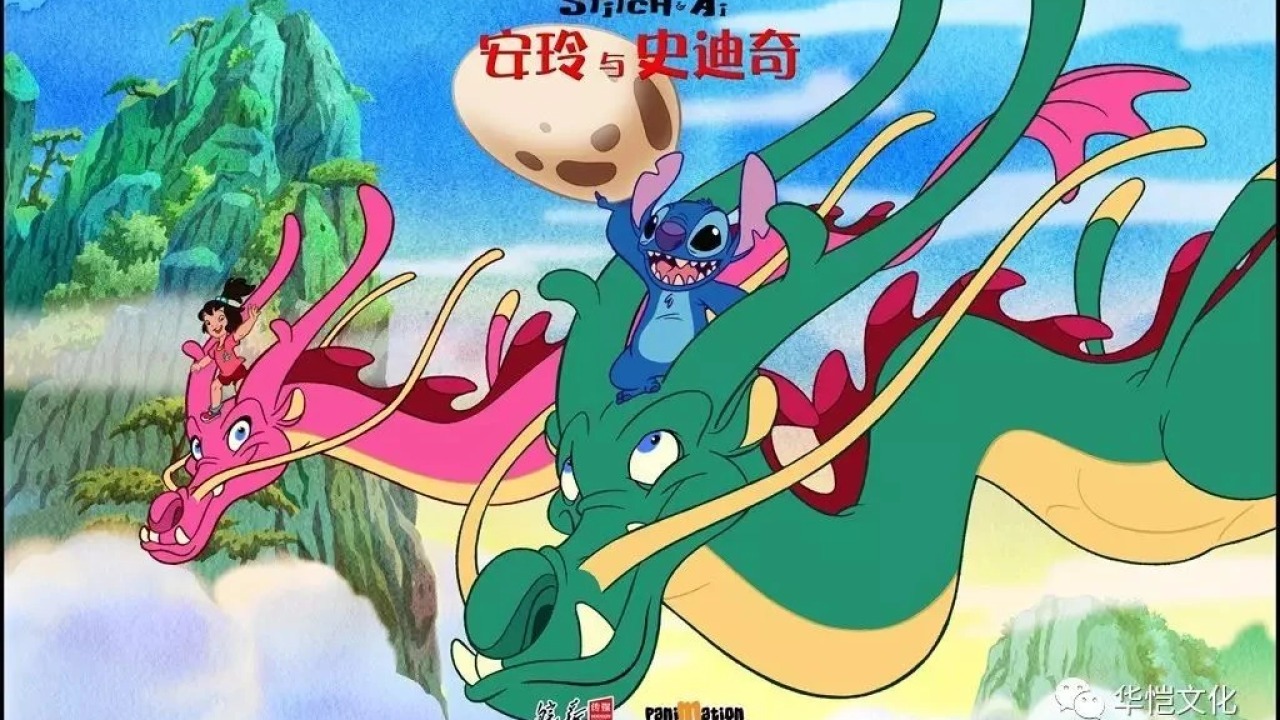
Stitch falls into Huangshan, meets Wang Ai Ling, and enters a thirteen-episode Chinese branch built around family custody, qi, mountain folklore, new experiments, and the difference between cultural setting and decorative scenery.
Thirteen episodes deserve their own front door
Stitch & Ai, known in Chinese as Ān Líng yǔ Shǐ Dí Qí, is the franchise’s Chinese-produced television branch. It is set around Huangshan in Anhui and follows Wang Ai Ling after Stitch crashes into her life. The series was produced in English, released first in Mandarin Chinese, and later distributed in English through Disney Channel Asia and DisneyNOW. That production path makes “dub” and “original” less obvious than viewers may expect.
The branch has thirteen produced episodes. Only twelve were made available during the former United States DisneyNOW run, leaving the finale especially easy to lose in English-language summaries. CVM Sekai records all thirteen, preserves original episode order, and states clearly when a legal current viewing route is unavailable. No unofficial upload becomes a recommended source merely because Disney removed the convenient one.
This hub connects the episode directory, series review, character profiles, Reacts, production history, cultural guides, and franchise-continuity discussion. It also keeps Stitch & Ai separate from the Japanese Stitch! anime. Both move Stitch to East Asia and give him a new girl companion. They are different productions, settings, casts, and story systems.
Choose what you came to investigate
Episodes and Reacts
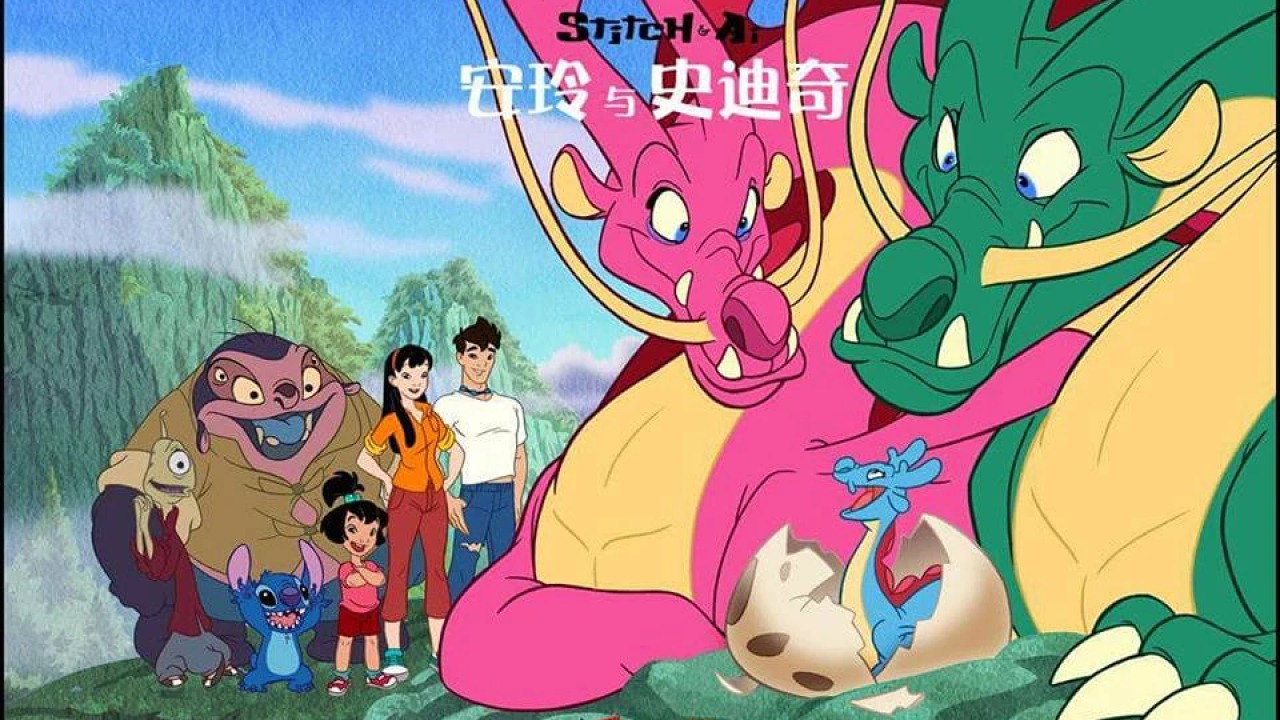
Follow all thirteen episodes in original Chinese broadcast order with official local title cards, real episode titles, editorial briefings, availability notes, and a complete RaeRae React for every installment. Episode 9 remains visible even though the former United States release omitted it.
Characters
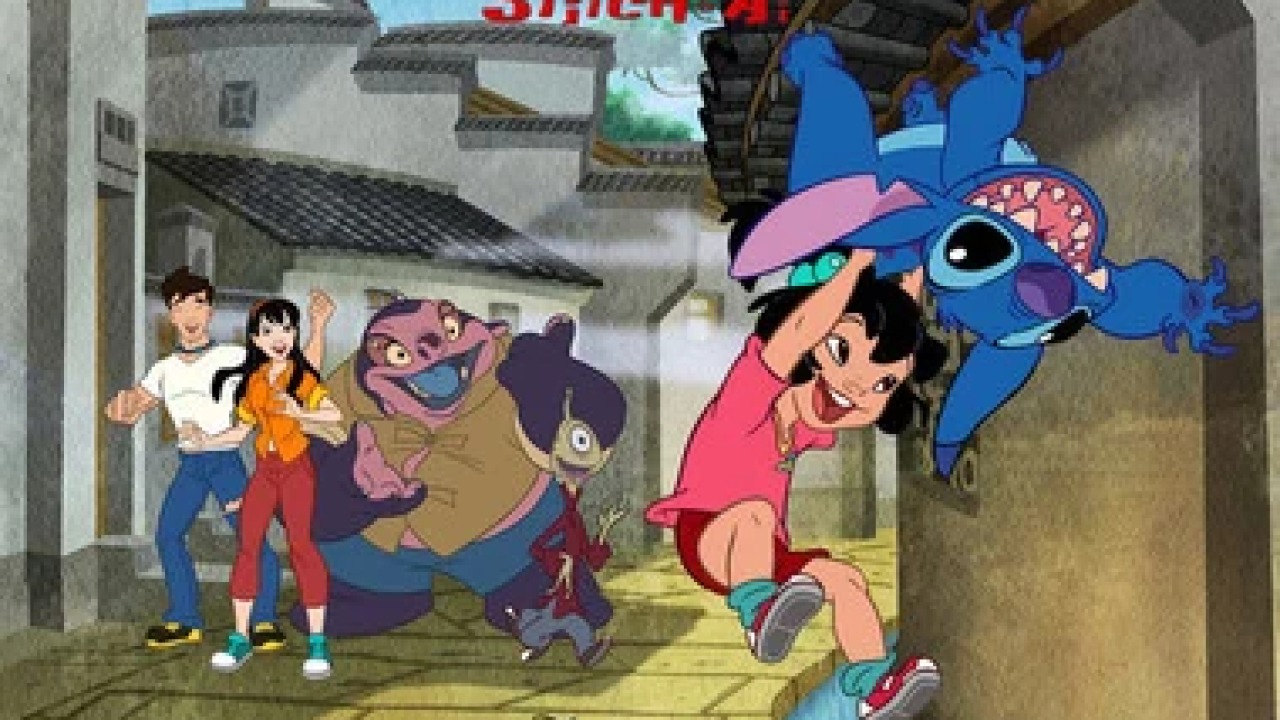
Open the full image-card directory for Ai Ling, Jiejie, Daiyu, Meiying, Scratch, and Yong. Every published profile uses episode evidence, documented performance credits, a distinct official local image, and analysis deeper than a one-line counterpart comparison.
Full Series Review
The 9,000-word review covers all thirteen episodes, Ai Ling, Huangshan, family authority, the Chinese legendary creatures, fragmented Western distribution, the missing United States episode, Stitch’s forced metamorphosis, continuity, craft, and the emotional silence around Lilo.
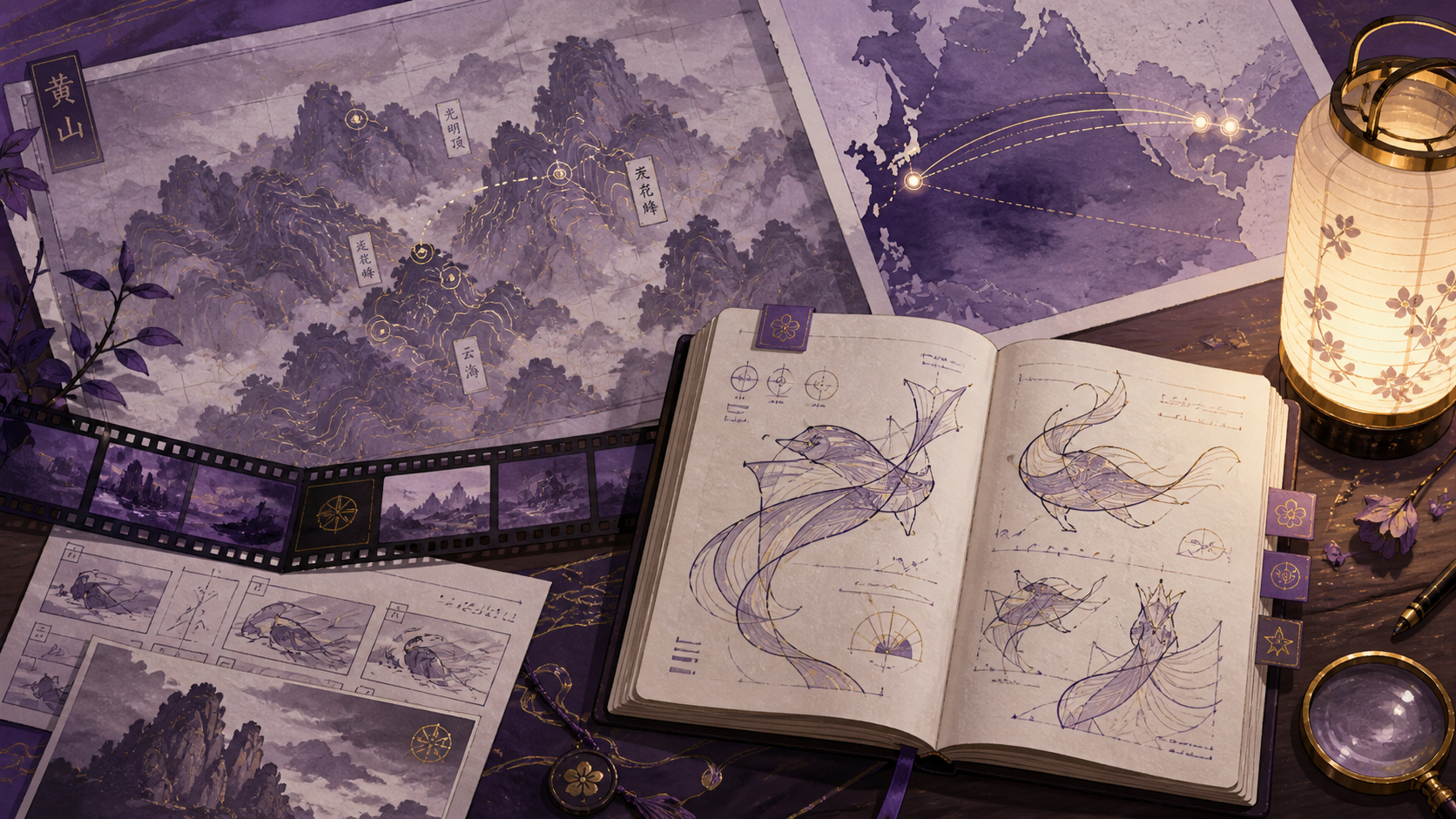
World, Lore, and Guides
Research Huangshan as a lived landscape, separate Chinese legendary forms from the cartoon’s experiment inventions, and follow the co-production through its complete thirteen-episode release and incomplete American catalog.
Ai Ling is not Chinese Lilo
Wang Ai Ling is introduced inside a custody struggle involving her aunt Daiyu, her older cousin Jiejie, and the expectation that adults can decide where a child belongs while treating the child’s resistance as another behavior problem. She is inventive, stubborn, emotionally direct, and deeply attached to Huangshan. Those traits may remind viewers of Lilo, but resemblance is not identity. Her family history, social position, and cultural setting produce different choices.
Stitch arrives with damaged memory and a body carrying unusual qi energy after reentry. His relationship with Ai develops through protection, mischief, and competing claims from aliens who want to use his destructive transformation. The branch therefore returns to a familiar franchise question through a different mechanism: whether a created person belongs to the scientist, the captor, the institution, or the family he chooses.
Daiyu cannot be reduced to the strict aunt trying to remove Ai from the mountains. Her motives, resources, methods, and assumptions need to be examined episode by episode. Jiejie’s position between adult authority and younger family obligation deserves its own attention. Meiying and the school ensemble also need more than bully labels, especially when class, popularity, and public embarrassment influence how children enforce belonging.
The episode branch
The thirteen-episode order begins with Stitch’s arrival and the custody conflict, then expands through the Lock, dragon and phoenix stories, possession, local festivals, Ai’s family, Stitch’s destructive form, Scratch’s manipulation, and the two-part endgame commonly identified through “Brothers” and “Monstrosity.” The directory will use one official image per episode as the featured, hero, and card image.
Each React will keep the knowledge boundary of its episode. Later revelations about Stitch’s memory, qi, Scratch, or the Jaboodies will not be imported backward to make an early theory look foolish. Where an English title differs from Mandarin listings, both names will be recorded. Where DisneyNOW omitted an episode, the directory will say “not currently available through the former route” instead of silently shortening the season.
A Chinese setting needs sources, not a mood board
Huangshan is a real mountain region with its own landscape, tourism economy, artistic history, and cultural associations. The series uses recognizable scenery while also inventing a fantasy town and story mechanics. A guide must separate filmed or drawn landmarks from composite locations. Calling every mountain “mystical China” would explain nothing and repeat the flattening the site is supposed to challenge.
The creature guides will identify when the show draws on Chinese traditions, when it uses a broad fantasy idea, and when it creates a franchise-specific alien. Dragons, phoenixes, qilin, xiezhi, qi, New Year customs, and festival imagery do not belong in one undifferentiated mythology pile. Sources will be named, disagreement will remain visible, and the show will still be allowed to be fiction.
A production guide will follow Anhui Xinhua Media, Panimation Hwakai Media, Disney Television International China, and additional Chinese studios, along with the American animation personnel who brought experience from Lilo & Stitch: The Series. The goal is to show how the visual continuity was constructed without describing the Chinese partners as anonymous labor behind an American property.
Reviews, Reacts, and rants
The full-series review judges the complete thirteen-episode arc instead of using a missing streaming episode as an excuse to review twelve. It examines custody, family authority, Stitch’s altered memory, Chinese legendary creatures, villain structure, animation continuity, Huangshan as setting, and whether the ending earns its emotional promises.
Rants belong where the text gives them evidence: children being moved for adult convenience, cultural setting used as visual shorthand, Disney distributing a branch and then making it difficult to watch legally, and villains treating Stitch’s body as dormant weapons infrastructure. Reacts will remain scene-based and editorial instead of becoming plot summaries with attitude sprinkled on top.
Original-language and performance records
The series was developed and recorded in English before its Mandarin Chinese broadcast, which complicates the common assumption that the English version is automatically a dub. The credited English ensemble includes Ben Diskin as Stitch and Erica Mendez as Ai, with Jess Winfield, Lucien Dodge, Laura Post, Cherami Leigh, Xanthe Huynh, and Richard Epcar among the principal performers. Character pages will attach exact roles only after verifying episode credits.
Mandarin performers deserve the same precision when reliable credits are available. CVM Sekai will not copy an unsourced cast list simply to make a profile look complete. Performer coverage will state the production language, release language, episode evidence, and any role change rather than blending every track into one cast.
Where to watch
Stitch & Ai is not currently available through the former United States DisneyNOW route. Availability changes by region and platform. This hub will update legal routes when a complete licensed option appears and will keep all thirteen produced episodes in the directory regardless of which subset a platform carries.
The continuity question stays open
The Chinese branch uses memories of Lilo and carries characters and ideas from earlier franchise stories, but it does not fit neatly beside every event in the Japanese anime. CVM Sekai treats continuity as evidence to examine, not a test readers must pass before enjoying the show. The guide will identify explicit references, contradictions, production intent where documented, and conclusions that remain interpretation.
Ai Ling does not need to defeat Lilo or Yuna in a ranking to justify her place. The useful question is what this branch does with a child defending home, an alien whose memory and body are being manipulated, and a family learning that protection without listening can become another kind of control.