
ANIME 101 · LEGENDARY FORMS · FRANCHISE EXPERIMENTS
The Chinese Creatures in Stitch & Ai: Legend, Experiment, and What the Show Changed
The cartoon borrows names and silhouettes. The guide keeps the cultural source, the episode invention, and Jumba’s explanation from swallowing each other.
Three layers belong in every creature conversation
A creature in Stitch & Ai can have three different identities at once. The first is the legendary, ritual, artistic, or literary tradition that inspired the name or shape. The second is the series-specific being designed for a thirteen-episode television story. The third is Jumba’s scientific explanation, which translates impossible forms into the franchise language of experiments, abilities, programming, and containment.
Collapsing those layers creates bad fandom information. A cartoon fenghuang-inspired experiment is not a complete definition of fenghuang tradition. A dragon parade prop is not the same object as a long in art, ritual, literature, or cosmology. A Nuo mask is not a monster species. The show borrows, combines, and invents. The guide records the combination without pretending the adaptation is neutral.
Long is more useful than the generic label Chinese dragon
English-language summaries often use “Chinese dragon” as if one translated category explains every form. Long, frequently romanized as loong or lung in older systems, belongs to a broad set of traditions involving water, weather, imperial imagery, direction, power, ancestry, and auspicious meaning. Regional, historical, ritual, and artistic uses vary.
The long-bodied, antlered, clawed image familiar to many viewers is not the Western winged fire-breather with different decoration. Translating both as dragon can be convenient and conceptually misleading. Stitch & Ai uses long-inspired forms inside chase and experiment plots. Viewers should notice the borrowing without assuming the creature behaves according to one universal myth rulebook.
Dragon Parade is performance before the plot turns the image into danger
“Dragon Parade” places Ai, Meiying, Dahu, and the community inside public performance. A parade dragon exists through coordinated human movement, material construction, music, rehearsal, and spectators. The form is animated by a group before any franchise creature complicates the event.
That distinction changes the episode. When damage occurs, the loss involves community labor and celebration rather than a broken monster prop. Stitch’s presence adds chaos, while Ai’s local participation gives her responsibility. The parade should be read as social practice, not an exotic backdrop waiting for alien action.
Fenghuang is not simply a phoenix with a Chinese address
The word fenghuang is often translated as Chinese phoenix, but the familiar Western phoenix story centers strongly on death and rebirth through fire. Fenghuang meanings have shifted across periods and can involve virtue, harmony, sovereign order, auspicious rule, and gendered associations. The Metropolitan Museum of Art notes the form’s Chinese origin and changing meaning as the image traveled into other cultural contexts.
“The Phoenix” uses a fenghuang-inspired being inside the series’ creature system. The episode can evoke renewal without becoming a documentary definition. Calling the animated being “the Chinese phoenix” risks importing a fire-rebirth mechanism the source tradition does not require and flattening the meanings the adaptation selected or ignored.
Why the missing American episode matters
The original Chinese run includes Episode 9, “The Phoenix.” The former United States DisneyNOW release carried twelve episodes and omitted that installment. The gap removed one of the branch’s clearest cultural-creature stories from the version many American viewers were most likely to encounter.
The omission also weakens the season’s transformation sequence. A fenghuang-inspired episode invites viewers to think about renewal before Scratch and Yong force Stitch into metamorphosis. One transformation can carry auspicious or restorative associations. Another is a bodily violation activated for military use. The contrast survives best in the complete thirteen-episode order.
Qilin is not a unicorn translation waiting to happen
Qilin is sometimes called a Chinese unicorn because a horned auspicious creature gives translators a quick bridge. The bridge can become a trap. Qilin traditions involve composite bodies, auspicious appearances, virtue, wise rule, and the arrival or recognition of remarkable people. Images vary widely, and historical encounters shaped representation.
The Metropolitan Museum of Art has documented how the giraffe brought to the Ming court became associated with the mythical qilin. That history shows tradition responding to politics, diplomacy, animals, and interpretation. A television design inspired by qilin belongs to another stage of adaptation rather than a final standardized model.
Nian belongs to a New Year story family, not one fixed monster file
Nian is commonly connected to stories explaining Lunar New Year practices involving noise, red color, light, and communal defense. Versions differ, and modern retellings often organize diverse practices into one tidy monster-origin story. The popularity of the explanation should not be confused with a single ancient canonical text governing every custom.
A series creature inspired by Nian can use fear of sound, celebration, or seasonal imagery as plot mechanics. The adaptation works best when the community practice remains visible. The being should not replace the people whose coordinated action gives the story meaning.
Mo and dream-eating need careful translation
The show’s dream material invites comparison with creatures described as eating nightmares or dreams. Names and creature identities shift across Chinese and Japanese sources, later popular culture, and translation. A guide should identify the episode’s terminology before attaching a broad internet definition.
“Dream On” uses interior desire and fear as story space. The creature function matters because dreams expose what Ai and Stitch cannot comfortably admit while awake. Cultural inspiration provides a frame. Character evidence provides the emotional meaning inside this specific episode.
Nuo Opera is not a creature category
Nuo traditions connect masks, performance, protection, exorcistic history, seasonal observance, local practice, and theatrical development in ways that vary by community. The former DisneyNOW title “Creatures” stripped the specific reference from Episode 11 before viewers entered the story. The local title “Nuo Opera” directs attention toward performance.
Masks can mark roles, powers, ancestors, or protective presence without claiming a biological monster stands behind every face. Stitch & Ai mixes ritual atmosphere with Jumba’s creatures and action comedy. The guide separates the performed role, the damaged sets and costumes, and the franchise beings causing the damage.
Jumba’s Chinese experiments change the franchise grammar
Earlier franchise experiments were largely cataloged through numbers, functions, activation, and the possibility of redirecting destructive purpose. The Chinese branch introduces beings whose designs and narrative associations draw on local legendary forms. Jumba’s laboratory language now sits beside cultural knowledge Ai recognizes from community and story.
The collision can be productive. Jumba knows mechanisms. Ai knows meanings and context. Neither viewpoint should erase the other. Problems arise when science claims ownership of every creature or when the script treats cultural knowledge as magic intuition that requires no evidence.
Ai Ling is the interpreter the branch actually needs
Ai Ling does more than point at a creature and supply a culturally flavored name. Her strongest scenes connect what is happening to a place, a family obligation, a performance, or a story she has heard before. That makes her knowledge relational. Jumba can scan an energy pattern and Stitch can recognize another experiment, but neither of them automatically understands what the people around them believe the image means. Ai fills that gap without becoming an all-purpose encyclopedia.
The distinction also protects her from the familiar sidekick problem. She is not present merely to translate China for imported characters. Her interpretations can be incomplete, emotional, or shaped by what she wants to prove. Meiying, Jiejie, and other local characters can challenge her. A creature episode becomes more interesting when cultural recognition starts a conversation rather than ending one with a neat fact.
This is especially important in a franchise built around naming. Lilo gave experiments names that redirected how other people saw them. Ai inherits a related power, but her branch adds another question: what happens when the new name resembles something a community already knows? The answer cannot belong exclusively to Jumba’s database. It has to pass through memory, performance, language, and the people living beside the story.
What adaptation owes the source culture
Adaptation does not owe museum stillness. A children’s series can redesign, combine, joke, and invent. The production owes viewers clarity about when invention is occurring and enough specificity that all Chinese material does not collapse into dragons, scrolls, qi, and red festival decoration.
Editorial coverage carries part of that responsibility after release. CVM Sekai can identify the show’s title, episode action, and character interpretation, then provide external context from cultural institutions. The goal is not to grade the cartoon for perfect mythology accuracy. The goal is to stop franchise invention from becoming the only definition readers ever encounter.
Sources and visual record
The cultural foundation uses museum and institutional material, including the Metropolitan Museum of Art discussion of fenghuang imagery crossing cultures, the Met’s research on the giraffe and qilin, and Smithsonian material on Chinese opera traditions. Episode names, sequence, and creature actions come from the complete original broadcast record.
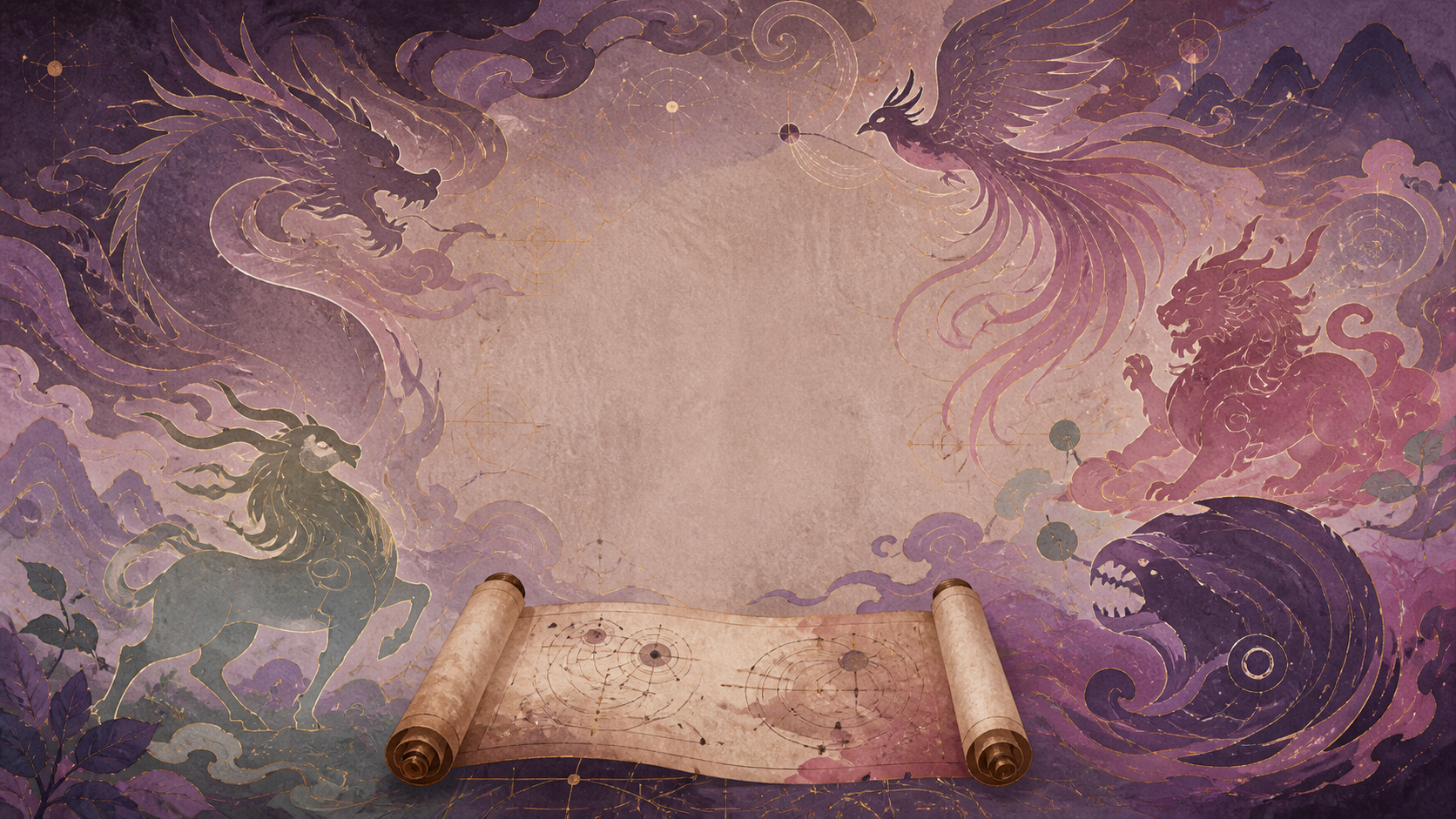
The hero image is original CVM Sekai editorial art created for this guide. The long, fenghuang, qilin, Nian, and Mo silhouettes are symbolic references rather than official character designs or definitive cultural diagrams. No franchise characters, logos, or copied frames appear in the artwork.
Keep exploring
Return to the Stitch & Ai hub, read the Huangshan guide, or browse all thirteen episode Reacts.
There is no single master file called Chinese mythology
China contains many regions, languages, ethnic communities, religious traditions, literary histories, performance forms, and local story families. A creature name can shift across centuries and genres. Court art, temple imagery, opera, household storytelling, modern animation, online games, and tourism may emphasize different traits without one version automatically invalidating every other.
That variety is why a guide should avoid sentences beginning with “the Chinese believe” unless a source truly supports the scope. Name the text, region, period, performance, or modern adaptation being discussed. When the evidence is broad, say broad. When Stitch & Ai invents a hybrid for one episode, call it the show’s version rather than quietly upgrading it into universal tradition.
Translation can create a creature that was never in the original category
English localization often reaches for familiar words such as dragon, phoenix, unicorn, demon, ghost, or monster. Those labels help viewers move quickly and can import the wrong anatomy, moral role, religious association, or narrative function. A translated word is a bridge, not proof that two traditions describe the same being.
The safest method keeps the romanized Chinese term beside the translation, explains why the familiar English label is being used, and lists the important differences. Readers then gain access without being told that long is simply a European dragon with another address or fenghuang is a reborn fire bird because “phoenix” appeared on a regional menu.
Creature design should be read frame by frame
Official title cards and episode stills provide evidence about horns, scales, feathers, color, movement, size, setting, and the relationship between a creature and human characters. Those visual choices may borrow from traditional motifs, modern children’s animation, franchise experiment design, or all three. Description should begin with what is actually visible.
Interpretation comes next. A coiled body, cloud setting, paired animals, mask, or color may suggest a known visual tradition, but the guide should cite production art or cultural sources before declaring intent. Similarity can be meaningful without becoming a claim that the animator copied one specific historical object.
Long imagery carries authority, water, weather, and imperial history in different contexts
The long is often flattened into a generic powerful serpent. Across visual and literary traditions, dragon imagery can connect with water, rain, clouds, directions, rulership, ancestry, auspicious power, or specific local stories. Those associations do not all appear every time a dragon appears.
Stitch & Ai uses dragon bodies for immediate scale and recognition. The branch can echo cloud and weather imagery while turning the creature into an episode obstacle or ally. A guide should identify the show’s action function separately from broader cultural meanings so one chase scene does not become a summary of centuries of dragon representation.
Fenghuang imagery is relational, political, and visual before it becomes a resurrection plot
The English word phoenix encourages audiences to expect death, fire, and rebirth. Fenghuang traditions can emphasize virtue, harmony, rulership, auspicious appearance, paired symbolism, and a composite avian body. Exact meanings depend on source and period.
When an English release omits “The Phoenix,” viewers lose more than one adventure. They lose a major piece of the branch’s creature conversation and may never realize the localization label needs explanation. Restoring the thirteenth-episode production order means preserving Episode 9 and giving its imagery a note careful enough to resist automatic Greco-Roman comparison.
Qilin comparison should begin with the body the episode shows
“Chinese unicorn” is memorable and usually misleading. Qilin imagery may include hooves, scales, horns, flames, cloud forms, deerlike or dragonlike features, and associations with auspicious rule or the arrival of a sage. One horn is not the only defining fact, and modern designs vary widely.
The show’s creature should be described as an animated interpretation first. Which traits appear? What does the plot ask the creature to do? Which features resemble documented qilin imagery, and which follow the franchise’s visual grammar? This method respects both the source tradition and the production’s right to stylize.
Nian stories change when a festival explanation becomes a monster episode
Modern tellings often connect Nian with Lunar New Year, noise, red color, light, and collective defense. There is no need to pretend every retelling has one ancient script. Festival explanations, children’s books, local accounts, television specials, and commercial imagery can circulate together and influence what audiences expect.
An episode may turn those materials into a clean creature problem with a recognizable solution. The guide should identify the narrative convenience. Community ritual has meaning beyond defeating a monster, and Lunar New Year cannot be reduced to the enemy that conveniently explains every visible tradition.
Nuo belongs to living ritual and performance histories
A Nuo Opera episode may include masks, movement, sound, procession, and the idea of expelling harmful forces. Those elements come from practices with regional variation and changing contemporary contexts. The masks are not automatically monsters, and performers are not simply pretending to become a creature for a Disney plot.
The guide should direct readers toward cultural and institutional sources on Nuo rather than treating the episode as the final explanation. Stitch & Ai can introduce a question. It cannot carry the full religious, theatrical, communal, and historical record inside one title card.
Jumba’s experiment vocabulary can accidentally colonize every explanation
Jumba understands created biology, weapons, programs, and alien technology. When every unfamiliar being is explained through his framework, local knowledge becomes provisional until the imported scientist approves it. The franchise then absorbs distinct creatures into the experiment catalog that already organizes Stitch’s cousins.
A stronger reading lets Jumba be wrong or incomplete. Ai, elders, performers, scientists, historians, and direct observation may each contribute different evidence. The answer may remain mixed. Science fiction can reinterpret legend without announcing that legend was merely alien engineering misunderstood by everybody who lived with it.
Ai Ling should not become the all-purpose cultural narrator
Ai can know local stories, family traditions, school material, tourist explanations, and the specific practices she has encountered. She cannot represent every Chinese community, period, or belief. Giving her perfect authority would flatten the culture and burden one child with explaining the setting to the imported franchise.
Let her ask questions and be corrected. Let two adults disagree about a story’s meaning. Let a performance expert know the mask while a biologist knows the animal habitat and a family remembers a different version. Cultural confidence becomes believable when it includes the ability to identify who knows more.
The episode directory should preserve titles the American release dropped or softened
The former DisneyNOW release omitted Episode 9, which means a twelve-episode American list cannot serve as the production record. The CVM directory correctly keeps all thirteen Chinese broadcast episodes in order, with the local title-card image and a note about regional availability.
Titles should remain attached to episode numbers even when English services translate them differently. If a translation changes a creature term, the guide can list alternatives and explain the tradeoff. It should not silently choose the most familiar word and erase the original category.
A respectful adaptation can still be criticized
Respect is not a shield against analysis. The show can introduce younger viewers to names and visual traditions while also combining regions, simplifying ritual, using generic fantasy logic, or letting an imported science-fiction character dominate the explanation. Both observations can be true.
Criticism becomes useful when it names the precise adaptation choice and its effect. Which context disappeared? Which stereotype became easier? Which visual detail survived? What source could help a viewer learn more? “Accurate” and “inaccurate” are often too blunt for a production that adapts several layers at once.
Source hierarchy for creature claims
Start with the released episode and official production material for claims about what Stitch & Ai shows. Use museum, library, university, cultural-heritage, and primary textual sources for historical claims. Use regional or practitioner sources when discussing living performance and local tradition.
Fandom wikis can help locate spellings, screenshots, or episode questions, but they should not be the final authority for culture or production history. When primary documentation is unavailable, label the uncertainty. A visible gap is more trustworthy than a confident sentence built from repetition.
What the visual receipt can and cannot prove
An official still can prove that a particular design, color, pose, setting, or title card appears in the released branch. It cannot prove the production team’s historical source unless a credited artist, production document, or official feature names that source. The guide should keep observation and production intent in separate sentences.
That separation protects good interpretation. RaeRae can argue that a dragon image echoes cloud-and-water associations or that a mask is being used as shorthand for danger while still admitting the artists left no public citation. Careful uncertainty makes the analysis stronger because readers can see exactly where the evidence ends and the editorial reading begins.