SAJA Boys: Members, Songs, Voices and KPop Demon Hunters Guide
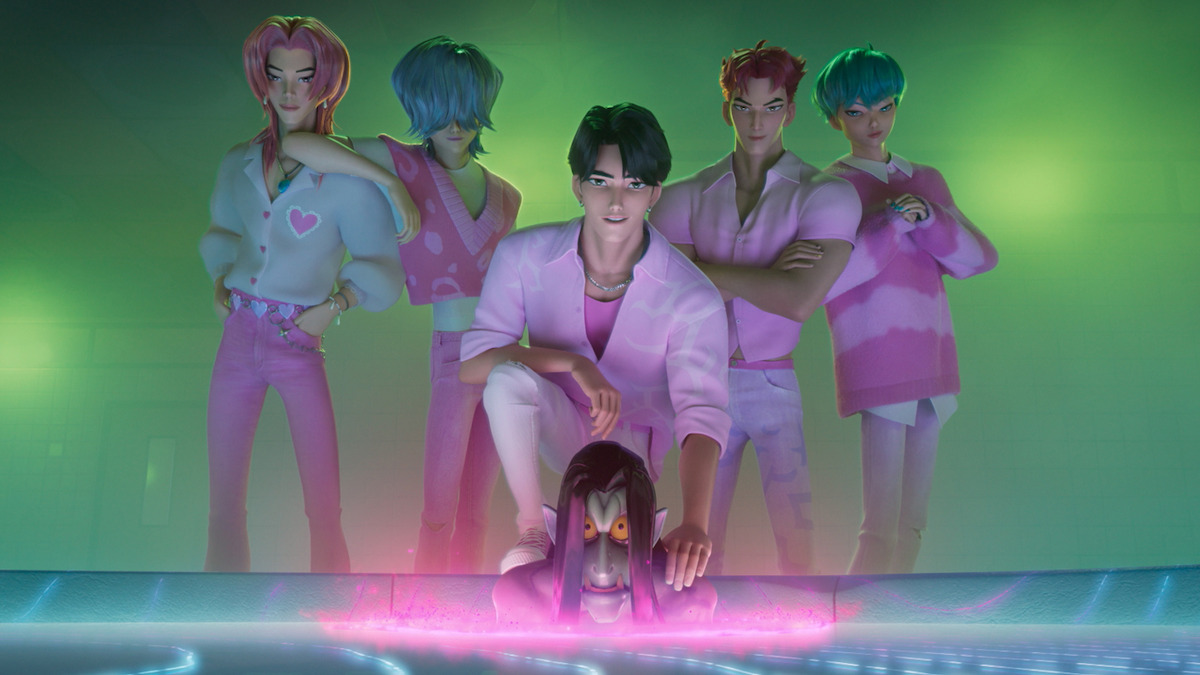
Group profile and current lineup
Members Jinu, Abby, Mystery, Romance and Baby Type Fictional demon idol group in KPop Demon Hunters Soundtrack performers Andrew Choi, Neckwav, Kevin Woo, samUIL Lee and Danny Chung Debut file Soda Pop Current canon status Original five-member campaign ended in the released film Archive rule Character, speaking-voice and singing credits remain separate identities Bottom line: SAJA Boys are a fictional demon idol group built for KPop Demon Hunters, but their music is performed by real singers whose credits deserve to stay visible. The characters and performers are connected; they are not the same people.
The answer before the lore
SAJA Boys are the five-member rival group in the 2025 animated film KPop Demon Hunters. Jinu leads Abby, Mystery, Romance and Baby in a campaign designed by the demon ruler Gwi-Ma: win HUNTR/X’s audience, drain the Honmoon of protective power and turn fandom into a delivery system for stolen souls. The setup is deliberately absurd and uncomfortably recognizable. Their pastel debut styling sells safety, their hooks reward repetition, and their darker final stage reveals what the brand was collecting all along.
Current status: canon in 2026
Inside the released film, the original five-member campaign has ended. Jinu rejects Gwi-Ma and sacrifices himself to protect Rumi; Abby, Mystery, Romance and Baby are defeated during the final battle. Netflix has confirmed a KPop Demon Hunters sequel with directors Maggie Kang and Chris Appelhans returning, but that announcement does not automatically confirm that every SAJA Boy returns, revives or promotes as an active group. This page records the completed film canon and separates it from sequel speculation.
The five-member map




Character and performer credits
- Jinu — group leader and lead singer; speaking voice Ahn Hyo-seop; singing voice Andrew Choi.
- Abby — primary dancer and physical visual archetype; speaking voice SungWon Cho; singing voice Neckwav.
- Mystery — backup vocalist and enigmatic visual archetype; speaking voice Alan Lee; singing voice Kevin Woo.
- Romance — flirtation and fanservice archetype; speaking voice Joel Kim Booster; singing voice samUIL Lee.
- Baby — maknae and deep-voiced rapper; speaking and singing performance by Danny Chung.
Why the split credits matter
Animation often asks several people to build one character. Dialogue actors control timing, comedy and emotional breath. Singers establish the vocal identity that must sound credible beside contemporary K-pop. Songwriters and producers construct the music itself, while animators turn those sounds into faces and movement. Calling Andrew Choi “Jinu” outside the performance context erases Andrew Choi; calling Ahn Hyo-seop the singer erases the soundtrack credit. The clean approach is a connected credit trail with no identity collapse.
How the group is assembled
Jinu proposes SAJA Boys as a strategic response to HUNTR/X rather than as an artistic dream. That origin changes every later stage. Their debut is not a beginning built on practice-room hope; it is a hostile acquisition wearing a flower crown. Gwi-Ma needs attention converted into spiritual access, and Jinu understands that a rival idol group can reach people faster than an obvious monster. The band is therefore a weapon designed with branding, positions, hooks and fan intimacy.
Soda Pop: sweetness with teeth
“Soda Pop” works because it never behaves like villain music. The melody is fizzy, the styling is bubblegum bright, and each member offers an instantly legible bias package. The lyric imagery keeps circling consumption and craving, so the threat is present without breaking the smile. The film does not ask viewers to believe fans are foolish; it demonstrates how professional charm can make a dangerous invitation feel like a reward.
Your Idol: the contract stops pretending
“Your Idol” removes the pastel wrapper. Black hats, supernatural lighting and choral weight turn the same relationship into an ownership claim. The group no longer promises refreshment; it promises submission. That contrast is the SAJA Boys thesis in two songs: attraction creates the channel, repetition normalizes the channel, and the final performance tells the audience who expected to control it.
Free belongs to Jinu’s fracture
“Free” is not a five-member SAJA Boys song. It is a Rumi and Jinu duet performed by EJAE and Andrew Choi, and its profile relationships should reflect those participants rather than dragging every fictional bandmate into the credit. The song matters to the group story because it reveals Jinu imagining a self outside Gwi-Ma’s contract. It is also where the leader becomes more than the campaign he designed.
The Pride and weaponized fandom
The Pride is funny as a fandom name because a group of demon lions would absolutely brand the audience as a collective noun. It is also the mechanism of the plot. Fans create energy, social proof and crowd momentum; Gwi-Ma intends to turn that shared investment into capture. The film exaggerates the stakes into literal soul theft, but the underlying question is grounded: what does an entertainment brand owe people after encouraging them to make belonging part of the purchase?
Visual concept: pastel to goth
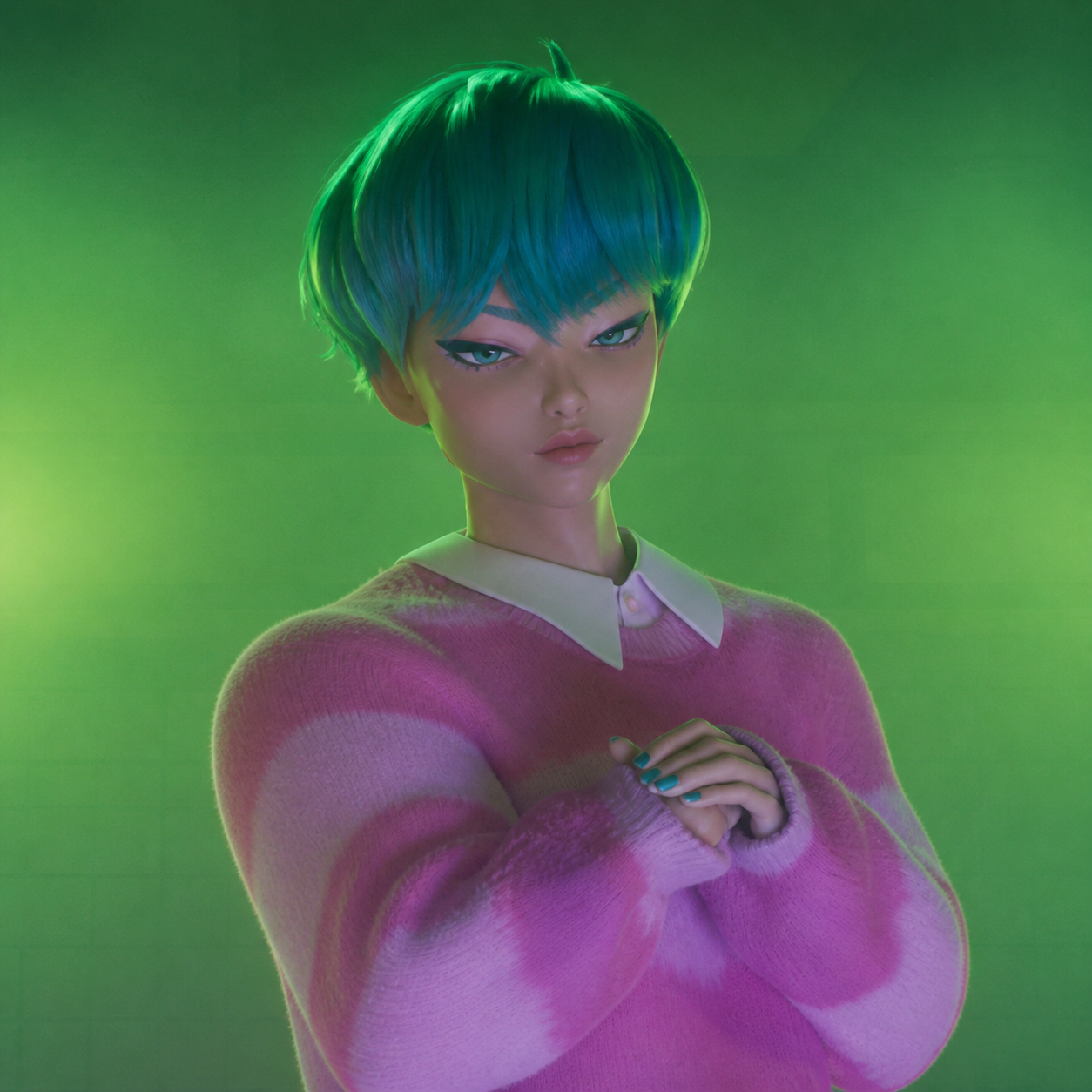
The design team built a readable before-and-after system. Pastel blue, pink and floral details make the human disguises feel soft enough to approach. The final black-hat stage replaces individual sweetness with a unified, ritual silhouette. Abby’s exposed strength, Mystery’s hidden eye, Romance’s heart-shaped language and Baby’s aggressive cuteness are not random decorations. Each one is a market segment given a body.
The member-position satire
SAJA Boys compress familiar idol positions until their commercial logic becomes visible. Jinu is leadership and emotional center. Abby is the body fans are invited to inspect. Mystery sells withholding. Romance sells direct parasocial attention. Baby sells contrast between cute packaging and a deep rap voice. None receives a normal trainee history because the film needs them to arrive as finished products. Their lack of ordinary biography is part of the joke and part of the horror.
What the story confirms
- The group consists of Jinu, Abby, Mystery, Romance and Baby.
- They are demons serving Gwi-Ma and disguise themselves as human idols.
- Their mission is to take HUNTR/X’s fans and weaken the Honmoon.
- Soda Pop and Your Idol are their two credited group performances on the soundtrack.
- Jinu alone receives a confirmed human past and a redemption choice in the released film.
What remains unknown
- The human-era histories of Abby, Mystery, Romance and Baby are not established in the film.
- Their exact ages are not canonically fixed beyond broad demon framing; Jinu is identified as more than 400 years old.
- A sequel announcement does not prove the original group has re-formed.
- Fan nicknames, imagined birthdays, zodiac signs and trainee periods are not canon unless an official source supplies them.
How to follow the real music team
Start with the soundtrack credits, then follow Andrew Choi, Neckwav, Danny Chung, Kevin Woo and samUIL Lee as real performers with careers outside these characters. Songwriting and production credits also matter: Danny Chung discussed the project’s construction with Netflix, including the intention to make “Soda Pop” almost irritatingly addictive. That is useful production evidence, not a fictional interview with Baby.
Official video tracker
Soda Pop
Your Idol
Free — Rumi and Jinu
A debut with no trainee narrative
Most idol stories turn preparation into proof of deserving the stage. SAJA Boys skip that structure because Gwi-Ma is not building artists in public; he is deploying a finished product. Their instant arrival is funny, but it is also a clue. Nobody can locate a trainee era, a pre-debut struggle or a company history because the group exists to capture attention before scrutiny catches up. The missing biography is narrative evidence, not a research failure.
Jinu’s leadership problem
Jinu is a capable strategist and a disastrous moral center. He understands the Honmoon, studies HUNTR/X’s public strength and identifies fandom as the pressure point. What he cannot control is the return of his own conscience once Rumi recognizes his shame without recoiling. The leader’s private fracture matters more than a conventional line distribution: when Jinu stops believing the mission, the group’s entire purpose loses the person who designed it.
Why the other four stay archetypal
Abby, Mystery, Romance and Baby receive less interior history than Jinu. That imbalance is intentional enough to name plainly. They function as exquisitely designed idol archetypes and agents of Gwi-Ma, while Jinu carries the film’s choice between shame and accountability. A profile should analyze what the four do on screen without pretending the movie supplied hidden family trees. Limited canon can still support strong design and performance analysis.
The group as a mirror for HUNTR/X
HUNTR/X builds power through an imperfect friendship that eventually survives disclosure. SAJA Boys build power through coordinated concealment. Both groups understand choreography, image and audience connection, but only one can transform after a member tells the truth. The rivalry is therefore more than girls versus boys or hunters versus demons. It asks whether a group can remain a community when its brand stops being a place to hide.
The Honmoon stakes
The Honmoon is powered by the relationship between hunters, music and the people who believe in them. Gwi-Ma’s plan does not need to overpower that system directly if SAJA Boys can redirect its audience. This is why charts, fan migration and public performance matter to the fantasy plot. Pop success is not decorative world-building; it changes the spiritual border protecting the human world.
The variety-show ambush
The hot-sauce sequence is efficient character writing disguised as a promotional schedule. HUNTR/X enters expecting to expose demons and is forced to perform friendliness under cameras. Baby wins the spice challenge, Jinu controls the social situation, and the audience sees how media training can neutralize an accusation before facts reach the room. The scene is funny because every participant understands the format and nobody controls its meaning.
The bathhouse confrontation
When the groups confront each other away from the public stage, the polished categories become harder to maintain. Attraction, suspicion and combat share the same space. Jinu notices Rumi’s marks, creating a private line of recognition that neither leader can safely disclose. The scene advances plot, but it also strips away the debut premise: these are not rival celebrities negotiating market share. They are wounded people and demons arguing over concealment.
Music as supernatural engineering
The soundtrack treats hooks as power systems. Repetition gathers people, synchronized performance focuses them, and emotional identification determines where that attention flows. “Soda Pop” establishes the channel through pleasure. “Your Idol” declares ownership once the channel is strong enough. The supernatural mechanics exaggerate entertainment economics without making the songs sound like lectures. They still have to work as pop records or the plan makes no sense.
Why catchy villain music is the point
A weaker version of this story would make the villains musically unpleasant so virtue stayed easy to hear. KPop Demon Hunters does the opposite. SAJA Boys receive two of the soundtrack’s most immediately addictive songs because danger can be competently produced, beautifully styled and genuinely fun. Enjoying the record is not a moral failure. Refusing to examine the transaction after the reveal would be the failure the film keeps circling.
Real performers, fictional charts
SAJA Boys can appear on real charts through soundtrack releases even though the characters cannot sign contracts, rehearse or tour. That distinction should remain explicit. Chart performance belongs to the released recording and its credited human creators. The fictional group name is part of the work’s presentation. Both facts can coexist without turning animation into a deceptive real-person profile.
Names and archetypes
The member names are labels with jobs attached. Abby points toward abs, Mystery toward concealment, Romance toward courtship, and Baby toward maknae styling. Jinu receives a conventional personal name because he alone must feel connected to a human past. The naming system tells viewers how much interiority to expect before the script explains anything. It is broad comedy used as precise narrative shorthand.
The ending and accountability
Jinu’s sacrifice helps Rumi, but it does not retroactively make the campaign harmless. The other members are defeated, The Pride is released from direct control, and HUNTR/X rebuilds its power through honest performance. Accountability here is not a speech that cleans the record. It is a choice that costs Jinu the identity and protection Gwi-Ma supplied. The ending permits grief without demanding amnesia.
Sequel discipline
A confirmed sequel naturally creates theories about resurrection, replacement members and unrevealed demon rules. The site can follow those theories as fandom conversation, but the canonical profile must not promote them into facts. Until Netflix or Sony names returning characters or publishes story details, the original film’s ending remains the authoritative status. “Possible” is not a synonym for “announced.”
A practical listening order
Start with “Soda Pop” and listen only for surface pleasure. Play “Your Idol” next and note which melodic instincts remain after the concept darkens. Then place “Free” between the two as Jinu’s counterfactual future: a voice imagining relationship without ownership. Returning to “Soda Pop” afterward makes the sweet language sound different, because the listener now understands who benefits from the craving.
What a complete SAJA Boys hub must do
A useful hub needs all five canonical character routes, correct speaking and singing credits, story status, the two group songs, Jinu’s duet relationship, design analysis and official sources. It should also say what is unknown. A long page that invents birthdays is worse than a shorter page with boundaries; depth comes from explaining the evidence, not filling every possible label.
The comedy is structural
The funniest SAJA Boys moments do not interrupt the threat; they explain how the threat travels. Popcorn eyes, impossible hot sauce, a bark from behind perfect bangs and Baby’s bottle all make the group shareable. Comedy lowers the temperature enough for viewers to repeat the scene, and repetition is exactly what Jinu’s campaign needs. The film lets humor be character, marketing and supernatural strategy at the same time.
Why one canonical page per member matters
Fictional characters accumulate duplicate pages quickly: one for the voice actor, one for the song credit, one for the sequel and another for “facts.” That fragments evidence and makes image cards compete. The durable structure is one character route that links outward to real performer profiles when relevant. New canon updates the existing page, while the performer keeps a separate real-person biography.
The soundtrack credit test
Whenever a new SAJA Boys upload appears, match the exact video ID and read the published performer line before assigning relationships. A group-branded visual can feature all five characters while a recording credit names specific singers; a Jinu duet should not be filed as participation by Abby, Mystery, Romance and Baby. Visual presence, fictional membership and musical performance are related fields, not interchangeable ones.
What makes the group memorable
SAJA Boys condense a whole promotional ecosystem into two songs and a handful of scenes without feeling thin. Every member is instantly readable, the music survives outside the plot, and the final reveal changes the meaning of the debut instead of merely replacing it. The group succeeds as satire because it first succeeds as entertainment. The critique lands after the hook has already done its work.
The filing rule for fictional music
File SAJA Boys under the K-pop ecosystem because the soundtrack, choreography and idol grammar are the subject, but label the group as fictional everywhere a reader could mistake the page for a real agency profile. Keep character cards connected to the group, keep real singers on their own artist routes, and attach exact videos only to credited participants. That structure preserves discovery without turning a film cast into a fabricated trainee roster.
RaeRae’s verdict
SAJA Boys work because the movie does not confuse “catchy” with “innocent.” The songs are excellent bait, the character designs are shamelessly efficient, and Jinu’s guilt gives the machinery one person capable of recognizing what it costs. The group is fictional. The pop engineering is not. That is why the pages need both lore and credits: one explains the trap, the other names the people who made it sing.
Sources and receipts
- Netflix Tudum — KPop Demon Hunters film, story and cast
- Netflix Tudum — soundtrack and official credits
- Netflix Tudum — character design and color story
- Sony Pictures Animation — official film page
React image cards
Static cards route each exact official upload to its own in-depth React. Every card repeats that React’s featured and hero image so the archive stays visually traceable.