
Abby of SAJA Boys: Character, Voice, Songs and Story Guide

Bottom line: Abby is the primary dancer and visual archetype in the fictional SAJA Boys. SungWon Cho provides the speaking voice and Neckwav provides the singing performance; those real performers are credited collaborators, not fictional group members.
Verified quick file
| Character | Abby Saja |
|---|---|
| Fictional group | SAJA Boys |
| Story role | Primary dancer and visual archetype |
| Speaking voice | SungWon Cho |
| Singing voice | Neckwav |
| Age | Centuries-old demon; exact age unknown |
| Story | KPop Demon Hunters |
| Current status | Original film arc complete; sequel return unconfirmed |
- Character: Abby Saja
- Group: SAJA Boys
- Role: primary dancer and visual archetype
- Speaking voice: SungWon Cho
- Singing voice: Neckwav
- Age: centuries-old demon; exact age unknown
- Story: KPop Demon Hunters
- Current status: original film arc complete; sequel return unconfirmed
The canon biography
The released film does not supply a human life, birth date or trainee history for Abby. It establishes him as a demon under Gwi-Ma, a SAJA Boys member and the body-centered part of the group’s market design. Netflix identifies him as the primary dancer. Anything more precise should be labeled interpretation, not biography.
That boundary matters because fan pages can make a confident sentence look official simply by placing it beside verified facts. This profile keeps production evidence, film events and interpretation in separate lanes.
The character argument
Abby’s joke is not merely that he has muscles. The film makes looking part of the choreography: Mira and Zoey’s eyes turn to popcorn, Abby signs sketches of his torso, and his final defeat targets the exact feature the brand sold. He represents the idol body made into public property, except the character knowingly weaponizes that inspection first.
Abby is therefore more than a visual label, even when the screenplay gives limited dialogue. Position, design and editing tell the audience what kind of attention this member is built to collect.
Signature weapon and screen function
Physical spectacle, dance power and deliberately excessive abs. The phrase sounds playful, but it describes the member’s job in Jinu’s campaign. SAJA Boys do not divide labor only by vocal line. They divide the fantasies offered to viewers, making the group feel instantly complete before anyone has time to ask where it came from.
Key relationship: Mira and Zoey
Mira and Zoey is the clearest relationship lens for Abby, but relationship does not always mean romance or friendship. It can be leadership, rivalry, attraction, projection or combat. The film uses quick reactions and repeated visual framing to establish those connections without giving every demon a separate subplot.
The fictional-profile rule
This is a character profile, not a disguised biography of the performer. The speaking actor, singing performer, animators, writers and character all belong in the same credit map, but only Abby belongs to SAJA Boys. Real-world dates, agencies and personal histories should never be transferred onto the fictional member.
How SAJA Boys sell attention
The group is designed as a complete attention funnel. Pastel styling lowers suspicion, member archetypes create bias choices, an addictive chorus rewards repetition, variety-show comedy simulates familiarity, and the darker stage converts affection into obedience. Each member handles a different part of that funnel without needing a long trainee backstory.
Soda Pop assignment
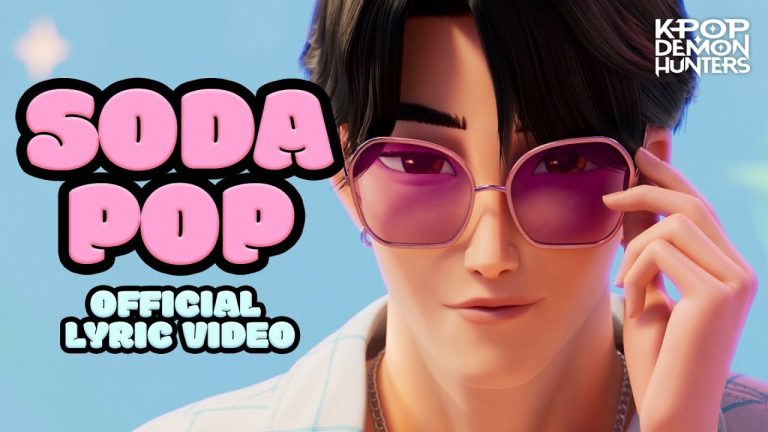
In “Soda Pop,” watch Abby before listening for the credited singer. Then reverse the assignment. The animation defines gesture and screen persona; the singer defines breath, attack and blend. Keeping both layers visible makes the performance more impressive and prevents Abby brand from swallowing the human labor.
Your Idol assignment
“Your Idol” removes the friendly disguise without abandoning choreography. The member still performs a recognizable position, but the lighting, hats and demonic faces expose the group’s actual contract with the crowd. Replay the transition as narrative editing, not just a concept switch.
The Pride relationship
SAJA Boys call their fandom The Pride. That name turns belonging into part of the group’s lion imagery, but Gwi-Ma intends the community as infrastructure for soul collection. The film makes a useful distinction: fans create sincere community with one another even when the organization courting them has predatory goals.
What not to invent
Do not assign a birthday, zodiac sign, MBTI, trainee period, agency contract or human nationality unless an official source confirms it. Character pages often become rumor magnets because empty fact boxes look unfinished. Here, the blank space is honest canon and sometimes intentional design.
The design argument
The human disguise is not merely attractive; it is legible from across a crowd. Hair color, silhouette, prop language and movement tell viewers which fantasy each member offers. The final demon design corrupts the same silhouette instead of replacing it, showing that the threat was inside the brand architecture from the start.
Current status
The released film completes the original SAJA Boys conflict. A sequel is confirmed, but this character’s return is not proven by that announcement alone. Until Netflix or Sony confirms more, the responsible status is completed film canon with future participation unconfirmed.
Why this page is long
Depth does not mean manufacturing private facts. It means separating confirmed canon, production credit, performance analysis, visual design, relationships and uncertainty so readers can see exactly what is known. A useful character file can be substantial without pretending an animated demon has an undisclosed trainee diary.
RaeRae’s read
The smartest part of SAJA Boys is that the group never needs the audience to mistake evil for ugliness. Beauty, humor and musical quality are the delivery mechanism. The movie trusts viewers to enjoy the hook and interrogate the transaction at the same time. That tension is more interesting than a flat warning about “bad idols.”
The instant-debut clue
SAJA Boys arrive without a public trainee story, pre-debut archive or ordinary agency rollout. That absence supports the plot: Gwi-Ma needs a finished rival product quickly, and Jinu is proposing a weapon rather than documenting artistic development. For this character, the debut stage is both introduction and camouflage. The group feels complete because every silhouette communicates a position before the audience can ask for history.
Position inside the five-member machine
A five-member formation gives the film enough contrast for clear bias archetypes while keeping every design readable in fast musical sequences. Abby’s role is not isolated from the others; it gains meaning through contrast. Jinu supplies command, Abby physical display, Mystery withholding, Romance direct affection and Baby cute-versus-deep-voice surprise. The group sells a menu of attention rather than one repeated fantasy.
Human disguise versus demon form
The human disguise invites approach through soft color, controlled movement and recognizable idol grammar. The demon form does not discard that grammar. It bends the same posture, hair and accessories toward menace so the reveal feels like truth surfacing through branding. Replay this character’s before-and-after silhouette. Continuity is the point: the danger did not enter later; it was packaged attractively from the beginning.
Camera work and audience instruction
Reaction shots tell viewers how to read SAJA Boys before exposition catches up. Fans surge, phones rise, HUNTR/X members register attraction or suspicion, and the camera borrows the rhythm of promotional content. Abby is introduced through other people’s attention as much as through direct action. The film understands that idol image is a relationship between performer, lens, editor and crowd—not a quality stored in one face.
Choreography as persuasion
The choreography makes seduction look frictionless. Gestures are large enough to become instantly repeatable, formations reorganize the five archetypes without losing individual identity, and hooks arrive with movements a crowd can imitate. For a demon campaign, participation is more valuable than passive admiration. Once fans repeat the shoulder line or hand shape, the group’s visual language has moved into bodies beyond the screen.
Vocal credit without identity collapse
The singing performer gives this animated member a musical body, but the credit does not erase the voice actor or become a claim that the singer shares Abby’s biography. Listen for tone, placement and blend as performance choices. Then return to dialogue and hear how a different artist builds timing and personality. The seam is not a flaw; it is collaboration, and naming it is part of responsible fandom documentation.
Dialogue economy
Not every SAJA Boy receives long dialogue, and counting lines alone would miss the construction. Pose, editing, costuming, vocal placement and other characters’ reactions do biographical work in compressed form. This profile reads those signals while refusing to call inference a confirmed event. The distinction lets analysis stay ambitious without turning headcanon into a database field.
Relationship to Jinu’s plan
Jinu designs the campaign, and the other four execute it without the moral hesitation that later breaks him. Abby’s relationship to Jinu is therefore both leader-member hierarchy and shared service to Gwi-Ma. The film does not show internal group meetings about consent, division of labor or doubt. Saying that plainly protects the canon from a familiar fan habit: inventing wholesome backstage dynamics because the formation looks convincing.
Relationship to Gwi-Ma
Gwi-Ma is not a conventional entertainment executive, although the metaphor invites comparison. He owns demonic souls and converts shame into obedience. Abby serves inside that system, but the released story gives different amounts of information about how each member entered it. Jinu’s bargain is confirmed. The others’ origins remain open. Shared service does not prove identical backstories.
Relationship to HUNTR/X
HUNTR/X are rivals, targets and narrative mirrors. Their music ultimately grows stronger through disclosure, while SAJA Boys depend on concealment remaining profitable. Abby’s moments with Rumi, Mira or Zoey can contain comedy, attraction and combat at once, but the larger structure stays clear: the groups represent different answers to whether performance protects a self or consumes it.
The variety-show test
The Play Games With Us sequence places supernatural enemies inside the rules of cheerful broadcast promotion. Open accusation would make HUNTR/X look hostile, so Jinu invites them into games and lets format discipline the conflict. Watch what this character does when the camera is supposedly casual. Variety behavior is still performance, and the demons understand that “authentic” access can be produced as carefully as a stage.
The final-stage test
During “Your Idol,” individual archetypes are absorbed into a darker unified command. Abby remains identifiable, but the group’s collective purpose is finally louder than the bias package. That balance is why the stage works. If every member became visually interchangeable, the earlier seduction would vanish; if the pastel personas stayed untouched, the reveal would lack consequence. The final design keeps recognition and removes safety.
Fandom is not the villain
The Pride is manipulated, not mocked for caring about music. Fans respond to professional songs, charismatic design and the promise of community. Gwi-Ma is responsible for weaponizing that investment. This distinction matters outside fantasy too: critical fandom should examine companies and systems without treating ordinary enthusiasm as stupidity. The film’s crowd can be vulnerable and still possess real collective feeling.
No fake fact box
An empty birthday field can make a page look incomplete, but a fabricated date would make it unreliable. The same rule applies to height, nationality, MBTI and pre-debut history. Abby has a verified role, performer credits, scenes and design logic. Those are enough for a serious profile. Unknown information should remain visibly unknown until an official source changes the record.
How to cite this character
Use Netflix Tudum for official character roles, voices, story summaries and creator comments. Use the soundtrack feature for singing and songwriting credits. Use Sony Pictures Animation and exact Sony Animation uploads for film and video provenance. Fan wikis can help locate questions, but they should not outrank the production’s own record when the two disagree.
Replay path one: sound first
Play “Soda Pop” without watching and identify where this performer enters the group blend. Note whether the part supplies melody, rap contrast, texture or a transition between stronger focal lines. Then watch the same section and compare the camera’s claim about importance with the arrangement’s claim. The two do not always distribute attention identically.
Replay path two: image first
Mute the first SAJA Boys performance and follow only silhouette, hand language and eye line. The concept remains legible because animation assigns each member a repeatable grammar. Restore the sound afterward and notice how the vocal performance confirms or complicates that grammar. This is the cleanest way to appreciate the separate teams building one fictional idol.
Replay path three: after the reveal
Return to the pastel debut after watching “Your Idol.” Details that first read as harmless appetite, affection or cuteness now carry the knowledge of soul collection. The first scene has not changed, but the viewer has. That recontextualization is the group’s strongest narrative trick and the reason a simple “villain song” label undersells the writing.
Merchandise and canon
Official merchandise can confirm a marketed name, design or group association, but it does not automatically create new story history. A product description calling this member charming is not proof of an unseen relationship or birthday. Keep promotional language useful but proportionate. Canon claims should come from the film, official character material or clearly attributed creator commentary.
Future-update rule
If a sequel, short, music video or official guide adds new information, update this same canonical page rather than creating a duplicate profile. Record the source and distinguish retcon, revival and flashback from present-day status. One character should keep one durable route so image cards, search results and soundtrack relationships do not fragment across versions.
The joke and the threat can coexist
KPop Demon Hunters does not require this member to stop being funny before becoming dangerous. The comedy makes the persona memorable; the menace reveals what that memory was recruited to do. Reading only the joke flattens the plot, while reading only the threat misses the craft that makes the campaign persuasive. The useful profile holds both tones without apologizing for either one.
Credit trail for future readers
A future reader should be able to move from character to group, exact official video, soundtrack credit and real performer without encountering a false biography. That trail is more useful than a giant unsourced facts table. It also makes corrections easier: if an official sequel changes canon, Abby page changes; if a performer releases solo work, the real-person page changes.
Why design counts as evidence
Creator comments about hair, clothing, silhouette and position are production evidence about intention, not proof of an unseen life event. They can explain why this member reads instantly on screen and how the human disguise foreshadows the demon form. Keeping design evidence in its proper category makes analysis stronger because the page never needs to disguise interpretation as a birth certificate.
Bottom-line status for 2026
As of August 2026, this member belongs to the completed story of the first KPop Demon Hunters film and the SAJA Boys soundtrack identity. A sequel exists as an announced production, but this specific return remains unconfirmed. The page therefore preserves the original arc, credits and relationships while leaving space for verified updates instead of writing the sequel early.
Member and group trail
Official video tracker
Soda Pop
Your Idol
Sources and receipts
Read the exact official-video React
React image cards
Official video archive
- Soda Pop React: SAJA Boys Made the Trap Taste Like Candy exact official videoDaily+514.9KTotal views835.9M · React complete
Official Socials
SAJA Boys are fictional and do not have real personal social accounts. Use Netflix Tudum’s official character file, Sony Pictures Animation’s official YouTube, and the canonical SAJA Boys hub; fan-roleplay accounts are not sources.