
RM
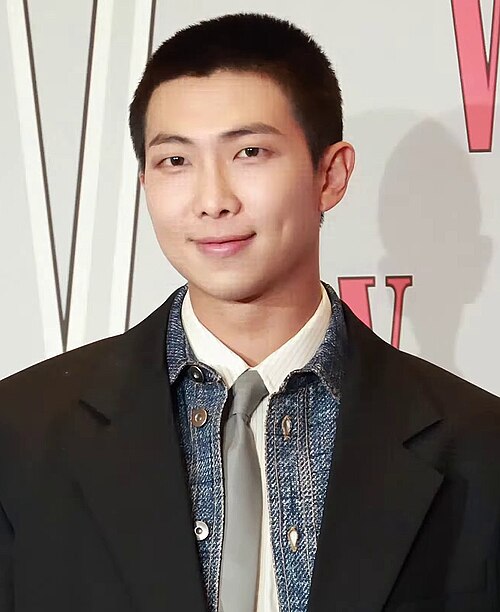
Kim Nam-joon was the underground rapper around whom Big Hit began assembling BTS, then became the lyricist and leader expected to explain seven people to the world. His solo work is what happens when the spokesman stops translating everybody else and starts documenting his own uncertainty.
Before BTS: poetry, hip-hop and Runch Randa
Nam-joon grew up in Ilsan and was academically gifted long before anybody put him in front of a stadium. He has spoken about scoring in the top tier of Korea’s university entrance preparation tests and about an IQ reported as 148. Those numbers became fandom trivia, but they can distract from the more useful fact: he liked language. He wrote poetry, paid attention to how words sounded, and began turning that instinct into lyrics after discovering hip-hop.
As a teenager he entered Korea’s underground hip-hop scene under the name Runch Randa. He recorded independently, performed in amateur circles, and worked around other young rappers who later became known in their own right. That history matters because RM did not arrive at Big Hit as a singer who was assigned a rap position. He arrived as a rapper and writer. Producer Sleepy of Untouchable heard him, passed his contact to producer Pdogg, and the connection eventually led him to Bang Si-hyuk.
RM joined Big Hit in 2010 and became the first member of the lineup that turned into BTS. The company’s early plan leaned much closer to a hip-hop crew than the idol group that debuted in 2013. Lineups changed. Trainees left. The concept changed with them. RM stayed, and the group was gradually constructed around the musical core of RM, SUGA and j-hope before the vocal members completed the seven.
The leader job was never just translating
RM is often introduced to Western audiences as “the member who learned English from Friends.” He did use the sitcom as one of his learning tools, first with Korean subtitles, then English subtitles, then without them. It is a charming story. It is not his entire leadership résumé.
Inside BTS, RM became the person most often responsible for explaining the group’s thinking in interviews, award speeches and meetings. He translated language, but he also translated seven personalities. He helped organize conversations, absorbed pressure when the group entered unfamiliar markets, and spoke publicly when the members needed one voice. He delivered BTS’s 2018 United Nations speech launching the “Love Myself” message and returned with the group for later UN appearances. His “Speak Yourself” line became more than a slogan because it connected the group’s album narrative to a public argument about self-acceptance.
Leadership did not make him infallible. Early lyrics and borrowed Black American hip-hop styling drew criticism. RM has acknowledged mistakes, discussed learning from people who challenged him, and changed how he approached language. That development is part of the biography. Erasing the missteps produces a saint card. Treating the early work as the whole person ignores more than a decade of visible growth.
The lyricist inside BTS
RM has hundreds of registered songwriting credits through the Korea Music Copyright Association. Numbers vary as new work is registered, so a static total goes stale quickly. What does not change is his role as one of BTS’s central writers. He has written rap verses, Korean adaptations, hooks, full songs and material for other artists. Before BTS debuted, he also contributed to GLAM’s “Party (XXO).”
His fingerprints run through BTS songs such as “No More Dream,” “N.O,” “Danger,” “I Need U,” “Run,” “Spring Day,” “DNA,” “Fake Love,” “Black Swan,” “ON,” “Life Goes On” and much of the group’s 2026 return album ARIRANG. That list is not meant to pretend he wrote every word alone. BTS records often use multiple writers and producers. RM’s importance is in the recurring perspective: youth under pressure, the instability of identity, the strange cost of success, love that does not magically cure self-hatred, and the question of what a Korean artist owes the world after becoming globally famous.
He is especially good at internal rhymes, double meanings and wordplay that do not travel neatly through subtitles. This is why translations of his lyrics can look simpler than the Korean actually is. Fans routinely build annotation threads because a line may be using a Korean homophone, an English phrase, a literary reference and a callback to an older BTS song at the same time.
From Rap Monster to RM
He debuted as Rap Monster, a name that came from a song he had written as a trainee. By 2017, it no longer fit how he saw himself or the music he wanted to make. He formally changed his stage name to RM. The initials were deliberately left open enough to hold more than one interpretation, including “Real Me.” It marked the end of a name that had become both a brand and a joke people used to flatten him into one aggressive rap persona.
The years the short bios keep skipping
2007–2010: Runch Randa, recordings and the audition he almost lost
RM began rapping in local amateur circles while still in middle school and made an early self-recording with Cool Edit, later known as Adobe Audition. He performed at his first concert in 2008 and released work as Runch Randa, including collaborations in the same broad underground generation as Zico. In 2009 he passed the first round of a Big Deal Records audition, then failed the next round after forgetting his lyrics. The failure did not end the path. Sleepy exchanged contact information with him, later recommended him to Pdogg, and in 2010 encouraged him to audition for Bang Si-hyuk.
Bang offered the sixteen-year-old a place immediately. RM accepted before telling his parents. Big Hit’s original plan centered much more directly on hip-hop, and the lineup shifted repeatedly before BTS became seven. During the trainee years RM appeared on pre-debut BTS tracks, trained with SUGA and j-hope, and wrote for GLAM. “Party (XXO),” which he helped write, was unusually direct for its period in presenting love without restricting it to heterosexual couples.
2013–2014: the debut voice and the first solo intros
RM debuted with BTS on June 13, 2013. “Intro: O!RUL8,2?” and “Intro: What Am I to You?” established a pattern the group kept using: album introductions in which one member frames the emotional question before the full record begins. “What Am I to You?” starts like a romantic confession and curdles into anger, mirroring the Dark & Wild album’s more volatile idea of love.
The early era also put BTS and RM under scrutiny from Korean hip-hop audiences who considered idol rap inauthentic. RM’s underground background did not exempt him. The tension fed his first mixtape and public defensiveness, but it also forced him to decide whether he wanted approval from a scene that had already defined his idol status as failure.
2014–2016: Warren G, Problematic Men and the first mixtape
During American Hustle Life, RM formed a working relationship with Warren G. Their 2015 collaboration “P.D.D” arrived just before the RM mixtape. The tape took roughly four or five months to build around BTS schedules and collected anger, ambition and identity arguments that had accumulated since debut. Spin later included it among its fifty best hip-hop albums of 2015. RM himself has been less romantic about it, calling parts immature and acknowledging how much rage controlled the writing.
He appeared on MFBTY’s “Bucku Bucku,” Primary’s “U,” Yankie’s “ProMeTheUs” and the Korean soundtrack release “Fantastic” for Marvel’s Fantastic Four. He also became a regular cast member on Problematic Men, where celebrities solved puzzles and discussed how they thought. He left after twenty-two episodes because BTS touring made the schedule impossible. In 2016 he co-produced Homme’s “Dilemma” with Bang Si-hyuk.
2017–2021: collaboration became a network, not a trophy shelf
“Change” with Wale grew from an online connection and compared social frustration in the United States and South Korea. RM then worked with Gaeko on “Gajah” and appeared on Fall Out Boy’s “Champion” remix, which made him the first K-pop artist to chart on Billboard’s Rock Digital Songs chart. “Timeless” with Tiger JK mattered for a different reason. Rather than use the verse to praise himself, RM wrote about the history and survival attached to the Drunken Tiger name.
mono. followed in 2018 and became the first release by a Korean artist to top Billboard’s Emerging Artists chart. Honne produced “seoul” after discovering that RM had recommended their music. Later work included Honne and BEKA’s “Crying Over You,” Lil Nas X’s “Seoul Town Road,” Younha’s “Winter Flower,” and eAeon’s “Don’t.” Each collaboration entered a different scene instead of dragging every guest into the same BTS-shaped arrangement.
2022–2024: Chapter 2 did not mean vacation
During BTS’s 2022 anniversary dinner, RM spoke openly about feeling that the group had lost room to develop individual stories. Headlines quickly misrepresented the discussion as a breakup or indefinite hiatus. The actual shift created space for seven solo careers while military service approached. RM appeared on Balming Tiger’s “SEXY NUKIM,” then released Indigo in December.
In 2023 he featured on So!YoON!’s “Smoke Sprite” and Colde’s “Don’t Ever Say Love Me.” He became Bottega Veneta’s first celebrity brand ambassador. His second studio album, Right Place, Wrong Person, arrived during enlistment in May 2024 and debuted at No. 5 on the Billboard 200 with 54,000 album-equivalent units, his largest US opening week at the time. Megan Thee Stallion’s “Neva Play” later gave him a No. 36 Hot 100 entry, his highest as a soloist. The documentary RM: Right People, Wrong Place premiered at the Busan International Film Festival before receiving a global theatrical release.
2025–present: discharge, art work and BTS again
After completing military service, RM became a Samsung Art TV ambassador and participated in an Art Basel talk. Plans for RM x SFMOMA placed works from his personal collection in dialogue with the museum’s holdings for an exhibition scheduled across 2026 and 2027. He also became involved as an investor in the art platform Artue. These are not random celebrity side jobs. They extend years of museum visits, donations, collecting and advocacy for Korean modern art.
He then returned to full-group BTS work. The comeback did not erase the solo albums. It made clearer what each member brought back. RM returned as a leader with a much larger vocabulary of alternative music, visual art and institutional culture than the trainee who once believed he had to defend his existence in every verse.
The solo discography is an autobiography in three temperatures
RM (2015)
His first mixtape is angry, hungry and defensive. It samples and reworks hip-hop tracks while RM argues for his legitimacy against idol prejudice, underground rappers who saw him as a sellout, and his own fear that they might be right. “Do You,” “Awakening,” “Monster” and “Joke” are not polite introductions. They are a young rapper trying to out-rap the room before the room can dismiss him.
mono. (2018)
mono. sounds like walking alone through Seoul after the trains have thinned out. RM called it a playlist rather than an album. “tokyo,” “seoul,” “moonchild,” “badbye,” “uhgood,” “everythingoes” and “forever rain” move through loneliness without turning it into a motivational poster. “everythingoes,” featuring Nell, treats pain as weather that eventually passes. “forever rain” imagines rain giving him permission to slow down while everyone else lowers their head.
Indigo (2022)
Indigo is the archive of his twenties. The guest list alone shows how widely he listens: Erykah Badu, Anderson .Paak, Tablo, Kim Sawol, Paul Blanco, Mahalia, Colde, Youjeen and Park Ji-yoon. “Yun,” named for Korean painter Yun Hyong-keun, asks whether one should become a better human before trying to make important art. “Still Life” refuses to let a museum term imply death. “Wild Flower” replaces fireworks with the quieter image of a flower field and lets Youjeen’s voice tear open the chorus. The album is thoughtful without pretending thought cures exhaustion.
Right Place, Wrong Person (2024)
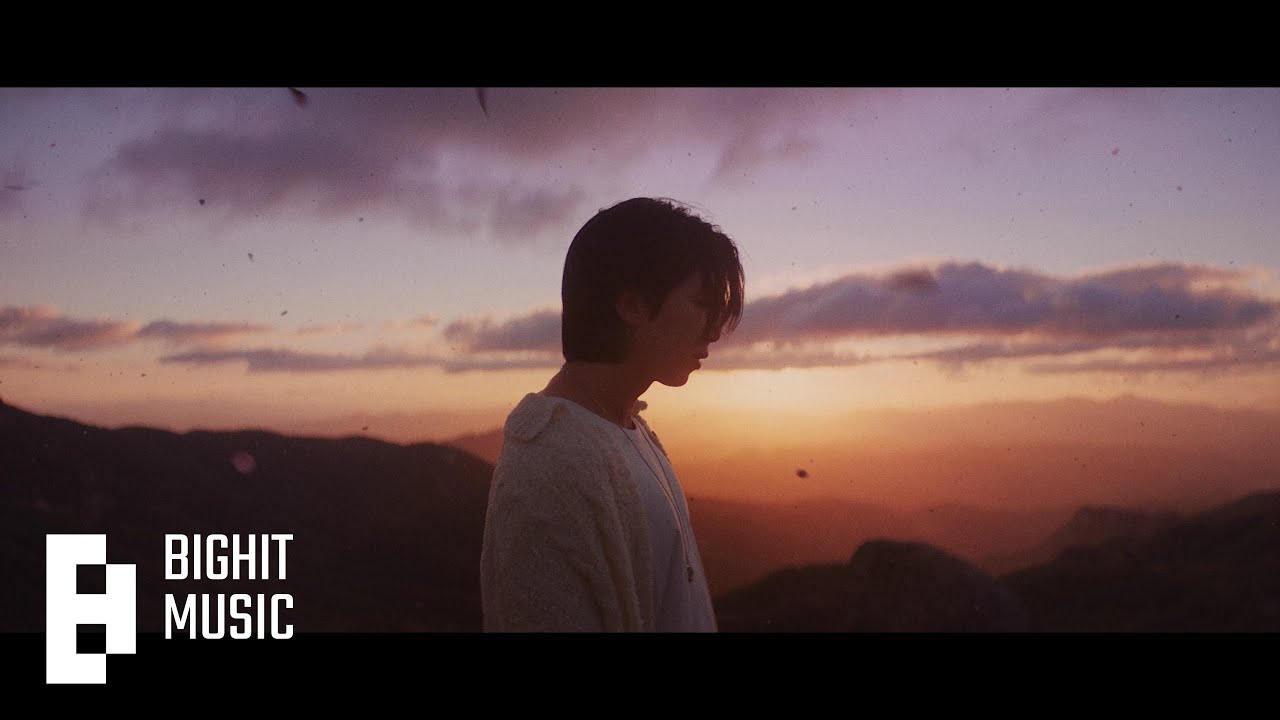
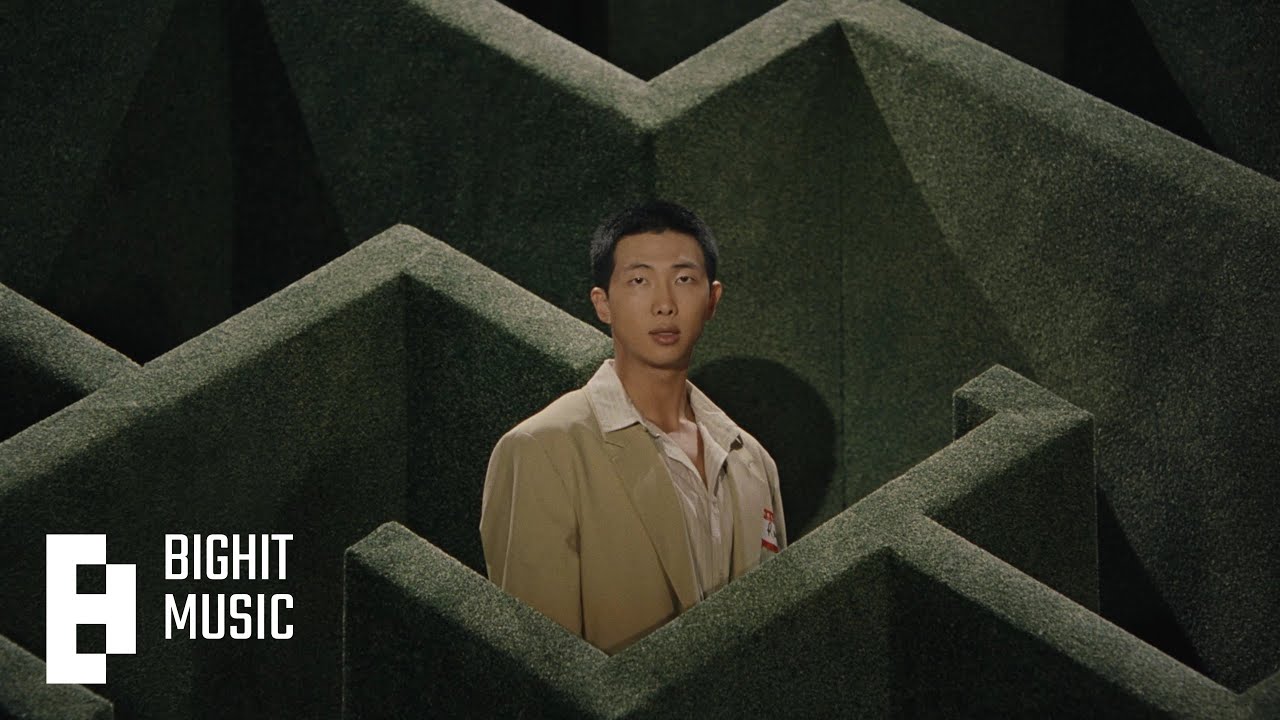
RM’s second studio album is stranger, rougher and less interested in behaving. It crosses alternative hip-hop, jazz, indie, psychedelic rock and electronic textures. “Come back to me” stretches into an uneasy meditation on relationships and identity. “LOST!” turns confusion into a bright, boxed-in office maze. “Groin” is blunt irritation with a grin. “Domodachi” with Little Simz has the nervous energy of musicians deliberately refusing a clean lane. The album’s documentary, RM: Right People, Wrong Place, showed the making of the record and the emotional mess around it rather than packaging the process as effortless genius.
Collaborations that explain his range
RM’s features are a second map of his taste. He worked with Wale on “Change,” Fall Out Boy on a remix of “Champion,” Lil Nas X on “Seoul Town Road,” Younha on “Winter Flower,” eAeon on “Don’t,” Balming Tiger on “SEXY NUKIM,” So!YoON! on “Smoke Sprite,” and Colde on “Don’t Ever Say Love Me.” Earlier collaborations include Primary, Gaeko, MFBTY and Warren G. The point is not international name collecting. He sounds different depending on the room, and he usually chooses collaborators who pull him away from the safest BTS expectations.
Art is not a cute side hobby
RM’s museum habit became so visible that Korean media began using the phrase “RM Tour” for the surge of visitors who followed his gallery and museum posts. He collects modern and contemporary art, with particular attention to Korean artists, and has used his platform to point global fans toward figures such as Yun Hyong-keun, Kim Whanki and Lee Ufan. He donated 100 million won to the National Museum of Modern and Contemporary Art Foundation to support the printing and distribution of art books.
He narrated an audio guide for Korean art at the Los Angeles County Museum of Art. He has also spoken about wanting to create a public space where people can see his collection rather than storing it as private celebrity wealth. A planned RM and SFMOMA exhibition placed works from his collection in dialogue with the museum’s holdings. For RM, visual art is another language for questions already sitting in his lyrics: identity, nation, memory, solitude and what survives a person.
Books, nature, bicycles and “Namjooning”
Fans use Namjooning for the kind of day associated with him: museums, bookstores, parks, cycling, looking at trees and moving slowly enough to notice something. The word is funny because RM is also famously destructive around small objects. He has been teased by the members for breaking things, losing passports and combining a philosopher’s inner life with the practical coordination of a baby giraffe.
He reads widely and has recommended fiction, poetry, essays, philosophy and art writing. Books connected to BTS lyrics or mentioned by RM have repeatedly received new attention from fans. He does not always endorse every argument in a book simply by showing it, which is worth saying because fandom recommendation lists sometimes turn a photographed cover into scripture.
Military service and return
RM enlisted on December 11, 2023, the same day as V. He served in the military band and played saxophone during V’s discharge welcome. He completed service on June 10, 2025. The moment was funny, emotional and very RM: the leader returned to cameras holding a saxophone while the group’s long military pause was finally collapsing toward its end.
After discharge, he returned to BTS preparations and to public conversations about the group’s future. He has been unusually candid about strain inside the group, including periods when the members discussed whether they could continue. That honesty is more useful than the usual “we are family and never struggle” idol script. BTS stayed together because the relationship was maintained, not because seven adults magically stopped having conflicting needs.
Work beyond the album credits
Brand and fashion file
RM became Bottega Veneta’s first celebrity ambassador in 2023 after years of wearing the house without turning every outfit into a billboard. The partnership made sense because his public style had already moved toward quiet tailoring, texture and clothes that looked lived in. He has also worked with Samsung through BTS and later through art-focused projects, including Samsung Art TV. The useful distinction is this: an endorsement belongs here when it connects to his work or public taste, not because a logo once appeared near his face.
Public service and giving
His donations form their own pattern. He supported music education for hearing-impaired students at Seoul Samsung School, helped the National Museum of Modern and Contemporary Art distribute art books, supported preservation and restoration of Korean cultural heritage through the Overseas Korean Cultural Heritage Foundation, and donated toward veteran identification work. The through-line is access: music education, books, objects and names that should not disappear because the public cannot reach them.
RaeRae coverage: the opinionated shelf
This comes before the statistics cabinet. CVM Sekai’s own RM and BTS Reacts, Rants and Tea belong here when they exist, because the point of the profile is to create a trail through the site-not to dump readers at a biography and hope they wander correctly.
Listen, order and watch without getting lost
The official artist and label destinations come first. Store availability changes by country, so these links lead to the current RM catalog rather than pretending one retailer works for everybody.
Panda Side Quest: build a Namjooning day
A proper RM side quest does not require expensive merch or a passport. Pick one museum room instead of trying to conquer the whole building. Read every wall label around one work. Walk somewhere with trees. Find a used bookstore. Take the long way home. Put on mono. if the sky looks personally offended, or Right Place, Wrong Person if your brain has opened fourteen tabs and none of them explain why you entered the room.
- Museum route: start with Korean modern artists RM has discussed or collected-Yun Hyong-keun, Kim Whanki, Lee Ufan and Park Soo-keun are useful doors.
- Reading route: choose poetry, an art essay or one novel from a recommendation list, then decide what you think before fandom turns the book into homework.
- Outside route: cycling, parks and quiet streets count. “Namjooning” is attention, not a luxury itinerary.
- Chaos clause: if you break a small household object while trying to become cultured, the side quest has become immersive.
Zodiac Side Quest: Virgo meets the Wood Dog
Western zodiac · Virgo
September 12 places RM under Virgo, an earth sign usually associated with analysis, language, craft, service and the exhausting urge to improve the thing one is standing inside. That stereotype fits the lyric editor, speech writer and leader who keeps revisiting what a word should mean. It also explains why “perfectionist” is not automatically a compliment: the same eye that catches a weak line can turn inward and refuse to stop grading the human who wrote it.
Chinese zodiac · Wood Dog
1994 is the year of the Wood Dog. Dog symbolism is commonly tied to loyalty, ethics, vigilance and protecting the group; the Wood element adds growth, cooperation and a stronger social conscience. Read playfully, that combination suits somebody whose public role mixes leadership with constant moral self-auditing. It does not mean the stars wrote BTS’s meeting notes. It means the metaphor is suspiciously on brand.
Fandom file
- Nicknames: Namjoon, Joon, Joonie, Leader, God of Destruction.
- BT21 character: KOYA, the sleepy blue koala-like character with removable ears.
- Favorite number: 1 has often appeared in older profiles.
- Food: He has spoken often about enjoying Korean food and has joked about his cooking limitations.
- Pets: His family dog Rap Mon, often called Monie, was named after his former stage name.
- Public image versus reality: The formal speaker at the UN is also the member who can lose an object while holding it. Both are real.
Discography map
Mixtapes and albums: RM (2015), mono. (2018), Indigo (2022), Right Place, Wrong Person (2024).
Essential solo entry points: “Do You,” “Joke,” “forever rain,” “moonchild,” “Wild Flower,” “Still Life,” “Closer,” “Come back to me,” “LOST!” and “Domodachi.”
BTS solo tracks: “Intro: What Am I to You,” “Reflection,” “Trivia 承: Love,” “Persona” and “Bicycle,” among others.
Film: RM: Right People, Wrong Place.
RaeRae take
RM is the member people call a genius until he starts asking what that word costs. His best work does not sound like a smart man showing us his vocabulary. It sounds like a smart man discovering vocabulary cannot keep him from being lonely, petty, exhausted, hopeful or hilariously unable to keep track of his passport.
Follow RM and keep digging
Instagram: @rkive
BTS on Weverse
Official BTS site
BTS group profile
RaeRae Reacts: music video reviews
Tea and official news with receipts
YouTube tracking history
Representative official solo videos across RM’s mixtape and album eras. CVM stores local thumbnails, current total views and daily history after snapshots on separate calendar days.
 2015Do YouOfficial music video · RMDaily+3.2KTotal views50.2M
 2018forever rainOfficial music video · mono.Daily+2.2KTotal views29.6M
 2022Wild FlowerOfficial music video · with youjeenDaily+45.8KTotal views135M
 2022Still LifeOfficial music video · with Anderson .PaakDaily+11.4KTotal views40.1M
 2024Come back to meOfficial music video · Right Place, Wrong PersonDaily+16KTotal views27M
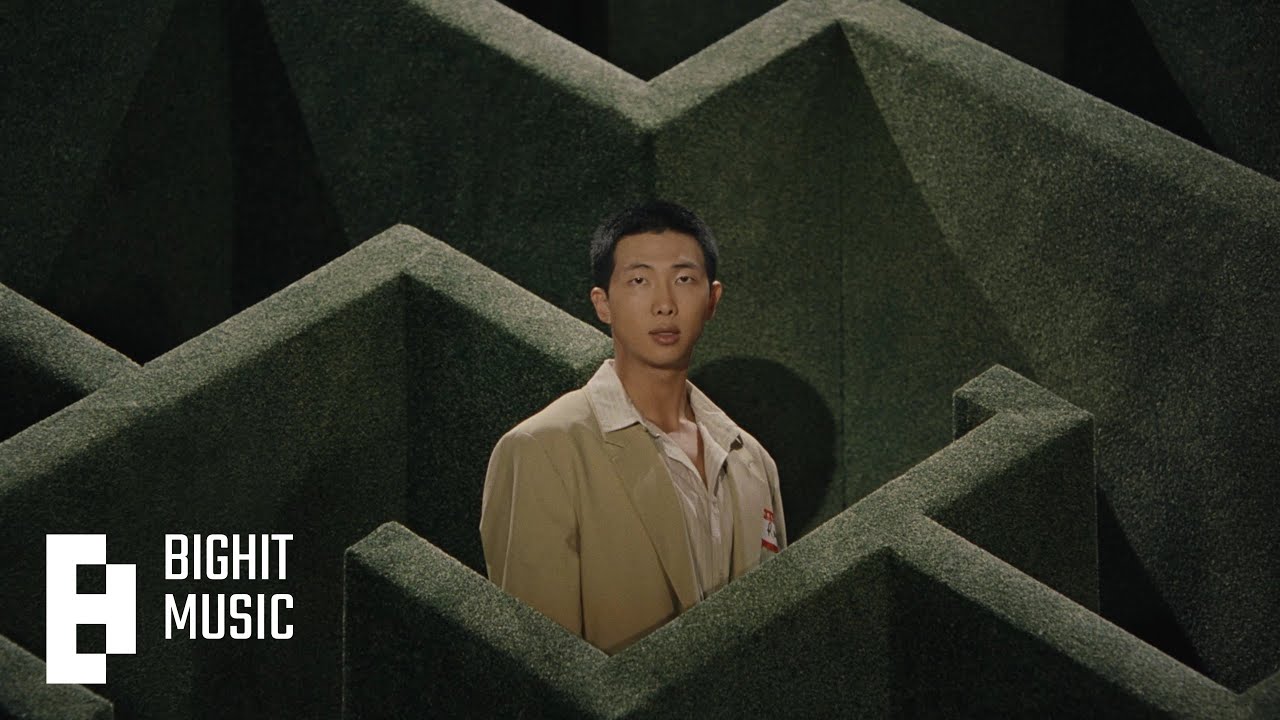 2024LOST!Official music video · Right Place, Wrong PersonDaily+6.8KTotal views19.3M
Sources
- BIGHIT MUSIC: RM discography
- Weverse: Indigo release information
- Weverse: Right Place, Wrong Person release notice
- Yonhap: RM’s second solo album and its themes
- Yonhap: RM and V complete military service
- Asia Business Daily: RM on his art collection and public exhibition hopes
- TIME: Indigo among the best K-pop albums of 2022