RAERAE REACTS
YET TO COME
BTS parked the furniture from their old music videos in a desert, looked directly at their own legend, and said the best part was still somewhere ahead.
“Yet to Come” is a retrospective that refuses to behave like a retirement speech. The song revisits the hunger, doubt, and promises that built BTS. The video brings back physical pieces of their history. Then both insist that memory is a place to visit, not a house where the group plans to die beautifully.
Artist: BTS
Album: Proof
Released: June 10, 2022
Genre: Alternative hip-hop and pop
Writers: Pdogg, RM, MAX, Dan Gleyzer, SUGA, and j-hope
MV director: Yong Seok Choi of Lumpens
What the song is actually saying
The title answers the question before the chorus does. Has BTS already reached its most beautiful moment? No. It is still coming.
That sounds simple until you remember the timing. BTS had collected records, stadiums, awards, diplomatic appearances, and a level of global scrutiny that made every comeback feel like a referendum on K-pop itself. Proof gathered their past into an anthology. A weaker title track could have listed trophies and asked us to clap.
Instead, the lyrics keep returning to the reason they started. The members question whether the praise and expectations have changed what they are chasing. They admit the past was beautiful. They also refuse the idea that success has completed them.
The line between confidence and exhaustion is the whole song. BTS know what they achieved. They also sound tired of being discussed as a collection of records instead of musicians who still want to make the next thing.
Song first: the quiet choice
The production is relaxed, almost stubbornly so. A warm beat, restrained synths, and a mellow melodic line create space for the words. This was released after “Dynamite,” “Butter,” and “Permission to Dance,” when the obvious commercial move would have been another enormous global-pop event. BTS chose a reflective mid-tempo song.
That choice disappointed people who wanted a comeback built to detonate onstage. I get it. The chorus does not grab you by the collar. It settles in slowly. The first listen can feel lighter than the occasion deserves.
The rap verses give it weight. RM, SUGA, and j-hope write from the position of people who have already reached the dream and discovered that achievement does not end insecurity. The vocal line keeps the hook tender rather than triumphant. Jin’s clarity, Jimin’s lift, V’s lower color, and Jung Kook’s smooth center make the chorus feel like reassurance instead of branding.
The counterargument
“Yet to Come” is not the strongest standalone single in the BTS catalog. Remove the history and the video references, and the arrangement can feel too polite. It does not have the dramatic tension of “Black Swan,” the propulsion of “Run,” or the immediate pop instinct of “Butter.”
That is a real limitation. Context should deepen a song, not perform emergency construction around it.
Still, the modest scale is part of the argument. BTS are singing about releasing themselves from the demand to produce another career peak on command. Making the song louder just to prove its importance would contradict the point.
Watch the music video
What changed every time I replayed it
First intake: I wanted a bigger chorus. The comeback carried anthology-album weight, and the song arrived with indoor-voice confidence. My first reaction was basically, “That is lovely. Where did you hide the detonation button?”
Second intake: The rap line changed the center of gravity. RM, SUGA, and j-hope do not rap like men begging history to approve them. They sound suspicious of the way success keeps moving the finish line, then charging admission to watch them chase it.
Third intake: The video made the restraint feel deliberate. Every famous prop offers an easy nostalgia hit, but the members keep walking past the evidence. The archive is visible without becoming the destination.
Later replay: Knowing that a real pause followed the song makes the final bus ride hurt differently. The members were not teasing a cute next era with a normal promotional calendar. They were closing one operational chapter while refusing to call the group finished.
Then the video opens the archive
The desert is filled with objects from earlier BTS videos. These are not random props placed for ARMY to scream at in the comments. They turn the group’s videography into a physical landscape.
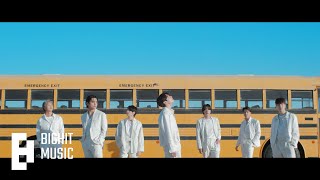
The school bus recalls “No More Dream.” The carousel connects to “Spring Day.” The angel statue brings back “Blood Sweat & Tears.” The piano points toward “First Love.” The shipping container evokes “Run.” The train car, the chairs, the sculpture, and other pieces appear like ruins from a civilization the members built themselves.
The setting matters. A museum preserves objects indoors and tells visitors what they mean. A desert exposes everything to time. BTS place their symbols in open space, walk among them, and keep moving.
Easter eggs worth screaming about
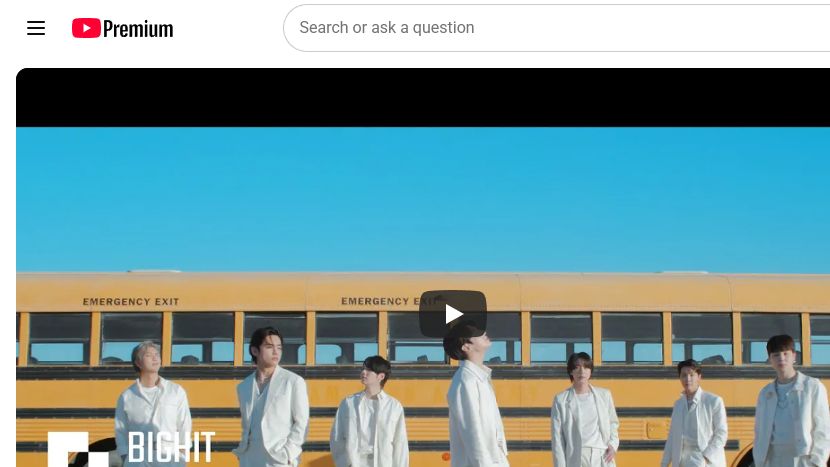
- The yellow school bus: A direct return to the debut-era vehicle in “No More Dream.” The group ends the video inside it, older but still traveling together.
- The carousel: It recalls “Spring Day,” one of the group’s clearest songs about absence, waiting, and reunion.
- The angel statue: “Blood Sweat & Tears” used classical art, temptation, and the loss of innocence. Here, the statue becomes part of the archive.
- The piano: SUGA’s “First Love” treated the instrument as memory, refuge, and witness.
- The number seven: The framing repeatedly protects the group as seven individuals sharing one horizon.
- The ending bus ride: They do not remain beside the artifacts. They leave together.
Why the desert works
The lack of a crowd removes the machinery of fame. No stadium. No award show. No press line. Just the members, their history, and an empty horizon.
That visual reset makes the song’s question believable. If every trophy vanished, what would remain? Seven people, the music they made, and the decision to keep going.
What I still do not like
The chorus remains safer than the idea deserves. BTS are questioning whether global success trapped them inside everybody else’s definition of their peak, but the melody rarely sounds cornered. The production protects the listener from the anxiety that the lyrics describe. One rough vocal edge, harder rhythmic turn, or bridge that briefly lost its balance could have made the conflict audible instead of leaving the rap verses to carry most of it.
I also understand why some listeners experienced the release as emotionally prepackaged. An anthology, a decade of callbacks, a title about the future, and a desert full of famous props can look like nostalgia assembled by committee. The video knows exactly which objects will make ARMY pause, screenshot, and start comparing frames. Sentiment and marketing are roommates here. Pretending otherwise would be childish.
That does not automatically make the emotion fake. Pop production always organizes feeling. Lighting tells us where to look. Editing tells us when to remember. A chorus tells thousands of strangers when to sing the same sentence. The honest question is whether the machinery serves an idea that belongs to the artists or merely squeezes the audience’s memory for engagement. “Yet to Come” earns my trust because the members walk away from the props. The video uses nostalgia, then refuses nostalgia’s demand to stay.
The song still lands below the strongest BTS title tracks for me. I admire the argument more than I crave the arrangement. That distinction matters in a React. Cultural meaning cannot turn a cautious melody into a dangerous one, and an excellent video should not receive custody of every musical weakness. The track is thoughtful. The audiovisual package is better. Both statements can sit at the same table without fighting over the bill.
The pressure hidden inside “the best”
Calling something the best sounds positive until a career has to live under it. Fans, media, awards shows, and markets love peaks because peaks create clean stories. This was the breakthrough. That was the biggest stadium. Here is the record nobody else touched. The problem is that a living artist cannot remain a peak. A person has to come down, eat dinner, make another decision, and risk producing something the public likes less.
BTS had become a measurement tool for K-pop by 2022. News coverage often used the group to explain the entire Korean music industry, Korean soft power, Asian representation, youth culture, fandom organization, and global chart access. Seven musicians were expected to carry a nation, an industry, and everybody’s argument about legitimacy. “Yet to Come” pushes back without delivering a lecture. The members recognize the achievement and ask whether achievement gets to own the rest of their lives.
That is where the song connects to a Confucian tension I know too well. Collective responsibility can create loyalty, discipline, and care. It can also turn success into a debt that never closes. Once a person becomes useful to the group, family, company, or country, every private need starts looking selfish. BTS do not reject the collective. They reject the idea that serving it requires becoming a permanent monument.
The Buddhist reading sits beside that. Fame encourages attachment to a fixed identity: BTS as record breakers, BTS as national representatives, BTS as seven people who must always appear the same. The video places those identities in the sand, where time can touch them. Impermanence is not failure here. It is the condition that makes another chapter possible.
The desert is doing more than looking expensive
A desert strips away ordinary context. Props that once belonged to crowded sets now stand alone, which makes them easier to recognize and stranger to look at. The yellow bus no longer belongs only to “No More Dream.” The carousel no longer lives only inside the grief of “Spring Day.” Each object has become a fandom landmark, loaded with memories created after the original shoot.
That transformation matters because symbols do not stay under a director’s control. Artists release an image, fans connect it to their own lives, and years of discussion build another layer around it. The “Yet to Come” video gathers that shared archive without pretending every interpretation is official. Some references are direct. Some connections are fandom readings. The difference should remain visible, because an Easter egg stops being fun when fans have to lie about the receipt.
The objects also expose the machinery behind nostalgia. A prop can make millions of people feel fourteen again, but it is still painted material arranged by a production crew. Showing the archive in open daylight lets the memory remain emotional without pretending it fell from heaven. Somebody designed the bus, moved the statue, framed the shot, dressed the members, controlled the light, and edited the return. Sentiment required labor.
The bus ending is a group decision
The final bus matters because BTS leave the desert together. They do not burn the archive, which would turn growth into rejection. They do not sit beside the props forever, which would turn respect into captivity. They board a vehicle tied to the beginning and use it for movement.
That is a cleaner image of continuity than pretending nothing changed. Military service, solo albums, private growth, exhaustion, and industry pressure were not small interruptions between identical group eras. The members had separate work to do. A team can survive separation, but it cannot survive by punishing people for changing while they are apart.
My military brain reads the bus as redeployment rather than graduation. The mission changes, the roster carries new experience, and everybody has to learn the team again. History helps because shared memory gives people a language for trust. History becomes dangerous when rank, habit, or nostalgia prevents the team from adapting to the conditions in front of it.
“Yet to Come” does not prove the next chapter will be better. Pop songs cannot guarantee that, and neither can fandom faith. The song makes a narrower claim: BTS still want a future that is not limited to repeating their most profitable past. That is less magical than destiny. It is also more human.
RaeRae verdict
“Yet to Come” is a thoughtful song attached to an excellent video. The track alone sometimes feels too cautious. The complete audiovisual piece is smarter. Every familiar object tempts BTS to stop and become a monument. They keep walking.
The best moment is not guaranteed. It is not a prize waiting politely in the future. It is the reason to keep making another album, another stage, another ridiculous group chat decision. BTS understood that a career becomes dead the second everybody agrees its greatest chapter is already over.