
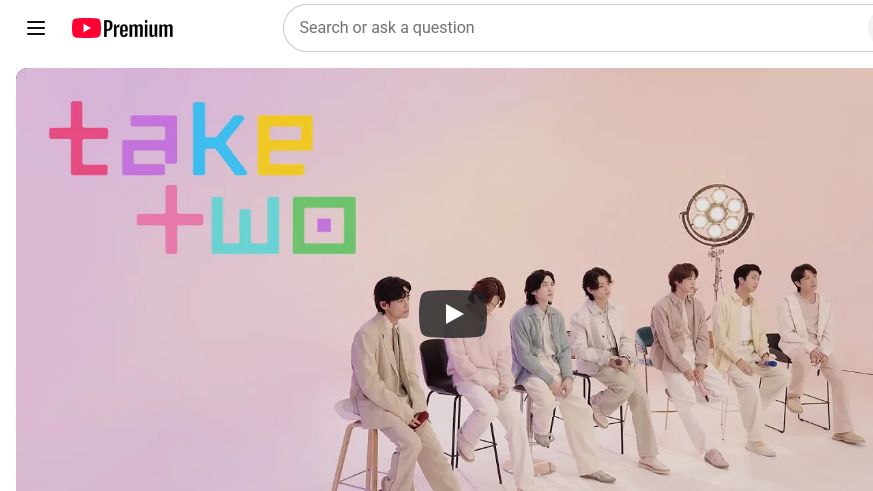
BTS Take Two Live Clip React: Ten Years, Seven Voices, One Promise
Take Two turns an anniversary into a conversation between BTS and ARMY. This exact live clip matters because microphones, breath, and seven familiar voices carry the promise without a giant concept set doing the crying for them.
Release file
Released: June 13, 2023
Runtime: 04:05
Artist / channel: BTS / official upload
Exact-file focus: Official 2023 BTS Festa live clip for Take Two.

BTS looked at ten years with ARMY, called it the first take, and left the porch light on before a separation nobody could pretend was small.
Overall vibe: gratitude with separation already in the room
Anniversary songs are dangerous. Gratitude can become corporate frosting: thank you for ten years, here is a montage, please purchase the commemorative object near the exit. “Take Two” works because BTS released it while the future was visibly uncertain. Military service and solo schedules were pulling the members into different rooms. Nobody could honestly promise that the next chapter would look like the first.
So the song makes a smaller, heavier promise. The story is still moving. The people inside it will change. The relationship does not need to pretend the separation is painless in order to survive it.
What changed every time I replayed it
First intake: The acoustic warmth feels comforting, but the timing makes the comfort ache. BTS released this while separation had already moved from rumor to calendar.
Second intake: The title stops sounding like a cute film metaphor. A second take means the first one ended, the people changed, and everybody still chose to step back in front of the camera.
Third intake: The rap verses keep the gratitude from turning into fan-service frosting. RM, SUGA and j-hope write from inside the uncertainty instead of promising a painless forever.
Later replay: The live clip becomes the real hook. Seven people sharing one frame looks ordinary until history makes ordinary access precious.
The title does almost too much work
A “take two” is another attempt after the camera keeps rolling. BTS frame their first decade as take one and whatever follows as the next shot. That metaphor could have turned into motivational poster mush. It stays human because the lyrics remember fear, uncertainty, and the fact that continuity requires people to choose one another again.
The title also resists the language of endings. Ten years are not the final cut. The members are not walking into a museum display labeled Legacy Completed. They are acknowledging an edit point while insisting the project is alive.
ARMY appears as youth, witness, memory, and the person waiting on the other side of the song. The address is romantic in the broad BTS sense without pretending an artist-fan relationship is ordinary private love. It is collective, mediated, imperfect, and still emotionally real.
Song first: why the restraint works
Acoustic guitar gives the track an open floor. Percussion keeps it moving without demanding a stadium explosion. The production is polished enough to avoid campfire-demo preciousness, but it never shows up wearing shoes inside the house.
The vocal line carries distinct emotional colors. Jin gives the melody a clear ache. Jimin brings fragility without losing control. V’s lower register adds warmth. Jung Kook keeps the phrasing fluid and conversational. None of them need to shout the meaning into submission.
The rap line enters from inside the memory. RM, SUGA, and j-hope have writing credits, and their verses change the pressure rather than bulldozing the acoustic frame. They bring history, self-awareness, and just enough roughness to keep the song from floating away in anniversary glitter.
What I love
The rap verses, the seven distinct voices, the decision to keep the chorus gentle, and the refusal to promise that take two will be a perfect copy of take one.
What gets side-eye
The chord progression is familiar and the arrangement arrives with rounded corners. I would not use this as evidence of BTS’s wildest musical imagination. Context carries part of the weight.
Lyrics and meaning: forever is easy until people leave the room
The recurring idea of walking together matters more than any grand forever claim. “Forever” is cheap when everybody is standing under the same stage lights. “Take Two” arrived as the group’s shared schedule was thinning. That timing turns a familiar promise into a risk.
The song does not say nothing will change. It asks listeners to believe change does not automatically erase connection. That is sweeter and more believable than reunion propaganda. Fans were not asked to freeze themselves during service. The members did not freeze either. Take two would require different people recognizing the same relationship.
There is also humility in calling the first decade a take rather than a finished masterpiece. BTS can acknowledge the awards, records, cultural impact, and stadiums without turning the anniversary into a coronation. The second chapter remains unfilmed.
The live clip: seven people sharing one frame became the plot
The clip is filmed like a memory already in progress. The members sit together outdoors in soft light while the landscape refuses to compete with them. There is no villain behind a lamp, no universe to decode, and no choreography trying to prove they can still synchronize. Presence is the plot.
That choice became more meaningful because fans knew group activities were changing. Watching all seven share one frame turned the simplest visual fact into the hook. The camera favors faces, medium shots, listening, little glances, and the ease of people who have spent years learning one another’s timing.
Nobody performs loneliness alone in a warehouse. Thank you. A fan song about continuing together did not need seven separate emotional rooms edited into artificial unity. The clip lets the members look at each other and breathe through the same arrangement.
Easter eggs without turning every blade of grass into lore
The largest symbol is the title: ten years become take one, and the unknown future becomes take two. The outdoor setting echoes lyrical ideas of roads, sky, seasons, and movement. Most importantly, the seven-member frame answers the coming separation without pretending it is not coming.
The lack of spectacle is also a callback. BTS had already proven the stadium part. Choosing closeness for the anniversary makes the relationship feel personal without fabricating privacy. A full camera crew was obviously present; intimacy does not require lying about production.
Fans may identify smaller references in styling, gestures, or location details. Unless the official team confirms them, those remain delightful theories. The emotional architecture is already strong enough without assigning a secret era to every tree.
Credits and the people behind the letter
RM, SUGA, and j-hope are among the credited writers, alongside longtime BTS collaborators Pdogg, EL CAPITXN, and GHSTLOOP. That combination matters. The fan address comes partly from members who lived the relationship and partly from producers who understand how the group’s voices have carried memory across albums.
The production does not chase novelty because novelty is not the assignment. Its challenge is harder in a different way: leave enough room for ten years of listener memory without collapsing into generic sentiment. The guitar and quiet rhythm become a frame rather than the main artwork.
The counterargument: context is doing labor
If you play “Take Two” for someone who has no relationship with BTS, they may hear a pretty acoustic pop song with a safe arrangement. That criticism is fair. Music cannot demand a decade of homework before it deserves evaluation.
But context is not a cheat code when the song was explicitly created as an anniversary communication. A birthday letter means less to a stranger because it was not written to them. The question is whether the craft creates space for the intended emotional history. Here, it does.
I still wanted one production decision that felt less polite, a cracked texture, a longer exposed vocal, a moment where the second take visibly jammed. The rap line supplies some friction, but the arrangement remains careful enough to avoid frightening the furniture.
The promise looks different after the reunion
Listening in 2026 changes the song because the second take is no longer an abstract comfort fans had to accept on faith. The members returned with solo careers, military experiences, changed habits, and a much clearer sense of what each person can carry alone. The group did not come back by erasing those years. They came back with seven separate lives still visible.
That makes the song less useful as a prediction and more useful as a record of intent. In 2023, BTS could not prove exactly how the reunion would feel. They could only tell ARMY what they wanted to protect. The soft arrangement fits that uncertainty. A louder promise would have sounded like management announcing a schedule. “Take Two” sounds like the members admitting that they want another chapter even though nobody has read the script.
The later comeback also exposes the smartest part of the title. A second take is not a rewind. Actors return to their marks with knowledge from the first attempt, then change the timing. BTS did not need to become the 2019 or 2022 version of themselves to keep the group real. They needed enough trust to let individual growth enter the shared frame without treating difference like betrayal.
ARMY, loyalty, and the part fandom sometimes makes weird
The song thanks fans, but gratitude does not sign away seven adults’ boundaries. K-pop often sells closeness through constant access, private-message language, livestreams, and promises that sound romantic even when millions of people receive them at once. “Take Two” uses intimate language too. The difference is that the song keeps returning to a shared road instead of ownership. BTS ask listeners to walk with them. They do not ask fans to freeze their own lives until the members return.
That distinction matters because absence can make fandom anxious and controlling. People start measuring loyalty through streaming totals, purchasing, perfect defense, or whether another fan reacted with the approved amount of grief. A thank-you song should not become a performance evaluation for the audience. The relationship has value because people chose it, not because anybody completed a quota.
My military brain understands the practical side of this better than the romantic language. Teams separate. People change assignments, carry experiences nobody else shared, and return with different rhythms. You do not rebuild trust by demanding that everybody behave exactly as they did before leaving. You rebuild it through repetition, patience, honest handoffs, and the willingness to learn the team again. “Take Two” turns that work into a gentle pop song, but the work is still there.
The Buddhist lens is quieter. Attachment becomes painful when love turns into a demand that nothing change. “Take Two” allows change and connection to exist together. The first decade ended. The members moved through lives that fans could witness only in pieces. The second chapter does not cancel impermanence. It accepts impermanence and asks whether care can survive it.
That is why the song holds up better than a grand forever anthem. Forever usually means nobody has tested the promise yet. BTS released “Take Two” when the test had already started.
My actual first-reaction file
The moment I leaned in
The rap verses. They stop the song from becoming a greeting card and remind us the first decade included fear, exhaustion, and choices, not only highlight reels.
The thing that got me later
All seven in one frame. Nothing technically dramatic happens, which is exactly why the image hurt when the schedule ahead was separation.
“Take Two” is not BTS’s most adventurous song. It may be one of their more honest anniversary songs. Gratitude becomes unbearably generic unless somebody admits what the gratitude cost. This track admits the first take was frightening and the next take is uncertain.
They do not promise that take two will reproduce take one. They promise to keep making it with the people who stayed. That is less cinematic than forever and far more credible.
Final verdict
“Take Two” is a handwritten fan letter that happened to chart. The arrangement is safe, but the timing, member writing, seven-member live clip, and refusal to pretend the future was guaranteed give the softness real weight.
RaeRae rating: 8.8/10. Emotional damage delivered with an indoor voice: 10/10.
Receipts and official links
Keep falling through the panda pile: BTS profile · “Body to Body” reaction · RaeRae Reacts
RaeRae verdict
The exact file earns its place because BTS keep seven individual roles audible inside one shared argument. The production supplies scale, but the members supply the reason to replay it.