
SPILL THE TEA
Pietra Bertolazzi Mocked BTS, ARMY Mobilized, and Then Everybody Reached for the Legal Vocabulary
A Brazilian influencer watched BTS perform during the 2026 World Cup final, decided the urgent cultural emergency was men wearing makeup and dancing, and discovered that insulting the world’s most organized fandom is less a social-media post than pressing a large purple button labeled DO NOT PRESS.
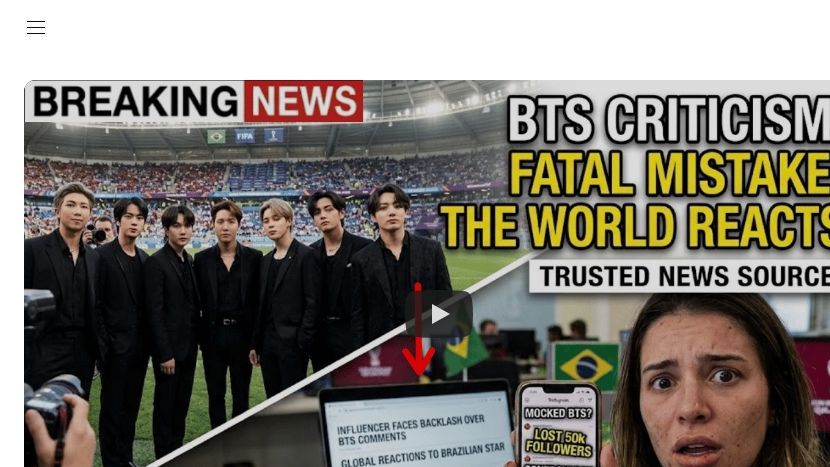
Who said it
Pietra Bertolazzi
Brazilian influencer and commentator
The words people screenshotted
“homens totalmente afeminados, vaidosos e cheios de caras e bocas”
In plain English: she described the BTS members as totally effeminate, vain, and full of affected facial expressions. She also called the sight a source of secondhand embarrassment. This was not fandom telephone. It came from her public account, was screenshotted, and was quoted by multiple Brazilian outlets.
The quick pour
What started it: Pietra Bertolazzi criticized BTS after the group’s July 19 World Cup final performance, calling the members “totally effeminate” and saying their expressions caused secondhand embarrassment.
What happened next: Fans condemned the remarks as homophobic and xenophobic, contacted associated brands, circulated old clips, and organized reporting campaigns.
What Bertolazzi later claimed: She said she faced threats, stalking, data exposure, false identities, and other coordinated attacks. She said evidence was being sent to São Paulo cybercrime authorities.
What remains unverified publicly: The full scope of those alleged crimes, the identities of the people involved, and the outcome of any investigation.
Watch the actual performance: Full 2026 World Cup final halftime show on YouTubeDaily+10KTotal views3.4M.
Watch the full context: My RaeRae Reacts review of the entire World Cup halftime show, including Madonna, the Muppets, BTS, Shakira, the education message, and the actual performance Bertolazzi reduced to makeup.
They performed for free, and the performance was tied to children’s education
The halftime show supported the FIFA Global Citizen Education Fund, which is working to expand access to education and football for children. FIFA committed $1 from every 2026 World Cup ticket sold to the fund and reported that more than $30 million had already been raised during the campaign.
Global Citizen also confirmed that the headliners did not receive performance fees. BTS donated its time. At their level, that means turning down the kind of appearance fee most artists never reach, rehearsing for an eleven-minute global production, flying into the loudest sporting event on the planet, and using that attention to help a fund for children.
So yes, criticism of the actual performance is fair. Nobody has to like “Dynamite.” Nobody has to enjoy the styling. But Bertolazzi did not say the mix was weak or the staging felt rushed. She looked at seven men giving an unpaid charity performance built around unity and education, then decided their makeup and femininity were the emergency. That is why her post landed with such a thud.
Receipts for the unpaid appearance
Payment: Global Citizen confirmed the performers donated their time and received no performance fees. E! News reported the confirmation, while El País quoted Global Citizen’s confirmation to The New York Times.
Purpose: FIFA’s official announcement tied the show directly to the FIFA Global Citizen Education Fund and its social projects for children worldwide.
The post that lit the match
After BTS performed at the World Cup final, Bertolazzi posted that nothing during the event shocked her more than learning that a group of men she described as vain and effeminate had become a major reference point for the current generation. She framed their appearance and performance style as evidence of a wider cultural problem.
When another user reportedly pointed to the positive messages in the group’s music, Bertolazzi called South Korean pop culture a “deformity” and described its audience as trapped in a blind, lost culture of idol worship.
That moved the conversation beyond “I did not like the performance.” Music criticism can be blunt. You can hate the song, the vocals, the styling, the choreography, the camera work, or the existence of synchronized jackets. Once the argument becomes that men looking feminine represents moral decline, the subject is no longer the quality of a performance. It is gender expression wearing a fake music-review mustache.
Why fans called it homophobic and xenophobic
BTS are South Korean men working inside an industry with different beauty norms, styling traditions, and performance expectations from the conservative Western masculinity Bertolazzi appeared to prefer. Using “effeminate” as proof that something is wrong treats femininity as contamination and male beauty practices as evidence of failure.
The follow-up description of South Korean pop culture as a deformity widened the target. That is why many people read the remarks as more than an aesthetic preference.
Bertolazzi later denied both accusations. She said her criticism concerned an entertainment-industry aesthetic rather than Korean nationality. She also said “effeminate” described appearance and expression, not sexual orientation, and referenced Japanese boxer Naoya Inoue as an example of the masculinity she admired.
That defense explains what she says she meant. It does not erase how the original language works. Calling men feminine can technically avoid naming sexuality while still using the same old insult built to punish men for failing a narrow masculinity test.
Then ARMY did what ARMY does
The reaction moved quickly across Brazilian and international fan spaces. Fans translated the posts, archived screenshots, criticized the remarks, and tagged companies connected to the influencers. O Boticário became a major target of calls for accountability because fans believed one of the creators had a commercial relationship with the brand.
Another influencer, Eduarda Vallery, also drew backlash after using an explicit homophobic slur while complaining about K-pop at the event. Vagalume reported that she deactivated her Instagram profile amid the response.
This is where the story splits into two conversations people keep trying to staple together.
- Public criticism and brand complaints: People can document a public statement, challenge it, and tell a company they do not want prejudice attached to a paid partnership.
- Threats, stalking, fraud, or exposing private data: Those are not fandom accountability. If substantiated, they are abuse and potentially crimes.
You do not have to soften Bertolazzi’s words to say that nobody deserves a death threat. You also do not have to pretend every angry tweet is organized crime because a fandom is loud.
Then the backlash left fandom and entered government-form chaos
By July 22, Bertolazzi had restricted comments, made her Instagram private, and announced that she was stepping away from social media. That was not just “people disagreed with me” damage control. Multiple Brazilian outlets reported that personal information attributed to her had been exposed and used for a series of retaliatory stunts.
What was reported, and what was claimed
- Volunteer election worker registrations: Fans claimed they used her information to register her as a volunteer poll worker in multiple Brazilian states. RedeTV reported the claim, citing journalist Gabriel Perline.
- Political-party affiliation: Users circulated an image they said showed a request to affiliate her with Brazil’s Workers’ Party, a party she frequently criticizes. Congresso em Foco documented the claim.
- Her home address entered into a government contact system: RedeTV reported that fans used the “Fale com o Presidente” platform with the stated goal of sending Lula photographs to her residence.
- Fake identities, messages, mail, and account activity: Bertolazzi later alleged false accounts, electronic fraud, unsolicited communications, exposure of personal data, stalking, and threats. Those claims appear in her later statement and should stay labeled as allegations unless investigators confirm them.
- Brand pressure and mass reporting: Fans contacted companies associated with her, reported accounts, circulated screenshots, and kept the original remarks searchable after the account went private.
Why did global K-pop news barely touch this?
Honestly, that surprised me too. The story was huge in Brazilian entertainment and political coverage, yet many English-language K-pop news channels barely mentioned it. My read is that four things worked against it: the original receipts were in Portuguese, the account went private, the most explosive retaliation claims carried legal risk, and international K-pop outlets are much better at translating Korean agency announcements than following a Brazilian influencer story across entertainment, electoral, and cybercrime reporting.
That silence matters. If you only watched English K-pop news, you might think this was one rude post and a few angry replies. Brazilian reporting shows a much stranger timeline: a global charity performance, prejudice disguised as cultural concern, fandom accountability, alleged identity misuse, political registrations, a private account, an indefinite break, and then cybercrime vocabulary. This was major tea. The language barrier should not have made it invisible.
The “criminal organization” response
On July 24, Bertolazzi issued a statement describing the people behind alleged coordinated attacks as something that could be considered a criminal organization. She said the case had moved beyond disagreement and was being followed by São Paulo’s cybercrime police.
She listed alleged conduct including threats, stalking, electronic fraud, device intrusion, false identity, ideological falsehood, exposure of personal data, and crimes against honor. She also said some attacks were misogynistic and targeted her Christian faith.
Those are serious allegations. They should be treated as allegations until authorities or verifiable records establish what happened. A dramatic label is not a court finding. Neither is a viral fan thread.
Why this story became so huge
First, BTS were performing on an enormous global stage. The World Cup final placed them in front of people who had never chosen to enter K-pop discourse and were suddenly confronted with Korean male pop styling in the middle of a traditionally masculine sports event.
Second, the insult touched an old nerve. K-pop boy groups have spent years being mocked as feminine, artificial, gay, weak, or somehow less male because of makeup, fashion, choreography, and emotional openness. The language changes slightly. The anxiety underneath barely bothers changing clothes.
Third, Brazilian ARMY is large, fast, organized, and extremely online. That can produce impressive fact-checking and public pressure. It can also become a mob if individuals decide the cause gives them permission to harm somebody.
The RaeRae take
Bertolazzi was allowed to dislike BTS. She could have said the performance was overproduced, the song bored her, the styling looked ridiculous, or the choreography needed more bite. I would have disagreed with some of it, but at least we would be discussing the stage.
Instead, she treated femininity in men as a civilizational warning. That is not brave cultural criticism. That is panic because a man wore lip tint and remained wildly successful.
ARMY was right to challenge the remarks, preserve the receipts, and ask brands whether those values match their partnerships. Anyone who threatened her, exposed private information, impersonated people, or committed fraud crossed a bright line. Fandom is not a diplomatic passport. Purple does not make a crime cute.
The funniest part is that BTS probably continued rehearsing while an entire section of Brazilian social media entered constitutional crisis over cheekbones.
What is confirmed and what is not
- Confirmed by published reporting: Bertolazzi made the remarks, faced major backlash, denied homophobia and xenophobia, and issued a statement describing alleged criminal attacks.
- Reported as her claim: Cybercrime authorities were following the matter and evidence was being compiled.
- Not established in the sources reviewed: Criminal charges, findings against named fans, or a final police conclusion.
- Fan-space evidence: Reddit and social posts show the scale and tone of reaction. They do not prove every allegation circulating inside the reaction.
Keep digging
Receipts
- Vagalume: Original remarks and fan response
- UOL/Estadão: Bertolazzi’s July 24 statement
- Video that brought the story to RaeRae’s desk
- Brazilian Reddit discussion showing public reaction
Last updated: July 24, 2026