Powered by vibes, caffeine, and questionable life choices. 💀
NINJA SCROLL • CVM SEKAI
Ninja Scroll
One movie. One 13-episode animated series. A fandom built inside the question of who owns a useful body.
Ninja Scroll is famous for speed, gore, and impossible killers, but its deeper machinery is political and psychological. Governments recruit through poison. Clans praise the people they have made expendable. Immortality protects appetite from consequence. Survival itself becomes the proof that somebody can use you again.
This hub separates reviews from episode reactions and gives every route a visible image card. Start with the 1993 movie, follow the 2003 television journey in order, study the characters and voices, then go deeper through nine guides about power, history, bodily autonomy, combat, and legacy.
At a Glance
1993 film: Jubei Kibagami, Kagero, and Dakuan cross a quarantined region where the Eight Devils of Kimon conceal stolen gold behind a manufactured plague. 2003 series: Jubei joins Shigure and Tsubute across thirteen episodes shaped by sacred destiny, rival clans, and political restoration.
Content: graphic violence, sexual assault, coercion, body horror, poisoning, plague imagery, and death. The editorial coverage names those elements directly and treats them critically without reproducing explicit detail.
Reviews
The movie and television series receive separate long-form reviews because they make different formal and moral choices. The film review examines an iconic work whose action craft and treatment of Kagero must be held in the same frame. The series review studies what happens when Jubei’s struggle for autonomy becomes an episodic condition.
Ninja Scroll remains a landmark action film because readable combat, political violence, poisoned labor, and Kagero’s exploitation sit beneath the monster spectacle.
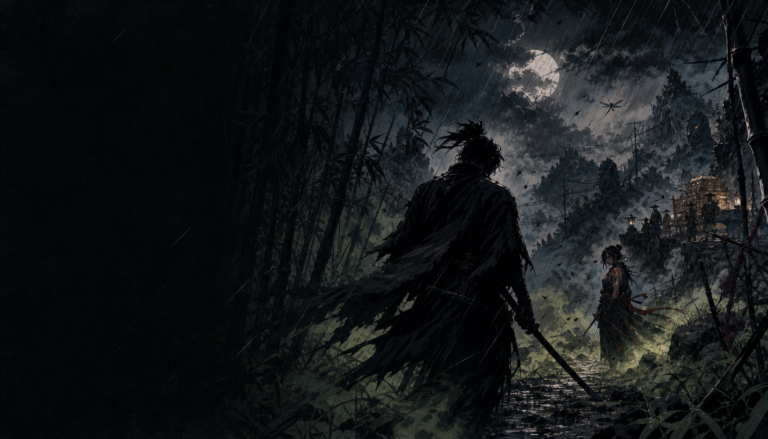
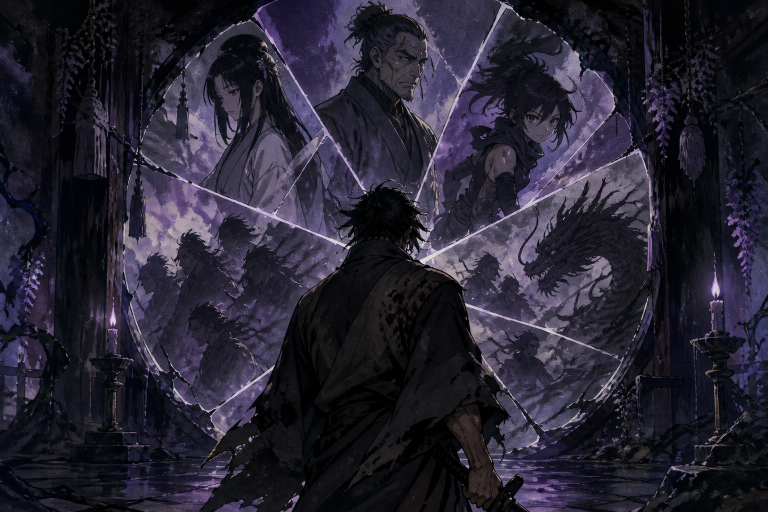
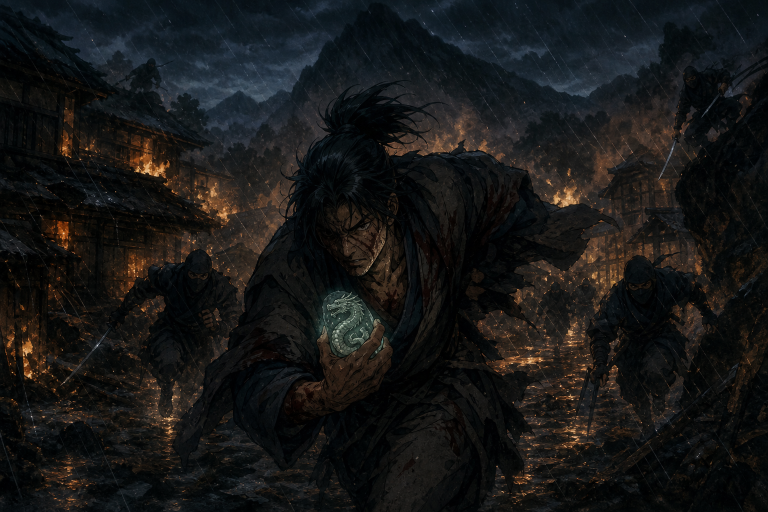
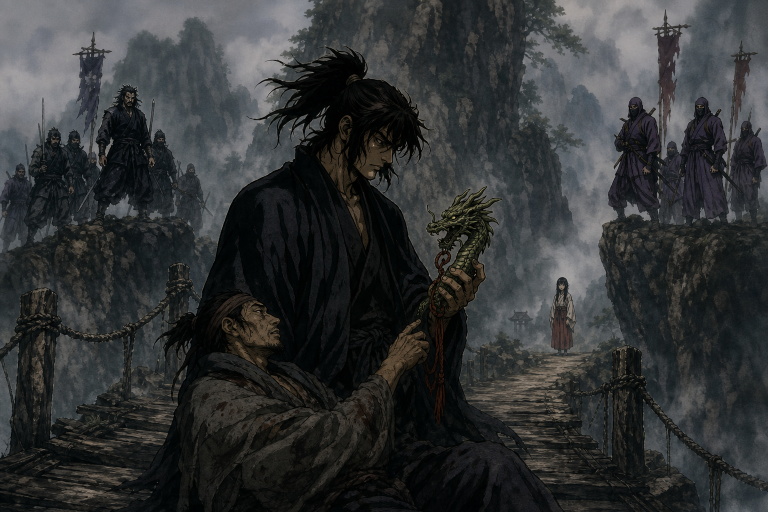
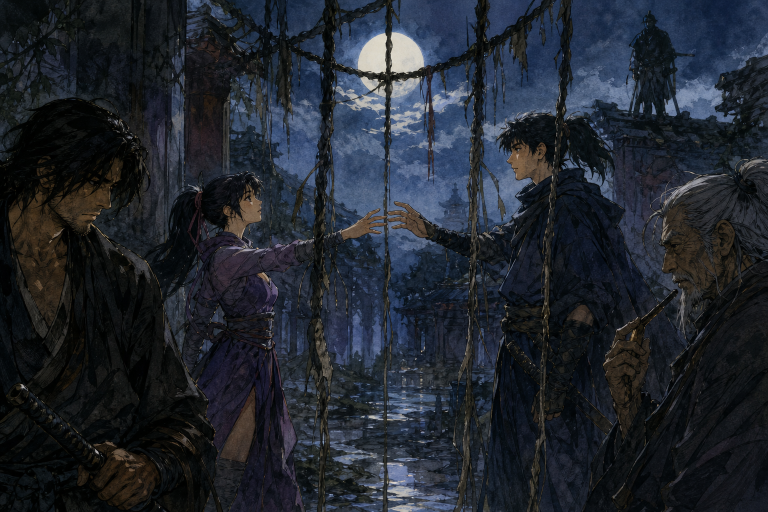
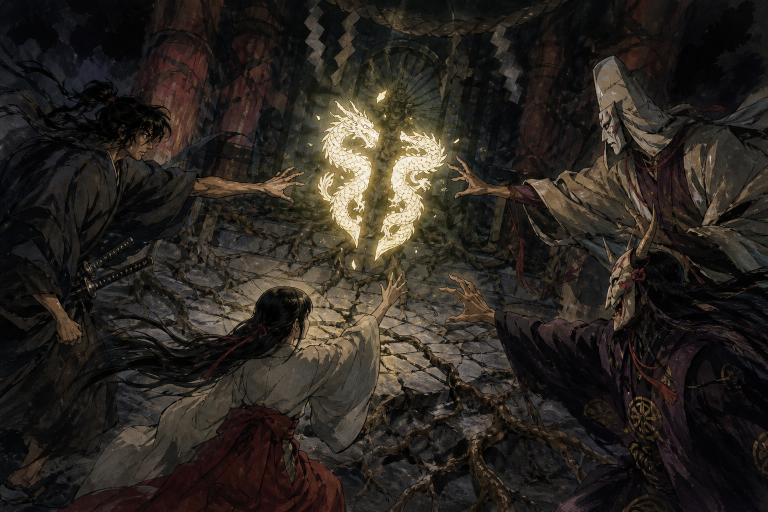
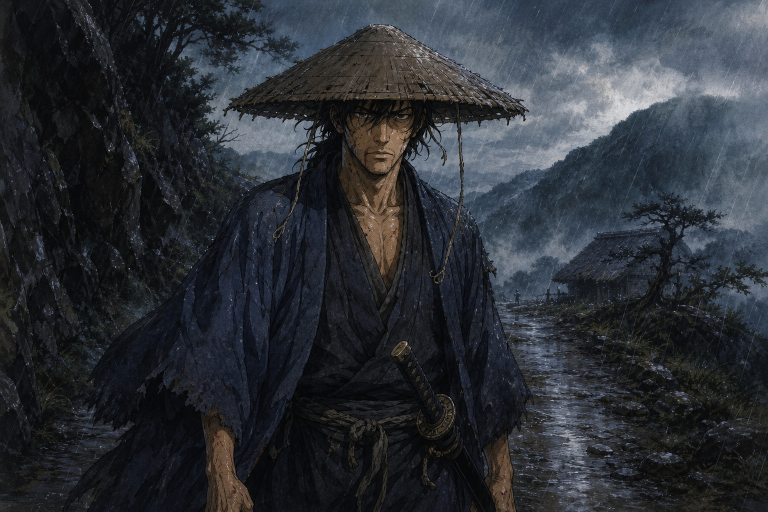
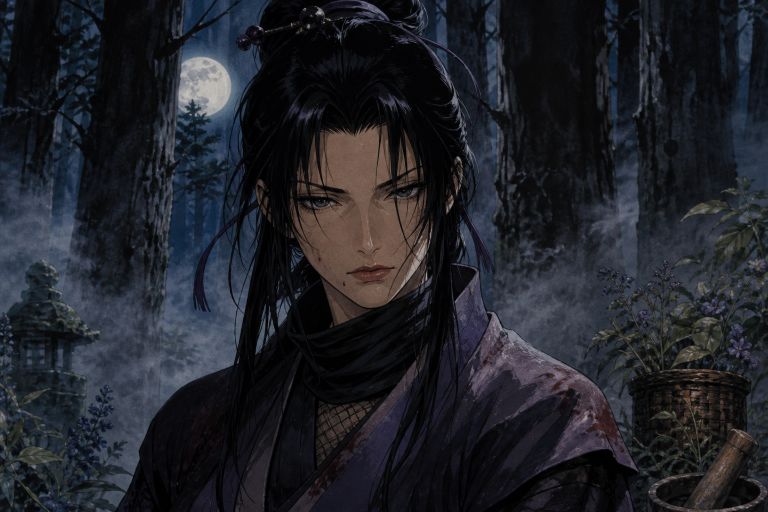
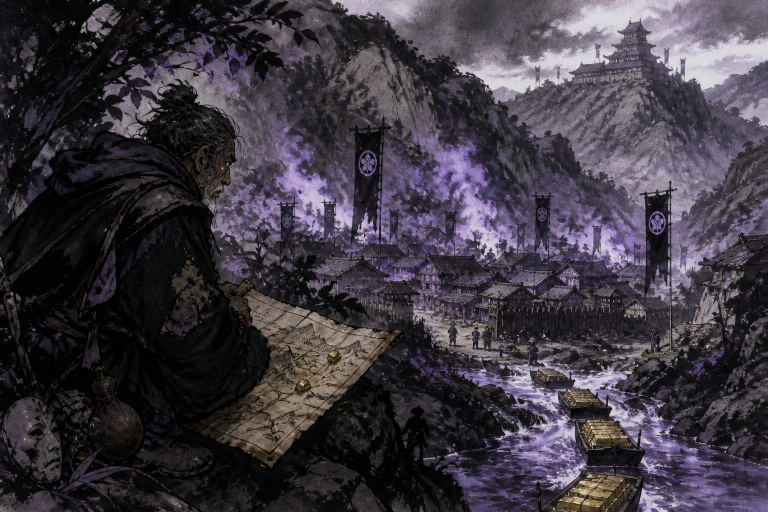
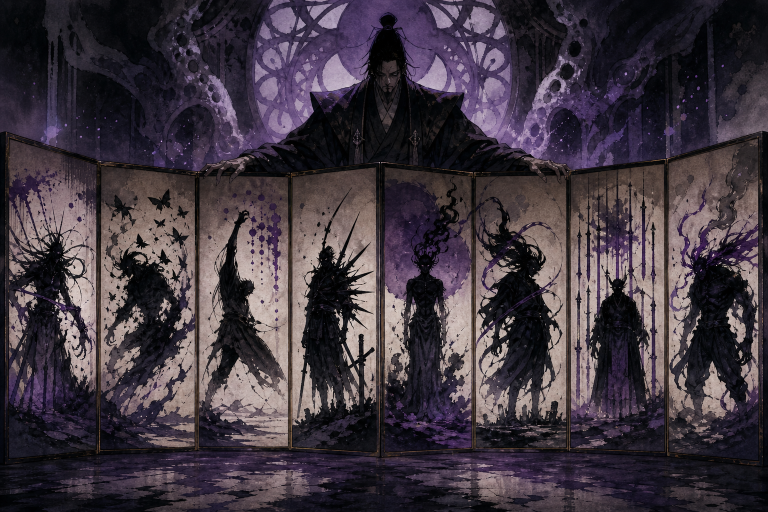
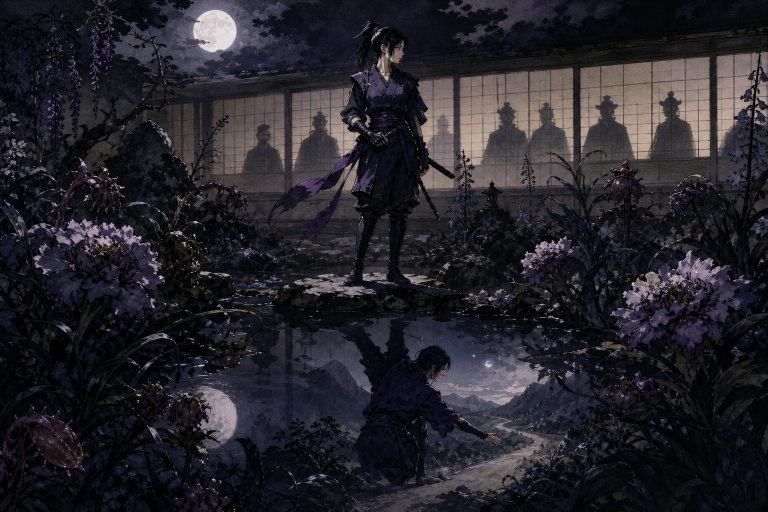
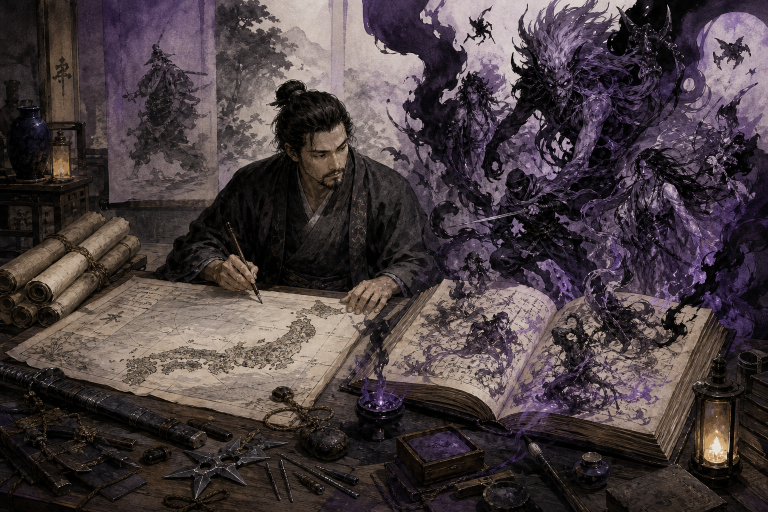
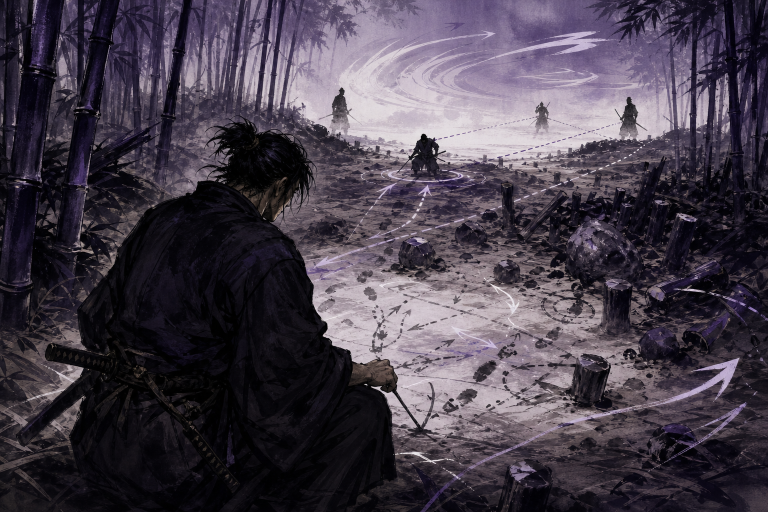
The ICONIC By Mistake reactions are not recaps. Each one follows the episode’s immediate wound into questions of consent, usefulness, masculinity, loyalty, fear, and the difference between rescue and ownership. These four cards open the journey; the complete directory keeps all thirteen episodes in official order with images, summaries, legal viewing guidance, and links.
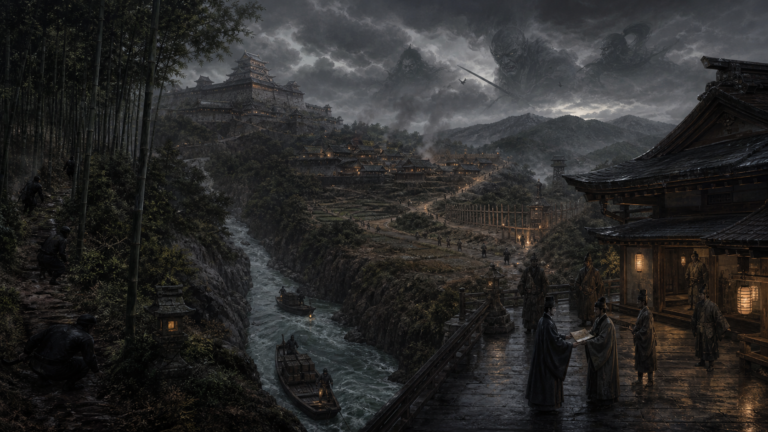
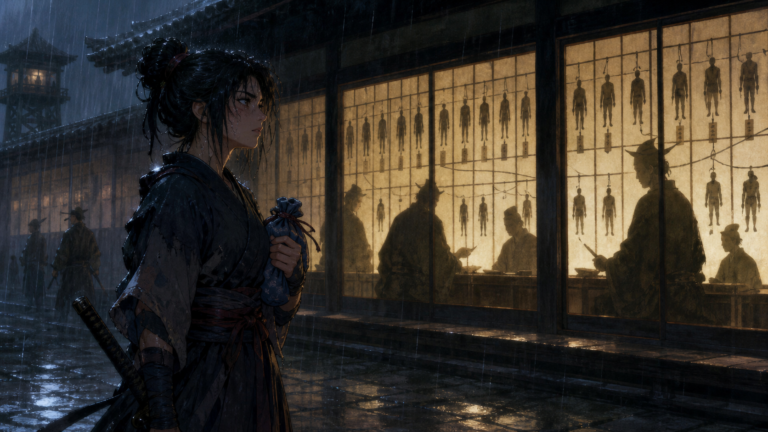
A village is not destroyed because evil arrives from nowhere. It is destroyed because armed power has already taught everyone to obey the person who claims to know what danger requires.
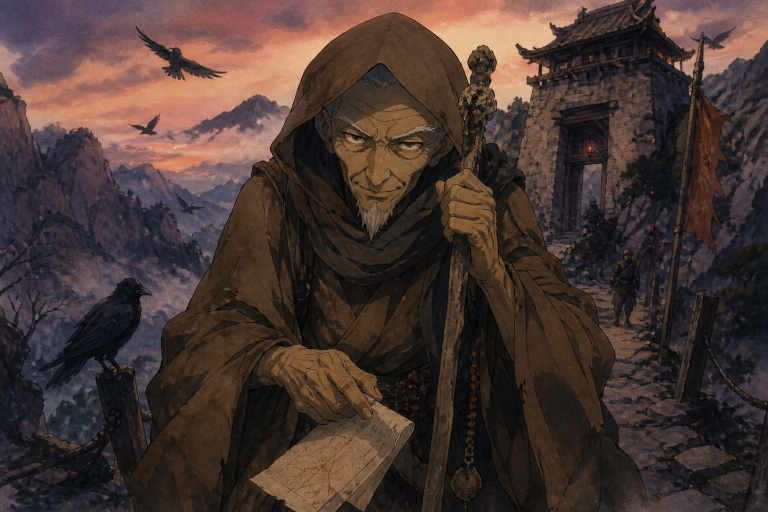
Leaving should create freedom, but this departure turns the road into a corridor built by other people’s schemes. Every direction carries a debt, a pursuit, or a stranger whose safety changes the moral cost of walking away.
The title promises romance, but the episode is really about the authorities who decide which attachments are legitimate. Love becomes forbidden when it interrupts inheritance, obedience, or the clean political use of a body.
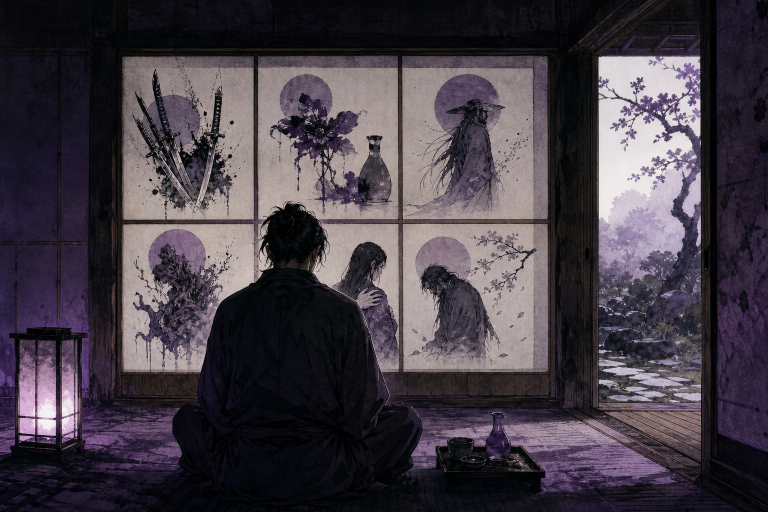
A broken stone is supposed to be useless, yet the episode understands that broken objects can expose the pressure that shattered them. Damage becomes evidence, not a verdict on worth.
Jubei wants freedom without indifference. Kagero wants recognition beyond the poison her clan made useful. Dakuan treats partial truth as strategy. Genma turns exceptional bodies into an organization built for extraction. Open a card for the full psychological profile or continue to the character directory.
A Koga poison taster and elite kunoichi whose immunity protects her clan while making intimacy dangerous and giving men another reason to control her body.
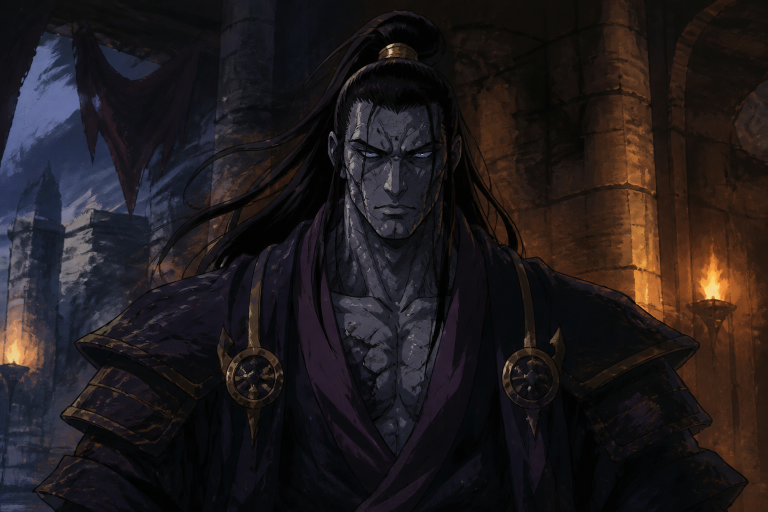
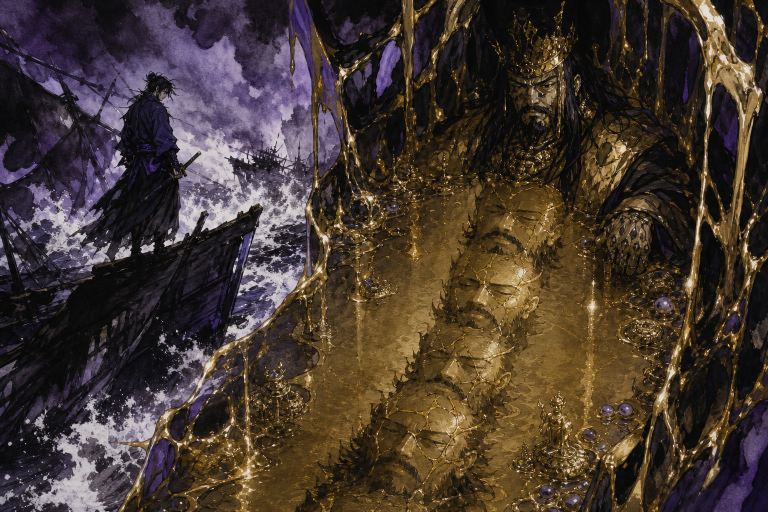
The immortal commander behind the Devils of Kimon, using plague, gold, bodies, and loyal monsters to turn regional catastrophe into political leverage.
All nine guides live here because nine is enough to get lost without creating another unnecessary doorway. The shelf moves from clan politics and the plague cover story through Kagero’s bodily autonomy, the Eight Devils, history versus fantasy, readable combat, immortality and gold, the film’s 1990s legacy, and a responsible first-time viewing guide.
A map of the clans, government agents, mercenary networks, and regional power struggles that make the movie’s supernatural violence politically useful.
How the film became part of the international adult-anime boom, and why admiration must include criticism of the marketing and violence that shaped its reputation.
The Japanese cast makes restraint, command, grief, and institutional confidence audible. These profiles use real portraits from official agency or broadcaster sources and focus on the performances behind Jubei, Kagero, Dakuan, and Genma.
Rants are where the contradictions stop being polite. These pieces argue with the movie’s legacy, the lazy equation of explicit content with maturity, and the fandom habits that can praise craft while disappearing the person whose body paid for the scene.
Ninja Scroll turns Kagero and Jubei into useful bodies for institutions that treat consent as an inconvenience. RaeRae examines what the human-weapon trope gets right, where the movie borrows exploitation as spectacle, and how the system could become more believable.
Ninja Scroll helped VHS distributors sell graphic content as proof that anime had become adult. RaeRae examines what the marketing opened, what the shock pitch flattened, and why difficult animation deserves better than a fandom hazing ritual.
Dakuan poisons Jubei and turns the antidote into a labor contract. RaeRae examines coerced service, medical dependence, Kagero’s weaponized body, and why treatment must restore choice before anybody asks for obedience.
There is one verified Tea item, so this shelf stays honest instead of being padded. The 2026 4K restoration brings the film back to theaters under director Yoshiaki Kawajiri’s supervision and gives the fandom a real reason to revisit what the movie achieves and what it asks viewers to endure.
Ninja Scroll’s 4K restoration brings Kawajiri’s shadows, painted weather, hand-drawn motion, and body horror back into focus without settling the movie’s harder arguments.
Ninja Scroll gets inside the psyche because its monsters are not safely outside civilization. They are specialists, employees, commanders, and assets. The most terrifying person may be the one who calls coercion a mission and means it sincerely.
Jubei’s answer is not purity. He keeps choosing boundaries inside compromised situations, helping people without accepting the lie that help grants ownership. Kagero exposes the cost of a world that praises survival while refusing the survivor a life beyond usefulness. That argument is why the fandom deserves more than a fast review and a row of disconnected links.
Two screen routes, two different arguments
The 1993 film and the 2003 television series share Jubei Kibagami and a dark-fantasy vocabulary, but they do not perform the same emotional work. The movie compresses plague, gold, espionage, bodily weaponization, and the Eight Devils of Kimon into a brutal feature whose momentum never excuses the institutions feeding on Kagero. The series expands the road through the Dragon Stone, Shigure, rival factions, and thirteen separate crises. One does not replace the other.
That distinction is why the hub separates two Reviews. The movie Review judges Kawajiri’s complete feature as a film: composition, violence, consent, gender, action clarity, performance, and the psychic residue behind its cult reputation. The series Review judges the television continuation as a full season. Episode Reacts remain another shelf because one chapter’s moral pressure should not disappear inside a verdict about all thirteen.
The human body is the battlefield
Ninja Scroll’s supernatural techniques are memorable because they are political before they are spectacular. Kagero’s poison body, Genma’s regeneration, Tessai’s stone flesh, and the Devils’ specialized violence show people reorganized around what authorities can extract from them. The film’s horror does not begin when a body becomes strange. It begins when somebody else calls that strangeness useful and treats consent as an obstacle.
Jubei occupies a partial freedom because he wanders outside formal service, yet Dakuan can still purchase his labor through poison and cure. The trick is funny only if we ignore the coercion. That contradiction gives the story its deepest pressure: even the competent hero can be turned into a state tool, and his comparative freedom does not release him from responsibility toward people with fewer exits.
How to get lost here without losing the map
Start with Reviews if you want the large judgment. Use Episode Reacts for the television sequence, where every title receives one searchable row, a concise briefing, a legal-viewing finder, and a direct editorial route. Open Characters for complete files on Jubei, Kagero, Dakuan, Genma, and the people whose bodies and loyalties hold the story together. Japanese Voice Actors identifies the performer and production era instead of treating one cast as permanent.
World, Lore, and Guides contains nine routes because this movie deserves more than a glossary. The shelf examines plague and gold, the Eight Devils, Kagero’s bodily autonomy, history versus dark fantasy, readable action, immortality, 1990s anime circulation, first-time content guidance, and the clan politics connecting private violence to state ambition. Rants and Tea stay separate so sourced argument is not confused with confirmed news.
The standard for every visible card
No post stands alone as a bare text link. Reviews, Reacts, characters, Japanese performers, guides, rants, and news appear through visible image cards. Each post’s locally stored featured image is also its hero source and its landing-card identity. A React uses original fan-art-style editorial artwork, while an episode directory is designed to receive official episode stills as distinct listing evidence.
The surrounding design remains CVM Sekai purple, black, white, and lavender regardless of the source image. Dark material does not require a dark unreadable page. The artwork can carry night, blood, rain, and menace; the interface still owes readers contrast, breathing room, Arial typography, and navigation that does not make thirteen episodes feel like punishment.
The hub keeps the film and television branch together without flattening them. One franchise card opens the route; every deeper shelf preserves its own artwork, format, chronology, and editorial purpose.