
Meeting
The tenth-anniversary retrospective returns to the lonely childhood and early rivalry that formed Naruto and Sasuke’s bond.
Bottom line
Naruto Shippuden Episode 257 pauses the war at the exact moment armies mobilize and returns to two lonely boys who did not know how to recognize themselves in each other. As a recap, “Meeting” repeats material longtime viewers already know. As a retrospective placed before the Fourth Shinobi World War, the episode asks a sharper question: when did Naruto and Sasuke begin mattering to one another, and why did rivalry become the only language they trusted enough to use?
The best new material comes before Team 7. Naruto vandalizes the village, hears adults discuss his lack of parents as though nobody should expect better from him, then asks Hiruzen who his parents were. The Third Hokage refuses because answering will not bring the dead back. That response is cruel in a quiet, bureaucratic way. Naruto is not asking for resurrection. He is asking for a history that belongs to him.
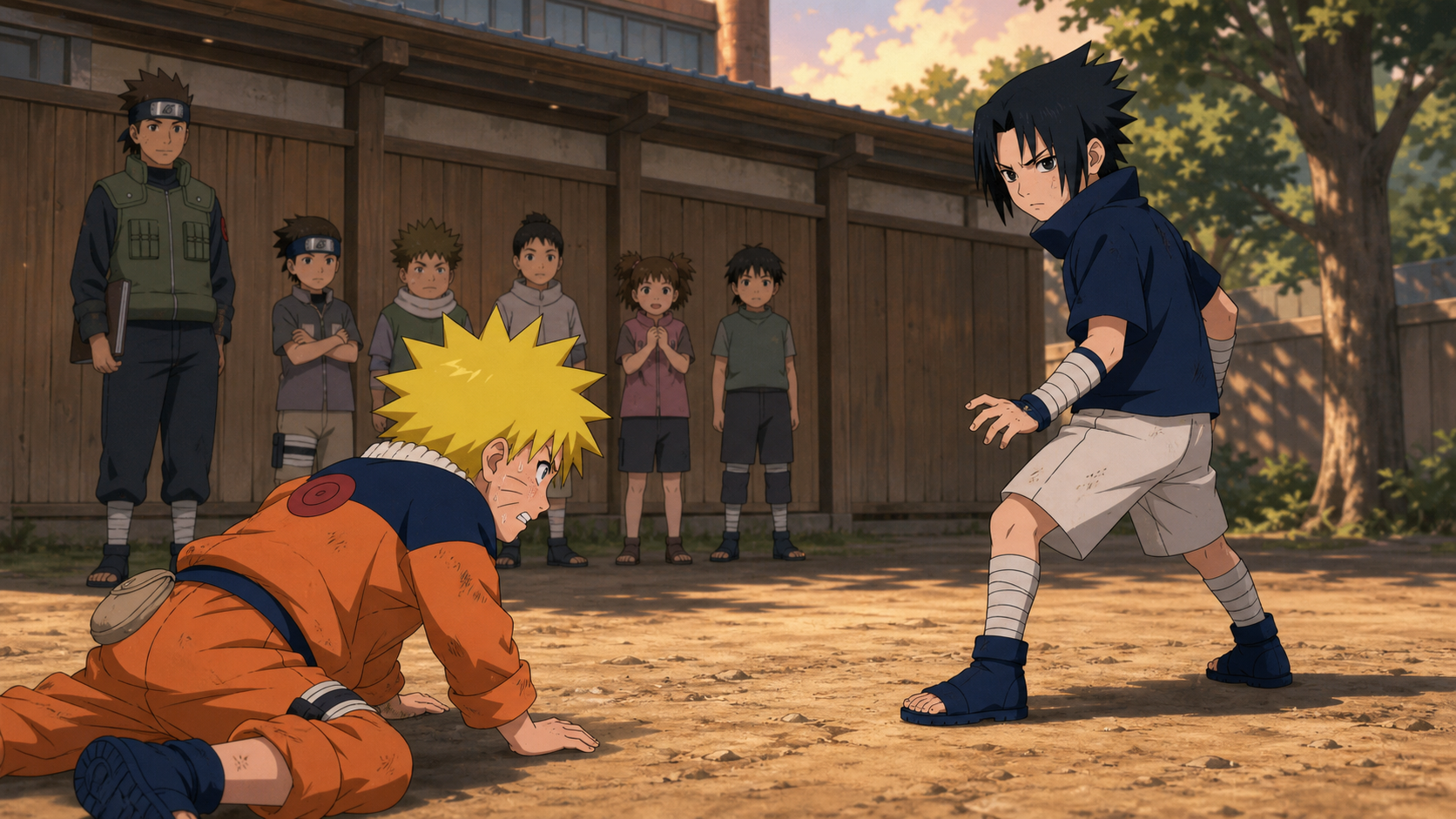
Sasuke enters the retrospective as another child defined by dead family and adult secrecy. Naruto recognizes hatred in his eyes during an Academy spar before understanding where that hatred points. Their first connection is not friendship. One neglected child notices that the admired child is also carrying something nobody else can see.
The war pause is deliberate, even when the timing feels rude
Episode 256 ends with enormous armies assembled and ready to move. Episode 257 responds by rewinding to childhood. Anybody waiting for the first battlefield clash has a fair reason to be irritated.
The interruption also serves the larger story. Kabuto has just raised dead shinobi to weaponize the living characters' history. Before those confrontations begin, the anime revisits the relationship that will shape Naruto's choices throughout the war.
This four-part anniversary project is not neutral placement. The series wants viewers to remember that Naruto and Sasuke's conflict began long before either boy possessed enough power to change the world.
Naruto's prank forces the village to acknowledge him
Young Naruto paints homes and shops, then runs while villagers complain. The damage is real. The motive cannot be reduced to a child enjoying chaos.
Konoha notices Naruto most reliably when he causes a problem. Approval is unavailable, family attention is unavailable, and ordinary belonging is unavailable. Vandalism guarantees that adults will say his name and spend time responding to what he did.
The prank therefore functions as a crude claim on public space. The village wants Naruto contained and quiet. He writes his existence across the surfaces everyone else treats as theirs.
The villagers turn orphanhood into an explanation instead of a responsibility
Adults discuss who will pay for the damage and mention that Naruto has no parents to discipline him. Their complaint identifies the absence while avoiding any communal obligation created by that absence.
Naruto is a village orphan because his parents died protecting Konoha. He is also the jinchūriki created by a decision made during that sacrifice. The adults around him know enough to fear the Nine-Tails and apparently not enough to treat the child carrying the seal with care.
Blaming absent parents lets the village describe Naruto as unsupervised without asking why the Hokage's administration left him so alone.
Naruto asks Hiruzen for identity and receives a lesson in silence
Hiruzen visits Naruto's apartment to deliver his allowance. The arrangement looks like basic care reduced to administration: money arrives, but the adult responsible for the village does not become family.
Naruto asks about his parents and says he only knows that they died during the Nine-Tails attack. Hiruzen refuses to explain, arguing that talking will not bring them back.
The answer dodges Naruto's real need. Names, choices, relationships, and family history matter even when nobody can reverse death. Hiruzen protects classified information by teaching Naruto that wanting to know is pointless.
The Third Hokage mistakes secrecy for emotional protection
Konoha has strategic reasons to conceal Naruto's parentage. Minato's enemies could target his son. The village also wants the Nine-Tails attack and its political failures contained.
Those reasons do not make Hiruzen's wording kind. He could acknowledge Naruto's grief, promise a later conversation, or tell the child that his parents loved him without revealing every protected detail. Instead, he closes the subject.
The scene shows how institutional secrecy becomes personal harm. A rule may protect Naruto from one danger while creating another wound inside his home.
Sasuke looks successful because grief has made him controlled
At the Academy, Sasuke defeats Naruto repeatedly. Other students see talent, composure, and the last Uchiha's admired status. Naruto sees the boy he cannot beat.
Sasuke's control is not peace. After the massacre, training gives his anger structure and offers a path toward revenge. Every victory confirms that discipline may someday make him strong enough to kill Itachi.
The Academy rewards the visible result without knowing what goal drives the work. Sasuke's excellence becomes another way adults miss his crisis.
Naruto recognizes hatred before he learns Sasuke's story
During a spar, Naruto looks into Sasuke's eyes and understands that the anger is not really about him. That observation matters because Naruto has spent his own childhood reading hostile faces.
He may not know the Uchiha history yet, but he knows what resentment looks like when resentment has nowhere safe to go. Sasuke's expression interrupts the simple fantasy that the popular prodigy has everything Naruto lacks.
Recognition does not produce immediate compassion. Naruto still wants to win. The insight creates a small crack in the rivalry's surface.
Learning about the massacre changes what Naruto thinks he saw
Naruto later hears that Sasuke is the only survivor of the Uchiha clan massacre. The fact gives a target to the hatred he recognized.
Both boys are orphans, but the similarity has limits. Naruto lacks memories of his parents and spends years asking for identity. Sasuke remembers family life, watched his brother destroy that family, and organizes his future around revenge.
Their losses do not cancel each other or create automatic understanding. The shared loneliness gives them a route toward connection that neither boy has the language to use.
Rivalry lets Naruto ask for Sasuke's attention without asking for affection
Naruto challenges Sasuke because victory would prove worth to the Academy and to himself. Repeated defeat also keeps Sasuke looking at him.
Competition is emotionally safer than admitting curiosity. Naruto can demand a match without saying that Sasuke's loneliness feels familiar. Sasuke can respond without admitting that Naruto's refusal to disappear has become noticeable.
Their rivalry begins as performance and gradually becomes relationship. The boys keep measuring themselves against each other because each one supplies recognition missing elsewhere.
Team 7 puts three incompatible needs in one room
Naruto, Sasuke, and Sakura become Team 7 under Kakashi. Naruto wants acknowledgment and dreams of becoming Hokage. Sasuke names revenge and restoration of his clan. Sakura focuses much of her early attention on Sasuke while dismissing Naruto.
The introductions reveal how little the three understand one another. Sasuke states a goal built around killing someone. The room treats the declaration as serious, but nobody opens the deeper conversation a child with that goal needs.
Kakashi inherits students whose public ambitions hide grief, insecurity, and isolation. His first task is less about skill than whether they can stop competing long enough to function together.
The bell test exposes the failure built into individual ambition
Kakashi offers two bells to three students and tells them that failure may send someone back to the Academy. Scarcity invites betrayal. Each student initially tries to win alone.
The hidden standard is cooperation. A shinobi team that abandons a teammate for personal advancement cannot be trusted in the field, regardless of individual talent.
Naruto's isolation makes the lesson especially difficult. He has learned to seek attention through solo performance. Sasuke has learned to depend on his own strength. Sakura's priorities are tangled with her crush. Teamwork demands behavior none of them has practiced well.
Sasuke sharing food is an early rebellion against the stated rule
Kakashi orders Sasuke and Sakura not to feed the restrained Naruto. Sasuke eventually shares food because a hungry teammate will weaken the team.
The act is practical, but practical care still counts. Sasuke violates authority to meet Naruto's need before either boy would describe the gesture as friendship.
Kakashi passes them because they place the team above the command's surface wording. The lesson teaches that judgment matters more than obedient performance, a principle the shinobi system applies very unevenly later.
The Land of Waves mission tests whether the lesson survived the yard
Team 7 expects a routine escort and encounters the Demon Brothers. Kakashi appears to die, and the new genin must respond before they understand the threat.
Sasuke moves with composure and helps protect Naruto. The Academy rivalry suddenly has consequences. Being slower no longer means losing a match. Fear can get a teammate killed.
The attack proves that the bell test was preparation, not transformation. Knowing teamwork as an idea does not remove panic from a child's first lethal encounter.
Naruto freezing is honest first-mission behavior
Naruto cannot move when the ambush becomes real. He has spent years claiming he will become Hokage and demanding recognition. None of that guarantees a trained response when killers appear.
His shame becomes sharper because Sasuke acts. The person Naruto wants to surpass saves him while he stands frightened.
The episode treats fear as humiliating through Naruto's perspective, but the audience can see a child confronting lethal violence for the first time. His reaction is human. The shinobi system has little patience for that humanity.
Stabbing his hand turns fear into a promise written on his body
Naruto drives a kunai into his injured hand and vows that he will never freeze again. The gesture is memorable because he converts shame into action immediately.
The action is also alarming. Naruto believes credibility requires blood. He cannot simply admit fear and continue training. He must punish the frightened body and use the wound as proof that a stronger version has taken control.
That habit will follow him. Pain becomes evidence of commitment, and self-sacrifice becomes one of the easiest ways for Naruto to communicate sincerity.
Sasuke saving Naruto complicates every claim that they were always enemies
Sasuke's response during the ambush does not erase his competitive attitude. The rescue shows that rivalry already coexists with responsibility.
He does not need a speech before acting. Team 7's brief training and his own instinct are enough to place Naruto inside the group he protects.
Later conflict often makes their bond sound mysterious or destined. Episode 257 returns to smaller choices. A shared meal, an intervention during an attack, and repeated attention create attachment before either boy understands the result.
The recap changes meaning because the audience knows where both boys go
First-time viewers of the original events did not know that Sasuke would leave Konoha or that Naruto would spend years trying to bring him back. The retrospective audience carries that future into every early exchange.
Sasuke's declared revenge now sounds like a warning the adults failed to answer. Naruto's obsession with surpassing him looks like the beginning of a bond that will later control major political and military choices.
Familiar scenes gain weight through consequence. The episode does not need to invent new destiny when the accumulated story already changes how a glance reads.
Anniversary framing adds value but does not remove repetition
“Meeting” begins a four-week project tied to the anime's tenth anniversary. Revisiting the earliest relationship makes sense for that celebration, and newly framed material gives the recap a clearer thesis.
Large portions still repeat scenes available in the original series. Viewers waiting at the edge of war are allowed to find the timing frustrating. Nostalgia is not automatically analysis.
The episode works best when new context changes the old scene: Naruto asking about his parents, recognizing Sasuke's hatred, and moving from village nuisance to teammate.
Hiruzen answers a child’s question as an administrator
Naruto asks who his parents were. He does not ask the Hokage to reverse death. Hiruzen responds that knowing will not bring them back, turning a request for identity into an irrational wish the child never made.
Security may limit names and circumstances. It does not require emotional dismissal. Hiruzen could tell Naruto that he was loved, that wanting history is reasonable, and that silence is not proof his parents abandoned him. He chooses closure instead of care.
The village notices misbehavior more reliably than loneliness
Naruto paints property because damage forces adults to respond. Konoha interprets the response it trained as evidence that he is naturally troublesome. Villagers mention absent parents as though identifying the cause absolves the community that left an orphan visibly alone.
The prank is wrong. The social arrangement is worse. Naruto learns that interruption produces names, pursuit, and conversation while quiet need produces an allowance delivered to an empty apartment.
Sasuke’s excellence hides the crisis adults reward
Academy students see a prodigy. Teachers see discipline. Naruto sees hatred before knowing where it points. Sasuke has converted grief into training so successfully that the visible achievement makes intervention seem unnecessary.
His stated ambition is murder, and the room accepts it as grim determination. That response tells us how thoroughly shinobi culture confuses functional pain with healthy purpose. Sasuke performs well, so the emergency inside him remains private.
Rivalry becomes contact neither boy has to confess
Naruto can challenge Sasuke without admitting curiosity about the loneliness he recognizes. Sasuke can answer without admitting Naruto’s relentless presence has become familiar. Winning and losing provide a repeatable reason to look at one another.
The bond grows through return. Meals, sparring, rescue, irritation, and attention accumulate before destiny receives credit. Competition is not automatically friendship, but it becomes the safest doorway available to two boys taught that visible need invites humiliation.
Naruto’s bloody vow turns fear into self-punishment
Freezing during a first lethal ambush is human. Naruto sees the reaction only as failure beside Sasuke’s competence. Stabbing his hand lets him replace shame with pain and display commitment in a language the shinobi world respects.
The moment is thrilling and worrying. Naruto learns that hurting himself can make vulnerability credible. That lesson will fuel extraordinary courage and a habit of proving sincerity through sacrifice when honest fear should have been allowed to speak.
The anniversary framing works only when memory changes under the weight of consequence. Watching Sasuke share food now is not the same as watching it before the curse mark, defection, reunion attempts, and promised final fight. The small rebellion against Kakashi’s rule becomes evidence that care existed before either boy knew how much they would deny it. The recap should not claim destiny made every early glance profound. It should show how decisions acquired meaning because both boys kept returning to them. A rice ball, a blocked attack, and one expression during a spar carry the bond more honestly than another speech about inevitable brotherhood.
Sakura deserves more than the retrospective gives her. Early Team 7 centers her crush and impatience with Naruto, but she is also a child performing maturity, status, and femininity according to rules she understands. Compressing her into the obstacle between two boys makes their bond cleaner by reducing hers. A look back would notice how all three students entered Kakashi’s team with needs they could not name and habits that injured one another. Naruto and Sasuke may drive the anniversary thesis. Team 7 was never only the stage where their relationship happened.
Sakura mattered.
What landed
The Hiruzen scene lands because one short refusal exposes the difference between material support and emotional care. Naruto receives an allowance while remaining deprived of his own history.
The Academy spar adds a useful early recognition between Naruto and Sasuke. Their connection does not begin with fate announcing itself. Naruto notices pain inside the boy everyone else praises.
The Demon Brothers sequence also remains effective. Sasuke's competence, Naruto's fear, and the bloody vow establish how rivalry can motivate growth while also teaching Naruto to answer vulnerability with injury.
What did not fully land
The retrospective compresses Sakura into familiar early behavior without giving much attention to the insecurity shaping her choices. Her role becomes another marker in Naruto and Sasuke's story.
Hiruzen's refusal receives no immediate challenge. The episode shows the harm clearly, but Naruto has no adult present who can tell him that wanting family history is reasonable.
The recap structure also moves quickly from loneliness to teamwork, which can make Team 7's attachment seem smoother than the original series allowed.
Final reaction
Naruto Shippuden Episode 257 repeats early Naruto, but the best additions refuse easy nostalgia. Young Naruto causes damage because negative attention still feels like proof that the village sees him. Hiruzen maintains secrecy by dismissing a child's right to know his parents. Sasuke turns grief into disciplined achievement while adults praise the achievement and leave the grief alone.
Naruto and Sasuke meet inside that shared failure of care. They do not become friends through one revelation. They spar, watch, resent, feed, protect, and measure themselves against each other. Rivalry gives both boys a way to maintain contact without admitting need.
Placed before a war filled with reanimated history, the retrospective has a purpose. Kabuto will force dead relationships onto the battlefield. Naruto's future choices will still revolve around the boy he first recognized through hatred. “Meeting” reminds us that their bond began when two children saw pain in each other and responded with the only language their world had taught them well: competition.
RaeRae’s call
The recap earns its pause when it shows two children recognizing pain before understanding it. Naruto and Sasuke build attachment through rivalry because competition feels safer than asking each other not to leave.
Episode details and viewing routes
- Official episode reference: Naruto Official episode guide
- Licensed episode route: Crunchyroll licensed episode page