K/DA: Members, Music, Human Voices and Virtual Group Guide
Group profile
| Members | Ahri, Akali, Evelynn and Kai’Sa |
|---|---|
| Origin | League of Legends music project |
| Debut | 2018 with “POP/STARS” |
| Current status | Established virtual four-member group; no confirmed 2026 release |
| Fandom | BLADES |
Ahri, Akali, Evelynn and Kai’Sa — four virtual members, many real voices, one group whose credits must stay visible.
Group facts and bottom line
K/DA is Riot Games’ virtual pop group built around League of Legends champions Ahri, Akali, Evelynn and Kai’Sa. The group debuted with “POP/STARS” at the 2018 World Championship and returned in 2020 with THE BADDEST and the ALL OUT EP. Seraphine collaborated on “MORE”; she did not quietly replace a core member.
The characters are the public group. The singers, rappers, dancers, animators and studios are the human authors who make that fiction move.
The four members
Ahri leads and anchors the melodic center. Akali carries rap, velocity and rule-breaking invention. Evelynn makes danger elegant enough to invite a second look. Kai’Sa translates rhythm into disciplined movement.
Those are fictional performance identities, not aliases that erase the credited women behind them.
POP/STARS changed the scale
The 2018 debut joined Madison Beer, Miyeon, Soyeon and Jaira Burns with Fortiche animation and a live Worlds performance. It did not succeed because audiences were confused about what was real. It succeeded because every layer committed.
Virtual pop works best when transparency strengthens the fantasy.
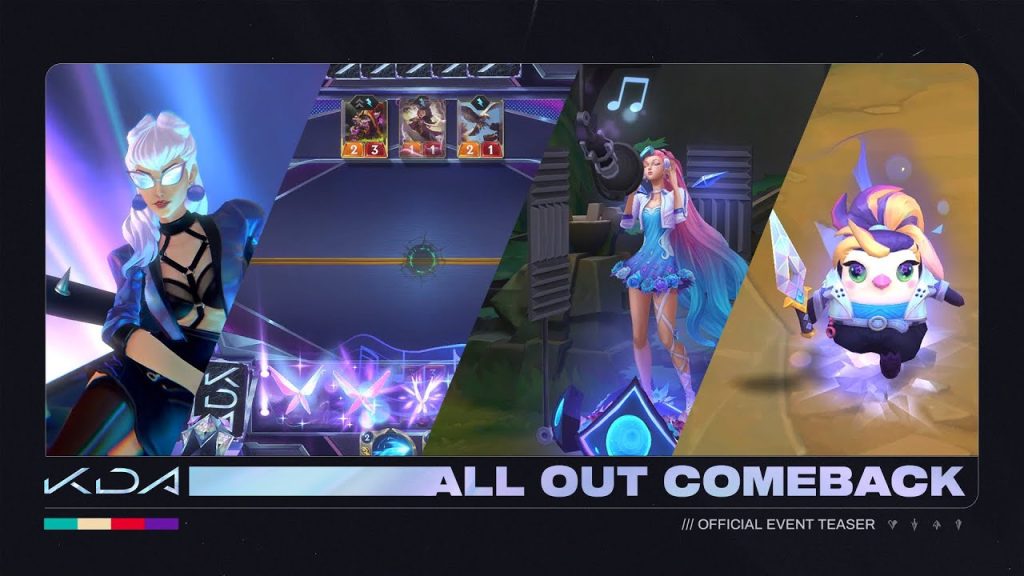
ALL OUT
The 2020 EP expanded K/DA without sanding every track into the same purple surface. THE BADDEST announced the return, MORE reunited all four with Seraphine, VILLAIN gave Evelynn the shadows, DRUM GO DUM turned Kai’Sa’s movement into the argument, and I’LL SHOW YOU built an Ahri-centered mirror maze.
A group project can distribute focus without pretending every member occupies every frame.
The real voices
Miyeon and Soyeon gave Ahri and Akali a Korean vocal and rap spine across the major singles. Madison Beer, Jaira Burns, Bea Miller, Wolftyla, Lexie Liu, Kim Petras, Aluna, Bekuh BOOM, TWICE and Annika Wells supplied different songs with different human textures.
Credits are part of the art, not legal print to hide after the fantasy has sold.
The dancers matter too
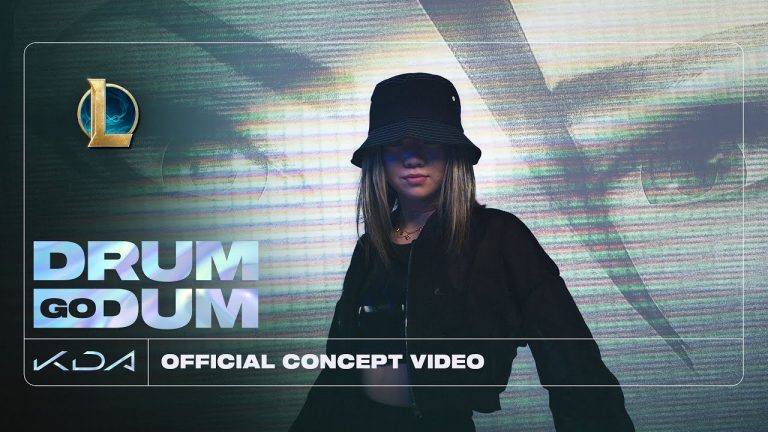
Bailey Sok stars in the DRUM GO DUM concept video. Live performances and choreography also rely on bodies whose timing teaches the audience how a virtual character is supposed to feel.
A motion-capture-shaped culture still owes dancers names.
Why K/DA counts as a group
K/DA has a fixed core lineup, an internal identity, a debut, a return, a connected catalogue and member-specific releases. Calling it merely a marketing skin understates the music project fans actually followed.
The commercial origin is true. So is the group structure built from it.
Rant: stop using “virtual” as an eraser
The industry loves a clean animated face because pixels do not ask for billing in an interview. That convenience becomes ugly when coverage treats the humans as interchangeable audio cables. K/DA’s illusion gets better when the audience can hear Madison, Soyeon, Miyeon, Wolftyla or Kim Petras as specific artists.
Fantasy does not require amnesia.
RaeRae take
K/DA landed because the songs were not afraid to behave like pop records first. Bass, hooks, rap cadence, vocal casting and choreography do the heavy lifting before lore adds the extra shine.
The neon is the invitation. Craft is why people stayed.
Image and tracker standard
This hub, four member profiles and every exact React use separate local official frames with metadata, source attribution, SEO and FileBird folder 25 placement.
Static cards link exact uploads. No infinite sideways carousel and no reused featured image.
Member directory
Current status: established group, no confirmed 2026 release yet
K/DA remains Riot Games’ virtual pop group built around Ahri, Akali, Evelynn and Kai’Sa. The last officially released group era is 2020’s ALL OUT. Reports of a 2026 return, leaked cosmetics and a reported “WATCH ME” registration are interesting leads, not a released comeback. Until Riot publishes a song, video or formal announcement, the tracker stops at the work audiences can actually hear.
Virtual groups do not follow ordinary contract or comeback rhythms. Riot can reactivate the concept when a game event, Worlds performance or larger music strategy calls for it. Dormancy is therefore more accurate than disbandment. The four characters remain the group identity even when the human voice cast may change from one song to another.
Group facts: four characters, many human creators
Ahri, Akali, Evelynn and Kai’Sa are the four public members. Seraphine collaborated on “MORE” and appeared inside the ALL OUT story, but collaboration does not silently convert her into a fifth permanent K/DA member. The exact project credit decides where she appears.
Miyeon, Soyeon, Madison Beer, Jaira Burns, Bea Miller, Wolftyla, Lexie Liu, Aluna, Kim Petras, TWICE, Bekuh BOOM and Annika Wells are among the real vocal performers across released K/DA music. Dancers, choreographers, animators, writers, producers and studios are equally real authors. Naming them strengthens the fiction because the audience can admire both layers at once.
Ahri: melodic center and fictional executive
Ahri leads K/DA’s public mythology and anchors its smoother melodic center. The character design translates foxlike elegance into pop authority: controlled expressions, bright lines and a sense that the stage already belongs to her before the first note.
Miyeon established much of that vocal identity on “POP/STARS” and “MORE,” while “I’LL SHOW YOU” expands Ahri through TWICE, Bekuh BOOM and Annika Wells. Multiple singers do not make the character fraudulent. They reveal voice casting as part of the group’s production language.
Akali: velocity, rap and crossover memory
Akali became K/DA’s breakout force through Soyeon’s delivery, neon graffiti and a rap flow that makes animation feel physically fast. The character carries rule-breaking confidence without requiring the other members to imitate her energy.
Her later connection to True Damage shows how Riot’s music universe can let one fictional performer cross projects. That does not merge K/DA and True Damage into one group. It gives Akali a career history the way a human artist might move between a core group and a collaboration.
Evelynn: danger built from restraint
Evelynn makes menace elegant enough to invite a second look. Madison Beer helped establish the breathier, darker vocal identity, and Kim Petras joined her on “VILLAIN.” The performance depends on holding power rather than constantly demonstrating it.
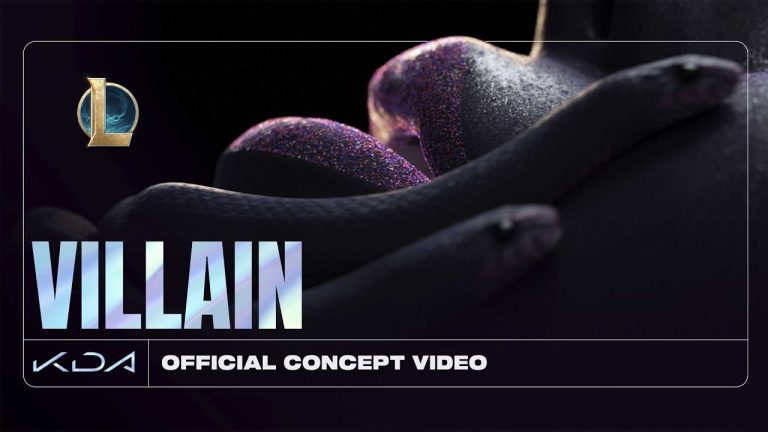
The “VILLAIN” concept video understands that restraint. An empty mansion, controlled camera movement and carefully withheld animation let the character dominate without a full-group chorus. The exact video belongs to K/DA while its voice credits remain Madison Beer and Kim Petras.
Kai’Sa: choreography is not a silent credit
Kai’Sa is framed through movement, spatial intelligence and obsessive practice. Jaira Burns helped establish her vocal presence in 2018; Wolftyla and Aluna contribute to later material. Yet the character’s most important language is often dance.
“DRUM GO DUM” makes that authorship visible through Bailey Sok’s live performance. A human dancer does not shrink the virtual member or expose a trick. She provides the pulse, weight and timing the animation concept depends on. The card and React name that labor directly.
“POP/STARS” made the virtual body feel present
K/DA debuted at the 2018 League of Legends World Championship with “POP/STARS,” combining Miyeon, Soyeon, Madison Beer and Jaira Burns with an augmented-reality live stage and a Fortiche music video. The project succeeded because the song, character design, choreography and event timing all agreed on one fantasy.
The group was promotional by design, but “marketing” does not describe the audience’s experience completely. People replayed the song outside the game, learned the choreography, followed the characters and sought the human performers. A commercial origin does not prevent a real pop relationship.
ALL OUT treated the group like an album project
“THE BADDEST” announced the 2020 return with Bea Miller and Wolftyla joining Miyeon and Soyeon. “MORE” reunited the four-character frame and added Seraphine through Lexie Liu. The EP then distributed focus: “VILLAIN” belongs to Evelynn’s atmosphere, “DRUM GO DUM” to Kai’Sa’s movement and “I’LL SHOW YOU” to Ahri’s self-image.
That structure is more interesting than forcing all four members into every track equally. Human groups use solos and units; a virtual group can do the same while changing voice casts. The archive records character focus, credited singers and video form separately.
Seraphine is a collaborator, not an erased credit
Seraphine’s “MORE” appearance was tied to a League champion launch and an elaborate social-media narrative. She sings through Lexie Liu and enters K/DA’s visual world as a featured artist. Calling her a permanent member would overstate the released group structure; omitting her would understate the exact video.
Featured status is not lesser status. It tells the listener what happened: one project expanded for one song, and the collaborator materially changed its language through Mandarin lyrics, a new melodic color and a different fictional perspective.
Animation studios shape performance
Fortiche helped define the 2018 look; Axis Studios built the “MORE” music video; Trizz Studio created “VILLAIN”; Riot artists and partner studios shaped the wider campaign. Animation is not a transparent delivery pipe for music. Editing, simulated lenses, character acting and impossible camera movement perform the song.
The best Reacts therefore discuss animation choices the same way a human music-video review discusses cinematography and acting. A virtual face can still underplay a line; a cut can still ruin choreography; a texture can make digital skin feel emotionally distant or startlingly intimate.
The voice cast can change without stealing identity
“THE BADDEST” replaces Madison Beer and Jaira Burns with Bea Miller and Wolftyla in the featured lineup, while later unit tracks introduce still more performers. That flexibility is a structural feature of K/DA. The character provides continuity; the singer brings a specific interpretation.
Credits should never hide behind the character. A listener can say Evelynn sings “VILLAIN” inside the fiction and Madison Beer and Kim Petras perform the vocals in production. Both statements are useful; only one of them pays the humans properly.
Why K/DA counts as a group
A group is not made real only by sharing a dorm or signing human employment contracts. K/DA has a stable name, recurring member identities, a catalog, visual eras, performance roles and an audience that follows the whole rather than one anonymous advertisement.
The project is also owned and activated by Riot, which gives it limits different from an independent artist. Both truths belong in criticism. Calling K/DA “not a real group” erases the human production; calling it identical to a human idol group erases the corporate and fictional mechanics that make it distinctive.
Fandom file: BLADES
K/DA fans are known as BLADES. The name connects the audience to the group’s sleek, dangerous visual language, but the fandom crosses several communities: League players, K-pop listeners, animation fans, dancers and people who arrived through one credited singer.
That mixed audience is why credits and exact versions matter so much. A Miyeon fan may want every song she performs; a Kai’Sa fan may follow concept videos and in-game choreography; a Bailey Sok viewer may arrive through dance. The hub lets those routes meet without pretending they are the same route.
Choreography connects the impossible body to a real one
K/DA characters can move with a range, camera access and physical safety no human stage can reproduce exactly. The choreography still needs human logic. Weight has to travel through a step, momentum has to prepare a turn and a gesture needs enough time to register before the edit replaces it. Bailey Sok and the broader dance teams give the digital bodies that logic.
The 2018 Worlds performance made the connection visible by placing human singers beside augmented characters. The illusion did not depend on proving the holograms were physically present. It depended on timing—camera, screen graphics, dancers, vocals and audience expectation arriving at the same beat.
Virtual identity can expand casting and repeat old erasures
A fictional member can be voiced in several languages, animated in impossible locations and kept visually consistent across years. That flexibility is creatively useful. It also creates a temptation to treat human performers as replaceable inputs whose names sit below the fold while the character receives every interview headline.
K/DA works best when the cast is visible. Soyeon’s rap choices are not interchangeable with “Akali energy”; Miyeon’s tone helped define Ahri; Madison Beer and Kim Petras make “VILLAIN” a particular duet. The characters organize the fiction, but specific women make each released recording sound the way it does.
The multilingual frame is musical, not just global branding
Korean and English already shaped “POP/STARS.” “MORE” added Mandarin through Lexie Liu and Seraphine. The language changes are not stickers placed on one export product; syllable length, consonant attack and melodic contour alter the flow. A translation credit is therefore part of production, not metadata copied after mastering.
The global cast also complicates the simple label “K-pop.” K/DA deliberately uses idol-group language, Korean performers and Worlds-stage spectacle while remaining a Riot-owned international virtual project. The hybrid is the point. Classification should help listeners find the work without pretending its production belongs to one national industry alone.
A future comeback has to be more than skin promotion
Every K/DA era sells League cosmetics; pretending otherwise would make the criticism childish. The standard is whether the music and videos exceed the transaction. “POP/STARS” did. ALL OUT did often enough to create character-specific songs, credited performances and an audience that stayed after the event ended.
If Riot returns to K/DA, a new release should justify six years of silence through craft rather than scarcity hype. Voice casting, animation partners, choreography and credits need to be announced as artistic decisions. A reported registration may signal planning, but only the finished work can prove the group has something new to say.
How to follow K/DA without turning rumors into releases
The official K/DA account, Riot Games Music channels and League’s K/DA news tag are the first evidence layer. Rights databases can reveal a registered title, and game files can hint at a cosmetic event, but neither proves a public release date, final cast or completed video.
This hub dates rumors only when they affect the discovery story and labels them as unconfirmed. Once Riot publishes an announcement, the current-status section changes. Once an exact video is released, it receives a tracker row, canonical image, React and every human credit available.
Official video tracker
- “POP/STARS” official music videoDaily+81.3KTotal views668.4M — read the full React.
- “THE BADDEST” official lyric videoDaily+13.9KTotal views79.7M — read the full React.
- “MORE” official music videoDaily+34.4KTotal views247.8M — read the full React.
- “VILLAIN” concept videoDaily+16.2KTotal views118.6M — exact playlist upload; read the full React.
- “DRUM GO DUM” concept videoDaily+4.3KTotal views22.9M — exact playlist upload; read the full React.
- “I’LL SHOW YOU” concept videoDaily+6.7KTotal views29.3M — read the full React.
Sources and official links
- Riot’s official K/DA news archive
- K/DA official YouTube channel
- K/DA official X account
- ALL OUT production-credit archive
Current release status checked August 30, 2026. Rumored or registered future work remains outside the official tracker until Riot releases or announces it.
RaeRae Reacts
DRUM GO DUM: Bailey Sok Gave K/DA a Human Pulse Without Shrinking Kai’Sa — exact playlist upload E_PbH5y70Tc.
RaeRae Reacts
VILLAIN: K/DA Let Evelynn Turn an Empty Mansion Into a Threat — exact playlist upload xoWxv2yZXLQ.
React image cards
Static cards route each exact official upload to its own in-depth React. Every card repeats that React’s featured and hero image so the archive stays visually traceable.