
POP/STARS: K/DA Built the Virtual Idol Blueprint Before the Industry Learned the Door Code
K/DA did not invent virtual performers, but POP/STARS made the modern sales pitch dangerously easy to understand: unmistakable characters, human voices with real bite and a video that never asks permission to be both game marketing and pop event.
Release file
Released: November 3, 2018
Runtime: 3:23
Artist / channel: K/DA / League of Legends
Exact-file focus: The exact official POP/STARS music video featuring Madison Beer, Soyeon, Miyeon and Jaira Burns, not a stage, fancam, lyric upload, short, remix or fan edit.
Verdict first: the exact upload matters. This React follows the performance and visual choices in this video, not a neighboring stage, fan lyric upload or different song with the same English title.
First reaction: what the hook is actually doing
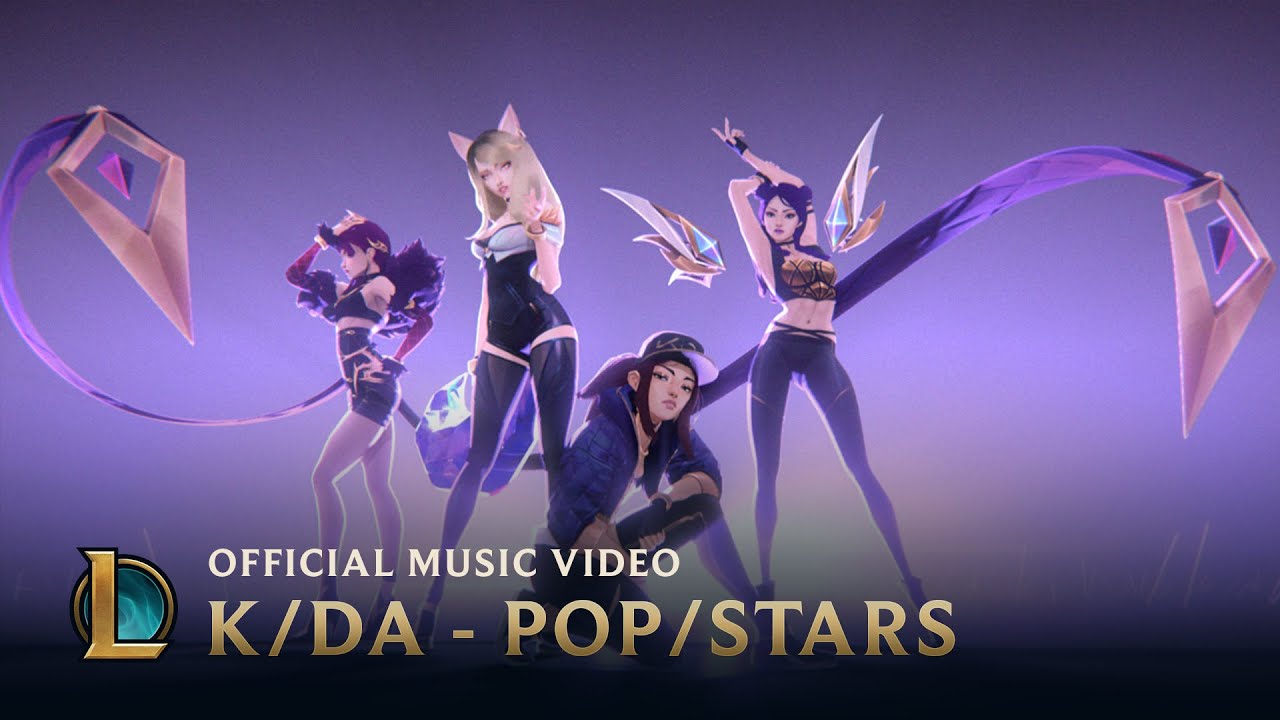
“POP/STARS” works because the League promotion behaves like a song first. A hard, spacious beat supports multilingual rap and a chorus with immediate melodic authority. Akali, Ahri, Evelynn and Kai’Sa arrive as distinct performers rather than game characters waiting to be recognized.
Catchiness is the entrance, not the verdict. The useful question is how percussion, bass, vocal register and phrasing make the central idea feel repeatable—and whether the repetition reveals more feeling or merely occupies time.
Production under the topline
The arrangement creates a floor before the performers decorate it. Follow the kick and low end, then notice which sounds vanish before a line begins. Empty space can give a low voice more authority than another layer of volume, while a bright response can reset the ear without flattening the groove.
i-dle-related solo work is strongest when the production recognizes the featured voice instead of renting a generic trend. Yuqi’s grain and delayed pocket, Minnie’s atmosphere and Soyeon’s percussive diction require different rooms. The mix here succeeds where it lets identity change structure.
The video argument
The MV blends stylized city space, neon graffiti, performance framing and character-specific movement. Virtual bodies allow perfect control, but personality comes from asymmetry: Akali attacks walls and rhythm, Ahri owns polish, Evelynn turns danger into gaze and Kai’Sa makes motion itself a signature.
The canonical still above comes from this exact upload. It remains the featured image, hero, Music Reviews card and social preview, so a reader does not click one visual promise and arrive inside another video’s page.
Performance details worth the replay
MIYEON and SOYEON provide Ahri and Akali’s Korean vocal performances; Madison Beer and Jaira Burns complete the lineup. The success is connected to i-dle history through those actual participants, not through a blanket claim that the whole group performed. Replay Akali’s subway sequence with the screen brightness lowered and focus on rhythm. Graffiti light, camera rotation and Soyeon’s consonants lock together so tightly that none functions as decoration.
Watch preparation rather than only impact: the breath before a phrase, the body loading weight before a directional change and the eye line that tells the editor where the next cut can land. Those decisions are the bridge between choreography and camera.
What works, and what I would change
The video’s perfection can obscure the production labor and real faces behind the voices. That is a documentation problem more than a flaw in the fantasy. A complete React keeps animators, character design and vocal performers visible at the same time.
That tradeoff matters. A harder bridge, longer ending or stranger cut might create complexity, but it can also break the release’s chosen scale. Criticism should identify the price of the existing choice without pretending every song wants to become a different genre.
Participation, not inheritance
The i-dle hub remains connected because the career grew from and continues beside the group. The profile trail follows actual participation, however. A Yuqi and Lexie Liu performance does not automatically belong to all five members; a Yuqi and Minnie duet belongs to both women; a solo choreography file links the solo artist and group history without fabricating group presence.
Bottom line
POP/STARS: K/DA Built the Virtual Idol Blueprint Before the Industry Learned the Door Code understands the mechanism beneath its hook and gives the camera enough performance evidence to make that mechanism visible. The release has limits, but none of them erase the reason to replay it.
Replay section
- First replay: watch only the performer outside the obvious focal point or the body between named moves.
- Second replay: isolate drums and bass; mark every place the groove removes sound instead of adding it.
- Third replay: follow vocal color and breath, not volume or line count.
- Fourth replay: test the criticism—imagine the proposed change, then decide what pleasure it would cost.
Canonical profile trail
- i-dle group profile
- SOYEON / Akali performer profile
- MIYEON / Ahri performer profile
- Exact official videoDaily+78.7KTotal views668.5M
Sources and receipts
“POP/STARS” did not merely introduce four characters; it established the contract virtual idol projects still struggle to honor. The fantasy can be impossible, but the charisma must remain traceable to human performance. Miyeon and Jaira Burns give the chorus lift from different vocal angles, Madison Beer supplies sleek control, and Soyeon makes Akali’s entrance feel like the room has changed ownership. Nobody is reduced to anonymous fuel for an avatar.
The subway sequence became iconic because animation, rap cadence and character design arrive as one decision. Neon paint reveals an interior world while Soyeon’s phrasing controls its velocity. Elsewhere, Ahri’s mirrored glamour and Evelynn’s predatory calm establish separate visual grammars. The video trusts viewers to understand a group through contrast, the same way strong live-action idol introductions do.
Replay the edit around every member handoff. Objects and movement carry momentum across incompatible spaces, making the team feel connected before any lore explanation is required. That is the blueprint: songs first, character legibility second, franchise infrastructure underneath. Later virtual acts can copy the polish, but “POP/STARS” endures because its technology serves a pop argument viewers can hear immediately.
The track’s bilingual structure is not an ornamental global gesture. Language changes alter attack and texture, giving Akali’s Korean rap a kinetic shape distinct from the English melodic sections. The production builds bridges between them through recurring bass pressure and percussion rather than forcing every performer into the same phrasing. Global collaboration becomes audible at the level of arrangement, long before anyone counts nationalities in the credits.
There is also a reason the video inspired repeated covers and stage recreations: its signature gestures are clear enough to quote but attached to characters strong enough to resist easy replacement. Accessibility and specificity reinforce each other. On replay, isolate the pre-chorus lift and watch how anticipation is created across faces, framing and sound simultaneously. The eventual hook feels inevitable because every department has been leaning toward it together.
The final chorus gathers those separate introductions without flattening them. Layers accumulate, but the mix preserves identifiable edges, allowing the group name to mean coordination rather than sameness. That distinction became foundational for K/DA and remains relevant to every project mixing fictional continuity, international singers and idol-style fandom. The debut did not solve every ethical question about virtual performers, but it established the creative minimum: creditable human charisma must remain audible inside the fantasy.
The video’s legacy should not obscure its immediate humor and sensuality. Akali’s neon swagger, Ahri’s self-aware glamour, Evelynn’s dangerous patience and Kai’Sa’s movement are enjoyable before they become case studies. That instant pleasure is part of the technical achievement. World-building never requires homework, and symbolic detail never interrupts the hook. Replayability comes from layered access: a casual listener gets an immaculate pop event, while closer viewing reveals how carefully sound, animation, choreography and character authorship were locked to the same pulse.
RaeRae verdict
POP/STARS still hits because it was designed like a debut, not a novelty trailer. Every member has a visual language, every voice changes the temperature and Akali’s subway verse remains one of those sequences competitors have spent years trying to reverse-engineer. The corporate machinery is enormous, but the song never sounds anonymous. K/DA built the door code: character specificity first, spectacle second and human performers never treated as disposable batteries.
What changed every time I replayed it
The second replay follows only the human vocal changes and refuses to let the animation claim authorship by itself. The third maps each character’s movement language: Ahri’s control, Akali’s attack, Evelynn’s danger and Kai’Sa’s precision. The fourth watches the subway sequence and the way graffiti, light and camera movement turn Akali’s verse into an event inside the event. The fifth studies group shots for the exact point four separate brands become a believable act. By the sixth, the blueprint is obvious: memorable silhouettes open the door, but voice, rhythm and character-specific performance are what make anybody return after the novelty expires.
Lyrics and meaning
POP/STARS makes fame a self-authored role rather than a reward politely granted by an industry gatekeeper. That fantasy is complicated because Riot owns the characters while human performers provide voices and motion the public can love. The video succeeds by keeping those layers in tension. K/DA are a real group inside the fiction, a branded project outside it and a collaboration among identifiable women in the recording. None of those truths cancels the others.