
King Elias
He begins as the son built to inherit a legend and ends Book 1 asking the sky to obey a sword. The scary part is not that Elias stops being human. It is how much frightened, grieving humanity remains inside every disastrous choice.
Profile
The golden heir becomes the kingdom’s open wound—and grief does not get to plead diminished responsibility
Elias is Prester John’s firstborn son, Miriamele’s father, Josua’s elder brother, Hylissa’s widower, High King of Erkynland, and the mortal ruler who accepts the black sword Sorrow from servants of Ineluki. He is physically imposing, hawk-featured, dark-haired, pale-skinned, and accustomed to being read as the stronger of John’s two sons. Book 1 turns every part of that inheritance against him.
He is not a cardboard king who wakes up evil because the plot needs an army. Elias grieves his wife, fears betrayal, resents his father’s judgment, suspects his brother, loves his daughter possessively, and understands too late that Pryrates negotiated a supernatural bargain with details deliberately withheld. All of that is true. It is also true that he rewards flatterers, humiliates loyal elders, ignores material warnings, imprisons Josua through a regime Pryrates controls, tries to convert Miriamele’s body into succession policy, accepts a human sacrifice, kneels to the Storm King, and spends his subjects as siege arithmetic.
The Dragonbone Chair · Verified chronology
A crown, a daughter treated like policy, a bargain sealed in blood, and a brother’s last impossible offer
The brothers once loved each other; Hylissa’s death gives their distrust a body
Elias and Josua were reportedly closer than most brothers. The break hardens after Josua escorts Elias’s Nabbanai wife Hylissa toward the Thrithings while Elias is away at war. Raiders attack, Hylissa dies, and Josua loses his hand defending her. Book 1 presents important pieces of this history through remembered conversation and inherited report, so motive should not be polished into certainty. What the text can prove is the emotional aftermath: Elias cannot encounter Josua’s missing hand without encountering his wife’s death.
That grief enters succession politics before John dies. Josua warns Elias about Pryrates; Elias hears manipulation. John privately judges the elder son strong but insufficiently thoughtful and the younger wise but physically diminished. Elias inherits not only the kingdom but a father’s impossible comparison, a dead wife, a brother he associates with her loss, and a court ready to monetize every fracture.
The dazzling court sells renewal while the land pays the invoice
Elias’s new reign glitters with tournaments, armor, music, feasts, and celebrations. The performance looks like youth returning after John’s long decline. Beneath it, villagers cannot sow, priests protest gluttony, taxes and levies rise, refugees crowd the walls, and allied grain ships are seized. When Isgrimnur raises a missing northern garrison, Elias lets Skali turn logistics into a loyalty test.
The resulting wooden-sword bout with Josua is not harmless brotherly roughhousing. Elias needles the lost hand, Naidel, Bright-Nail, and kingship until the spar nearly becomes something uglier. Pryrates regulates the temperature. The king still possesses agency, but the priest has learned which wound produces which royal reaction.
He says “daughter” while planning to spend her as an heir-producing alliance
Elias wants Miriamele married to Fengbald because he has no son and wants a grandson who can stabilize the succession. She refuses. The court treats the refusal as a management problem; Miriamele recognizes something worse, fearing what Pryrates is making of her father. Elias’s damaged love is real enough that later he calls her the one good piece he intends to save from Josua’s house. The possessive noun is the problem. “Save” means restore to his control.
Book 1 never asks us to choose between “he loves her” and “he violates her agency.” It makes the contradiction the point. A father can feel genuine terror for his child while treating access to her body, marriage, movement, and future as royal property.
Pryrates conceals the price; Elias still accepts delivery
At the Angel Stones, four white-haired figures and a larger bodiless presence arrive to complete a covenant. Pryrates promised Josua as the sacrifice without fully explaining that term to Elias. Because Josua escaped, Count Breyugar becomes the replacement. Pryrates kills him and spills his blood across the black coffin-shaped box.
The box opens to reveal Jingizu—Sorrow—calling to everyone nearby with unbearable seduction and grief. Elias objects to Pryrates’s secrecy and throws off the priest’s hand. Then he takes the sword. He promises to honor the pact, kneels, and hails Ineluki as Storm King while fear collapses into a helpless smile. Manipulation explains how the choice was engineered. It does not make the oath imaginary.
Josua puts every bargaining chip on the table; Elias chooses the sword
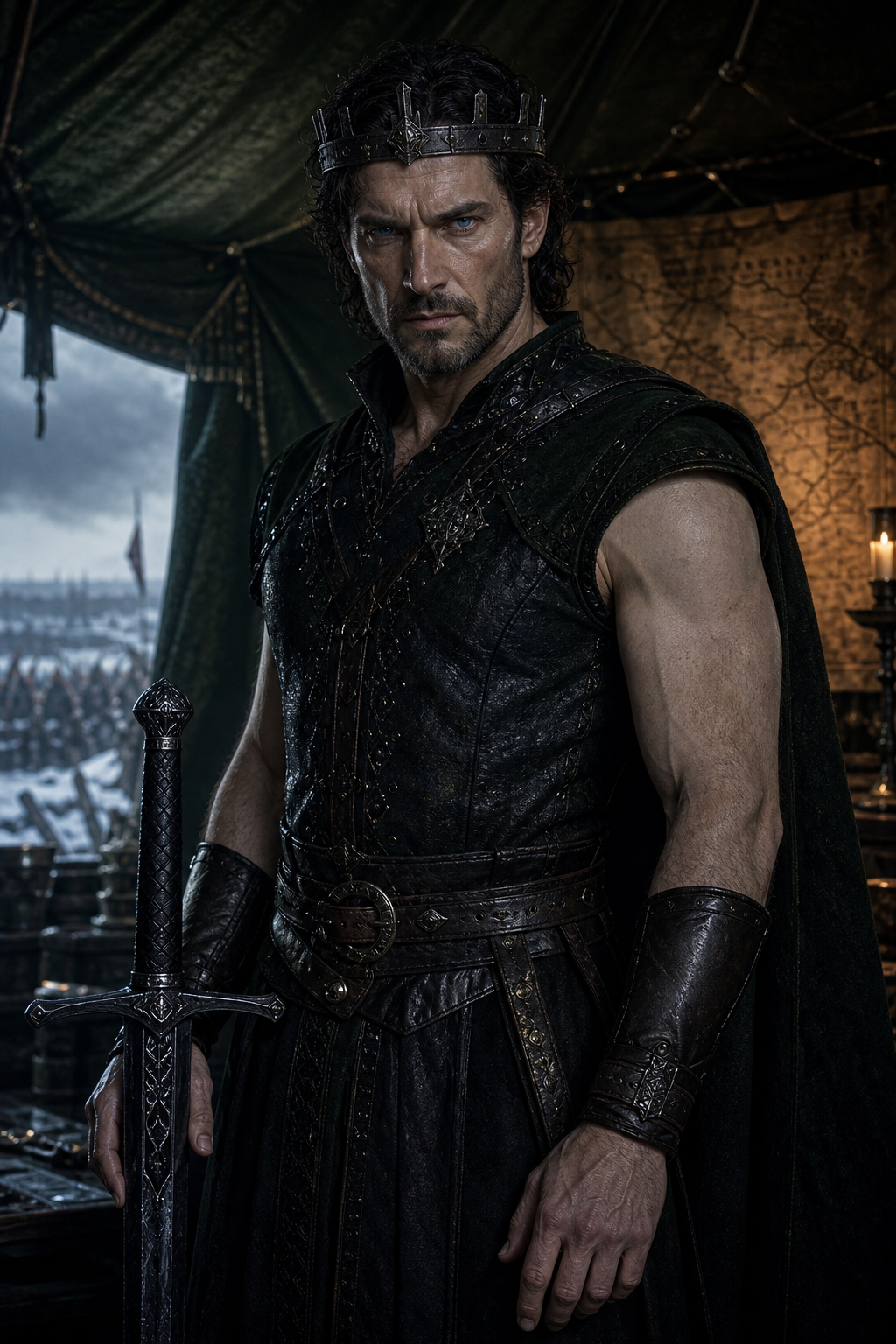
In the green campaign tent, Elias wears Fingil’s iron crown, sits bare-armed in supernatural cold, and holds Sorrow between his knees. He demands Miriamele and offers safe conduct only to Naglimund’s women and children. Everyone else will die if she is not surrendered.
Josua truthfully says he does not know where she is and will not hand her over unwillingly. He offers his own life, Naglimund’s gates, and a search across heaven and earth if Elias will cast away Sorrow. For a moment Miriamele’s face recalls Hylissa. Then Josua’s touch reaches the severed wrist, the old wound consumes the room, and Elias rejects the last exit his brother can invent.
He orders rain—and the laughter dies when everybody realizes he expected obedience
Elias attacks Naglimund with six wall-high siege towers, catapults, a ram, miners, ladders, archers, and enough soldiers to spend lives the defenders cannot replace. When oil and pitch set four towers burning, he rides out with Sorrow and commands rain. None comes. The defenders laugh, then understand the king is not performing divine authority for morale. He is outraged that the sky has disobeyed.
Guthwulf warns that ordinary siegecraft cannot break Naglimund quickly. Elias grants one final day and promises “other arrangements.” The human army withdraws, clearing the way for the Norn-led Harrowing. Book 1 ends before Elias receives a clean reckoning, but it has already made the chain legible: crown, pact, sword, siege, supernatural atrocity.
Crown, grief, and culpability
The tragedy is stronger when the profile refuses both lazy absolution and lazy simplification
Elias’s defenders inside the story remember a brave prince and devoted husband. Josua repeatedly treats that remembered man as evidence that recovery remains possible. The green-tent offer is the purest expression of this hope: Josua will surrender himself, his stronghold, and his political future to get his brother away from Sorrow. Love is not naïve because it hopes. It becomes politically dangerous when hope substitutes for a security assessment.
Pryrates deserves exact blame. He isolates the king, manages information, supplies black liquor and soothing drink, weaponizes dreams, negotiates beyond the authorization Elias understands, and makes every crisis point back toward greater dependence. Ineluki’s influence and Sorrow’s presence are not metaphors. By the siege, Elias is unnaturally cold, sleepless, gem-bright or reddened in the eyes, and unable to separate supernatural expectation from governance.
But “under influence” cannot become fandom bleach. Before Stoning Night, the regime already prizes spectacle over crops, favoritism over military evidence, coercive marriage over Miriamele’s refusal, and insult over correction. After Stoning Night, Elias keeps choosing the structure that protects his grievance: Pryrates beside him, Sorrow in hand, Miriamele demanded, soldiers expendable, Josua defined as hatred made flesh.
Relationships
Every intimate bond becomes a route by which love, fear, inheritance, and control enter the state
Prince Josua
They once loved one another. Hylissa’s death, Josua’s lost hand, John’s judgment, succession anxiety, and Pryrates’s manipulation convert that closeness into obsession. Josua still believes the man he loved can choose differently; Elias experiences the offer as accusation and theft.
Miriamele
Elias’s love for her is one of the few feelings the sword has not flattened. That makes his behavior more disturbing, not less: he turns marriage into succession policy, demands her surrender, and describes recovery as saving the one good piece of his family.
Hylissa
Her death is the wound Elias and Josua cannot share without turning memory into blame. Miriamele’s face briefly reopens tenderness at Naglimund; Josua’s severed wrist immediately converts tenderness back into hatred.
Prester John
John leaves Elias a kingdom built around his own legend and privately judges both sons against it. Bright-Nail, the Dragonbone Chair, the funeral, and the crown become less an inheritance than a test nobody can finish because the dead king still defines the grading.
Pryrates
Pryrates tells partial truths, controls access, drugs and soothes, manages Elias’s dreams, and arranges the covenant. Elias depends on him and resents him, but keeps choosing the machinery that gives the priest power.
Sorrow / Jingizu
Sorrow is weapon, inheritance trap, psychic presence, and material proof that Elias accepted Ineluki’s bargain. By Naglimund it never leaves him. The portrait includes it because Book 1 no longer permits a clean visual separation between king and pact.
Guthwulf
Guthwulf remembers camaraderie and tries to reach it through military counsel. Elias answers with distance and a deadline. The Hand’s fear measures how completely proximity to royal power has stopped providing safety.
Fengbald
Elias uses Fengbald against Josua and treats his proposed marriage to Miriamele as political stabilization. Fengbald’s cruelty and Falshire catastrophe reveal the quality of agent the new court rewards.
Isgrimnur
John’s closest companion brings concrete northern danger; Elias answers through Skali’s insinuation and public slight. The regime teaches loyal witnesses that evidence matters less than whether it flatters the new king.
Fandom notes and what the fact box misses
Yes, he is hot. No, the jawline is not a legal defense.
Elias should look like the prince everyone once expected to rule well. The tragedy loses voltage if he arrives as an obvious corpse-king before the bargain. He is charismatic, physically powerful, hawk-nosed, dark-haired, and royal enough to make obedience feel like the natural architecture of a room. The attractive exterior is not decorative generosity. It explains why old loyalty survives bad evidence and why remembered nobility keeps purchasing one more chance.
That is also why the profile refuses the “Pryrates made him do it” shortcut. Fandom often treats supernatural corruption like a detergent cycle: insert dangerous man, add cursed object, remove moral stain. Book 1 is meaner and more interesting. Pryrates selects pressures already present. Sorrow enlarges entitlement already governing the court. Ineluki offers power to a king already interpreting disagreement as disloyalty.
His most memorable siege beat is not victory—it is the dead laughter
The rain command condenses Elias’s Book 1 transformation better than a paragraph of diagnosis. The defenders initially see a ridiculous man shouting at weather. Then they recognize that his expectation is sincere. The scene crosses comedy, terror, pity, and political warning in seconds. A ruler who believes the universe owes him compliance will treat human refusal as a cosmic malfunction.
At the same time, the failed rain matters. Elias is not omnipotent. The sword does not make every command true. His rage comes partly from discovering that power promised in absolute language still arrives with limits. Naglimund’s defenders cannot assume those limits will save them, because “other arrangements” bring forces ordinary walls were never built to stop.
Josua’s offer does not prove Elias is redeemable; it proves Josua still loves him
The parley is often tempting evidence for the wrong conclusion. Elias’s momentary response to Hylissa through Miriamele shows emotional continuity, but continuity is not redemption. The decisive action is rejection. Josua’s willingness to sacrifice everything tells us who Josua is and who Elias used to be to him. It does not overrule what Elias chooses in the tent.
Book 1 leaves Elias alive, which means the profile must preserve both danger and unfinishedness. It should not borrow later-volume outcomes, diagnoses, or final moral accounting. Today’s verified end state is the High King outside the fallen Naglimund ecosystem, inseparable from Sorrow, implicated in the Harrowing, and still human enough that every choice hurts more.
Canonical identity and milestone art
The adult king stays recognizable even as Sorrow changes the weather around him
Elias’s canonical Book 1 image fixes an attractive, powerfully built man in his middle forties with black hair, a high forehead, strong hawk nose, pale skin, short dark facial hair, cold blue gem-bright eyes, and the physical authority of a lifelong warrior. He wears Fingil’s iron crown and dark green-black campaign clothing with his arms exposed, standing inside the green tent with Sorrow.
On the record
What this profile can prove today
This canonical profile covers Elias only through The Dragonbone Chair. Book 1 verifies his succession, court spectacle, conflict with Josua, plan to marry Miriamele to Fengbald, responsibility within Pryrates’s manipulated covenant, acceptance of Sorrow, demand for Miriamele at Naglimund, rejection of Josua’s offer, first-day siege command, and movement toward the Harrowing.
Source: owner-accessed Kindle edition of The Dragonbone Chair, verified front-to-back through page 652 of 652 and reconciled with the complete Book 1 character manifest. Later-volume chronology will be added only after sequential reading reaches and verifies it.
The Dragonbone Chair hub → · Book 1 characters → · Miriamele’s canonical profile → · Series hub →