
BTS They Don’t Know ’Bout Us Audio React: Privacy After the Whole World Looked In
They Don’t Know ’Bout Us turns secrecy into shelter. BTS sing about a relationship protected from spectators while carrying the very inconvenient history of being watched almost everywhere.
Release file
Released: March 19, 2026
Runtime: 02:44
Artist / channel: BTS / official upload
Exact-file focus: Exact official album audio. The later Tampa fan recording is excluded from the canonical file.
BTS stopped explaining the relationship to strangers and made privacy sound like an old-school hip-hop boundary line.
What changed every time I replayed it
First intake: The 808 lands before the argument. BTS sounds planted, not wounded, which immediately keeps the track out of celebrity pity-party territory.
Second intake: “They do not know” stops sounding like a correction and starts sounding like relief. Outsiders can remain wrong. The group does not have to spend the afternoon fixing them.
Third intake: The word “special” changes shape. Praise becomes another cage when it demands seven people remain heroic, grateful, united, and easy to explain at all times.
Later replay: I still want one sharper production break, but the controlled irritation wins. Nobody is arguing in the comments. They closed the app and kept the bass.
The live stage made the boundary louder
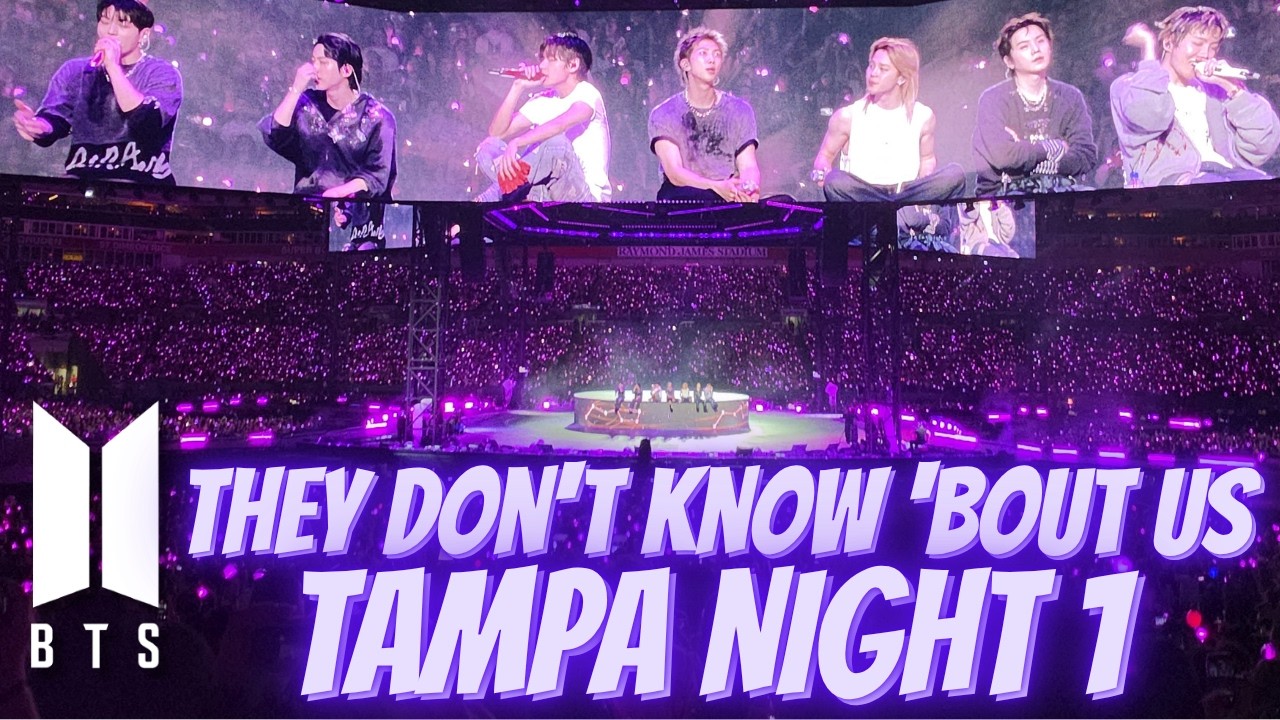
The record keeps its temper under control. The Tampa stage lets the bodies finish the sentence. All seven members spread across the stadium-sized frame while the crowd turns the private boundary into a public chant. That contrast matters. The song says strangers do not own the relationship, then thousands of fans sing along without pretending they do.
Overall vibe: private truth over public mythology
The beat pulls from old-school hip-hop and trap, with enough 808 weight to make the song feel planted rather than defensive. BTS are not asking the audience to understand every private detail. They are rejecting the idea that fame gives strangers ownership of the story.
That stance lands differently after years of military schedules, solo careers, reunion speculation and people turning seven human relationships into a public utility. The track does not scream that outsiders are wrong about one rumor. It says the entire viewing angle is incomplete.
What I love
The controlled irritation. Nobody sounds like they are losing an argument online. The group sounds bored with the trial and confident enough to leave the courtroom.
What I side-eye
The hook is intentionally repetitive, but the production could have risked one sharper disruption. A sudden empty bar or unfiltered vocal break would make the boundary feel even more physical.
The hook vibe: access denied with a bass line
The title phrase works because it is conversational. It sounds like something said after closing a door, not something printed on a manifesto. Repetition turns it into a protective circle: you can watch, measure, praise, insult and speculate, but observation is not intimacy.
The groove keeps the message from becoming self-pity. BTS are not begging to be seen correctly. They are claiming the right to remain partly unknowable. That is a much healthier pop-star fantasy than pretending total access is proof of love.
Lyrics: “special” can still be a cage
The writing pushes back against projections that turn BTS into heroic symbols, unbreakable representatives of Asia, or manufactured objects. Praise can flatten a person almost as efficiently as hate. Being called exceptional sounds flattering until it becomes a demand to survive everything without visible damage.
ARIRANG’s themes of Korean identity and global movement make that pressure specific. BTS carry enormous cultural meaning, but the song refuses the idea that they must explain an entire country, continent or generation every time they make music. Representation matters. So does the right to be seven Korean men with private jokes, conflicts and limits.
The “us” stays usefully unstable. It can mean the members, BTS and ARMY, or any relationship constantly narrated by outsiders. The song’s power comes from refusing to identify the authorized audience. If you have to ask whether you are inside the “us,” that may be the answer.
Presentation: official audio, no fake detective board
The official BANGTANTV release is an audio upload rather than a narrative MV. There is no director explaining colored doors or hidden clocks because none exist. The visual restraint suits the point: outsiders do not get another fictional set to colonize with theories.
That does not make the presentation empty. The ARIRANG artwork frames the track inside the group’s return, while the music keeps the private center off-camera. Sometimes the most accurate visual choice is not giving the audience another window.
Easter eggs in the album architecture
- Lowercase title: the sentence looks casual while delivering a hard boundary.
- Track 11: it arrives after “Like Animals,” moving from instinct and exposure into control over interpretation.
- 808 relationship: AP noted its kinship with “2.0,” connecting the group’s updated identity to its refusal of outside definitions.
- Old BigHit sound: the hip-hop foundation reaches backward without pretending the members are the same rookies.
The member-credit file matters
Jimin participated as a lead composer and lyricist, with RM, SUGA and j-hope also credited alongside Pdogg, GHSTLOOP, Y2K and other collaborators. That combination explains the track’s balance: vocal intimacy, rap-line boundary setting and production that remembers BTS’s earlier hip-hop spine.
Jimin’s contribution is especially useful context because public shorthand often reduces him to performance and vocal color. A track about being misread includes his authorship in the official record. Fans should not repeat the flattening the song is criticizing.
Producer perspective without imaginary quotes
Pdogg, GHSTLOOP and Y2K’s documented production credits tell us who built the sonic frame; the final recording tells us what choices survived. The beat is heavy without turning aggressive, the hook is intimate without becoming soft-focus, and the arrangement leaves the words in control.
No official narrative director has offered a visual explanation because this is not a conventional music video. I am not assigning meaning to nonexistent props. The real backstory is authorship and context: a globally over-explained group made a song about the limits of explanation.
The parasocial boundary is the actual love language
Fandom often confuses access with care. Watching years of content can create familiarity, but familiarity is not mutual intimacy. BTS can share stories, fears, jokes, and music without making every relationship available for public inspection.
That boundary does not insult ARMY. It protects the conditions that allow artists and fans to remain in relationship without turning seven people into public property. Love that requires total access is surveillance wearing a purple hoodie.
The song also protects relationships among the members. Fans see edited footage, official statements, stages, and fragments of private history. None of us sits inside the full friendship. Accepting that limit is more respectful than building a detective board and calling it loyalty.
The Korean and global macro lens
BTS carries national symbolism whether the members request it or not. Global media has called them proof of Korean soft power, Asian representation, youth resilience, and a new music economy. Those readings can be useful, but they also turn people into infrastructure.
From a modern Confucian lens, identity is relational, yet relationship does not erase the private self. Duties exist in both directions. Public figures owe honesty within reasonable limits. Audiences owe restraint. Institutions owe room for human failure.
The track’s satire is blunt: strangers collect clips, charts, translations, airport photos, enlistment dates, and body language, then announce they understand “us.” BTS answers with a bass line and the social equivalent of closing the curtains.
Seven people, one boundary, different reasons
RM sounds like the person drafting the boundary so nobody can pretend the wording was unclear. His delivery gives the song its argument. Jin gives the melodic line openness without turning privacy into coldness. He reminds the listener that protecting something does not mean the thing lacks warmth.
SUGA brings the exhaustion of somebody who has watched strangers convert fragments into certainty. j-hope keeps the song moving, which matters because a boundary should create room to live, not merely build a prettier bunker. Jimin makes the private emotion feel close enough to be real without performing it as proof.
V carries the lower, guarded color that fits a song refusing public ownership. Jung Kook stabilizes the chorus so the refusal never sounds defensive. The seven-member blend makes the central claim believable: outsiders can know the public story and still not know the relationship.
Privacy is not secrecy with better public relations
Fans often treat privacy as a suspicious empty space. If an artist does not explain a friendship, romance, disagreement or absence, somebody will fill the gap with screenshots and confidence. The song pushes back on the idea that visibility creates entitlement. Seeing a person frequently does not move the audience into that person’s inner circle.
Secrecy hides information because disclosure would threaten power, safety or reputation. Privacy sets a boundary because not every truth belongs to the crowd. The difference matters. A private relationship can be healthy and honest between the people inside it. The public simply does not get a chair.
That is where the hook earns its bass line. “They don’t know” is not a sad complaint that strangers misunderstood one post. It is access control. The members do not owe a complete evidence packet to everyone who mistakes attention for intimacy.
The fandom can love BTS without becoming an investigator
Parasocial relationships are not automatically fake or shameful. Music can help people survive, learn, grieve and build community. The problem begins when emotional value gets converted into authority. Buying albums does not purchase a vote on somebody’s private life. Knowing years of public content does not make inference equal consent.
The internet rewards the opposite lesson. Platforms pay attention to certainty, outrage and constant updates. A blurry photograph becomes a case file. A missed appearance becomes betrayal. Two people standing near each other becomes a secret timeline. The audience is not merely curious; the system teaches curiosity to perform like law enforcement.
From an MRT and power lens, the important question is who can define reality. The celebrity has direct knowledge but limited control over circulation. The crowd has fragments but enormous collective reach. “They don’t know ’bout us” returns authority to the people living the relationship. That should be obvious. Online, it is practically radical.
The Korean celebrity system makes silence do extra work
K-pop depends on carefully managed closeness. Idols speak directly to fans, share routines and repeat language about togetherness. That intimacy can be sincere while also serving a business model. The conflict arrives when companies and audiences encourage emotional access but punish artists for keeping ordinary adult boundaries.
Korean entertainment culture also places heavy value on reputation, group responsibility and reading the room. One person’s private choice can become a public burden for members, staff and brand partners. Silence may protect more people than the audience can see. That does not make every silence noble. It means outsiders rarely possess the entire responsibility map.
A Confucian lens sees relationships as obligations shaped by role. A Buddhist lens warns against gripping any role as permanent identity. BTS has to live between those pressures: members of a group, individual adults, public figures and private people. The song refuses to let one role swallow all the others.
The smartest thing the track does is leave the details out
A weaker version would provide specific rumors, recognizable incidents or a dramatic answer to one fandom theory. That would make the song expire faster and reward the same detective behavior it criticizes. The absence of particulars protects the people involved and turns the boundary into something listeners can apply beyond BTS.
I still want one arrangement surprise. Strip the chorus to voices and bass, let the phrase feel almost uncomfortably bare, then return with the full blend. Privacy is the theme, so the production could make absence audible. The current track says the right thing. One riskier musical choice would make the listener experience it.
Final verdict
Keep digging through the panda pile
BTS profile · Jimin profile · RM · SUGA · j-hope
RaeRae verdict
This exact upload earns the replay because BTS keep seven individual roles inside one shared argument. The companion performance remains useful context, but it no longer competes with the canonical file or turns one React into two reviews.