
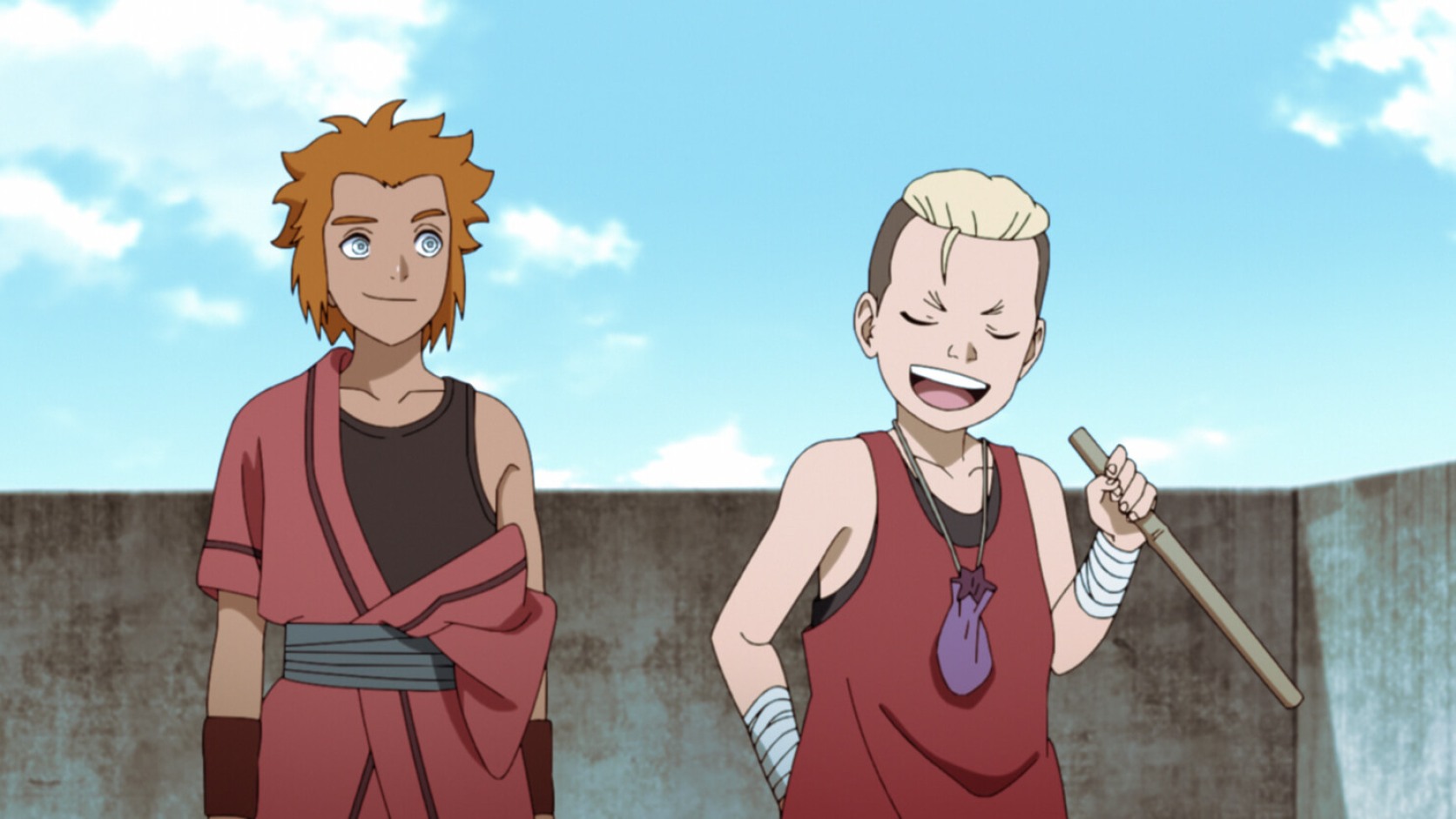
The Blood of the Funato
Ikada cares for his injured sister while Kobuna, Araumi, and the clan pressure him to prove family loyalty by joining a war he never wanted.
Series: Boruto: Naruto Next Generations
Episode: 250 · The Blood of the Funato
Arc: Great Sea Battle of the Hidden Mist Village
Release: May 22, 2022
Previous: Episode 249 · Burgeoning Hatred
Directory: All 293 Boruto episodes
Bottom line
Boruto Episode 250 takes us inside the Funato family and proves that “blood” is doing two jobs at once. Blood means kinship, the people Ikada loves and refuses to abandon. Blood also means violence, the price Araumi expects every relative to pay for belonging. Ikada wants to care for his badly injured sister, Seiren. His father and clan want him fighting.
Kobuna asks whether Ikada will join the war after Funamushi’s death. Araumi treats hesitation like betrayal. Isari sees that the campaign is failing and argues for withdrawal. The family could choose care, survival, and an end to the losses. Instead, the loudest adults keep treating grief as a recruitment office.
RaeRae’s one-minute verdict
Ikada changing Seiren’s medicine and sitting beside her is not cowardice. That work is family duty in its most honest form. Araumi wants the symbolic version of loyalty, where a son proves his blood by spilling somebody else’s.
Let Isari withdraw the fighters. Keep Ikada with Seiren if that is where he freely chooses to be. Protect Kobuna from recruitment. Stop ranking combat above caregiving. A family that only values its children when they fight has confused lineage with ownership.
Ikada comes home for Seiren
Ikada returns after learning how seriously Seiren was injured. He does not arrive seeking command, revenge, or recognition. He comes to watch over his sister.
That choice tells us who he is before the clan starts telling him who he must become. Care is his first instinct, and the episode should take that instinct seriously.
Seiren cannot advocate for herself
Seiren lies unconscious while relatives argue about war, honor, and Ikada’s future. Her condition makes her physically present but politically absent.
Medical decisions should center her welfare, known wishes, and best interests. Nobody should use her body as a banner for retaliation while she cannot speak.
Caregiving is real work
Ikada monitors Seiren, manages treatment, and stays close through uncertainty. The labor looks quiet beside a battle, but quiet does not mean easy or unimportant.
Caregivers carry fear, exhaustion, medication schedules, bodily needs, and the possibility of sudden decline. A responsible family would support Ikada rather than mock him for doing necessary work.
Seiren needs qualified medical care
Love cannot replace clinicians, supplies, clean equipment, and emergency planning. Ikada should not be left solely responsible for a severely injured patient because other adults prefer the battlefield.
The clan must assign trained medical staff, document treatment, maintain medications, and prepare safe evacuation if her condition changes. Family presence should support care, not substitute for a health system.
Ikada also needs relief
Continuous bedside care can consume sleep, food, judgment, and emotional stability. Ikada needs another trusted caregiver who can relieve him without pushing him into combat.
Rest is not abandonment. A rotation would protect both siblings and give Ikada space to make decisions outside the immediate panic of Seiren’s condition.
Araumi calls care a failure
Araumi is annoyed that Ikada remains with Seiren instead of joining the war. His anger reveals a hierarchy in which combat counts as duty and care counts as avoidance.
That hierarchy is rotten. The clan cannot claim family as its highest value while demeaning the work keeping a family member alive.
A father should not conscript his son through shame
Araumi has enormous power over Ikada as both father and clan leader. When he frames refusal as weakness or betrayal, family pressure becomes coercion.
Ikada cannot give meaningful consent while love, belonging, and approval are threatened. A parent should protect a child’s future, not make affection conditional on military service.
The clan expects blood to decide identity
Ikada’s temperament and chosen life do not match the warrior role others assign him. The clan treats ancestry as destiny.
Biology cannot decide profession, morality, or political loyalty. Family history may shape a person, but nobody inherits an obligation to kill.
Ikada already chose another life
Working as a shipbuilder gave Ikada useful skill, community, and distance from the Funato campaign. That life was not a childish detour. He built an identity around making vessels rather than sinking them.
The clan’s demand threatens more than his safety. They want him to abandon evidence that a Funato can contribute without becoming a fighter.
Shipbuilding is not lesser service
Boats carry food, medicine, workers, families, and trade. Building them supports the sea in a way conquest never will.
Araumi’s contempt for noncombat labor exposes how militarized the clan has become. When every talent is measured by battlefield use, a community consumes its own future.
Seiren placed hopes in Ikada
Seiren believed Ikada possessed remarkable power and could serve the family. That belief may have included love, pride, ambition, and the clan’s expectations all at once.
Ikada can value his sister without fulfilling every dream she held for him. Love does not require becoming another person’s plan.
Hope can become pressure
Families often call expectations “hope” because the word sounds kind. The emotional weight can still be crushing when only one acceptable future is offered.
People around Ikada should ask what he wants, what he fears, and what conditions shaped his earlier refusal. They should not treat his power as communal property.
Seiren’s injury is not Ikada’s enlistment order
Her suffering may intensify his desire to protect her, but protection does not automatically mean joining the campaign that exposed her to harm.
The most direct act of care may be staying beside her and opposing further escalation. Revenge would not restore her health.
Kobuna comes carrying Funamushi’s death
Funamushi’s son visits Ikada after losing his father. Kobuna asks whether Ikada will fight, turning a bereaved child into a messenger for the clan’s expectations.
Adults should be surrounding Kobuna with safety and care. Instead, the war gives him a recruitment question to deliver.
Kobuna should not recruit anyone
A child cannot be made responsible for persuading an adult or older relative to enter combat. That task places political weight on grief and makes refusal feel like rejection of the child.
Somebody should tell Kobuna that Funamushi’s death is not his fault and that he does not need to secure another fighter to prove loyalty.
Ikada answers honestly
Ikada says he is not suited for battle. The statement is direct, self-aware, and morally relevant. He knows his nature better than relatives who see only inherited power.
Leaders should treat that answer as a boundary. Pressing harder does not reveal hidden courage. Pressing harder erodes consent.
Not suited for battle is enough
Ikada does not owe the clan a diagnosis, a dramatic confession, or a demonstration of incapacity. A clear refusal should end the discussion.
Communities that demand elaborate justification for opting out usually intend to argue with every reason. Respect begins when “no” has meaning.
Power does not create duty to fight
Ikada’s abilities may be rare and strategically valuable. That fact increases the clan’s interest but does not erase his autonomy.
A person is not a public weapon. Talent can create opportunities and responsibilities, but forced combat is ownership disguised as necessity.
Araumi mistakes capacity for consent
Araumi sees what Ikada could do and assumes the family may command that capacity. He never pauses over whether Ikada accepts the cause or the methods.
Consent cannot be inferred from bloodline, skill, proximity, or silence. Commanders must ask, and they must accept the answer.
The other Funato apply collective pressure
Disapproval does not come from Araumi alone. Clan members reinforce the idea that Ikada’s absence disgraces everyone.
Group pressure can become more effective than a direct threat because every relationship appears conditional. Ikada risks losing home, family, and identity at the same time.
Belonging should not require violence
A healthy family leaves room for dissent, different work, and moral disagreement. The Funato version of belonging demands obedience to armed leadership.
That demand makes the clan fragile. People remain because departure is punished, not because the shared project deserves trust.
Isari reads the battlefield correctly
Isari recognizes that continuing the campaign will cost more people without producing a realistic victory. He argues for withdrawal.
That is not cowardice. Command judgment includes knowing when an objective no longer justifies the casualties required for pursuit.
Withdrawal can save the clan
Leaving a failed operation preserves fighters, allows medical care, protects families, and creates space for negotiation. A retreat may feel humiliating, but humiliation is survivable.
Araumi’s pride turns withdrawal into dishonor because admitting limits would threaten his authority. The clan should not pay with lives to protect one leader’s image.
Commanders need authority to say stop
If every subordinate who recommends withdrawal is treated as disloyal, battlefield reporting becomes performance. Leaders hear only what confirms their plans.
A functioning command system protects dissent, requires casualty estimates, and records objections. Isari’s warning should trigger review, not punishment.
Araumi has confused persistence with strength
Continuing after every setback can look determined. Persistence without a workable objective becomes waste.
Strength would mean facing the losses, changing course, and accepting responsibility. Araumi chooses repetition because change would require admitting that his decisions harmed his own people.
Honor is swallowing the living
The clan speaks about honor while Seiren lies injured, Funamushi is dead, Kobuna grieves, and more fighters face danger. Any code producing that pattern deserves interrogation.
Honor should regulate power and protect people. A code that only demands sacrifice serves commanders, not community.
Seiren becomes a symbol against her will
Her injury can be used to demand retaliation, prove enemy cruelty, or shame Ikada. Each use pushes the actual patient farther from view.
People should name Seiren’s needs before invoking her name in a political argument. Her pain belongs to her, not to the clan’s propaganda.
Funamushi’s death becomes another lever
Kobuna’s loss gives leaders a fresh reason to continue. The dead commander can no longer answer for his choices, and his child can be displayed as proof that the family must retaliate.
Grief should lead to support and investigation. Turning grief into a lever ensures another child will stand in Kobuna’s place.
The Funato are not a single mind
Ikada wants another life. Isari wants withdrawal. Kobuna is grieving. Araumi demands battle. Seiren cannot speak. Their differences matter.
Calling all Funato bloodthirsty would repeat the dehumanization that sustains the war. Individual motives and responsibilities must remain visible.
Humanizing the Funato is not excusing them
The episode shows family care, internal disagreement, and fear inside the opposing side. Those details do not erase attacks, hostage-taking, or civilian danger.
Humanization makes accountability more precise. Real people make choices inside real pressure; justice must identify both.
Ikada faces coercive control
His father controls status, belonging, and access to family while demanding conduct Ikada rejected. That pattern fits coercive control even without a visible physical threat.
Support should offer confidential advice, safe lodging, communication with Seiren, and protection from forced recruitment. Escape is not meaningful if leaving means losing every loved person.
Seiren’s care cannot depend on Ikada’s obedience
Araumi must not threaten to withdraw treatment, access, or information unless Ikada fights. Medical care cannot become bargaining material.
An independent clinician or advocate should document Seiren’s condition and ensure treatment continues regardless of family politics.
Ikada needs a private decision space
He cannot evaluate his future while surrounded by grieving relatives and military leaders demanding an immediate answer. Time and privacy are essential.
He should speak with somebody outside Araumi’s command who understands both the conflict and coercion. Advice without safety will not be enough.
Refusal must not trigger punishment
Demotion, exile, loss of family access, confiscation of work, or public shaming would all punish Ikada for exercising autonomy. The clan may call those consequences tradition, but the function remains coercive.
Protection requires monitoring what happens after he says no, not merely allowing him to speak once.
Kobuna needs child protection now
The boy has lost his father and is already focused on who will continue the fight. That combination signals recruitment risk and unresolved trauma.
He needs a safe caregiver, grief support, school, routine, and distance from military planning. Adults should not praise his desire for revenge as maturity.
Children copy what adults reward
If Kobuna receives attention when he talks about battle, he will learn that violence is the approved language of mourning. If adults honor vulnerability and care, another path becomes possible.
The clan’s response now will shape whether he grows around his grief or remains trapped inside the loss.
Funamushi’s fatherhood deserves honest memory
Kobuna should be allowed to remember tenderness, protection, and ordinary moments with his father. He also deserves a truthful account of Funamushi’s command decisions.
Forcing either worship or total condemnation would make mourning harder. Children can love a parent while eventually understanding that the parent caused harm.
The episode exposes gendered labor
The community’s visible work divides combat, supplies, repair, and care along expectations that carry different status. The people maintaining daily survival receive less glory than fighters.
That imbalance hides who actually keeps the clan alive. Food, medicine, maintenance, child care, and transport are not secondary to society. They are society.
Women’s labor cannot remain scenery
When women collect supplies, repair equipment, care for injured people, and hold families together, their work should influence decisions. Labor without voice is exploitation.
Any peace process or withdrawal plan needs the people who understand household needs, medical shortages, displacement, and survival beyond combat.
Combat prestige distorts every choice
Araumi treats fighting as the highest contribution, so every other role appears lesser. That prestige system pushes people toward violence even when their skills are more useful elsewhere.
The clan needs a wider definition of service that values builders, medics, caregivers, navigators, teachers, and negotiators.
A wounded community needs builders
Boats, homes, clinics, water systems, and routes will need repair regardless of who claims victory. Ikada’s skills could help the islands recover.
Sending him to fight risks the person and the expertise. War consumes capacity that peace will desperately need.
The sea is not owned by one family
The Funato connect identity and authority to the ocean, but cultural attachment does not grant unlimited control over everyone who lives or travels there.
Maritime access, fishing, transport, sacred sites, and environmental protection require negotiation among affected communities. Weapons cannot create legitimate consent.
Grievances still need a forum
Rejecting the Funato campaign does not mean every underlying complaint is false. Communities may have experienced displacement, exclusion, resource loss, or disrespect.
Those claims need evidence, representation, and a political process. Ignoring them because commanders committed violence will leave recruiters with useful anger.
Violence narrows the people who speak
Once the conflict becomes military, Araumi and other armed leaders appear to represent everyone. Ikada, caregivers, workers, and dissenters disappear from negotiations.
A legitimate settlement must include noncombatants and people who rejected the campaign. Guns should not determine whose voice counts.
Isari needs protection for dissent
Arguing for withdrawal may place Isari at risk from his own side. He needs a safe way to document the recommendation, communicate with others, and refuse unlawful orders.
Internal dissent can prevent atrocities and save lives. Treating every objection as treason makes accountability impossible.
Orders must be recorded
Who ordered continued attacks, rejected withdrawal, recruited minors, or diverted medical resources should be documented. Oral command and family hierarchy make later denial easy.
Records protect victims, responsible subordinates, and the historical truth. They also show whether Araumi’s authority faced any real constraint.
Casualty numbers need names
Leaders can discuss losses as strategy while families experience individual absence. Every dead, injured, and missing person should be identified and reported accurately.
Naming people resists the way grand causes turn lives into acceptable totals. Funamushi, Seiren, and the others are not just points in Araumi’s argument.
The injured need neutral access
Medical workers should be able to reach wounded people regardless of affiliation. Treatment cannot depend on whether somebody promises to return to combat.
Neutral care also creates communication channels that may support prisoner exchange, family notification, and de-escalation.
Families need the right to leave
Funato households who want safety should receive evacuation routes without being branded traitors. Civilians cannot be treated as human shields for a political claim.
Receiving communities need resources so displacement does not produce new resentment. Safe exit is part of ending the war.
Fighters need a demobilization path
People who joined through family duty, fear, money, or belief need a credible way out. Surrender should include identification, lawful review, disarmament, and reintegration support where appropriate.
If departure guarantees disappearance or revenge, Araumi can keep people fighting by describing every alternative as death.
Accountability must reach leaders
Low-ranking fighters should answer for their actions, but justice cannot stop there. Araumi and commanders who designed operations, rejected warnings, or exploited grief hold greater responsibility.
Hierarchy should increase scrutiny rather than provide insulation.
Boruto’s side should listen to Ikada
Ikada understands the clan’s family structure, grievances, sea culture, and internal fractures. Treating him only as a potential enemy would waste the perspective most likely to support de-escalation.
Listening does not mean demanding intelligence as the price of friendship. Boruto must respect Ikada’s safety and agency.
Friendship cannot become recruitment either
Boruto may want Ikada to oppose the Funato publicly. That wish can reproduce Araumi’s pressure from the other direction if friendship becomes conditional.
Ikada should be free to choose peace without serving either side as a weapon, symbol, or informant.
Ikada may fear losing Boruto too
Joining the Funato could place him against a friend. Refusing the clan could cost his family. The conflict makes every relationship feel like a test.
Support should acknowledge that double bind rather than offering a simple slogan about choosing the right side.
Seiren’s future could change the decision
If Seiren wakes, worsens, or dies, relatives may treat the development as a command for Ikada to act. Emotional shock is the worst moment for irreversible military decisions.
A cooling-off period and independent support should follow any major medical change. Grief must not become an enlistment deadline.
The title warns us about inheritance
“The Blood of the Funato” sounds like ancestry, power, loyalty, and spilled life all at once. The clan uses those meanings to make violence feel natural.
Ikada’s refusal proves nothing about violence is inevitable. Blood can describe connection without dictating conduct.
Family tradition can be challenged
Tradition deserves respect when carrying knowledge, identity, and care. Tradition deserves change when leaders use custom to silence refusal or sacrifice children.
Ikada can remain Funato while rejecting Araumi’s war. A living culture must allow moral growth.
Care offers a different inheritance
Ikada can pass forward what he does at Seiren’s bedside: attention, skill, patience, and refusal to abandon a vulnerable person. Kobuna needs that model more than another fighter.
The clan’s future could be built through care for the sea and one another rather than domination.
What responsible leadership looks like now
Accept Isari’s call for withdrawal. Place Seiren under qualified care with Ikada’s presence protected. Remove Kobuna from military messaging. Offer fighters and families safe exits. Open monitored negotiation.
Then investigate the campaign honestly, including Araumi’s decisions and the opposing side’s conduct. Peace without truth will remain fragile, but truth without safety will never be heard.
RaeRae’s final word
Ikada is not failing his family. He is the person in the room actually caring for family while Araumi talks about blood and sends relatives toward more bloodshed. The contrast could not be clearer.
Seiren needs medicine, not revenge performed in her name. Kobuna needs grief care, not another recruiter. Isari needs permission to save the fighters who remain. Ikada needs the right to be a builder. If the Funato cannot survive those choices, the problem is not Ikada’s loyalty. The problem is a leadership model that only recognizes love after somebody bleeds.
Sources and lawful viewing
Official episode reference: Naruto Official episode guide
Licensed episode route: Crunchyroll licensed series page