
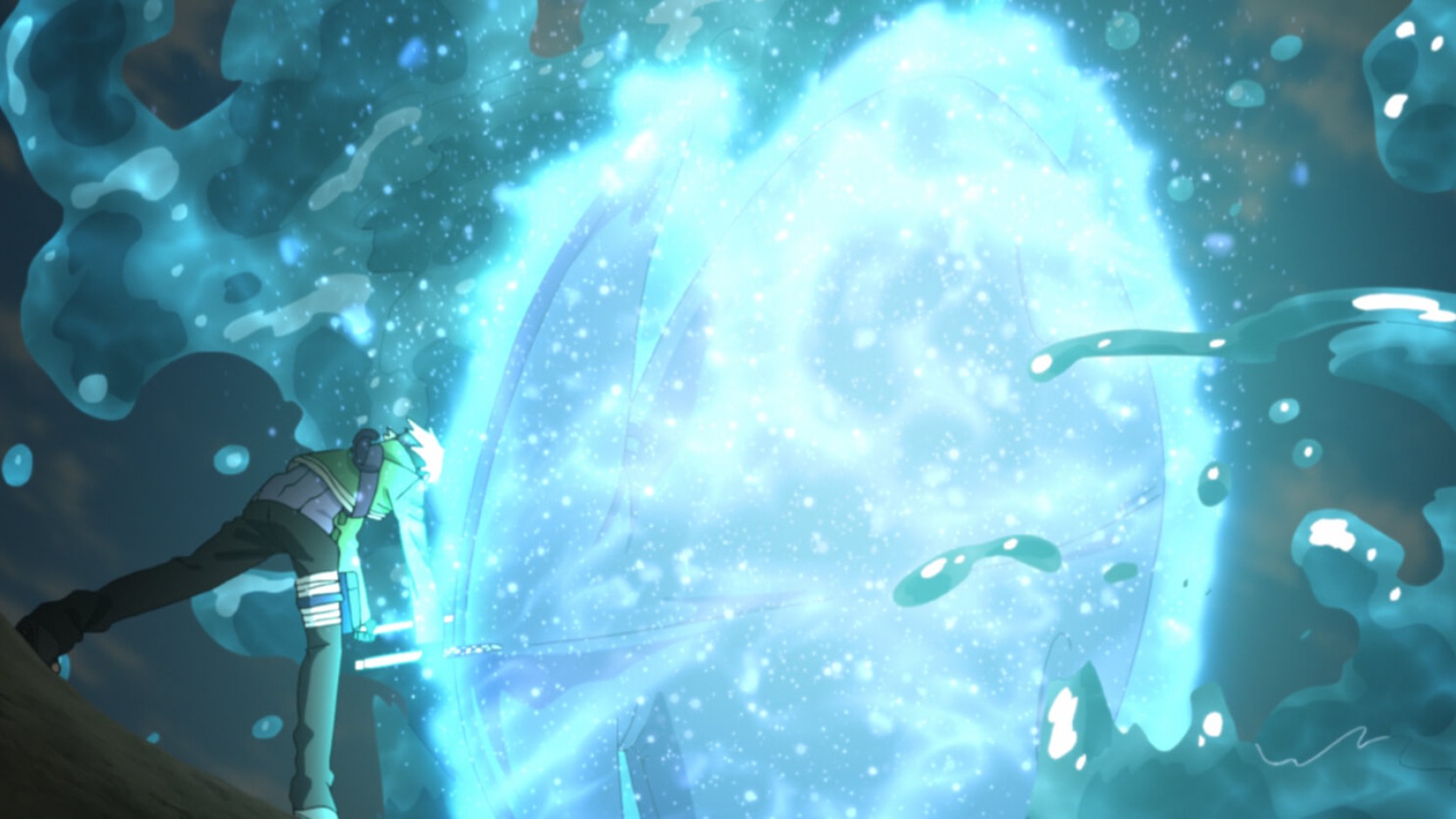
Funamushi’s Tenacity
Funamushi sees through Kagura’s traps and turns revenge into a full assault, forcing an outnumbered defense to decide whether persistence protects life or merely keeps violence alive.
Series: Boruto: Naruto Next Generations
Episode: 245 · Funamushi’s Tenacity
Arc: Great Sea Battle of the Hidden Mist Village
Release: April 17, 2022
Previous: Episode 244 · Rift
Directory: All 293 Boruto episodes
Bottom line
Boruto Episode 245 shows what happens when a defensive plan meets an enemy who already understands the plan. Funamushi and his elite squad locate Kagura’s group inside the village, see through the traps, and force a full battle before the defenders can control the terms. Boruto, Kagura, and their allies recover through teamwork despite being outnumbered. Funamushi answers that resistance by feeding revenge into a powerful water jutsu that corners them.
The episode calls his defining quality tenacity. I see grief hardened into a command style that spends other people’s bodies. Persistence can keep somebody alive. Persistence can also keep violence alive after every useful goal has disappeared.
RaeRae’s one-minute verdict
“Funamushi’s Tenacity” delivers the kind of battlefield reversal that makes an action episode move: the traps fail, the numbers become visible, panic hits, and teamwork rebuilds order. The moral center sits underneath the spectacle. Funamushi knows civilians live here. His revenge still expands the attack.
Tenacity is not automatically honorable. Ask what a person refuses to release, who pays for that refusal, and whether the mission protects anyone beyond the commander’s wound.
The traps were never enough
Boruto and the others planned to slow the Funato advance with traps. A delaying system can create evacuation time, divide attackers, and reduce direct combat. No trap should become the whole defense.
Every fixed obstacle needs surveillance, fallback positions, and a plan for discovery.
Funamushi reads the battlefield
The enemy identifies the defenders’ location and understands Kagura’s plan. That success suggests reconnaissance, local knowledge, observation, or leaked information. Dismissing Funamushi as blinded by revenge would miss his tactical competence.
A dangerous commander can be emotionally driven and strategically capable at the same time.
Intelligence failure deserves review
Kagura’s group should ask how the plan became visible. Were tracks left near traps? Did residents move in predictable patterns? Did scouts report positions? Was the coded warning itself part of a larger deception?
Learning requires evidence rather than blaming the most convenient person.
Residents must not become suspects
When a defense is exposed, frightened commanders often suspect local betrayal. The village includes people with different loyalties and fears, but suspicion without evidence can trigger detention, violence, and permanent division.
Investigate specific conduct. Do not turn an entire community into a security threat.
The full-scale attack removes distance
The defenders expected controlled delay and instead face overwhelming numbers. The transition matters psychologically. People who prepared for staged contact suddenly confront noise, motion, injuries, and uncertainty at once.
Training should include what to do when the first plan fails before anyone feels ready.
Being shaken is not cowardice
Boruto and the others are unsettled when the Funato break through. Fear is a normal response to a plan collapsing. Shame about fear wastes attention that could support recovery.
Courage begins after the nervous system recognizes danger, not before.
Teamwork restores a shared picture
The defenders regain control by working together. Coordination lets one person cover another, communicate openings, protect civilians, and compensate for uneven skills. Teamwork is not a magical feeling. Teamwork is information moving fast enough to keep people alive.
Trust becomes visible through positioning and rescue.
Overwhelming numbers change the duty
When opponents greatly outnumber defenders, holding ground may become less important than buying evacuation time. Commanders should continually reassess whether the village can still be defended without sacrificing everyone inside.
Bravery does not require pretending arithmetic has no meaning.
Funamushi turns revenge into strategy
His desire for revenge drives him toward a powerful jutsu after ordinary tactics stop producing the result he wants. Personal anger becomes operational escalation.
The more authority a grieving person holds, the more important external limits become.
Tenma’s death remains the wound
Funamushi’s loyalty to Tenma helps explain the intensity. Losing a commander, relative, or symbol can make continued combat feel like proof that the dead mattered. That belief traps grief inside repetition.
Remembering Tenma does not require creating another family’s loss.
Seiren’s injury adds fuel
The Funato have already absorbed further harm, including Seiren’s condition. Each injury can become evidence that the enemy deserves more punishment. The spiral grows because every retaliatory act creates the next justification.
Pain explains why stopping feels impossible. Pain does not make stopping wrong.
Revenge has no measurable finish line
A military objective can be evaluated: hold a route, evacuate a village, destroy a weapon, negotiate passage. Revenge ends only when the grieving person feels satisfied, and violence rarely produces that satisfaction.
An operation without a lawful endpoint becomes permission for endless harm.
The water jutsu is spectacle and threat
Funamushi’s powerful technique overwhelms the visual field and corners the defenders. The scale makes his rage feel physically present. The same scale threatens homes, roads, shelters, and people who cannot defend themselves.
Powerful animation should not make collateral harm disappear from the moral frame.
Water is not contained by intention
Large water techniques can flood structures, sweep away residents, contaminate supplies, destroy records, and block evacuation. Funamushi may aim at shinobi, but the medium spreads beyond a single target.
Commanders remain responsible for foreseeable effects outside the point of impact.
Civilian warnings must change immediately
Once a large-scale water attack begins, residents need higher-ground routes, signals, flotation support, and teams checking low areas. Earlier shelter plans may become dangerous if they assumed fire or direct weapons were the main risk.
Emergency plans must follow the hazard rather than the paperwork.
Children need named escorts
Noise and flooding can separate children from adults within seconds. Each shelter group should assign specific escorts, head counts, and reunification points.
Telling everybody to run leaves the smallest people responsible for keeping up.
Medical teams need drowning response
Treatment planning should include aspiration, hypothermia, impact injuries, contaminated water, and delayed breathing problems. Patients who appear stable may worsen later.
The battle ends sooner than the medical consequences.
Kagura’s local knowledge matters again
Kagura may know high ground, drainage, caves, strong buildings, and routes hidden from outsiders. That knowledge can save civilians when the original trap plan fails.
His childhood connection is most valuable when used to preserve life, not to demand a symbolic stand.
Kagura must be willing to retreat
Home creates emotional pressure to hold every street. A tactical withdrawal could protect residents and let defenders regroup. Kagura needs someone empowered to challenge him if memory begins directing command.
Leaving ground temporarily is not abandoning the people moved to safety.
Boruto cannot chase Funamushi’s anger
Boruto often responds to personal threats by closing distance and trying to break through emotionally. Funamushi’s revenge can pull him away from the team and into a duel that serves the attacker’s priorities.
Boruto should fight the plan, not the insult.
Sarada needs command discipline
Sarada can stabilize the group by assigning sectors, tracking injuries, preserving communications, and deciding when a position is lost. She should not wait for everybody to agree while conditions change.
Good command makes room for dissent before action and clarity during action.
Mitsuki should protect the exits
His speed and perception may make him effective at keeping evacuation routes open or detecting flanking movement. That role could save more lives than joining the most visible clash.
The strongest fighter is not always most useful at the center.
Buntan’s experience can read the enemy
Buntan understands violence, weapons, and the Hidden Mist’s history. Her judgment should inform strategy rather than being accepted only when convenient. Temporary freedom should include an actual voice.
Trust means listening before a crisis confirms that listening was necessary.
Hebiichigo’s caution remains valuable
Hebiichigo may notice risks others dismiss because optimism has not protected her. A team facing a compromised trap plan needs somebody willing to say the position cannot hold.
Pessimism and realism are not synonyms, but institutions often confuse them.
Kyoho should not be used only as force
Kyoho’s physical strength can make commanders assign him to the hardest point without asking what he sees or needs. He deserves a role with clear limits and equal extraction support.
Strength does not turn a person into fortification.
The trio’s freedom remains unresolved
The curse marks were removed temporarily in the previous episode. Fighting well now may be praised as rehabilitation while officials still reserve the right to restore control later.
No victory can make that arrangement ethical.
Service under broken terms is exploitation
Buntan, Hebiichigo, and Kyoho already questioned whether promised sentence reductions would be honored. Asking them to face overwhelming numbers before resolving those terms lets the Mist receive another benefit first.
The government should not negotiate after the labor is complete.
Every contribution needs documentation
Records should identify who defended residents, maintained routes, provided medical help, intercepted attackers, and suffered injury. The trio need copies through independent counsel.
Documentation protects them from later officials shrinking their work into a vague sentence.
Equal rescue is the test
When somebody is injured or surrounded, does the team risk extraction equally for a Leaf shinobi, a Mist shinobi, and a former prisoner? That answer reveals whether declared trust is real.
Nobody should be left because status makes the paperwork easier.
Funato fighters are also being spent
Funamushi’s elite squad may trust him, fear him, share his grief, or obey clan hierarchy. His revenge exposes them to traps and a full battle whose political value remains unclear.
Commanders can exploit loyal followers without ever threatening them openly.
Tenacity can hide refusal to reassess
Persistence is useful when goals remain lawful and attainable. Funamushi continues escalating after the defenders counter his numbers. Refusing to reconsider may look strong while producing avoidable casualties.
A commander who never changes direction is not necessarily committed. He may be trapped.
The squad deserves lawful orders
Funato fighters should know the objective, civilian limits, surrender policy, and conditions for withdrawal. “Avenge Tenma” cannot replace operational rules.
People asked to risk death deserve more than a leader’s emotion.
Civilian buildings need protected status
Homes, clinics, schools, food stores, and shelters should not become firing positions or supply depots unless absolutely necessary and residents understand the consequences. Separating military activity can reduce targeting.
Protection requires visible choices about where fighting happens.
The defenders need fire and flood teams
Water may dominate Funamushi’s attack, but broken structures and secondary fires can occur together. Dedicated residents and shinobi should monitor hazards rather than assuming combatants will notice everything.
Specialized emergency work saves people while heroes are busy looking heroic.
Communication must survive chaos
Hand signals, runners, whistles, lights, and marked routes should supplement radios or jutsu. The team needs short messages for retreat, medical help, flooding, missing civilians, and enemy movement.
Complex plans collapse when nobody can say what changed.
A fallback position needs supplies
Retreat routes are useless if the destination has no water, medicine, food, or protection. Supplies should be distributed across more than one site before the attack reaches them.
Redundancy prevents one successful enemy strike from becoming a total failure.
The village needs a missing-person ledger
During evacuation and battle, a central record should track who left, who remains, who is injured, and who cannot be located. Access must protect privacy while helping families reunite.
Uncertainty can injure a community long after the noise stops.
Captured fighters need documented care
Both sides may take prisoners. Names, injuries, treatment, location, and transfers should be recorded. Nobody should disappear into revenge because a commander is angry.
Humane custody protects evidence and interrupts the spiral.
Surrender needs a visible route
Funato fighters who want to stop need clear instructions and assurance they will not be attacked after laying down weapons. Defenders must know who can accept surrender.
An exit from violence must exist before people can choose that exit.
Funamushi needs somebody who can say no
A chain of command should include oversight capable of stopping a grieving commander from escalating beyond the mission. The Funato structure appears to reward loyalty and vengeance instead.
Authority without internal restraint turns personal injury into public danger.
The Mist also needs oversight
Kagura’s side cannot claim moral superiority while using children in battle and formerly incarcerated people under uncertain terms. Chojuro’s administration should review deployment, reinforcements, evacuation, and the curse-mark system.
Accountability should not stop at the enemy line.
Winning the clash will not secure the village
Even if the defenders repel Funamushi, residents may lose homes, tools, food, health, and trust. Security includes the ability to return and live without permanent military occupation.
Victory language can erase damage when leaders want the story finished quickly.
Reconstruction funding should be automatic
The Hidden Mist should cover property damage, medical costs, lost wages, displacement, trauma care, and environmental cleanup. Residents should not prove loyalty to qualify.
The village absorbed risk for a regional conflict and should not receive the bill.
Independent witnesses matter
Residents, medics, and neutral observers should document the attack, including harm caused by both forces. Official reports written only by combatants may minimize civilian loss.
Truth becomes harder to recover after debris is cleared.
Rumor control needs honesty
Leaders should report confirmed facts, uncertainties, casualties, and safety instructions without turning every update into propaganda. Hiding losses invites fear and manipulation.
People can handle uncertainty better than discovering they were deliberately misled.
Funamushi’s grief needs another destination
If captured, he needs due process and accountability for choices made during the attack. He also needs trauma care and a chance to speak about Tenma without an audience rewarding rage.
Treatment does not excuse violence. Treatment can reduce the chance of more violence.
The dead should not be recruited forever
Commanders often invoke fallen people to demand continued sacrifice. Tenma cannot consent to every action performed in his name. His memory should not become a blank authorization.
Mourning honors a life better than multiplying the circumstances that ended that life.
Boruto will carry this battle
Being cornered by Funamushi’s revenge may leave Boruto with guilt, anger, and a desire to answer force with force. Adults should provide debriefing and counseling before that reaction becomes another mission plan.
Young shinobi need help processing what survival does to them.
Kagura carries responsibility without total control
Kagura chose the village, designed the defense, trusted the trio, and now faces an enemy who broke the plan. He should review his decisions without accepting blame for Funamushi’s assault.
Responsible leadership distinguishes mistakes from another person’s deliberate harm.
The title should make us suspicious
“Funamushi’s Tenacity” invites admiration for persistence. The episode shows a man whose refusal to stop corners defenders and endangers a village. Tenacity without justice is merely sustained harm.
Character traits become virtues only through the purposes they serve.
What the episode does well
The story lets the trap failure create immediate consequence, then uses teamwork to show why the defenders are more than individual techniques. Funamushi’s larger jutsu turns emotional escalation into visible physical danger.
The action has meaning because every tactical shift changes who may survive.
Where the story should push harder
Residents need more presence during the battle, especially their evacuation, injuries, and decisions. The episode should keep the trio’s legal status visible instead of letting good combat performance resolve institutional questions.
Spectacle becomes stronger when consequences remain in frame.
What the defenders deserve
They deserve reliable intelligence, reinforcements, medical support, clear retreat authority, and time to recover. Young fighters should not be praised into accepting preventable risk.
Teamwork should supplement public responsibility, not replace government duty.
Environmental damage belongs in the casualty count
A massive water technique can reshape soil, uproot trees, contaminate wells, carry waste into homes, and destroy habitat along the village edge. Those effects may not appear in the immediate injury report, yet families depend on clean water, stable roads, fish, crops, and safe ground. Environmental assessment should begin as soon as the attack area is secure.
Cleanup costs belong to the public response, not to residents whose location made them vulnerable. Specialists should test water, inspect slopes, remove debris, and publish findings in language the community can understand. A battlefield is still an ecosystem after combatants leave.
The next generation should not inherit the feud
Children in the Funato and Mist communities will hear stories about this battle. Adults may teach them that one side was born treacherous and the other was born righteous. Such stories turn grief into identity before young people can examine the evidence. Schools, families, and community leaders need room for honest history that names wrongdoing without assigning inherited guilt.
Boruto’s generation is already carrying conflicts designed before they were born. Ikada is pressured to become useful to a clan war. Kagura carries a bloodline associated with terror. Buntan, Hebiichigo, and Kyoho are judged through a punitive system descended from the Bloody Mist. Ending the conflict means refusing to make children responsible for preserving adult hatred.
A real debrief must include the failed plan
After survival, teams often celebrate improvisation and avoid examining why improvisation became necessary. The debrief should reconstruct when Funamushi discovered the traps, how scouts moved unseen, which communications failed, where civilians were located, and who lacked critical information. Participants must be able to report mistakes without fearing humiliation or punishment for every honest admission.
The purpose is not to find one person to blame. The purpose is to make the next village less dependent on luck. Lessons should be shared with civilian leaders and emergency planners, not locked inside a shinobi report that residents never see.
What the villagers deserve
Residents deserve evacuation, accessible shelters, hazard warnings, protected medical sites, documented losses, compensation, and a voice in reconstruction. They deserve a future not organized around being strategically located.
Their home is more than the battlefield where other people proved resolve.
What the Funato rank and file deserve
They deserve lawful objectives, civilian-protection rules, accurate information, surrender routes, and commanders capable of reassessing. They should not be spent to keep Funamushi’s revenge emotionally convincing.
Loyalty does not cancel a leader’s duty of care.
RaeRae’s final ruling
“Funamushi’s Tenacity” proves that persistence can become a threat when nobody asks what should end. Funamushi reads the traps, commits overwhelming numbers, and escalates through a powerful water jutsu because revenge has replaced a limited objective. Boruto, Kagura, and the others recover through cooperation, but civilians and coerced fighters remain inside the cost.
Move residents to high ground. Keep medical routes open. Document every contribution and injury. Protect surrender. Fund reconstruction. Keep the trio’s curse marks off. Give commanders authority to retreat and oversight strong enough to stop revenge from writing strategy.
Tenacity is not refusing to stop. Sometimes tenacity is building a life after deciding the dead will not be used to demand another death.
Sources and lawful viewing
Naruto Official lists “Funamushi’s Tenacity” as Boruto Episode 245 in the Great Sea Battle of the Hidden Mist Village arc and describes the elite squad discovering Kagura’s plan and launching a full attack. Crunchyroll carries the episode where regional availability permits and lists an April 17, 2022 release. Streaming details can vary by country.
Official episode reference: Naruto Official episode guide
Licensed episode route: Crunchyroll licensed series page
After watching, ask whether Funamushi’s persistence protects anyone, what happens to civilians when large-scale jutsu enters their village, and whether the Mist will honor the freedom and sentence credit of people whose teamwork helped keep the defense alive.