
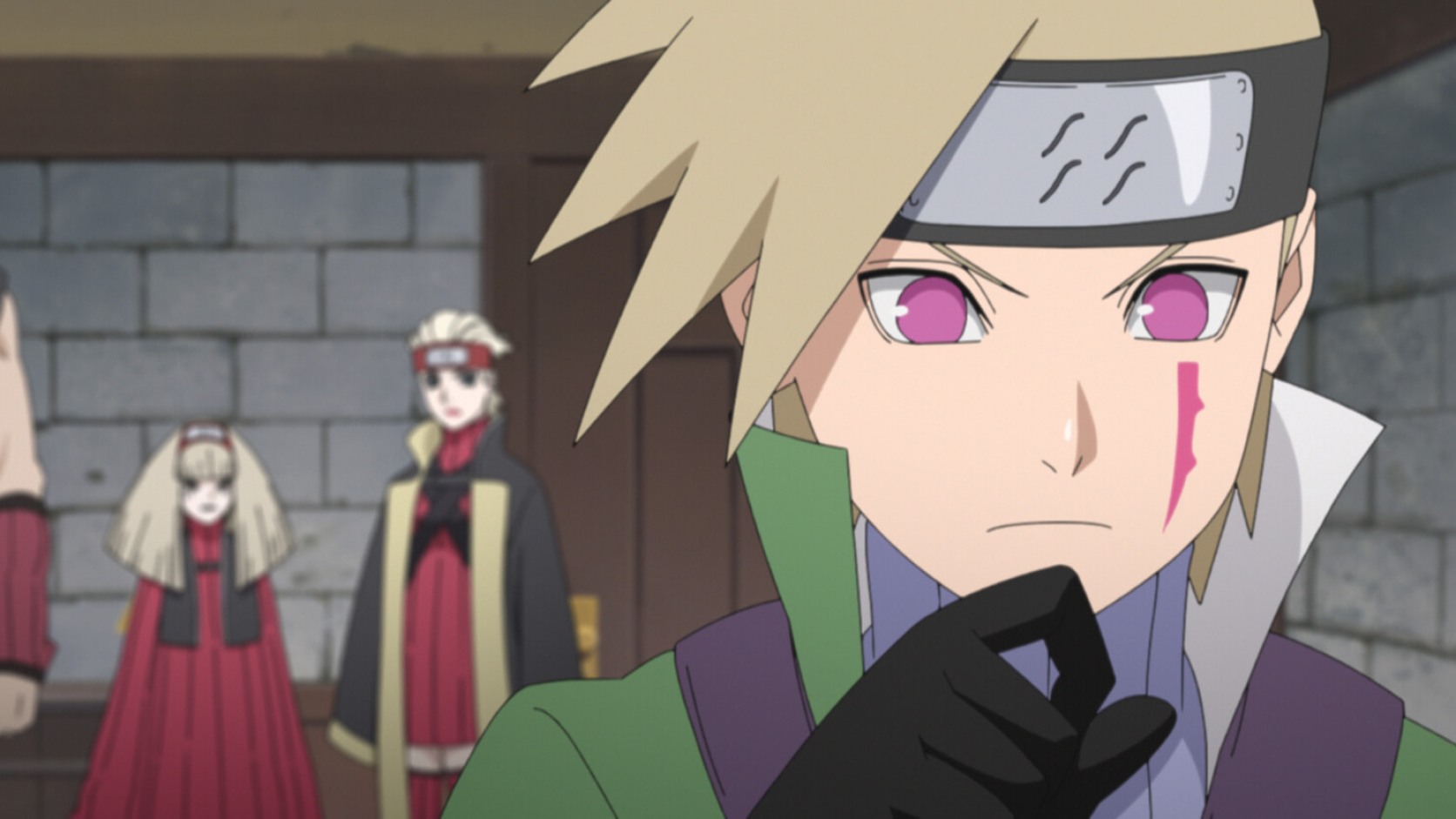
Rift
Enemy scouts arrive before the village defense is ready, pushing Kagura to remove the trio’s curse marks and exposing why freedom should never have been an emergency tool.
Series: Boruto: Naruto Next Generations
Episode: 244 · Rift
Arc: Great Sea Battle of the Hidden Mist Village
Release: April 10, 2022
Previous: Episode 243 · Where I Belong
Directory: All 293 Boruto episodes
Bottom line
Boruto Episode 244 puts Kagura in a crisis created by two failures at once. Funamushi’s unit is approaching Kagura’s childhood village before the defense is ready, and Kagura does not have enough fighters to protect the residents. His answer is to remove the curse marks controlling Buntan, Hebiichigo, and Kyoho temporarily, then ask them to fight beside him. The decision saves tactical time while exposing how indefensible the marks always were.
Freedom should not become an emergency tool that a supervisor switches on when coerced people are useful. If Kagura can release the trio because he needs their strength, the Mist can release them because their bodies belong to them.
RaeRae’s one-minute verdict
“Rift” gives Kagura a genuinely difficult command decision and then lets the prison system stand in the room with him. He trusts the trio enough to remove the marks before battle. They hesitate and still agree to help. That moment has courage, history, fear, and a giant institutional indictment packed inside one gesture.
Temporary freedom is not mercy when the same authority plans to restore bodily control afterward. Remove the marks permanently. Put sentence terms in writing. Let the trio decide whether service is part of their future.
The scouts arrive before the plan is ready
Enemy scouts are approaching while defenses remain incomplete. That timing means residents face danger before barriers, evacuation routes, and command roles are settled. Leaders must decide what can still be completed and what should be abandoned.
Finishing the original plan matters less than protecting people from the actual attack.
Early contact changes every assumption
The defenders expected more preparation time. A capable plan must survive the loss of that assumption. Teams should shift from construction to evacuation, reconnaissance, delay, and protection of essential routes.
Adaptation is not failure. Pretending the schedule has not changed would be failure.
Scouts may be gathering civilian information
Enemy scouts are not only counting shinobi. They may be identifying shelters, roads, leaders, supplies, children, and weak points. The village needs concealment, misinformation that does not endanger civilians, and movement away from predictable gathering sites.
Every visible civilian pattern can become intelligence for an attacker.
Kagura counts fighters and sees a shortage
Kagura recognizes that his force may not hold against Funamushi’s squad. Naming the shortage is responsible. The dangerous step is treating bodies under state control as the fastest available reinforcement.
A staffing crisis does not create consent where coercion already exists.
The village cannot fill the military gap
Residents may volunteer to support defense, but Kagura should not convert fear into recruitment. Civilians lack the training, equipment, intelligence, and extraction support available to shinobi.
Asking frightened people to stand in the front line hides a government failure inside local bravery.
Kagura removes the curse marks
The marks gave the Mist the ability to punish or kill Buntan, Hebiichigo, and Kyoho if they violated imposed conditions. Removing them immediately changes the physical relationship between the trio and every order Kagura gives.
The scene proves bodily freedom was technically possible all along.
Temporary removal exposes permanent injustice
If officials believed the marks were necessary for public safety, why can Kagura suspend them when combat requires trust? The answer is that institutional convenience, not a consistent safety principle, governed their use.
A safeguard that disappears when labor is needed was never only a safeguard.
Freedom cannot be mission equipment
Kagura effectively unlocks freedom for the duration of an emergency. That structure treats liberty like a weapon issued before deployment and collected afterward. Human autonomy is not state gear.
Nobody should have to earn control of their own body one battle at a time.
The trio hesitate for good reason
Buntan, Hebiichigo, and Kyoho do not rush to accept. They have been imprisoned, marked, supervised, and disappointed by sentence terms. Hesitation may reflect fear of Funamushi, distrust of the Mist, uncertainty about Kagura, or refusal to be used again.
Their pause is evidence of judgment, not ingratitude.
Agreement under pressure remains complicated
The village is in danger, people may die, and Kagura has just removed the marks. Saying yes can be brave and sincere while still occurring inside intense moral pressure. They may believe refusal will condemn civilians or prove every accusation against them.
Consent becomes strongest when no threat follows a no.
Kagura asks rather than commands
His approach matters. Asking acknowledges that the removal should restore agency. The request also comes from their supervisor during an emergency, so the power imbalance does not vanish with the mark.
Respectful language helps, but enforceable freedom matters more than tone.
Buntan has reasons to distrust every promise
Buntan already learned that the sentence reduction may be smaller than expected. She understands that institutions can receive dangerous labor and reinterpret the reward later. Another request for service therefore arrives on top of a broken promise.
Trust cannot be demanded from the person who absorbed the breach.
Hebiichigo recognizes the trap fastest
Hebiichigo’s suspicion is often treated as resistance to rehabilitation. Suspicion can also be accurate risk assessment. She knows that helpful behavior may produce praise without freedom and that one bad outcome may restore the harshest judgment.
Systems call people difficult when those people remember the fine print.
Kyoho deserves an independent choice
Kyoho’s quieter presence can make other people speak for him. He should receive the same information, time, legal protection, and right to refuse as the others. Group agreement should not swallow individual consent.
Silence cannot be counted automatically as yes.
The curse marks were lethal coercion
The marks were not ordinary monitoring devices. Their possible consequence made obedience a survival condition. Such power corrupts every apparent choice made while the marks are active.
Rehabilitation built on a threat to the body is punishment pretending to be treatment.
Public safety needs evidence, not fear
Mist officials may defend the marks by pointing to the trio’s past violence. Restrictions should still be individualized, reviewable, proportionate, and based on current evidence. A lethal mechanism offers no hearing at the moment of punishment.
Fear of possible harm does not justify unlimited state power.
Removal should include medical care
Taking away the marks may have physical effects, residual damage, or psychological consequences. Independent medical staff should examine each person, explain findings privately, and document long-term risks.
The same institution that implanted control should pay for complete treatment.
The trio need written confirmation
A verbal promise from Kagura may not prevent another official from restoring the marks later. Each person needs written records showing removal, legal status, sentence credit, conditions, and appeal rights.
Freedom that exists only in one supervisor’s memory is fragile.
Kagura assumes personal risk
Removing the marks may violate orders or expose Kagura to blame if any member leaves. He chooses trust while protecting civilians. That courage deserves recognition without turning his personal gamble into the only safeguard the trio have.
Rights should not depend on finding a supervisor willing to risk punishment.
Chojuro remains responsible
Kagura’s decision does not erase the Mizukage’s authority over the system that imposed the marks. Chojuro must review why they were used, who approved them, what alternatives existed, and whether every affected person can receive permanent removal.
Reform requires policy, not one compassionate exception.
Funamushi’s advance creates no legal vacuum
Emergencies tempt leaders to suspend ordinary protections. The approaching attack does not erase the trio’s rights, civilian consent, custody rules, or obligations toward captured enemies.
Law matters during crisis because crisis is when power becomes easiest to abuse.
The defense needs roles based on choice
If Buntan, Hebiichigo, and Kyoho agree to fight, they should choose among roles suited to their skills and comfort. Kagura should not assign the most dangerous positions as repayment for release.
Freedom followed immediately by a suicide mission is not meaningful freedom.
Every fighter needs an extraction plan
The team should define withdrawal routes, signals, rally points, and medical support. Nobody should be left behind because leaders assume a former prisoner is expendable or likely to flee.
Equal service requires equal rescue.
Residents should not be kept in place for morale
The enemy’s early arrival makes evacuation more urgent. Leaders may fear that visible departure will weaken fighters or reveal panic. Civilian movement should be judged by safety, not by the image of unity.
A full village behind the barricade is not proof of courage when people lacked transport.
The rift is larger than the title suggests
There is a rift between the Funato and Mist, between inherited loyalty and chosen future, between Kagura’s trust and the state’s coercion, and between what the village needs and what leaders prepared. The episode places all those fractures under one approaching force.
Battle reveals divisions that peace allowed officials to postpone.
Kagura’s childhood home raises the stakes
Kagura is not defending an abstract route. He remembers the village as part of his own life. Emotional connection may sharpen his resolve while making retreat unbearable.
Someone else should hold authority to order evacuation or withdrawal if Kagura cannot separate memory from tactics.
Boruto should support without replacing Kagura
Boruto trusts Kagura and will want to reinforce his decision. Support should not turn into speaking over the trio or promising outcomes Boruto cannot guarantee. Kagura must own his command choices, and the trio must own their answers.
Friendship cannot sign another person’s legal agreement.
Sarada needs to document the decision
Sarada can record when and why the marks were removed, what each person was told, and whether any conditions were attached. Documentation protects Kagura and the trio when higher officials review the mission.
Memory becomes political after a controversial choice.
Mitsuki can monitor safety without becoming a jailer
The team may still worry about betrayal. Mitsuki can watch battlefield movement as he would for every ally, but covertly treating the trio as prisoners after announcing freedom would undermine trust.
Safety planning should be transparent and applied consistently.
Rehabilitation cannot mean endless proving
The trio have already faced missions, injuries, and risk. Each new crisis creates another opportunity for officials to say freedom will come after one more demonstration. That structure has no endpoint.
A legitimate program publishes milestones and honors them when reached.
Sentence credit must be calculated now
Before asking for more service, the Mist should state how previous work counted and how this mission would affect release. Changing terms afterward would repeat the same harm Buntan already identified.
Nobody can consent to a bargain whose price and reward remain hidden.
Combat service should not be the only path
Rehabilitation can include education, paid work, counseling, restorative processes, and community support. Requiring dangerous fighting favors people with combat skills and makes survival the measure of moral growth.
Freedom should be reachable without becoming useful in war.
Victims deserve a process too
Critiquing lethal marks does not erase harm the trio caused before imprisonment. People affected deserve truthful records, participation in appropriate restorative processes, compensation where possible, and protection from retaliation.
Victim care and prisoner rights strengthen each other when the goal is real safety.
Restorative justice requires consent
No victim should be forced to meet the trio, forgive them, or accept an apology. No incarcerated person should be forced to perform remorse for release. Facilitated dialogue belongs only where everyone freely agrees and trained staff can protect participants.
Healing cannot be staged as a public-relations event.
The village needs to know who is fighting
Residents should understand that the trio are participating and that their legal status is under review, without receiving sensational details that invite vigilante behavior. Rumors can make civilians fear their defenders or target them after the battle.
Transparent communication should protect privacy and safety together.
Former prisoners should not be used as decoys
Commanders may view the trio as people whose loss would carry fewer political consequences. Any plan that assigns them disproportionate exposure because of status is exploitation.
Every life on the field deserves the same tactical care.
Weapons access needs equal rules
If the trio need weapons to defend the village, procedures should reflect skill and role rather than stigma alone. Restrictions may be reasonable, but secret limits or defective equipment would endanger everyone.
Trust announced publicly must appear in logistics too.
Aftercare should be promised before combat
Medical treatment, trauma counseling, rest, family contact, and legal review should already be scheduled. Waiting until after the mission lets officials delay or deny support once public attention moves on.
Care is part of the mission cost.
The village defense needs a civilian liaison
One resident chosen by the community should receive updates and bring civilian concerns to the command group. Kagura’s childhood connection does not make him the current representative of everyone living there.
Knowing a place is not the same as speaking for a place.
Early evacuation remains possible
Enemy scouts approaching does not mean every route is closed. Small groups may move through protected paths while defenders delay contact. Leaders should not abandon evacuation because a perfect mass departure is no longer available.
Partial safety is worth pursuing.
Deception must not endanger residents
Defenders may use false positions or trails to misdirect scouts. Any deception should draw attackers away from homes, shelters, and evacuation routes. Using civilian buildings as fake command sites would make those buildings targets.
Tactics should reduce civilian risk rather than redistribute risk invisibly.
Captured scouts need humane treatment
Scouts may carry valuable intelligence, but interrogation cannot include torture, threats against family, or denial of care. Their identities, injuries, and custody should be documented.
Urgency does not make cruelty reliable or lawful.
Information from prisoners needs corroboration
A captured scout may lie, guess, or say whatever ends questioning. The team should compare statements with movement, terrain, coded messages, and sensory reports.
Certainty produced by coercion is often only confidence without truth.
Funamushi is responsible for using the shortage
The defenders’ weak preparation does not make the coming attack inevitable. Funamushi chooses to exploit a civilian village before reinforcements arrive. Tactical intelligence does not erase moral agency.
An opponent’s vulnerability is not permission to harm everybody nearby.
The Funato fighters also face coercion
Some members may be bound by clan hierarchy, grief, fear, or inherited duty. Defenders should offer safe surrender routes where possible. Recognizing coercion within the attacking force does not excuse the assault.
Accountability becomes more accurate when rank and choice are examined individually.
Surrender instructions must be clear
Fighters need to know how to lay down weapons, where to move, and what treatment to expect. Defenders need rules preventing attacks on people who are surrendering.
A safe exit can shorten battle and preserve evidence.
The Mist should create an independent inquiry
After the immediate threat, investigators outside Kagura’s chain of command should review the curse marks, sentence promises, deployment decisions, and removal. The trio need representation and access to records.
An inquiry controlled by the officials being examined cannot restore trust.
Kagura should not carry the consequences alone
If leadership disagrees with removal, officials may blame Kagura for acting outside procedure while ignoring the understaffed defense that forced his choice. The review must examine who failed to send enough protection and why coercive marks existed as a staffing resource.
Accountability should move upward as well as downward.
The marks should never be restored
Temporary language leaves open the possibility that control will return after the crisis. Restoring a lethal mechanism because the trio survived and helped would punish the trust Kagura asked them to show.
The only ethical next step is permanent removal with medical and legal follow-through.
Release should not depend on victory
The trio cannot control whether the entire defense succeeds. Sentence credit and freedom should reflect their choices and conduct, not a battlefield outcome shaped by intelligence, command, weather, and enemy strength.
Justice cannot be a wager placed on somebody else’s strategy.
If anyone leaves, leaving is not proof of evil
Once the marks are gone, a member may decide to escape rather than fight. Such a decision could violate a lawful custody order, but the response must account for fear, broken promises, and bodily coercion. Flight does not retroactively justify lethal control.
Due process still applies after distrust is confirmed.
What the episode does well
The story makes a tactical decision reveal an institutional contradiction. Kagura’s trust has immediate consequences. The trio’s hesitation preserves their agency, and the approaching scouts keep the choice from becoming a comfortable classroom debate.
The best action stories make systems visible through urgent personal decisions.
Where the story should push harder
The episode should state whether removal is permanent, what legal authority Kagura has, and what the trio were promised. Residents should be shown making evacuation choices rather than existing mainly as the reason fighters must act.
Ambiguity creates drama, but ambiguity about freedom often protects the people holding power.
What Kagura deserves
Kagura deserves adequate reinforcements, clear authority, emotional support, and protection from becoming the scapegoat for a system that left him understaffed. He deserves to trust people without gambling his whole future on their response.
Leadership should not require choosing between civilians and procedure alone.
What Buntan, Hebiichigo, and Kyoho deserve
They deserve permanent removal of the marks, independent medical care, written sentence accounting, legal counsel, equal protection during battle, and the freedom to decide whether combat belongs in their lives.
Their bodies should never again carry the government’s threat.
What the village deserves
Residents deserve evacuation, honest risk information, accessible shelters, protected medical care, compensation, and enough trained defenders that incarcerated people are not the emergency plan. They deserve a voice in how their home is defended.
Civilian safety is a public obligation, not a favor produced by desperate improvisation.
RaeRae’s final ruling
“Rift” proves the curse marks were about control because Kagura removes them the moment trust becomes tactically valuable. Buntan, Hebiichigo, and Kyoho agree to help after hesitation, and that choice matters. Their courage does not cleanse the system that limited their freedom before asking for their bodies again.
Keep the marks off. Document the removal. Give the trio independent counsel and medical care. Calculate sentence credit in writing. Give residents evacuation routes and a civilian liaison. Send proper reinforcements. Review why Kagura had to solve institutional understaffing with a personal act of defiance.
Freedom cannot be the tool leaders unlock when danger arrives and lock away when usefulness ends.
Sources and lawful viewing
Naruto Official lists “Rift” as Boruto Episode 244 in the Great Sea Battle of the Hidden Mist Village arc and describes Kagura removing the curse marks after enemy scouts approach the village. Crunchyroll carries “Rift” where regional availability permits and lists an April 10, 2022 release. Streaming details can vary by country.
Official episode reference: Naruto Official episode guide
Licensed episode route: Crunchyroll licensed series page
After watching, ask whether temporary removal proves the marks were unnecessary, whether the trio could safely refuse Kagura’s request, and why the Mist had no defense plan that respected bodily autonomy before the scouts appeared.