
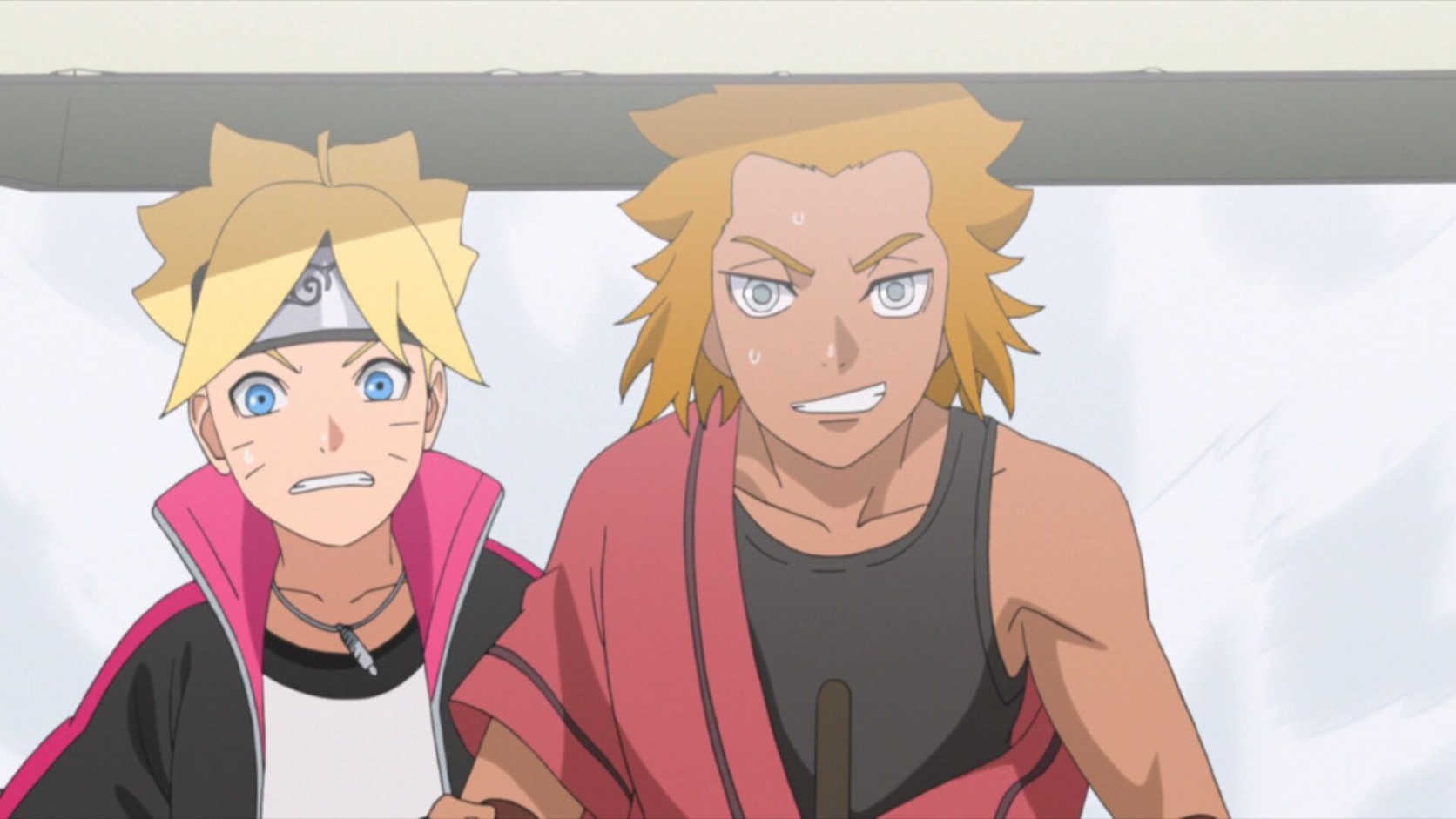
The Boy from the Isle of Shipbuilders
A disabled evacuation ship reveals the workers, tools, infrastructure, and community care required after the shinobi action ends and survivors still need a safe route home.
Series: Boruto: Naruto Next Generations
Episode: 239 · The Boy from the Isle of Shipbuilders
Arc: Great Sea Battle of the Hidden Mist Village
Release: March 6, 2022
Previous: Episode 238 · A Killer on the Ship
Directory: All 293 Boruto episodes
Bottom line
Boruto Episode 239 lets a damaged ship stop the story long enough to remember that survival depends on workers who know how to build, tow, repair, and navigate. Boruto, his friends, and the rescued people of Dotou Island are stranded at sea. Kajiki and his apprentice Ikada find them, tow the vessel to the Isle of Shipbuilders, and offer the practical help no battle technique can replace.
I love a fandom episode that understands infrastructure is a character. The sea war keeps approaching, but the immediate problem is a broken vessel carrying exhausted civilians. Somebody has to know where the hull failed, which materials can hold, how long repairs will take, and what passengers need while they wait.
RaeRae’s one-minute verdict
“The Boy from the Isle of Shipbuilders” is a bridge episode with an actual point. Ikada enters through competence rather than a dramatic secret. Kajiki treats repair work as expertise. Boruto helps instead of standing around demanding speed. The island becomes a community shaped by skilled labor while the Funato conflict grows beyond the horizon.
The episode’s quiet is not empty. Quiet creates room to see who keeps people alive after heroes finish fighting.
A dead ship is a public emergency
The vessel is carrying people who survived occupation, forced labor, murder, and an attempted attack by a mobile fortress. Losing propulsion in open water creates risks from weather, dehydration, medical emergencies, renewed attack, and simple panic.
The crew needs more than a mechanic. They need communications, passenger counts, medical triage, food and water inventories, weather monitoring, and a contingency if towing fails.
Rescue does not end at liberation
Getting civilians off Dotou Island was one step. Safe arrival, shelter, family reunification, medical care, and recovery remain unfinished. The damaged ship proves why rescue plans need an entire route rather than a single escape moment.
A government cannot report success when people are technically free but stranded between danger and home.
Kajiki notices the problem and acts
Kajiki could have passed the damaged ship and protected his own schedule. He stops, assesses, and offers help. That choice matters because mutual aid often begins before formal authorities arrive.
Community care is not less professional than government response. Kajiki brings specialized knowledge, equipment, and a willingness to assume responsibility.
Ikada enters through work
Ikada’s first impression is not a declaration about destiny. He is Kajiki’s apprentice, part of a shipbuilding practice, and capable enough to help tow a disabled vessel. His value is visible through what he does.
That introduction gives him dignity beyond the secrets the arc will later reveal. A person is more than their family name and political inheritance.
Apprenticeship is education with responsibility
Ikada is learning through real work under a skilled mentor. A healthy apprenticeship includes instruction, supervision, safety, wages, rest, and increasing independence. An apprentice should not become cheap labor hidden behind the language of opportunity.
Kajiki’s duty is larger than teaching techniques. He is responsible for creating conditions where Ikada can make mistakes without catastrophe.
Shipbuilding is not background labor
Every repaired board, seal, engine part, rope, and measurement protects lives. The shinobi world often treats craftspeople as supporting scenery while combat receives the glory. Episode 239 corrects that imbalance for a moment.
No Rasengan can replace a seaworthy hull. Technical labor is also heroic when failure means drowning.
The tow requires trust
The damaged ship must accept guidance from strangers. Kajiki and Ikada must believe the crew will follow instructions. Passengers must tolerate more uncertainty after repeated trauma.
Trust here is practical, not sentimental. Everyone agrees on roles, pace, signals, and destination because cooperation is the only safe route forward.
Passengers deserve clear information
People aboard should know why the ship stopped, who offered assistance, where they are being taken, and how long repairs may require. Honest estimates are better than false reassurance.
Silence invites rumors about another Funato attack or hidden mechanical danger. Information can lower panic without promising what nobody controls.
The Isle of Shipbuilders is infrastructure
An island organized around shipbuilding is not merely a picturesque stop. The community connects other islands, fishing routes, trade, emergency travel, and public services. Its workers keep the Land of Water functioning.
That strategic value also makes the island vulnerable during war. Protection plans should have existed before conflict reached nearby seas.
Skilled workers need wartime protection
Shipwrights may become targets because both civilians and military forces depend on their knowledge. Authorities should offer security without taking control of the island’s labor or forcing workers into military production.
Protection cannot become conscription by another name.
Repairs need a real assessment
Kajiki cannot promise a completion time before inspecting the damage. The team needs to know whether the problem affects propulsion, steering, the hull, power, or multiple systems. Temporary repair and permanent repair are not interchangeable.
Pressure from anxious passengers should never force a worker to certify an unsafe vessel.
Safety outranks schedule
Everyone wants to leave quickly because conflict is growing. Urgency is real. A rushed repair can fail at the worst possible moment and place even more lives at risk.
Leaders should support Kajiki when he says the work needs time. Expertise means having authority to stop unsafe departure.
Materials have to come from somewhere
Repair requires usable parts, tools, fuel, and storage. Wartime disruption can make all of those scarce. The island may have to choose between this vessel and other community needs.
The Mist should reimburse materials and labor promptly. Gratitude does not pay suppliers or replace depleted emergency stock.
Boruto offers labor instead of entitlement
Boruto and his friends try to help while waiting. That choice makes the episode warmer. They do not treat the shipwrights like service workers who owe them instant results.
Helping still requires listening. Untrained hands can create more work if enthusiasm overrides instruction.
Useful help begins with asking
The correct question is not “What can I grab?” The correct question is “What do you need, and what can I safely do?” Kajiki should define tasks based on risk and skill.
Respect for labor includes respecting the worker’s process.
Shinobi strength has limits in a workshop
Boruto, Kawaki, Sarada, Mitsuki, and their teammates can lift, carry, secure, and move quickly. Strength does not teach material tolerances or engine design. A workshop punishes confidence without knowledge.
The episode quietly reminds viewers that expertise is specific. Being exceptional in one field does not create authority in every field.
Denki belongs in this environment
Denki’s technical mind can connect with repair work naturally. He can learn from shipbuilders without treating local methods as primitive. Technology becomes richer when formal knowledge meets experience built across generations.
Collaboration should credit the people who already understand the machines.
Iwabee can support without taking over
Iwabee’s physical strength is valuable for moving materials and stabilizing work. He should still follow the shipwright’s direction. Strength applied at the wrong angle can destroy what everyone is trying to save.
Discipline means letting knowledge guide power.
Metal Lee needs a task with clear boundaries
Metal works best when expectations are specific. A defined repair-support role can reduce uncertainty and let him contribute without performing calmness for everyone around him.
Good leadership designs work so different nervous systems can succeed.
Sarada should coordinate passenger needs
Sarada’s leadership belongs beyond the workshop. Civilians need shelter, medical checks, food, information, and a clear departure process. She can help connect the ship’s crew, island leaders, and passengers.
Coordination is not lesser than repair. Coordination prevents essential needs from disappearing between teams.
Mitsuki can notice what nobody assigned
Mitsuki often sees gaps without demanding praise. That ability can help, but the group should not rely on him as an invisible solution for every unclaimed responsibility.
Reliable people deserve explicit roles, rest, and recognition.
Kawaki knows what forced usefulness feels like
Kawaki spent years valued for what others could extract from his body. On the shipbuilding island, helping must remain voluntary and bounded. Nobody should praise him into another situation where refusal feels impossible.
Belonging should not depend on constant usefulness.
The rescued civilians need rest
Passengers should not be expected to earn shelter by joining repair work. Some may want to help because action restores control. Others may need sleep, food, medical attention, or silence.
Recovery is not laziness. Survival already demanded enough labor from them.
Forced miners deserve compensation
The Dotou Island residents carried extracted gold under threat. Their unpaid labor and injuries do not vanish because the ship left the island. The Mist needs a claims process that is accessible, documented, and funded.
Nobody should have to prove perfect victimhood to receive repair.
The shipboard murder needs follow-through
Episode 238’s investigation cannot become yesterday’s problem. The victim’s family needs notice and support. Evidence needs secure transfer. Kyoho’s record needs a clear correction if he was falsely accused.
Moving into a new setting should not erase institutional obligations.
Kyoho deserves more than quiet exoneration
Public suspicion harmed Kyoho in front of passengers and teammates. A private conclusion will not correct the public story. Leaders should state clearly what the evidence showed and ensure no false allegation follows him into later review.
Reputation damage is real harm when freedom depends on official judgment.
Buntan and Hebiichigo are still supervised
The shipbuilding pause does not remove the curse marks. Buntan, Hebiichigo, and Kyoho remain under a system that can kill them for disobedience.
Their recent actions should trigger immediate independent review and a timetable for removing those marks. Rehabilitation without an exit is permanent control.
Kagura cannot carry reform alone
Kagura treats the trio with trust and sees their capacity for change. His character matters. Policy matters more. Rights cannot depend on whether one compassionate supervisor stays alive, keeps authority, or wins every disagreement.
The Mist needs structural reform that survives individual leadership.
Kajiki’s workshop needs consent
The arrival of a large group can disrupt space, supplies, housing, and work. Island residents should be consulted rather than informed after leaders decide everything.
Emergency cooperation is strongest when local people retain a voice over their resources.
Mutual aid should not become unpaid extraction
Kajiki and the island may volunteer help. The government still owes compensation. Public authorities often celebrate community generosity while quietly shifting costs onto workers with the least budget.
Thank-you speeches are not invoices paid.
War raises the price of every delay
The Funato and Land of Water are moving toward a larger clash. A broken civilian vessel now sits inside a tightening military environment. Repair time is shaped by danger nobody in the workshop created.
Leaders must protect the island without pressuring workers to cut safety corners.
The coming clash was not inevitable
Crunchyroll’s episode record describes conflict becoming unavoidable. By this point, armed forces may indeed be committed. The political conditions did not appear overnight. Modernization disputes, neglected communities, Funato organizing, intelligence failures, and revenge decisions built this moment.
Calling war inevitable can hide every earlier choice that made peace less likely.
Funato grievances require a political answer
The clan’s violence against civilians deserves accountability. Communities harmed by modernization still deserve hearings, compensation, environmental protection, and democratic influence.
Condemning armed abuse does not require defending every policy of the state.
Civilian routes should be protected from battle
The Mist and Funato forces should establish protected corridors for evacuation, medical movement, and food delivery. Even without formal agreement, commanders can avoid known civilian vessels and infrastructure.
War law begins with recognizing that military advantage does not erase human limits.
Shipbuilders should not be military targets
The island repairs civilian transport and supports everyday life. Turning every useful workshop into a target would punish the entire region. Combatants should distinguish direct military use from general economic value.
Communities need ships after war too.
Ikada deserves an identity beyond family
The story will complicate Ikada’s background. Episode 239 first shows an apprentice who works, learns, and helps strangers. That evidence should remain part of how viewers understand him later.
Bloodline can explain pressure. Bloodline should not erase chosen work.
A person can leave an inherited role
If Ikada comes from a family with expectations for him, shipbuilding may represent more than a job. Work can become a claim to self-determination. Leaving home does not always mean rejecting people. Sometimes leaving is the only way to hear one’s own desire clearly.
Families should not turn love into ownership.
Kajiki’s mentorship offers another model
Kajiki can teach through standards, shared labor, correction, and trust rather than domination. A mentor who recognizes an apprentice’s dream helps build more than technical skill.
Healthy authority prepares someone to stand independently.
Boruto recognizes passion quickly
Boruto responds to people who care deeply about a chosen path. He understands dreams because Naruto’s story and his own conflicts have taught him how much identity can gather around a goal.
His best response is curiosity rather than deciding what Ikada’s dream should mean.
Friendship begins before full disclosure
People do not owe their entire history at the moment they meet. Boruto can value Ikada’s help and enjoy his company without possessing every family detail.
Trust grows through experience. Later revelations may change context without making every earlier interaction false.
Secrecy can be survival
Someone leaving a powerful or violent family may hide connections for safety. Disclosure can bring retaliation, rejection, or pressure to return. Viewers should avoid treating secrecy as automatic proof of malicious intent.
The question is what a person does with the truth when others’ safety depends on disclosure.
The island needs an evacuation plan too
War is approaching, and the Isle of Shipbuilders now shelters vulnerable passengers. Leaders need routes, boats, fuel, medical support, and signals if Funato forces appear.
Hospitality should not place residents in danger without resources.
Repair records protect everyone
Kajiki should document damage, parts used, tests completed, and remaining risks. Those records help the crew operate safely and create evidence about what caused the original failure.
Documentation is care when lives depend on maintenance history.
The vessel needs a sea trial
Finishing repairs at the dock does not prove performance under load. The crew should test propulsion, steering, communications, and emergency systems before returning every passenger aboard.
Urgency cannot replace verification.
Accessibility belongs in the departure plan
Boarding must account for injured, elderly, disabled, and traumatized passengers. Clear ramps, assistance teams, seating assignments, medication access, and family grouping should be planned before movement begins.
The slowest passenger sets the humane pace.
Food and water require tracking
An unexpected island stay can strain supplies. Coordinators need transparent inventories, dietary accommodations, safe water, and distribution that does not reward aggression.
Scarcity becomes more dangerous when nobody explains the plan.
Children need space away from crisis talk
Children aboard the rescued group have heard enough about killers, cannons, and pirates. The island should provide supervised places to rest, play, and receive age-appropriate information.
Childhood does not become optional during war.
Workers need rest before the next repair
Kajiki, Ikada, and everyone assisting cannot work without limits. Fatigue causes mistakes around heavy tools and seaworthy systems. Shift schedules and rest periods protect the passengers as much as the workers.
Hero culture should not enter the workshop and rename exhaustion dedication.
The Mist owes the island a formal agreement
Compensation, security, material replacement, liability, and ongoing support should be written down. Emergency promises spoken by grateful officials can disappear when budgets return to normal.
Communities deserve enforceable commitments.
What Boruto learns from repair work
Boruto learns that helping does not always mean leading or fighting. Sometimes helping means carrying what a craftsperson requests, waiting while an expert checks the work, and accepting that speed is not under his control.
That lesson will matter far beyond this island.
What the shinobi system should learn
Security includes shipwrights, engineers, medics, navigators, communications workers, and community organizers. Funding only combat capacity leaves society fragile after the first damaged hull.
Public investment should follow the full chain of survival.
That investment cannot arrive only after a dramatic failure. The village should map critical maritime workers before emergencies, fund apprenticeships, maintain emergency parts, and support smaller islands that keep routes connected. Training needs to include safety, accessibility, environmental protection, and fair labor standards. Workers should have a direct voice in procurement because the person repairing a hull often understands a design failure long before an administrator reading a budget. Public systems become resilient when practical knowledge can move upward without being filtered through rank or political convenience.
The same principle applies to the rescued passengers. They know where communications failed, which routes became dangerous, how occupation changed local movement, and what help arrived too late. Their testimony should guide future evacuation planning. Authorities should compensate people for participating in reviews, provide translation and accessibility, protect privacy, and publish what changes will follow. Asking survivors to repeat painful experiences without changing policy is extraction disguised as consultation. Listening becomes meaningful when budgets, deadlines, and authority move in response.
What RaeRae is keeping
I am keeping Ikada’s introduction through skill, Kajiki’s immediate mutual aid, Boruto’s willingness to help, and the episode’s respect for repair labor. I am keeping the breathing room that lets civilians and young shinobi exist outside continuous combat.
I am also keeping the pressure in the distance. The Funato conflict is growing, the passengers still need complete recovery, and the Mist still owes answers about every failure that brought them here.
RaeRae’s final ruling
“The Boy from the Isle of Shipbuilders” proves that a quiet episode can carry enormous stakes. A disabled ship full of survivors needs more than heroic optimism. Kajiki and Ikada bring knowledge, tools, labor, and a safe destination. Their craft turns open water from a trap back into a route.
Pay the workers. Replace their materials. Protect the island without taking control of its labor. Give passengers care while they wait. Test the repaired ship before departure. Document every decision. Then remember that the people holding society together are often the ones anime places behind the fighters. Episode 239 lets us see them.
Sources and lawful viewing
Naruto Official lists “The Boy from the Isle of Shipbuilders” as Boruto Episode 239 in the Great Sea Battle of the Hidden Mist Village arc and provides the synopsis. The official page currently repeats the prior episode’s gallery assets, so this post uses a separately sourced episode-specific TVMaze still rather than reusing Episode 238 media. Crunchyroll carries the episode where regional availability permits. Release and streaming details can vary by country.
Official episode reference: Naruto Official episode guide
Licensed episode route: Crunchyroll licensed series page
After watching, ask who receives praise when a rescue succeeds and who receives a paycheck. Then ask whether the Land of Water protects the workers and infrastructure that make every safe journey possible.