
Ikada’s Dream
A parts run and storm rescue reveal Ikada’s chosen shipbuilding future, the labor behind maritime safety, and the cost of leaving a family that planned another life for him.
Series: Boruto: Naruto Next Generations
Episode: 240 · Ikada’s Dream
Arc: Great Sea Battle of the Hidden Mist Village
Release: March 13, 2022
Previous: Episode 239 · The Boy from the Isle of Shipbuilders
Directory: All 293 Boruto episodes
Bottom line
Boruto Episode 240 gives Ikada room to name a dream before the Funato conflict tries to name him first. He and Boruto travel by boat to collect a part needed for the damaged evacuation ship. Boruto sees Ikada’s skill at the helm. Ikada explains that he left home against his family’s wishes, found Kajiki, and chose shipbuilding. Then a storm and another damaged vessel force both boys to turn words about purpose into action.
I love this episode because work, choice, and care matter as much as inherited power. Ikada does not want glory on a battlefield. He wants to build ships. That dream connects people across water, keeps communities supplied, and can save lives without requiring anyone to become a weapon.
RaeRae’s one-minute verdict
“Ikada’s Dream” understands that a calling can be practical and still feel enormous. Ikada’s piloting is not a cute hobby. His knowledge helps secure the repair part and respond to an emergency at sea. Boruto recognizes the seriousness of that dream because he sees the labor behind the words.
The episode also places Ikada’s choice beside a family conflict viewers do not fully understand yet. His right to choose a life remains real even when family history becomes complicated.
The repair part carries many lives
Boruto and Ikada are not taking a casual trip. The disabled ship carries people rescued from Dotou Island. A missing component delays medical care, reunification, shelter, and safe passage. One part becomes a bottleneck for an entire recovery route.
That is infrastructure. Small objects can hold public consequences when systems lack backups.
Spare parts are a policy question
Why does the island have to travel to a separate factory for a critical component during an escalating conflict? Maybe specialized production makes sense. Emergency planning should still include inventories, interchangeable parts, supplier maps, and backup routes.
Workers should not be forced to solve every supply failure through personal bravery.
Ikada knows the water
Boruto is impressed by Ikada’s piloting because the skill is visible under pressure. Ikada reads wind, current, waves, vessel response, and distance. That knowledge comes from attention and practice.
Anime often treats noncombat skill as ordinary until danger exposes how rare mastery really is. Ikada deserves recognition before the storm proves his value.
Piloting is embodied knowledge
A manual can explain controls. A skilled pilot also feels changes through the deck, hears strain in the engine, and anticipates how weather will move the boat. That intelligence lives in the body as much as the mind.
Formal education should respect craft knowledge rather than treating every lesson outside a classroom as lesser.
Boruto knows when somebody cares deeply
Boruto responds to conviction. He has spent his life around adults and children carrying inherited expectations, public titles, and private desires. When Ikada talks about ships, Boruto hears more than career planning.
He hears somebody trying to claim authorship over his own future.
A dream does not need to be glamorous
Building ships may not receive the applause attached to becoming Hokage or defeating a famous enemy. The work still shapes thousands of lives. A reliable vessel carries food, medicine, families, workers, and emergency aid.
Usefulness is not the only measure of a dream, but shipbuilding has public beauty all over the place.
Ikada left home for a reason
His family opposed the departure. The episode does not yet provide every detail, so viewers should resist filling silence with blame. Leaving can be painful and necessary at the same time.
A person may love family and still reject the future that family planned.
Family concern can become control
Relatives may believe they know what keeps someone safe, preserves tradition, or protects the family name. Concern crosses into control when refusal is punished and the person’s stated desire never counts.
Love should make room for a life nobody else would choose.
Ikada’s dream is also migration
He leaves one community and enters another to find work and training. That movement requires housing, money, social connection, and protection from exploitation. Apprentices who relocate are especially dependent on mentors.
Kajiki’s responsibility therefore includes more than technical instruction.
Kajiki gives the dream structure
A dream becomes sustainable through schedules, standards, tools, correction, and repeated practice. Kajiki offers a workshop where Ikada can turn desire into skill.
Mentorship is strongest when the mentor prepares an apprentice for independence rather than permanent dependence.
Apprentices deserve wages
Ikada’s passion does not make his labor free. He contributes to towing, repairs, transport, and emergency response. An apprenticeship should include fair compensation, safety equipment, rest, and a transparent path toward qualification.
“You are lucky to learn here” should never replace a paycheck.
The parts factory belongs to a larger system
Factories produce the components shipwrights need. Workers there depend on raw materials, power, safe transportation, and predictable demand. War can disrupt every link.
The Land of Water needs a resilience plan that protects civilian production without turning factories into military property.
Boruto joins as a learner
Boruto is not the expert on this boat. That is good for him. He can ask questions, observe, and help without controlling the journey.
Learning how to follow another young person’s expertise is part of leadership.
Friendship grows through shared work
Boruto and Ikada spend time together because a real task requires cooperation. Conversation emerges between decisions, weather, and movement. The bond feels earned because they see how each other responds to responsibility.
Shared work can reveal character more honestly than a dramatic promise.
The storm does not care about lineage
Weather strips away social rank. The sea responds to preparation, judgment, and luck. Boruto’s family name cannot calm waves. Ikada’s hidden family history cannot steer the boat by itself.
Skill matters because nature does not recognize prestige.
Storm planning should begin before departure
The trip needs forecasts, communication, flotation equipment, emergency supplies, route alternatives, and clear return thresholds. A required repair part does not justify ignoring weather risk.
Urgency should improve planning rather than erase planning.
Turning back can be responsible
Stories often frame persistence as the only courageous choice. At sea, continuing can become reckless when conditions exceed vessel or crew limits. A pilot needs authority to turn back without being accused of weakness.
Safety culture depends on respecting that decision.
The damaged vessel creates a second rescue
Boruto and Ikada encounter people in trouble while their own mission remains urgent. Stopping may delay the part. Passing by could cost lives. The conflict is real because every option carries consequences.
Public systems should not rely on chance encounters for maritime rescue.
Maritime rescue needs dedicated capacity
The Land of Water should have distress signals, patrol coverage, trained rescue crews, medical support, and coordinated dispatch. Shipbuilders and shinobi can assist, but emergency response must be funded as a public service.
Luck is not an emergency plan.
Ikada’s response reveals his values
He does not merely talk about loving ships as objects. A ship matters because people are aboard. Skill becomes care when he uses knowledge to protect strangers.
That distinction separates craft from obsession. Ikada’s dream is relational.
Boruto’s instinct is to move toward danger
Boruto wants to help. That generosity can save people. He still needs to listen to the pilot, understand the water, and avoid creating a second person who needs rescue.
Courage without coordination transfers risk to everyone nearby.
Rescue begins with assessment
How many people are aboard? Is anyone injured? Is the vessel taking water? Can the engine restart? What hazards surround the hull? A quick assessment determines whether to tow, transfer passengers, stabilize, or call for more help.
Action feels faster when guided by the right questions.
Communication lowers panic
People on a damaged boat need clear directions. Shouting without roles can produce movement at the worst moment. Ikada should identify himself, explain the plan, and confirm that passengers understand.
Calm information is part of rescue equipment.
Flotation comes before heroics
Everyone near unstable water needs flotation support. Anime characters may leap across waves, but ordinary passengers cannot. Rescue planning must center the least mobile person, not the strongest rescuer.
No dramatic technique excuses missing basic safety gear.
Injured passengers require triage
Someone may have trauma, hypothermia, bleeding, or shock. The rescuers need blankets, first aid, and a route to medical care. Moving an injured person without assessment can worsen harm.
Saving someone from drowning is the beginning of care.
The storm turns time into pressure
Conditions can worsen faster than a damaged crew can respond. Ikada must balance caution with action, and Boruto must accept that every choice happens without perfect information.
Good decisions under pressure are not perfect decisions. They are reasoned choices with safety at the center.
Ikada’s body carries a hidden history
Boruto sees something extraordinary during the rescue. The moment complicates what viewers know about Ikada. Physical difference may connect him to a lineage or community he has not disclosed.
Nobody loses the right to bodily privacy because a friend becomes curious.
Difference should not become spectacle
When a body does something unusual, the person should remain the center rather than becoming a puzzle for others. Boruto’s reaction matters. Wonder can be respectful when paired with restraint.
Questions require consent, especially when difference may have caused earlier rejection.
Secrecy can protect self-determination
Ikada may hide parts of his history because disclosure could collapse his new identity into an inherited one. People leaving powerful families often need space to become known through present choices.
Privacy is not proof of betrayal.
Trust does not require total access
Boruto can trust Ikada’s conduct without knowing every fact about his body or relatives. Friendship is not an audit. Trust grows through how people handle responsibility and boundaries.
Disclosure should happen because Ikada chooses, unless immediate safety genuinely requires information.
The Funato shadow changes the audience’s reading
Viewers know a clan war is expanding around Ikada’s new life. That knowledge creates suspicion. Suspicion should not erase the shipbuilder we have already met.
Family connection may explain future pressure. Present conduct remains evidence too.
Inherited identity is not destiny
The Naruto universe returns constantly to bloodline and inherited obligation. Ikada’s dream offers another possibility: a person can choose craft over conflict, connection over domination, and building over destruction.
That choice deserves support before tragedy tests him.
Communities should offer exit routes
Someone leaving an armed or controlling family needs safe housing, confidential services, legal protection, work, and a way to contact loved ones without being forced home.
Telling people to choose peace means little when institutions provide no safe place for that choice.
Kajiki may be part of that safe route
Kajiki gives Ikada work and mentorship without demanding a public confession about his past. That environment may be why Ikada can imagine a future.
Mentors should still have support. One workshop cannot carry every legal and emotional need alone.
Boruto’s privilege can become protection
Boruto has access to leaders and public credibility. If Ikada later faces pressure, Boruto can use that status to insist on evidence, choice, and safety. Allyship means moving resources, not only expressing friendship.
The Hokage’s son should know when his name can open a door for someone else.
The repaired ship is waiting on them
Every minute in the storm affects passengers back at the island. The mission cannot disappear inside the new rescue. Someone should update Kajiki and the waiting group if communications allow.
People handle delay better when they know the reason and receive a revised plan.
Supply chains need redundancy
One component, one factory, one boat, and one storm should not control whether a civilian evacuation can continue. The Mist needs multiple suppliers, cached parts, shared specifications, and mutual-aid agreements among islands.
Redundancy looks expensive until the single route fails.
Standardization can save lives
If ship components are compatible across common vessel types, emergency repairs become faster. Standardization should be designed with shipwrights, not imposed by officials who never maintain the equipment.
Workers know which uniform rule helps and which rule creates a new failure.
Repair funding should arrive before crisis
Workshops need grants for tools, training, spare materials, and safe facilities. Waiting until a ship full of survivors breaks down forces communities to improvise with whatever remains.
Preparedness is less dramatic than rescue and more humane.
Environmental knowledge belongs in navigation
Ikada’s skill includes reading the sea as a living environment. Currents, reefs, storms, and seasonal changes affect every route. Modernization should not discard local ecological knowledge.
Technology and tradition can strengthen each other when neither side begins with contempt.
Climate and weather risk need records
Storm patterns should be tracked and shared across islands. Warnings must reach small crews in accessible formats. Workers need authority to delay trips without losing wages.
Safety fails when economic punishment pushes people onto dangerous water.
The damaged crew deserves investigation without blame
An accident at sea should be examined for mechanical failure, weather, training, workload, and maintenance. Blaming the nearest worker may hide a defective part or unsafe company policy.
Learning requires a culture where people can report mistakes honestly.
Rescue labor deserves compensation
Ikada and Boruto help because lives are at risk. Public authorities should still cover fuel, damaged equipment, medical supplies, and lost work. Mutual aid should not leave helpers poorer.
Care becomes sustainable when communities are resourced to provide care again.
The passengers on both ships have rights
The original evacuation group and the newly rescued crew need information, medical care, privacy, and safe transport. One emergency should not make the earlier survivors invisible.
Coordination means holding multiple groups in view without ranking whose fear matters most.
Child labor concerns remain
Boruto and Ikada are young people carrying serious maritime responsibility. Skill and willingness do not erase age. Adults must supervise, equip, and limit risk.
Celebrating their competence should lead to stronger protection rather than higher expectations.
A dream should not require proving worth through danger
Ikada’s rescue may show that he belongs in shipbuilding. He should not have needed a storm to earn that recognition. Apprentices deserve advancement through sustained learning, not dramatic sacrifice.
Institutions often notice people only after crisis. That is an institutional failure.
Boruto should not turn the secret into leverage
Whatever Boruto witnesses, he owes Ikada discretion. Friendship would be damaged if curiosity became pressure or if private information became a story shared with the team for entertainment.
Respect shows up most clearly when someone holds information they could misuse.
Ikada deserves the first word about Ikada
Family members, officials, and enemies may all try to define him. The apprentice should be allowed to state what he wants, what he fears, and what support he needs.
Self-determination starts with letting a person narrate their own life.
The episode contrasts building and warfare
While the Funato and Mist prepare for greater conflict, Ikada dreams about creating vessels. Both worlds use metal, labor, navigation, and knowledge. One connects communities. The other turns the sea into territory controlled through fear.
Technology carries the values of the people directing its use.
Peace requires work people can choose
Young people leaving armed groups need credible futures. Training in shipbuilding, repair, navigation, health care, agriculture, and other community work can provide identity beyond violence.
Jobs alone do not heal trauma, but choice and stability create room for healing.
The Land of Water should invest in apprenticeships
Publicly funded programs could connect young people to skilled mentors while guaranteeing wages, safety, housing, and certification. Programs should remain voluntary and separate from military recruitment.
Education should widen futures rather than redirect control.
What Boruto learns here
Boruto learns to admire expertise without needing to surpass the expert. He sees a dream built from craft and community rather than rank. He also confronts a private truth that belongs to someone else.
Those lessons ask for humility, which may be harder than any technique.
What Ikada’s dream deserves
Ikada deserves time, training, pay, tools, safety, and the freedom to decide how family history fits his future. He deserves to build a ship because building calls to him, not because rescue proves he is useful enough to be free.
A dream should be supported before becoming a test.
What RaeRae is keeping
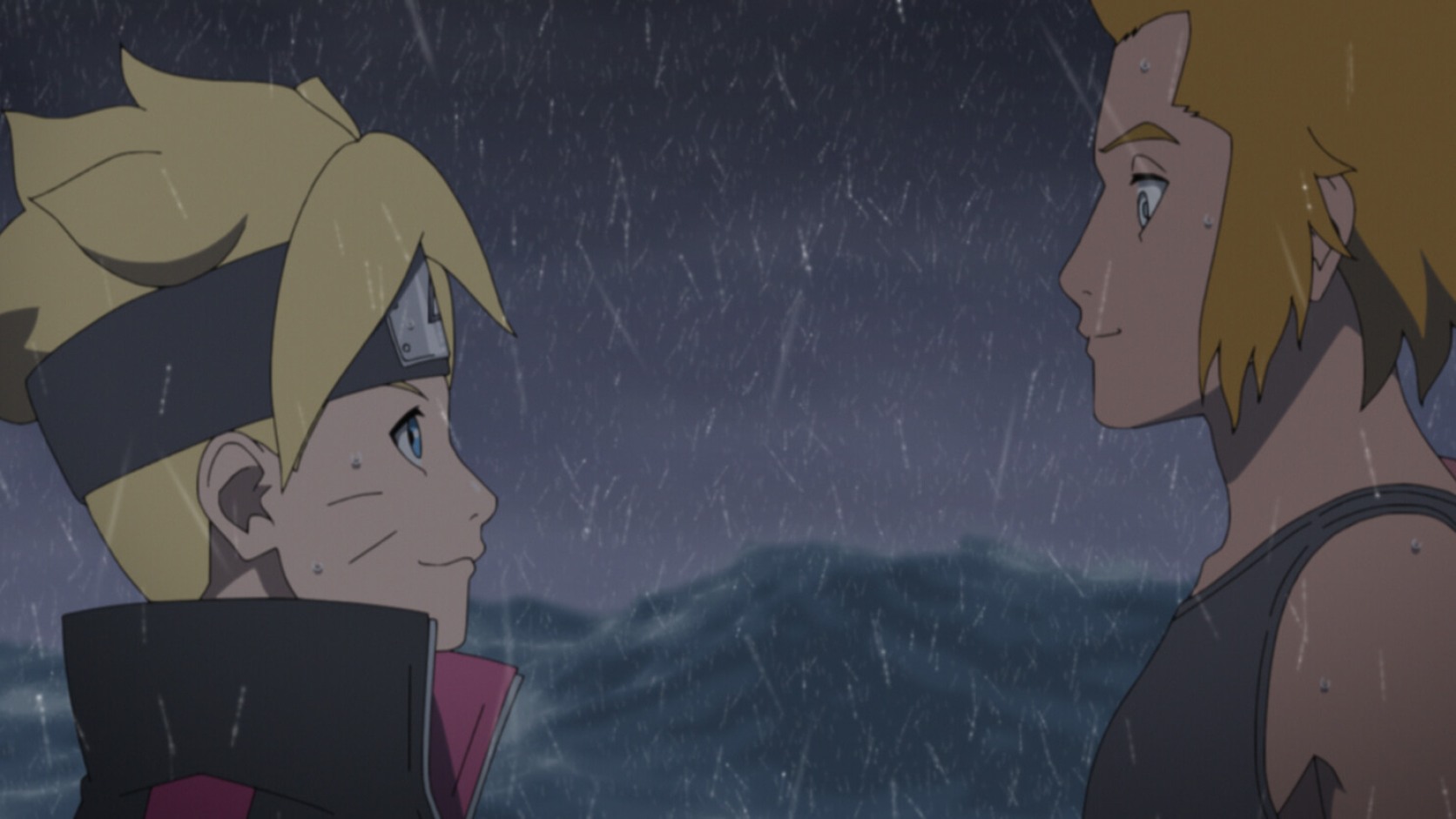
I am keeping the rain-soaked conversation, Ikada’s confidence at the helm, Boruto’s genuine admiration, and the way a missing part reveals an entire network of labor. I am keeping the rescue because the boys choose people over schedule.
I am also keeping my eye on every adult institution. Children should not be the maritime rescue system. Apprentices should not be unpaid. Families should not own futures. Public infrastructure should not depend on one brave boat in a storm.
The episode also makes me think about who gets permission to dream without having to justify the dream as service. Boruto can name ambitions inside a family that will keep loving him through disagreement. Ikada appears to have left home because the life he wanted did not fit what relatives expected. That difference changes the cost of honesty. A young person should not have to choose between family belonging and an authentic future. Communities need mediators, safe housing, confidential counseling, and education routes that let someone leave without disappearing. Families need support learning that separation is not always rejection. Sometimes distance prevents love from hardening into control.
Kajiki’s workshop offers one model, but a single generous mentor cannot replace public responsibility. Apprentices need contracts, grievance procedures, health coverage, accident protection, and credentials recognized beyond one island. If the war damages the workshop, Ikada should not lose every path forward. Portable qualifications and shared training networks would let shipbuilders move between communities without starting from zero. That kind of boring administrative planning protects dreams when weather, conflict, illness, or economics disrupt the place where a dream first became possible.
RaeRae’s final ruling
“Ikada’s Dream” gives us a young person who wants to build in the middle of an arc obsessed with destruction. That choice is not small. Ships connect islands, carry medicine, move families, support livelihoods, and create escape routes when danger arrives. Ikada’s dream is peace infrastructure.
Fund the apprenticeship. Pay the labor. Stock the parts. Protect the route. Respect the pilot. Rescue the stranded crew without turning children into permanent emergency workers. Let Ikada disclose his history in his own voice. Then give him enough freedom to become the shipbuilder he chose to be.
Sources and lawful viewing
Naruto Official lists “Ikada’s Dream” as Boruto Episode 240 in the Great Sea Battle of the Hidden Mist Village arc and provides the synopsis and gallery. Crunchyroll carries “Ikada’s Dream” where regional availability permits. Release and streaming details can vary by country.
Official episode reference: Naruto Official episode guide
Licensed episode route: Crunchyroll licensed series page
After watching, ask why one repair part controls an evacuation route and why two young people become the available storm rescue. Then ask what Ikada’s family owes a dream that belongs to him.