
BTS Into the Sun Audio React: Hope With Heat Damage
Into the Sun chooses forward motion, but refuses to pretend light is gentle. The official audio makes hope feel hot, risky, and worth approaching even when everybody knows it can burn.
Release file
Released: March 19, 2026
Runtime: 03:48
Artist / channel: BTS / official upload
Exact-file focus: Exact official Into the Sun audio. Later Busan fan recordings are excluded from the canonical file.
ARIRANG ends by walking toward the light without pretending healing is cool, fast, or remotely tidy.
What changed every time I replayed it
First intake: The filtered voices sound like they are calling from the other side of a closed room. I want the filter gone, then realize distance is the opening condition.
Second intake: I stop waiting for a giant chorus. The song is not trying to win a fireworks contract. It is teaching the arrangement to stand up slowly.
Third intake: The album placement changes everything. After thirteen tracks about return, fame, appetite, separation, and seven individual selves, “forward” sounds less like optimism and more like group maintenance.
Later replay: I still prefer more raw vocal grain, but the rock coda earns its horizon. The ending grows because the members keep walking, not because the production hands them a trophy.
Watch BTS carry it onto the stage
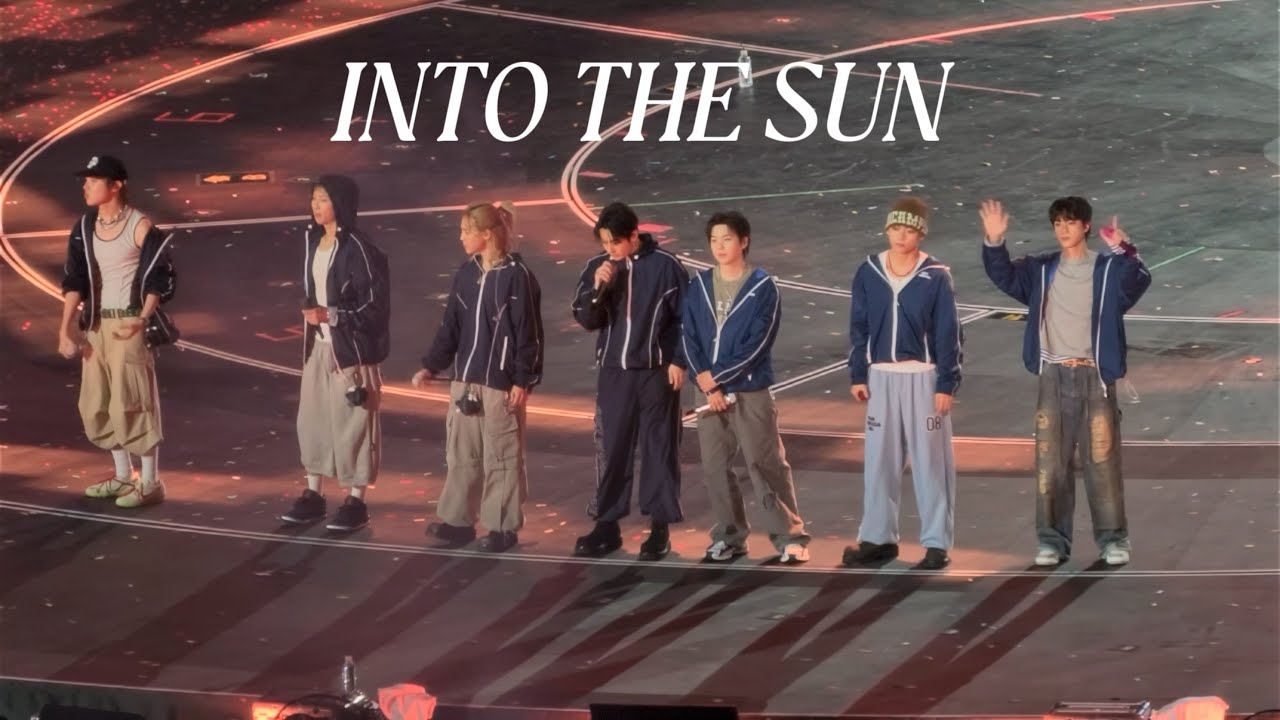
The Busan performance answers the question the studio track leaves open. Seven people have to make this slow climb work in a stadium, without hiding behind the album sequence. They do it by staying together in the frame and letting the song build at its own speed. The track does not turn into a victory lap. It becomes a promise they have to keep in public.
Overall vibe: sunrise after nobody slept
“Into the Sun” begins like the room is still dark. The voices arrive filtered and slightly distant, the production keeping them behind glass before the song slowly opens. It is not a cheerful sunrise. It is the light that finds you after a terrible night and makes you decide whether getting up counts as hope.
As ARIRANG’s closer, the track has an unfair job. It must follow thirteen songs about return, fame, separation, instinct, exhaustion and the weirdness of becoming BTS again. Instead of summarizing the album like a school report, it chooses motion. The answer is not “we are healed.” The answer is “we are walking.”
What I love
The patience. The acoustic beginning does not rush to prove scale. When the rock coda finally grows, it feels earned-like the horizon widened because the members kept moving, not because a producer pressed the inspirational button.
What I side-eye
The processed vocals will divide people. I understand the distance they create, but there are moments when I want the filter to step aside and let the raw grain of seven voices do the emotional work.
The hook vibe: forward is a direction, not a personality
The hook does not behave like a chant designed for a stadium clip. It stretches. The melody keeps reaching upward while the arrangement builds underneath it. That makes the phrase “into the sun” feel less like a slogan and more like a physical decision made one breath at a time.
There is an important difference between a song about light and a song about moving toward it. Light can be handed to you by a lyric. Movement demands participation. BTS leave the listener with the harder version.
Lyrics: no fake clean ending
The album title carries the history of “Arirang,” a Korean folk song associated with longing, separation and reunion. “Into the Sun” does not try to imitate the folk melody. It responds to the emotional problem: after crossing the pass, after losing and returning, what do you do with the person who made it through?
The writing refuses a reset. The members’ military hiatus and solo years are not treated like dead space between group promotions. Those chapters changed the voices walking into this closer. The song’s hope works because it allows fatigue to remain visible.
That is also why the ending feels adult. Younger pop often imagines recovery as transformation: pain disappears and a shinier self arrives. “Into the Sun” imagines recovery as stamina. You may still carry the bruise. You walk anyway.
The visual question: what do you show when the song is the horizon?
There is no giant narrative music video attached to this track, and that absence matters. The official release is the song itself, carried through BANGTANTV’s licensed audio and the ARIRANG visual world. That keeps the listener from outsourcing the ending to a director’s plot.
If a future performance becomes the defining visual, it should resist easy orange-sky symbolism. The song already contains the sunrise. What it needs onstage is distance, breath, and seven people choosing the same direction without marching like identical soldiers.
Easter eggs and album architecture
- Track 14: placing it last turns every earlier detour into the road that reaches this decision.
- Acoustic to rock: the production moves from private reflection toward collective scale.
- Vocoder texture: the altered voices sound like messages crossing distance before becoming present.
- Jimin and V credits: two of the group’s most color-specific vocalists help shape a closer about carrying individual selves into one future.
The credit file is part of the story
The songwriting list includes RM, SUGA, j-hope, Jimin, V, Pdogg and several collaborators. Weverse later issued a correction notice for this track’s printed credits, proof that liner notes are not decorative trivia. Credits decide whose labor becomes searchable history. If the first album run got it wrong, the correction belongs in the fan record.
The member involvement also answers a lazy argument about ARIRANG’s global collaborators erasing BTS. Collaboration does not automatically remove authorship. The useful question is what survived the room. Here, the closing perspective sounds specific to seven people who returned with separate careers and still chose a plural ending.
Director and songwriter perspective-without inventing one
There is no official narrative director explaining a film because this is not a conventional MV. I am not going to manufacture Easter eggs out of an audio upload. The documented production and credit choices are enough: the filtered opening, gradual expansion, member participation and placement as the closer all point toward emergence rather than conquest.
The Korean lens: crossing the pass without erasing the road
“Arirang” carries separation, longing, endurance, and the image of crossing a pass. BTS does not need to quote the folk melody for the album closer to inherit that emotional geography. A pass is not a teleport. The body that reaches the other side still remembers the climb.
That matters after military service and seven solo chapters. Korean public life often asks people to return to a role as if the individual time in between should fold neatly out of sight. INTO THE SUN refuses that clean reset. The group returns as seven people who changed separately and now have to build a shared pace again.
From a modern Confucian lens, the self is relational. BTS is not only seven biographies standing beside one another. The group exists through duties, memory, trust, conflict, and repeated acts of choosing the relationship. The song’s hope feels credible because it treats togetherness as work, not destiny.
The macro and micro story
At the micro level, this is what recovery looks like after the dramatic part ends. Nobody is clapping in your kitchen. You put your feet on the floor, answer one message, and decide the day still belongs to you.
At the macro level, BTS has to carry private exhaustion inside a public symbol. Fans, media, corporations, and national narratives all want the return to mean something clean. The song declines. It offers direction instead of a slogan.
That is the artistic vision I trust: light is not proof that darkness failed. It is simply the next condition. The members do not become innocent again by walking toward it. They become present.
Seven voices make hope sound less suspicious
RM gives the song its intellectual spine without turning the ending into a lecture. He sounds like somebody who has already argued with the easy version of hope and decided to keep the useful part. Jin brings the clean lift the chorus needs. His tone makes the horizon feel reachable without pretending the road became flat.
SUGA is important because optimism sounds different after it passes through somebody who keeps receipts on exhaustion. j-hope supplies motion. He has always understood that joy can be labor, discipline and performance, not merely a personality setting. Their contrast keeps the song from becoming one giant inspirational poster.
Jimin makes the softer phrases feel exposed instead of weak. V gives the lower spaces weight and age, which stops the sunrise language from floating away. Jung Kook holds the center with the kind of control that makes a difficult melodic transition sound obvious after it happens. Seven recognizable textures turn one hopeful sentence into seven different reasons to keep walking.
The album needed an ending that did not lie
A final track has a structural job. It must close the record without pretending every question has been answered. “Into the Sun” understands that closure and certainty are not twins. The music rises, but the lyric does not issue a warranty. The group chooses direction while leaving risk in the frame.
That matters for BTS because reunion narratives invite terrible writing. The easiest version would congratulate the members for surviving, thank ARMY, point toward forever and roll the credits under a swelling choir. This song is more careful. It knows military service, solo careers, public scrutiny and time apart changed the men returning to the group. Walking together again cannot mean walking backward into 2022.
From my military brain, forward movement is often less romantic than civilians imagine. Sometimes the mission continues because stopping in the exposed place is worse. You check who is present, redistribute weight and keep moving before anybody feels ready. Hope can arrive later. The first act is accountability. “Into the Sun” carries some of that practical energy. The group does not wait for perfect emotional weather before choosing the next direction.
The sunlight is not a prize
The song’s strongest symbol is also the easiest one to ruin. Sunlight can become lazy shorthand for healing, purity and a future where everybody finally behaves. Here, the sun works better as exposure. Light reveals distance, scars and the fact that the road continues. It warms, but it also removes the shadows people used to hide.
A Buddhist reading makes the ending less triumphant and more honest. Nothing about fame, friendship or artistic identity stays fixed. The members cannot recover a permanent version of BTS because no permanent version ever existed. The group survives by accepting change without treating every change as betrayal. The sun rises because conditions move, not because the universe rewarded good behavior.
That is also why the song belongs after darker material. Hope means more when it has to share a record with fear, anger and fatigue. A bright closer does not erase the previous tracks. It carries them into a different temperature. The morning matters because nobody slept.
Final verdict
Keep digging through the panda pile
Lyrics and meaning
The lyrics use the sun as direction and danger at the same time. Moving toward light can mean purpose, fame, truth, or destruction. Hope becomes credible because the song admits the heat instead of selling brightness as a painless cure.
RaeRae verdict
This exact upload earns the replay because BTS keep seven individual roles inside one shared argument. The companion performance remains useful context, but it no longer competes with the canonical file or turns one React into two reviews.