
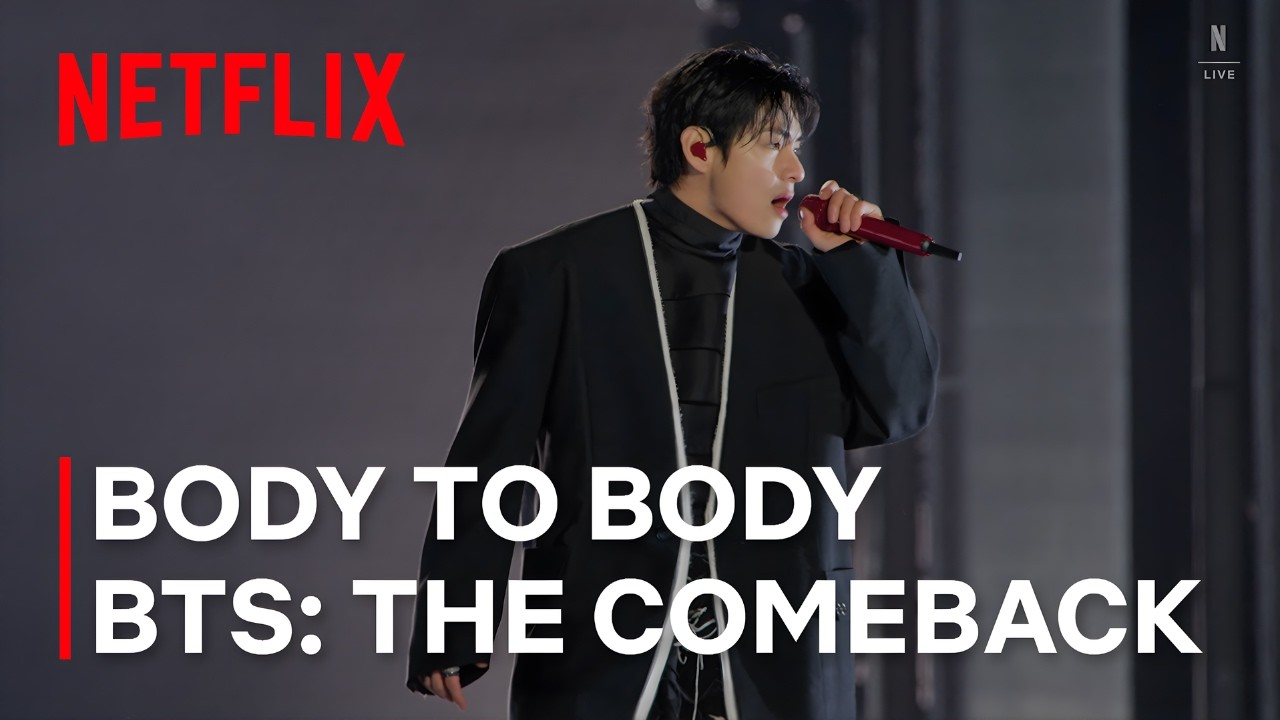
BTS Body to Body Audio React: Closeness Without the Camera Alibi
Body to Body sounds intimate enough to invite assumptions, then uses seven voices to ask whether closeness means desire, comfort, dependency, or the dangerous relief of being understood.
Release file
Released: March 19, 2026
Runtime: 03:10
Artist / channel: BTS / official upload
Exact-file focus: Exact official Body to Body audio. The later Netflix live clip is context, not a second review object.
BTS disguised a stadium reunion thesis as a skin-to-skin club song, then let “Arirang” walk through the middle and claim the building.
What changed every time I replayed it
First intake: The title promised skin and the beat delivered a stadium. “Body to Body” understands exactly what fans will assume, then widens physical closeness until it includes seven members, thousands of voices and a group rebuilding muscle memory after years apart. The song flirts, but it also organizes.
Second intake: The “Arirang” sample stopped feeling like a heritage badge and started acting like a bridge. BTS do not place tradition behind glass. They make it walk through a modern hip-hop track where the crowd can answer. That is closer to how living culture survives: repetition, adaptation, argument and use.
Third intake: The member writing credits changed the intimacy. RM, SUGA and j-hope know what it means to rebuild a shared rhythm after solo work and military service. Their lines make dependence sound chosen, not weak. Nobody returns to a seven-person body by pretending the separation never happened.
Later replay: The track became an ethical question about fandom. A crowd can complete a song without owning the people singing it. “Body to Body” celebrates proximity, but healthy proximity still needs boundaries. The best stadium connection says we are here together, not you belong to me.
Overall vibe: physical closeness after years of screens
On paper, “Body to Body” looks like the flirt song. The title arrives wearing skin-to-skin perfume and absolutely understands what fans will assume. Then the album context keeps pulling the meaning away from one private bedroom and toward a much larger room: seven performers, a crowd, bass moving through the floor, voices answering voices, and the strange intimacy of thousands of strangers breathing on the same beat.
Apple Music’s official album notes describe that physical language as stadium togetherness. That matters because BTS and ARMY spent the hiatus maintaining connection through solo releases, livestreams, archived clips, Weverse posts, and screens. Those things can carry love. They cannot reproduce the pressure wave of a crowd shouting seven names back at seven bodies onstage.
The hook vibe: a crowd chant with its collar open
The opening is hip-hop first. Percussion lands with enough empty space for the rappers to sound conversational rather than buried. RM, SUGA, and j-hope appear in the writing file, which helps explain why the group’s early rap identity feels remembered from inside instead of recreated by committee.
Vocal phrases turn the physical language into warmth. The hook is simple enough for a stadium to learn immediately, but the production keeps changing underneath it. Electronic texture gradually yields to more acoustic percussion before the “Arirang” passage enters.
That transition is the actual hook for me. The familiar folk melody does not appear as one decorative pluck placed over a Western beat to prove the album owns a passport. It changes the song’s emotional temperature. The club track suddenly remembers separation, return, and a melody carried through generations.
What I love
The rap spacing, the member handoffs, the shameless double meaning, and the way “Arirang” enters the bloodstream instead of stopping the party for a heritage presentation.
What gets side-eye
Remove the concert context and parts of the hook become familiar stadium-pop shorthand. The song asks the listener to supply a crowd. Luckily, BTS have several million volunteers.
Lyrics and meaning: the reunion is a physical circuit
The song rebuilds contact in layers. Voice meets voice. Beat meets body. Performers meet crowd. Korea’s most recognizable folk melody meets a global pop opener. The repeated physical language works because the hiatus made absence concrete. “Together” is no longer a vague fandom promise; it is people occupying the same space again.
That does not make the song innocent. RM later discussed the creative process and acknowledged the track began from a more overtly sexual idea. The final version expands rather than erases that origin. Desire, performance, and crowd intimacy overlap. Fans do not need to pretend every sensual lyric is secretly about friendship, and critics do not need to pretend a stadium interpretation is fan denial.
The best pop songs can hold more than one body at once. “Body to Body” is romantic, physical, communal, and promotional. It is also an album opener with the administrative duty of announcing that BTS are not easing back into the building.
The “Arirang” sample: not one fixed patriotic object
The track uses the Bonjo or standard Seoul version of “Arirang,” the melody most international listeners are likely to recognize. “Arirang” is not one frozen national anthem. It is a family of regional versions shaped across generations, carrying separation, endurance, affection, resentment, travel, and belonging.
That history makes sampling it both powerful and risky. A famous melody can become instant cultural shorthand, stripped of the communities and variations that kept it alive. “Body to Body” handles the risk better than a decorative sample would because the arrangement changes around it. The folk passage becomes a bridge between an electronic global-pop present and an older emotional language.
The Netflix documentary reportedly shows the group and creative team discussing how much of “Arirang” to include and how to make the use feel connected to BTS rather than pasted onto the album title. That process matters. Cultural reference is not automatically meaningful; somebody has to make choices about where it enters and what work it performs.
The live stage is the intended picture
There was no conventional narrative MV attached at release. That is not a missing-content emergency. The intended visual was already waiting: the Gwanghwamun comeback performance and the world tour that followed.
Concert reporting describes a central stage, large-scale movement, traditional references, and crowds singing the Korean “Arirang” section across language borders. In Madrid and Paris, the song functioned as an opener,not background for a plot, but the physical act of beginning again.
A glossy studio MV might have made “body to body” smaller. The live setting turns the phrase into infrastructure. Every light stick, chant, dancer, camera, and vibrating seat becomes part of the arrangement.
Who built it: a very crowded writing room
The production file names the Picard Brothers, Diplo, Ryan Tedder, and Pdogg among the producers, with a wider writing group that includes those creators alongside Akira Evans, Teezo Touchdown, RM, SUGA, j-hope, and Kirsten Allyssa Spencer. That is a lot of hands. The surprise is that the song still feels structurally clear.
Large pop credits can create anxiety about authenticity, especially on an album promoted as a return to roots. Credits do not tell you which person contributed which line, arrangement decision, melody, or vocal direction unless a reliable source specifies it. The honest reading is not “outside producers made BTS” or “the members secretly did everything.” The record is collaborative, and the three rap-line members have documented writing participation.
The Picard Brothers and Diplo help provide the percussive global-pop frame; Pdogg’s long history with BTS matters to the internal continuity; the members bring language, flow, and group memory that cannot be hired from a generic hit factory.
The live-performance perspective: dependence can be design
My main criticism is also the song’s strategy. Without a crowd, some phrases feel broad. With a crowd, the whole thing clicks. Usually I distrust a studio track that needs pyrotechnics to become interesting. “Body to Body” survives headphones because its rap foundation and “Arirang” transition are real musical events. The stadium does not rescue an empty song. It completes a deliberately open circuit.
That makes it a smart opener. BTS could have begun ARIRANG with orchestral destiny music and seven monuments rising from the floor. Instead, they begin with sweat, drums, flirtation, and the memory of what a crowd feels like.
My actual first-reaction file
The moment I leaned in
When the folk melody stopped being background flavor and answered the album title. I went from “this is a hot stadium opener” to “oh, the separation just walked into the club.”
The panda side quest
Learning that “Arirang” is not one single melody frozen for six hundred years. Every regional version is another path through the mountain.
“Body to Body” chooses contact over coronation. It does not ask the world to admire BTS’s return from a respectful distance. It asks everybody to get in the room, shout back, and let a Korean melody of longing travel through modern speakers.
The repeated physical language can sound generic if you strip away that architecture. Do not strip it away. The concert, the hiatus, the member credits, and the “Arirang” sample are not fan excuses stapled on after release. They are the reason the opener exists.
Seven bodies do not create one identical relationship
RM gives the reunion language a framework. Jin makes the hook feel open enough for a stadium. SUGA keeps physical closeness from sounding automatically innocent, while j-hope turns connection into motion.
Jimin makes proximity feel immediate, V gives the chant a lower center, and Jung Kook holds the melodic line steady enough for thousands of people to answer. The point is not seven men dissolving into one body. It is seven distinct people choosing a shared rhythm.
After years of screens, proximity became a luxury
The pandemic trained people to treat breath, crowds and touch as risk calculations. K-pop responded with screens, delayed tours and performances built for cameras instead of rooms. “Body to Body” carries the memory of that distance even when the lyric does not stop to explain it.
A stadium chant can feel like recovery because sound crosses the space bodies cannot. That does not mean every crowd is automatically safe or every touch is welcome. Consent still matters. The song’s strongest version is collective presence chosen by the people inside it, not forced intimacy disguised as fandom.
From a Buddhist lens, bodies are temporary and relational. They depend on food, air, care, labor and other people. Independence is useful, but total self-sufficiency is a fantasy. The track makes dependence audible without turning it into weakness.
“Arirang” works because it has traveled through many bodies already
The folk-song reference is not one frozen patriotic stamp. “Arirang” has regional variants, migration histories and generations of singers who changed its sound while preserving recognition. Sampling it inside a stadium track continues that movement.
The danger is using heritage as instant seriousness. BTS avoids the worst version by placing the reference inside a song about reunion and passage rather than hanging it on the wall as proof of Korean authenticity. Still, the production should give the sample enough room to remain audible as more than a credential.
My final complaint is physical: the last section should sound crowded. Let audience voices, breath and imperfect timing enter the mix. A song called “Body to Body” should leave fingerprints on the clean master.
Final verdict
“Body to Body” is BTS rebuilding the performance circuit between seven artists and the crowd that waited. It is flirt song, hip-hop opener, reunion handshake, and cultural bridge in the same sweaty file.
RaeRae rating: 9.2/10. I want the wristband, terrible stadium food, and 50,000 people losing their voices.
Receipts and official links
- Netflix Latinoamérica, BTS “Body to Body” live performance at Gwanghwamun Square
- BTS, “Body to Body” official audio on BANGTANTVDaily+328.1KTotal views140.7M
- Apple Music , official ARIRANG album notes and “Body to Body” description
- Forbes , Bonjo “Arirang” sample and documentary context
- Forbes , official track list and production credits
- Associated Press , album review and “Arirang” melody in the opener
- Le Monde , tour performance and international crowds singing “Arirang”
- BIGHIT MUSIC , corrected album credit notice
Keep falling through the panda pile: BTS profile · “Hooligan” reaction · RaeRae Reacts
RaeRae verdict
This exact upload earns the replay because BTS keep seven individual roles inside one shared argument. The companion performance remains useful context, but it no longer competes with the canonical file or turns one React into two reviews.